Lawsuit: In Session Vendeka Inc. and Pepecuu v. Department of Commerce [2025] FCR 107

EmmDubz

Citizen
Joined
Jun 11, 2025
Messages
59

Case Filing


IN THE FEDERAL COURT OF THE COMMONWEALTH OF REDMONT
CIVIL ACTION


Vendeka Inc. & Pepecuu
Plaintiff

v.

Department of Commerce
Defendant

COMPLAINT
The Plaintiff complains against the Defendant as follows:

WRITTEN STATEMENT FROM THE PLAINTIFF

This is a case for breach of contract and the Defendant's failure to adhere to its own crisis management policies. The Defendant, as the legal successor to the commandeered entity "The Exchange Inc.," defaulted on the repayment of the TEX-001 bonds held by the Plaintiffs.

Following the seizure, the Defendant published the "Financial Crisis Mitigation Plan," which created a distinct classification for the Plaintiffs as "Secured Creditors" based on their holding of "financial securities." The Defendant has since violated its own plan by improperly attempting to relegate the Plaintiffs' specific contractual claims to the State Owned Withdrawal Facility (SOWF), a separate process designed for depositors. The Plaintiffs seek to enforce their contractual rights and compel the Defendant to follow its own published rules.

I. PARTIES
1. Vendeka Inc. (Plaintiff)
2. Pepecuu (Plaintiff)
3. Department of Commerce (Defendant)

II. FACTS
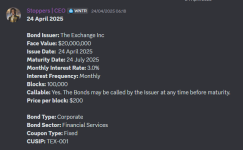
1. On April 24, 2025, The Exchange Inc. issued the "TEX-001" bonds, creating a binding loan contract with a mandatory maturity date of July 24, 2025. The Plaintiffs purchased a combined 2,452 units of these financial securities.
2. On June 27, 2025, the Defendant invoked its power under the Taxation Act to "commandeer" The Exchange Inc., choosing not to declare the entity bankrupt and thereby maintaining its legal continuity and inheriting its liabilities.
3. On the 5th of July 2025, and subsequently on the 5th of August, the second and third interest payments respectively were not paid out.
4. On July 13, 2025, the Defendant published the "Financial Crisis Mitigation Plan," which explicitly defined "Secured Creditors" to include entities holding "financial securities in the Exchange."
5. On July 24, 2025, while under the Defendant's direct control, the TEX-001 bonds reached their maturity date. The Defendant failed to repay the principal owed, constituting a material breach of contract.
6. In subsequent communications, the Defendant has contradicted its own Mitigation Plan by directing the Plaintiffs to the SOWF, a facility the plan reserves for "Depositors."

III. CLAIMS FOR RELIEF
1. The Defendant, as the successor-in-interest to The Exchange Inc., is liable for the material breach of the TEX-001 bond contract.
2. The Defendant is acting in an arbitrary manner by violating its own "Financial Crisis Mitigation Plan" and improperly classifying the Plaintiffs' claims.

IV. PRAYER FOR RELIEF
The Plaintiffs seeks the following from the Defendant:
1. $490,400 in compensatory damages, representing the principal value of 2,452 units of TEX-001 bonds at $200 per unit.
2. $29,424 in compensatory damages, representing two months of unpaid, accrued interest at the contractual rate of 3.0% per month.
3. $155,947.20 in legal fees, equalling 30% the compensatory damages.

V. EVIDENCE

1. P-001: The bond offering announcement for TEX-001.
2. P-002: An announcement from the Secretary of Commerce, dated the 27th of June 2025, confirming the commandeering of The Exchange.
3. P-003: The "Financial Crisis Mitigation Plan".
3. P-004: The "Voyager & The Exchange | Assessment of Health And Federal Seizure" report.
5. P-005: Proof of ownership of TEX-001 bonds for Vendeka Inc. & Pepecuu.
6. P-006: Transcript of DoC support ticket between Vendeka Inc. (EmmDubz) & the DoC.
7. P-007: First interest payment announcement.

Proof of Representation:

1760467678978.png
1760467697800.png

By making this submission, I agree I understand the penalties of lying in court and the fact that I am subject to perjury should I knowingly make a false statement in court.

DATED: This 14th day of October 2025

 

Attachments

  • P-006.pdf
    P-006.pdf
    1.4 MB · Views: 72
  • P-005.png
    P-005.png
    182.7 KB · Views: 108
  • P-004.pdf
    P-004.pdf
    1.5 MB · Views: 78
  • P-003.pdf
    P-003.pdf
    453.1 KB · Views: 93
  • P-002.png
    P-002.png
    85.7 KB · Views: 96
  • P-001.png
    P-001.png
    50.8 KB · Views: 122
  • P-007.png
    P-007.png
    18.5 KB · Views: 118

Writ of Summons

@Kaiserin_ is required to appear before the federal Court in the case of Vendeka Inc. and Pepecuu v. Department of Commerce [2025] FCR 107

Failure to appear within 72 hours of this summons will result in a default judgement based on the known facts of the case.

Both parties should make themselves aware of the Court Rules and Procedures, including the option of an in-game trial should both parties request one.

 
The Commonwealth is present, your honour.
 
@Kaiserin_ You have 48 hours to file your Answer to Complaint.
 
Your Honour,

This case shares striking similarity with the unsettled matter of Gribble19 v. The Exchange, Inc. [2025] FCR 102. Crucial to both cases are such matters of law as whether or not The Exchange exists as a legal entity, whether or not the Commonwealth is liable for its debts, whether or not its being commandeered has resulted in a force majeure, and whether or not it is insolvent, among others.

As FCR 102 was filed before this case, we asked that this case be enjoined until such time as FCR 102 has reached a verdict, or at least until the crucial matters of law regarding the legal status of The Exchange have been settled within that case. This would ensure that the same matters are not being litigated several times at once, and ensure consistency in the application of the law to these incredibly high value cases, so that no mistake is made.
 
Your honour, we would like to respectfully request your permission to file a proper response to this motion to enjoin.

The Defendant's motion correctly states the need to "ensure consistency in the application of the law... so that no mistake is made." However we believe that our response is necessary to aid the court in achieving this as there are significant material differences between this case & Gribble19 v. The Exchange, Inc, [2025] FCR 102 which could result in harm to the Plaintiffs if these differences are not heard.
 
Your honour,

Seeing as the request for enjoinment has yet to be ruled upon, the defence requests an extension of 48 hours on our Answer to Complaint.
 
My apologies. For some reason, I wasn't notified about updates in this case.

Your honour, we would like to respectfully request your permission to file a proper response to this motion to enjoin.

The Defendant's motion correctly states the need to "ensure consistency in the application of the law... so that no mistake is made." However we believe that our response is necessary to aid the court in achieving this as there are significant material differences between this case & Gribble19 v. The Exchange, Inc, [2025] FCR 102 which could result in harm to the Plaintiffs if these differences are not heard.

You may make your motion, and then I shall rule on the enjoining.
 
Thank you your honour.

This case should be allowed to continue due to a number of factors, including the fact that the Defendant in this case is the DoC, not The Exchange (TEX) as is the case in Gribble19 v. The Exchange, Inc. [2025] FCR 102 (Gribble). This difference is not simply one in presentation, but material, and results in the fact that while both cases are aimed at the TEX-001 bond default, they are not interchangeable. This single change nullifies multiple arguments brought by the Defence in Gribble, including defences B & C as noted in their Answer to Complaint.

Defence B in Gribble argues that the government takeover was an unforeseeable event and as such, Force Majeure would free The Exchange of its liabilities. However this defence is not applicable once the Defendant ceases to be TEX, and instead the DoC. The DoC would not be able to argue its own premeditated actions were "unforseen", and therefore excuse itself from its own obligations.

Likewise, Defence C in Gribble argues that "The Exchange, Inc. is insolvent and simply cannot pay." This defence becomes irrelevant again as this case features the defendant as the DoC, not TEX.

Furthermore, this case introduces critical legal arguments that are entirely absent from Gribble. The case we've presented is grounded in the direct legal consequences of the Defendant's own policies under the law. By choosing to commandeer TEX, while refusing to declare bankrupty, the Defendant made a deliberate choice to maintain the company's legal existence. As a result, all of TEX's contractual obligations, including the TEX-001 bonds, remain legally valid. The Defendant, as the sole party in control of TEX, are therefore responsible for ensuring it fulfills those obligations. This argument is not being made in the Gribble case.

Additionally, evidence presented in our complaint, including P-003, and P-006 shows that the Defendant is not following its own published policy, another aspect unique to this case.

The Defendant's motion correctly states the need to "ensure consistency... so that no mistake is made." However, a greater mistake would be to allow a ruling in a separate, less comprehensive case to set the precedent for this matter. The central legal questions: the direct liability of the DoC, and the fundamental principle of holding a government department accountable to its own established procedures, are only being properly argued here.

It is with all these reasons in mind that we respectfully ask the court to deny the motion to enjoin, and allow this case to proceed.
 

Court Order


While the plaintiff's arguments are insightful and worthy of consideration, I do believe that the safest course of action is to enjoin this case until such time Gribble19 v The Exchange, Inc. [2025] FCR 102 is resolved.

So ordered,
Judge AmityBlamity


Court Order


While the plaintiff's arguments are insightful and worthy of consideration, I do believe that the safest course of action is to enjoin this case until such time Gribble19 v The Exchange, Inc. [2025] FCR 102 is resolved.

So ordered,
Judge AmityBlamity

Good afternoon your honour.

We would like to request this case to be permitted to resume due to the dismissal of Gribble19 v The Exchange, Inc. [2025] FCR 102 in the courts.
 
Good afternoon your honour.

We would like to request this case to be permitted to resume due to the dismissal of Gribble19 v The Exchange, Inc. [2025] FCR 102 in the courts.
Granted.

@Kaiserin_ you have 48 hours to file an Answer to Complaint.
 

Answer to Complaint


IN THE FEDERAL COURT OF THE COMMONWEALTH OF REDMONT
ANSWER TO COMPLAINT

Vendeka Inc. & Pepecuu
Plaintiff

v.

Commonwealth of Redmont
Defendant

I. ANSWER TO COMPLAINT

1. AFFIRM that the TEX-001 bonds were issued with the maturity date listed, and that Plaintiffs purchased 2,452 units of such.
2. AFFIRM that the DOC commandeered The Exchange, Inc. (hereafter "TEX") on June 27, that it was not declared bankrupt at the time, and that it maintained its legal continuity as a distinct entity. DENY that the DOC inherited TEX's liabilities.
3. AFFIRM that the TEX-001 bonds have not yet been paid out.
4. AFFIRM that the DOC published the Financial Crisis Mitigation Plan on July 13.
5. AFFIRM that the bonds reached their maturity date. DENY that this was a material breach of contract, NOTING that this is an interpretation of law, not a fact.
6. DENY that the DOC has contradicted the Mitigation Plan: said plan prescribes discreet processes for non-depositor creditors, and Plaintiff evidently misunderstands the process laid out by that plan.

II. DEFENCES
1. TEX is a legally distinct non-government entity under directorship of the government (Gribble v. Exchange). Directors are not personally liable for corporations they control (Legal Entity Act § 8) barring DOC intervention (Taxation Act § 8.(3).(d)). While directors of corporations have been found liable for punitive damages for their conduct in directing their company ([2025] FCR 36), the entire point of the liability protections under the Legal Entities Act is to protect directors from liability should their company be unable to pay its debts - in short, directors of companies cannot be liable for consequential damages arising from their company's conduct, short of DOC action under the Taxation Act or bankruptcy proceedings.
2. The Commonwealth is constitutionally unable to grant the requested relief under Justice Compass v. Commonwealth.
3. TEX was declared bankrupt on November 11 (D-002). Even if the Commonwealth were liable for consequential damages as a corporate director, TEX's debts are moot.
4. The True Economic Redemption Act (hereafter "TERA"), and the associated Financial Crisis Mitigation Plan, were drafted specifically to provide a legal framework under which depositors and creditors of institutions which became insolvent during the 2025 financial crisis could receive repayment. Even though the original plan advises creditors to write off the TEX-001 debts, the DOC still plans to pay back part of the TEX-001 bonds as an act of executive discretion. In short, Plaintiffs' grievances as to the first claim for relief are being addressed outside the courts already, and a lawsuit is not the proper avenue for them to pursue redress.
5. As to the second claim for relief, Plaintiffs fundamentally misunderstand the TERA and Mitigation Plan. The Financial Asset Management Corporation (interchangeably FAMC or FAMF) is charged with the management and repayment of investment securities issued by covered institutions, and is associated with the State-Owned Withdrawal Facility (SOWF). The Mitigation Plan reads:

Investors may claim their securities by making a ticket in SOWF. They are asked to simply write their name or the name of their company that the securities are listed on. The FAMF employees (DoC personnel) will go through with the investor of what is happening with each of their securities and compensate them as needed.
The Commonwealth did not act arbitrarily in directing Plaintiffs to the SOWF - it acted directly in line with established policy.
6. The failure of Plaintiffs to follow the DOC's directions in seeking compensation in line with the Mitigation Plan represents a breach of Plaintiffs' duty to mitigate damages. This lawsuit was filed pre-emptively, as the proper legal avenues for pursuing repayment of the debts in question were not utilised.

EVIDENCE
d001.png
d002.png
1765237105803.png

WITNESS LIST
ElysiaCrynn, DOC Secretary.

By making this submission, I agree I understand the penalties of lying in court and the fact that I am subject to perjury should I knowingly make a false statement in court.

DATED: This eighth day of December, 2025.


Motion


IN THE FEDERAL COURT OF THE COMMONWEALTH OF REDMONT
MOTION TO STRIKE

Plaintiffs' counsel states in fact 5 that "The Defendant failed to repay the principal owed, constituting a material breach of contract." The allegation that this was a breach of contract is a legal interpretation, and not a fact. As such, it should be struck.

 
Last edited:

Motion


IN THE FEDERAL COURT OF THE COMMONWEALTH OF REDMONT
Motion to Dismiss - Rule 2.1, Standing Application

The Defence moves that this case be dismissed, and in support thereof, respectfully alleges:

Rule 2.1, Part 3 grants that in order for Plaintiff to have standing, the following condition must be met:

Remedy is applicable under relevant law that can be granted by a favorable decision.
Plaintiff requests solely compensatory damages and legal fees from the Commonwealth for the alleged breach of contract. As a matter of law, these cannot be granted.

The Defence brings Your Honour's attention to three points of law:

  • TEX has a balance of $0.01 (D-003) and its associated bank a balance of $0 (D-001). It is a covered institution under the True Economic Redemption Act, and is bankrupt under the Bankruptcy Band-Aid Act (D-002). It certainly is unable to pay the debts that Plaintiff seeks payment of, and it has no assets which could be used by the Commonwealth to pay them.
  • Your Honour held in Gribble that The Exchange, Inc. (hereafter TEX) is a separate legal entity from the Commonwealth and the Department of Commerce, and that the DOC is the director, but not the owner, of TEX ([2025] FCR 102, Nov. 1). TEX is a corporation, and was never nationalised. Legal Entity Act § 8.(10) grants that the only personal liabilities that directors of institutions hold in relation to the corporations they control are the duty of care and the duty of loyalty. Neither of these require payment of corporate debts from personal assets, barring intervention from the DOC itself under Taxation Act § 8.(3).(d).
  • Hon. Judge Muggy21 held in Justice Compass, Ltd. v. Commonwealth [2025] FCR 98 that:
    [...]a judgment, no matter how sound, cannot conjure what reality will not supply. A court cannot order the sky blue or blood from a stone, for judicial authority reaches only those remedies the law and the world can meaningfully deliver. The Department of Homeland Security did not violate this Court’s order in Vanguard and did not violate Plaintiff’s rights for failing to pay the verdict; DHS’s failure to employ every conceivable enforcement measure does not create a civil right of action against the Commonwealth.
    This precedent is directly relevant. In Justice Compass, the DHS was ordered by a prior court to unfine the Plaintiff a certain amount of money. But because it was unable to do so without reaching into unappropriated DCGovernment funds, the Court found that the DHS was under no obligation to ensure that the Plaintiff received the money. A binding court order surely carries more force than a private debt, and yet even such an order was insufficient to force the Commonwealth's hand in ensuring that non-government entities pay their debts.

It is not just that the Commonwealth is not liable for whatever debts TEX may owe - though this is undoubtedly true - rather, it is constitutionally unable to pay those debts, and there is no statute under which the Commonwealth could be forced to do so. TEX is legally distinct from the government, and thus, if it has any debts at all, they belong solely to itself, not to the DOC. Congress holds the power of the purse. Therefore, absent an appropriation from Congress and associated discretionary action from the Executive, the Commonwealth cannot pay other entities' debts with taxpayer money. Plaintiff's prayers for relief ask the Commonwealth to do just that. We need not even arrive at Plaintiff's second claim for relief; they request no relief associated with it. As all of Plaintiff's prayers cannot constitutionally be granted, even if they were ordered by this Court, this case carries no standing, and must be dismissed.

 
Last edited:

The Plaintiffs' respectfully submit this response to the Defendant's Motion to Strike, & Motion to Dismiss.

I. Response to Motion to Dismiss Pursuant of Rule 2.1

1. Justice Compass Explicitly Exempts this Conduct from Immunity

The Defence relies on Justice Compass v. Commonwealth to argue that the Government is immune from suit due to a lack of appropriation. This is a misapplication of the ruling. Judge Muggy21 held that immunity applies to "good-faith fiscal collection efforts." However, the Court explicitly made exception for cases where the government's own conduct is at issue:

"Where State Power is exercised in a manner that exceeds lawful authority, is tainted by bad faith, or infringes protected rights, the doors of the Court remain fully open."
This case falls within this boundary. The Plaintiffs are not alleging a failure to collect, they allege misconduct that infringees upon their protected contractual rights.
- The Defendant exceeded lawful authority by violating its own "Financial Crisis Mitigation Plan"
- The Defendant infringed protected rights by defaulting on a valid loan contract while in full control of the debtor entity
As the Plaintiffs allege a direct violation of rights and an excess of authority, the limited authority described in Justice Compass does not apply.

2. Statutory Duties Override Director Protections

The Defendant claims that the DoC is a "Director" and therefore immune. This ignores the statutory condition of that protection. Legal Entity Act 8(10) shields directors only if they fulfill their fiduciary duties.
- Legal Entity Act 8(10)(a) mandates that a Director must:
"(iv) [act] in a manner that is in the best interests of the Corporation"
- The Defendant, as Director, held The Exchange Inc. for months without declaring bankruptcy, during which time it defaulted on the entity's debts (TEX-001) while prioritising other policy interests.
- This failure to act in the Corporation's best interests constitutes gross negligence. Therefore the Defendant can be held liable for its own mismanagement.

II. Response to Motion to Strike​


Under the Contracts Act 7(1), the law defines a breach clearly:
"(1) A breach of contract occurs when a party fails to fulfil its contractual obligations."
It is an undisputed fact that the Defendant failed to pay the principal balance upon maturity. Therefore, describing this non-payment as a "breach" is not a subjective legal opinion, it's a statement of fact derived directly from the statutory definition required to describe this event.

III. Notice of Intent to Amend Complaint​


Pursuant to Rule 3.3, the Plaintiffs' hereby notify the Court of our intent to Amend the Complaint. This amendment is necessary due to material developments that have occured during the prolonged enjoinment of this case, specifically the Defendant's declaration of bankruptcy for The Exchange Inc. on the 11th of November 2025.

Proposed Amendments:

- Reflect the timeline of the bankruptcy declaration, establishing that the Defendant held the entity for months after the default occured.
- Explicitly cite the breach of fiduciary duty and gross negligence under the Legal Entity Act 8(10). This claim arises from the Defendant's mismanagement of the entity between the date of seizure and the date of bankruptcy.​
 
Defence respectfully wishes to remind Your Honour (@AmityBlamity) that there is a pending motion to dismiss, and failing that, that discovery is set to begin.
 
Defence respectfully wishes to remind Your Honour (@AmityBlamity) that there is a pending motion to dismiss, and failing that, that discovery is set to begin.
My apologies for the delay. I shall get to the motion tomorrow.
 
Defence respectfully wishes to remind Your Honour (@AmityBlamity) that there is a pending motion to dismiss, and failing that, that discovery is set to begin.

On resignation of the Hon. Judge AmityBlamity, I'll be the presiding officer.

I will review the Motion to Dismiss after I finish my pancake, in 5 days...
 

Court Order


IN THE FEDERAL COURT OF THE COMMONWEALTH OF REDMONT
Order - Commonwealth's Motion to Dismissal

As it stands now, the Commonwealth, at least on a plain reading of this Court's finding in Justice Compass Ltd. v. Commonwealth [2025] FCR 98, may be immune from this action. On review of current filings, the Court has lingering questions regarding the application of the Taxation Act and how it would interact with the True Economic Redemption Act. This is insufficiently plead within CW's motion for the Court to action it at this time.

All other defense arguments not considered.


MOTION DENIED, the Court will reserve the option to issue an Order to Show Cause if immunity is insufficiently challenged.

So ordered,
Judge Mug.


I got bored, so I thought I'd "legal" for a bit while on LOA.

Discovery now open, Deadline 11/8/25 @ 9pm.

Plaintiff's motion to amend is accepted. CW's motion to strike is granted.
 
Last edited:
The Federal Court issues the following orders and notices. Furthermore, please see the trial rules further mentioned in this post


In the interest of more efficient Courtroom proceedings, the Court will permit responses to motions without prior Court permission. The deadline for said motions shall be 48 hours.

Furthermore, in obedience with Rule 1.4, parties are advised that engaging in conduct that obstructs or interferes with the administration of this Court or its proceedings may be held in Contempt of Court.


Judge Mug’s Trial Protocol and Rules

Pursuant to Rule 1.2, these shall be the rules herein imposed for this trial. The timeframes listed for each section may be changed on application for an extension.

Extensions are permitted as long as requested during the period in question. Extension requests outside of the period are at the discretion of the Court.


Presentation of Witness Questions
  1. Each Party must submit all initial questions for his or her witnesses in a single post.
  2. All objections to the submitted witness questions must be filed in one consolidated post.
  3. Objections are due within fourty-eight (48) hours after the deadline for submitting witness questions.


Witness Summonses & Testimony

  1. Witnesses shall provide responses as directed by the Court.
  2. Any objections to witness testimony must be submitted within fourty-eight (48) hours of the witness's response.


Cross Examination

  1. Each Party may conduct cross-examination of any opposing witness.
  2. Cross-examination questions are due within fourty-eight (48) hours after the witness has responded to direct questioning.
  3. Cross-examination questions do not need to be consolidated.
  4. Any objections to cross-examination questions are due within twenty-four (24) hours of submission by the Witness.


Closing Statement
  1. Following the conclusion of all witness testimony and examination, the Court will invite each Party shall submit a Closing Statement.
    • Clearly label any legal arguments (e.g., “1. THEFT IS ILLEGAL” followed by the Party’s reasoning) - This is for the Court's sanity and ease of readability.
  2. Plaintiff shall have 72 Hours to submit a Closing Statement. On submission of Plaintiff's statement, Defendant shall immediately have 72 hours to submit a Closing Statement.


Motions and Objections After Closing Statements

  1. After both Closing Statements have been submitted, either Party may file post-argument motions or objections (e.g., Motion to Reconsider, Objection for Perjury, etc.).
  2. The Party must notify the Court of its intent to file such motion or objection within twenty-four (24) hours of the Closing Statements being submitted.
  3. Upon advisement from the Court, the Party will have forty-eight (48) hours to submit the requested motion, objection, or brief.
 
I got bored, so I thought I'd "legal" for a bit while on LOA.

Discovery now open, Deadline 11/8/25 @ 9pm.

Plaintiff's motion to amend is accepted. CW's motion to strike is granted.
Good morning your honour,

Could we have clarification on the deadline please:)

Many thanks.
 
Good morning your honour,

Could we have clarification on the deadline please:)

Many thanks.

Sorry, too many pancakes last night apparently…

Deadline 1/8/26 @ 9pm EST
 

Court Order


IN THE FEDERAL COURT OF THE COMMONWEALTH OF REDMONT
Order - Commonwealth's Motion to Dismissal

As it stands now, the Commonwealth, at least on a plain reading of this Court's finding in Justice Compass Ltd. v. Commonwealth [2025] FCR 98, may be immune from this action. On review of current filings, the Court has lingering questions regarding the application of the Taxation Act and how it would interact with the True Economic Redemption Act. This is insufficiently plead within CW's motion for the Court to action it at this time.

All other defense arguments not considered.


MOTION DENIED, the Court will reserve the option to issue an Order to Show Cause if immunity is insufficiently challenged.

So ordered,
Judge Mug.


Motion


IN THE FEDERAL COURT OF THE COMMONWEALTH OF REDMONT
Motion to Reconsider

Your Honour,

We seek clarification. The Commonwealth's Motion to Dismiss does not purport that we are constitutionally immune from judicial review under Your Honour's exact theory of Limited-Scope State Immunity in [2025] FCR 98. In this filing, the Commonwealth merely argues that, in line with the logic presented in that ruling, along with application of the Court Rules, the Plaintiff fails to meet Standing Application under Rule 3.1, Part 3. Here, we do not simply argue that the Commonwealth needn't make the requested payments, but rather that it cannot without Congressional intervention, and therefore there was - and is - no applicable remedy under law. While we certainly reserve the right to argue that the Commonwealth enjoys Limited-Scope State Immunity for the present situation - and may ask Your Honour to rule on that question in your final verdict - our argumentation has not yet reached that request.

The Commonwealth's argument for dismissal is best summed up in this passage:

TEX is legally distinct from the government, and thus, if it has any debts at all, they belong solely to itself, not to the DOC. Congress holds the power of the purse. Therefore, absent an appropriation from Congress and associated discretionary action from the Executive, the Commonwealth cannot pay other entities' debts with taxpayer money. Plaintiff's prayers for relief ask the Commonwealth to do just that. We need not even arrive at Plaintiff's second claim for relief; they request no relief associated with it.
We ask for a ruling as to this theory of dismissal, and should Your Honour choose to uphold your denial of it, at least a more detailed verdict as to what elements we must prove or clarify in order to reach a favourable decision. Without such clarity, the Commonwealth is left in the dark as to how it must plead its case going forward.


Motion


IN THE FEDERAL COURT OF THE COMMONWEALTH OF REDMONT
Motion to Reconsider

Your Honour,

We seek clarification. The Commonwealth's Motion to Dismiss does not purport that we are constitutionally immune from judicial review under Your Honour's exact theory of Limited-Scope State Immunity in [2025] FCR 98. In this filing, the Commonwealth merely argues that, in line with the logic presented in that ruling, along with application of the Court Rules, the Plaintiff fails to meet Standing Application under Rule 3.1, Part 3. Here, we do not simply argue that the Commonwealth needn't make the requested payments, but rather that it cannot without Congressional intervention, and therefore there was - and is - no applicable remedy under law. While we certainly reserve the right to argue that the Commonwealth enjoys Limited-Scope State Immunity for the present situation - and may ask Your Honour to rule on that question in your final verdict - our argumentation has not yet reached that request.

The Commonwealth's argument for dismissal is best summed up in this passage:

We ask for a ruling as to this theory of dismissal, and should Your Honour choose to uphold your denial of it, at least a more detailed verdict as to what elements we must prove or clarify in order to reach a favourable decision. Without such clarity, the Commonwealth is left in the dark as to how it must plead its case going forward.


I'll rule directly on your question and expand on what I originally meant. The Court used "immunity" too liberally as to cause confusion, apologies.
 

Court Order


IN THE FEDERAL COURT OF THE COMMONWEALTH OF REDMONT
Order - On Reconsideration for Commonwealth's Motion for Dismissal

Movant requests reconsideration from this Court's previous order denying the dismissal order. Movant states Court misapprehended arguments and seeks clarification.

Clarification of the Court's Original Order (#19)

On review of this Court's previous finding in Justice Compass Ltd. v. Commonwealth [2025] FCR 98, the Court found that Defendant may be immune from the ongoing prosecution as a result of "immunity." On reconsideration of how the Court's order would be interpreted, immunity or to "be immune" was a confusing adjective to employ considering the Justice Compass decision. The Court understands CW's motion as follows: Since Congress has not granted a statutory provision for the relief sought, the action fails for lack of standing. On reading Rule 2.1.3, CW argues that a remedy is not possible since such funds were not appropriated by Congress. The Court can't force the CW to cause an appropriation, thus the complaint should fail.

Order on Reconsideration

DENIED, affirmed.

On review of the Complaint, Plaintiff proffers allegations that appear to be a prayer for damages arising from a breach of contract between Plaintiffs and The Exchange ("Company"). They proffer, that since the Commonwealth has commandeered Company, all of Company's assets/liabilities have transferred to the Commonwealth. According to Plaintiff, The Exchange is one and the same with the Commonwealth.

On review of the Answer, the Commonwealth denies that the Dept of Commerce inherited any liabilities. CW proffers that, as the Hon. Judge AmityBlamity found in Gribble19 v. The Exchange [2025] FCR 102, Company remains a distinct non-government entity, under directorship of the Government.

In considering initial filings, the Court would side with the Government, a corporation (LLC, or whatever the Company was actually filed as), shields the Director from liability (Legal Entity Act § 8 (10)). Since the DOC now serves as director of Company, it is subject to the same obligations and standards as a natural person, including the duty of care, duty of loyalty, fiduciary duties, and the business judgment rule. Plaintiff's argument #2 argues precisely this point. They allege the following:

"The Defendant, as Director, held The Exchange Inc. for months without declaring bankruptcy, during which time it defaulted on the entity's debts (TEX-001) while prioritizing other policy interests.​
- This failure to act in the Corporation's best interests constitutes gross negligence. Therefore the Defendant can be held liable for its own mismanagement."​

This argument appears to be legally sufficient to imply that the Director, the Commonwealth, may be liable in the same manner found in Nexalin (see Privacy Matters Collective (Class Action Group Represented by Mezimori) v. Nexalin, [2025] FCR 36). Is this true? That will be a question of law that can be settled after fact-finding in discovery and briefing by parties. CW's motion to dismiss only discusses the lack of standing considering the lack of appropriation. If Plaintiff's theory on liability thru maleficence on the part of the CW is valid, then the Commonwealth could liable under a tort claim.

Otherwise, the Court affirms its promise. If this argument is not sufficiently pled and supported, the Court will reconsider its prior adjudication and submit an Order to Show Cause as appropriate.

So ordered,
Judge Mug.


Motion


IN THE FEDERAL COURT OF THE COMMONWEALTH OF REDMONT
REQUEST FOR DISCOVERY

The Plaintiff would like to request the Defendant to produce the following records:

1. Complete transaction logs for "The Exchange Inc." and any associated accounts from the 27th of June 2025 (Date of seizure) to July 31st, 2025 (One week after the TEX-001 Bonds maturity date.)

2. Records of transfers or assets from "The Exchange Inc." to the SOWF, DoC, or other government entities between June 27th, 2025, and November 11th, 2025.

3. Internal DoC correspondance and communications regarding TEX-001, or TEX-001 bondholders. Specifically regarding whether to pay out TEX-001 bonds, and the assigning of bondholders to the SOWF.

4. Internal DoC correspondance and communications regarding the decision to maintain "The Exchange Inc." as an active entity for five months following commandeering without declaring bankruptcy or satisfying debts.

5. Records of any executive actions, board resolutions, or management decisions taken by the DoC regarding the operations of "The Exchange Inc." during the commandeered period.

I apologise for sending such a sizeable request toward the end of the Discovery period, I just got back from holiday :p, not my intent to delay proceedings.

Kindly submitted by Matt/EmmDubz
Counsel for the Plaintiffs.


Motion


IN THE FEDERAL COURT OF THE COMMONWEALTH OF REDMONT
REQUEST FOR DISCOVERY

The Plaintiff would like to request the Defendant to produce the following records:

1. Complete transaction logs for "The Exchange Inc." and any associated accounts from the 27th of June 2025 (Date of seizure) to July 31st, 2025 (One week after the TEX-001 Bonds maturity date.)

2. Records of transfers or assets from "The Exchange Inc." to the SOWF, DoC, or other government entities between June 27th, 2025, and November 11th, 2025.

3. Internal DoC correspondance and communications regarding TEX-001, or TEX-001 bondholders. Specifically regarding whether to pay out TEX-001 bonds, and the assigning of bondholders to the SOWF.

4. Internal DoC correspondance and communications regarding the decision to maintain "The Exchange Inc." as an active entity for five months following commandeering without declaring bankruptcy or satisfying debts.

5. Records of any executive actions, board resolutions, or management decisions taken by the DoC regarding the operations of "The Exchange Inc." during the commandeered period.

I apologise for sending such a sizeable request toward the end of the Discovery period, I just got back from holiday :p, not my intent to delay proceedings.

Kindly submitted by Matt/EmmDubz
Counsel for the Plaintiffs.

Defence opposes all submitted requests:

The Commonwealth cannot comply with Requests 1 and 2 - they request the data of a financial institution, which is classified as commercial-in-confidence under the Taxation Act § 10.(3).

The Commonwealth cannot comply with Requests 3 and 4 - internal DOC correspondence is classified under the Classified Materials Act, and most of the requested messages were lost in the reset of the Cabinet Discord between the first Juniperfig administration and the Pepecuu administration.

The Commonwealth cannot comply with Request 5 - it is incredibly overbroad, such that compliance would be impossible. Further, even if we were to attempt compliance, most of the information sought would be either classified or commercial-in-confidence.
 
We notify the Court of an amendment to our Answer to Complaint:

II. DEFENCES
1. TEX is a legally distinct non-government entity under directorship of the government (Gribble v. Exchange). Directors are not personally liable for corporations they control (Legal Entity Act § 8) barring DOC intervention (Taxation Act § 8.(3).(d)). While directors of corporations have been found liable for punitive damages for their conduct in directing their company ([2025] FCR 36), the entire point of the liability protections under the Legal Entities Act is to protect directors from liability should their company be unable to pay its debts - in short, directors of companies cannot be liable for consequential damages arising from their company's conduct, short of DOC action under the Taxation Act or bankruptcy proceedings.
2. The Commonwealth is constitutionally unable to grant the requested relief under Justice Compass v. Commonwealth.
3. TEX was declared bankrupt on November 11 (D-002). Even if the Commonwealth were liable for consequential damages as a corporate director, TEX's debts are moot.
 
Defence calls the following witnesses:
  • DonTrillions - Federal Reserve Governor, both current and at the time of TEX's commandeering
  • Kaiserin_ - Author of the True Economic Redemption Act and President at the time of TEX's commandeering
    (We acknowledge the irregularity of calling counsel as a witness. A separate prosecutor will question me, and my testimony will not be used until/unless introduced properly as evidence)
 
Defence submits the following message into evidence:
1767831241817.png
 
Defence opposes all submitted requests:

The Commonwealth cannot comply with Requests 1 and 2 - they request the data of a financial institution, which is classified as commercial-in-confidence under the Taxation Act § 10.(3).

The Commonwealth cannot comply with Requests 3 and 4 - internal DOC correspondence is classified under the Classified Materials Act, and most of the requested messages were lost in the reset of the Cabinet Discord between the first Juniperfig administration and the Pepecuu administration.

The Commonwealth cannot comply with Request 5 - it is incredibly overbroad, such that compliance would be impossible. Further, even if we were to attempt compliance, most of the information sought would be either classified or commercial-in-confidence.

The Court affirms CW's denial of Request #5, it is overly broad. Request #1 and #2 are also declined for the reasons outlined by the CW.

Request #3 and #4 are denied, insofar as additional showing as to why remaining communications should be declassified.
 

Motion


IN THE FEDERAL COURT OF THE COMMONWEALTH OF REDMONT
MOTION TO RECONSIDER

The Plaintiff would like to respectfully ask for the court to reconsider denial of our Request for Discovery.

Request #1 & #2.
With regards to Request #1 & #2, the Plaintiff recognises that the Taxation Act 10(3) states that financial data is confidential. However, as The Exchange has been declared bankrupt, under section 3(2)(b) of the Bankruptcy Band-Aid Act, by invoking bankruptcy, the Defendant is bound to its requirements:

  • Section 3(2)(b)(iv) explicitly states: "A public accounting of the Reorganization Plan must be made... The Reorganization Plan must have a clear path to paying Active Debt." Therefore, the Defendant cannot claaim "Commercial in Confidence" on financial records that the Act explicitly mandates must be "public accounting." The transparency requirements of the Bankruptcy Band-Aid act supercede the privacy protections of the Taxation Act once an entity enters insolvency.
  • Section 3(2)(b)(iii) states: "Creditors are compelled to work with a debtor... to amicably resolve debts." Therefore it is legally impossible for the Plaintiffs to negotiate or agree to a reorganisation plan with the Debtor, in this case the Defendant, if they refuse to disclose the entity's assets.
If the courts remain concerned about this data entering the public domain, we would be for a Closed Court session.

Request #3 & #4.
The Court's Order on Reconsideration posted on January 6th of this year conditions liability on the proof of maleficience. The Legal Entity Act 8(10) defines the specific duties a director must uphold:
  • 8(10)(a)(ii): To "act on an informed basis."
  • 8(10)(a)(iv): To "Act in a manner that is in the best interest of the Corporation."
  • 8(10)(b): To "put the interest of the company before their own personal interests."
Therefore, to determine whether the Defendant breached these statutory duties, the Court must be allowed to examine the decision-making process.
  • Did the Defendant delay bankruptcy for five months based on a sound financial strategy (acting on an "informed basis")?
  • Did the Defendant divert bondholders to the SOWF to protect the corporation?
These questions cannot be answered by looking at the outcome alone, they instead require examining the intent found in internal communications. Allowing the Defendant to classify the evidence of their own decision making renders the burden of proof impossible to meet.

Furthermore, the Defense claims messages were "lost." This failure to preserve records during an ongoing case is dissapointing. The Plaintiffs request that the Defendant produce any records that remain.


Respectfully submitted,
EmmDubz/Matt,
Counsel for the Plaintiffs.

 
(Writing this for posterity)

By the grace of Lord Tuk and his infinitesimal wisdom, the deadlines of this Court have been modified due to forums outages.

@Kaiserin_ The deadline for a response to the Motion to Reconsider has been reset, if the CW wishes to contest the motion, you shall until Jan 17th, 2026 at 9pm EST. Considering the forums disruptions, any objection as to the untimely objection/response to this motion shall be administratively ignored.


Parties are not prejudiced when the Court grants generous deadlines relief in an equitable manner or when otherwise directed by Staff intervention.
 
Your Honor,
I would like to inform the court that I am now first chair on this case
 

Motion


IN THE FEDERAL COURT OF THE COMMONWEALTH OF REDMONT
MOTION TO RECONSIDER

The Plaintiff would like to respectfully ask for the court to reconsider denial of our Request for Discovery.

Request #1 & #2.
With regards to Request #1 & #2, the Plaintiff recognises that the Taxation Act 10(3) states that financial data is confidential. However, as The Exchange has been declared bankrupt, under section 3(2)(b) of the Bankruptcy Band-Aid Act, by invoking bankruptcy, the Defendant is bound to its requirements:

  • Section 3(2)(b)(iv) explicitly states: "A public accounting of the Reorganization Plan must be made... The Reorganization Plan must have a clear path to paying Active Debt." Therefore, the Defendant cannot claaim "Commercial in Confidence" on financial records that the Act explicitly mandates must be "public accounting." The transparency requirements of the Bankruptcy Band-Aid act supercede the privacy protections of the Taxation Act once an entity enters insolvency.
  • Section 3(2)(b)(iii) states: "Creditors are compelled to work with a debtor... to amicably resolve debts." Therefore it is legally impossible for the Plaintiffs to negotiate or agree to a reorganisation plan with the Debtor, in this case the Defendant, if they refuse to disclose the entity's assets.
If the courts remain concerned about this data entering the public domain, we would be for a Closed Court session.

Request #3 & #4.
The Court's Order on Reconsideration posted on January 6th of this year conditions liability on the proof of maleficience. The Legal Entity Act 8(10) defines the specific duties a director must uphold:
  • 8(10)(a)(ii): To "act on an informed basis."
  • 8(10)(a)(iv): To "Act in a manner that is in the best interest of the Corporation."
  • 8(10)(b): To "put the interest of the company before their own personal interests."
Therefore, to determine whether the Defendant breached these statutory duties, the Court must be allowed to examine the decision-making process.
  • Did the Defendant delay bankruptcy for five months based on a sound financial strategy (acting on an "informed basis")?
  • Did the Defendant divert bondholders to the SOWF to protect the corporation?
These questions cannot be answered by looking at the outcome alone, they instead require examining the intent found in internal communications. Allowing the Defendant to classify the evidence of their own decision making renders the burden of proof impossible to meet.

Furthermore, the Defense claims messages were "lost." This failure to preserve records during an ongoing case is dissapointing. The Plaintiffs request that the Defendant produce any records that remain.


Respectfully submitted,
EmmDubz/Matt,
Counsel for the Plaintiffs.

Response


IN THE FEDERAL COURT OF THE COMMONWEALTH OF REDMONT
RESPONSE TO MOTION TO RECONSIDER

Request #1 & #2
While the plaintiff alleges that, in compliance with the Bankruptcy Band-Aid Act, the Commonwealth must disclose the private assets and transaction logs of The Exchange, upon examination this assertion is meritless.

Within the logic of their own reasoning, the requested materials should not be released. The statute from the BBA Act states that “A public accounting of the Reorganization Plan must be made… The Reorganization Plan must have a clear path to paying active debt.” This does not necessitate the release of the assets of the company, nor the transaction logs of the company, rather it neccesitates that a plan must be made and released. While the plaintiff states that “it is legally impossible for the plaintiffs to negotiate or agree to a reorganization plan with the debtor, in this case the defendant, if they refuse to disclose the entity’s assets,” that is not what this trial is about. The plaintiff is not alleging wrongdoing on the part of the Commonwealth in the execution of the bankruptcy of the exchange; it is alleging instead that the Commonwealth is responsible for their debt.

The information that the plaintiff is requesting is some of the most protected in Redmont, on par with Attorney Client Privilege and Personal Information. The question that the Plaintiff here poses is not materially related to the case at hand, and therefore does not necessitate the release of such highly protected information.

Request #3 & #4
Once again the Plaintiff is requesting information regarding claims that are beyond the scope of the case. The court in this trial is not trying to determine if the Commonwealth breached its statutory duties as the director of the exchange, but rather is determining if the Commonwealth is personally liable for the debts of the exchange. The defense does not need all of the classified discussion about TEX within the DOC over the last 5 months to determine if the Commonwealth is liable for the debt of The Exchange. Regardless of intent, the outcome of the actions of the commonwealth should be cut and dry legal or illegal. If the DOC violated a statute, it should be apparent via the outcomes of its actions. The intent of the DOC which the plaintiff is requesting to analyze with these chat logs is not materially relevant to the case.


Response


IN THE FEDERAL COURT OF THE COMMONWEALTH OF REDMONT
RESPONSE TO MOTION TO RECONSIDER

Request #1 & #2
While the plaintiff alleges that, in compliance with the Bankruptcy Band-Aid Act, the Commonwealth must disclose the private assets and transaction logs of The Exchange, upon examination this assertion is meritless.

Within the logic of their own reasoning, the requested materials should not be released. The statute from the BBA Act states that “A public accounting of the Reorganization Plan must be made… The Reorganization Plan must have a clear path to paying active debt.” This does not necessitate the release of the assets of the company, nor the transaction logs of the company, rather it neccesitates that a plan must be made and released. While the plaintiff states that “it is legally impossible for the plaintiffs to negotiate or agree to a reorganization plan with the debtor, in this case the defendant, if they refuse to disclose the entity’s assets,” that is not what this trial is about. The plaintiff is not alleging wrongdoing on the part of the Commonwealth in the execution of the bankruptcy of the exchange; it is alleging instead that the Commonwealth is responsible for their debt.

The information that the plaintiff is requesting is some of the most protected in Redmont, on par with Attorney Client Privilege and Personal Information. The question that the Plaintiff here poses is not materially related to the case at hand, and therefore does not necessitate the release of such highly protected information.

Request #3 & #4
Once again the Plaintiff is requesting information regarding claims that are beyond the scope of the case. The court in this trial is not trying to determine if the Commonwealth breached its statutory duties as the director of the exchange, but rather is determining if the Commonwealth is personally liable for the debts of the exchange. The defense does not need all of the classified discussion about TEX within the DOC over the last 5 months to determine if the Commonwealth is liable for the debt of The Exchange. Regardless of intent, the outcome of the actions of the commonwealth should be cut and dry legal or illegal. If the DOC violated a statute, it should be apparent via the outcomes of its actions. The intent of the DOC which the plaintiff is requesting to analyze with these chat logs is not materially relevant to the case.

Court Order


IN THE FEDERAL COURT OF THE COMMONWEALTH OF REDMONT
Order - On Reconsideration, Motion to Compel

Requests 1-4 (R1 - R4) are the same from Plaintiff's initial Motion to Compel.


R1 and R2: On reconsideration, GRANTED, with modifications. Transactions between the Government, Exchange (and associated accounts), and the Owners/Directors/Managers/Principal Officers of the Exchange shall be furnished. The transactions of third-party citizens/companies shall remain hidden.

R3, on reconsideration, GRANTED. Under Plaintiff's theory, if a Government official failed to act with due regard of his or her obligations under the law, the Commonwealth may be liable. The Court can't properly adjudicate that theory without seeing how the Commonwealth proceeded in the execution of its powers as "Director" of the Exchange (see Reveille Legion v. BabySoga [2025] DCR 52).


R4, on reconsideration, DENIED. Beyond the classified nature of Government chats, the Complaint does not allege Government maleficence, merely a breach of contract. The outcome from Government actions does not, of itself, require limitless exposure to internal Government communications (see generally Commonwealth of Redmont v. Milqy, [2022] SCR 16, Vernicia v. The Commonwealth of Redmont, [2024] FCR 39).


The Court shall create a Closed Court ticket for the Commonwealth to enter the files into. The evidence filings shall retain their original classifications outside of the ticket. Within the Closed Court ticket, they shall have JUD-RESTRICTED, where only parties have access to the material. The Court orders parties to maintain strict confidence in the materials requested under pain of Contempt and all other lawful powers of the Federal Court.


The Commonwealth shall have 72 Hours to present the materials to the Closed Court ticket.

So ordered,
Judge Mug

 
@Dogeington

You shall have 72 Hours (extensions of course will be granted) to present witness questions for Kaiserin_ and DonTrillions. The Court prolongs the witness question presentation due to the delayed ruling on reconsideration. Parties are not prejudiced when the Court takes its time (eating pancakes) adjudicating a matter within a reasonable timeframe.
 
@Dogeington

You shall have 72 Hours (extensions of course will be granted) to present witness questions for Kaiserin_ and DonTrillions. The Court prolongs the witness question presentation due to the delayed ruling on reconsideration. Parties are not prejudiced when the Court takes its time (eating pancakes) adjudicating a matter within a reasonable timeframe.


This is struck, we haven't had our Opening Statements.
 
Back
Top