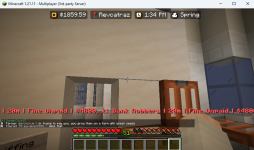
Lawsuit: Pending ShellSchockMSG v. Department of Homeland Security [2026] DCR 151

ShellShockMSG

Citizen
ShellSchockMSG
ShellSchockMSG
Attorney
Joined
Jul 15, 2026
Messages
10

Case Filing​

IN THE DISTRICT COURT OF THE COMMONWEALTH OF REDMONT​

CIVIL ACTION

ShellshockMSG
In-game name: "ShellschockMSG"
Plaintiff

v.

Department of Homeland Security
Defendant

COMPLAINT​

The Plaintiff complains against the Defendant as follows:

WRITTEN STATEMENT FROM THE PLAINTIFF​

I am asking this Court to review three Bank Robbery summary convictions imposed against me by the Department of Homeland Security on August 13, 2026.

I first attempted to resolve this directly with DHS through ticket DHS-38093. During that appeal, DHS provided three screenshots that it said supported three separate Bank Robbery convictions. The DHS representative initially described the incidents as having occurred only a few days earlier, then corrected that statement and said the screenshots were probably from approximately one to two weeks earlier. The representative also stated that the reports were filed "back when the cca came back."

That timing raised a significant legal issue. The Criminal Code was repealed on July 19, 2026, and the current Criminal Code did not take effect until July 31, 2026. The current Criminal Code expressly prohibits charging, convicting, or punishing someone for conduct that was not an offence when it occurred. The Code contains a narrow exception for five specifically identified offences committed during the period in which there was no criminal code. Bank Robbery is not one of those offences.

Because DHS's own approximate timeframe potentially overlapped that period, I repeatedly asked DHS to identify the actual date of the conduct underlying each conviction. I specifically explained that I was not simply requesting technical file metadata. I needed the dates of the alleged conduct to determine what law was in effect when each alleged offence occurred.

DHS declined to provide those dates. It instead described the evidence as "unassailable," upheld all three convictions, and closed my administrative appeal.

I also dispute whether the first screenshot supplied by DHS independently establishes that I was specifically within the bank vault, which is an element of Bank Robbery under the Criminal Code. DHS maintains that the screenshot clearly establishes my presence within the underground vault region. I disagree and ask that the underlying evidence supporting that conclusion be examined by the Court.

As a result of these convictions, I was assessed three $4,800 fines and confined in Revcatraz. While incarcerated, I was physically attacked by another player. I do not presently possess a screenshot of that incident and do not know what server, combat, police, or other records may exist concerning the attack. I intend to seek any available records through discovery and to testify to what occurred.

If one or more of these convictions are determined to have been unlawful, I also seek compensation for the consequences of the resulting punishment, including the fines and confinement, humiliation, loss of enjoyment, reputational effects to the extent proven, and the worsening of my circumstances resulting from being attacked while incarcerated.

I am therefore asking this Court to review the convictions, establish the dates and underlying evidence through the judicial process, and grant the relief supported by the evidence and law.

I. PARTIES​

  1. Plaintiff ShellshockMSG, known in-game as "ShellschockMSG", holds a legal qualification under the Bar Association of Redmont Act, appears in this matter in a self-represented capacity, and is the individual against whom the three Bank Robbery summary convictions at issue in this case were imposed.
  2. Defendant Department of Homeland Security ("DHS") is the government department responsible for the enforcement of the three Bank Robbery convictions challenged in this action and for the administrative review conducted through DHS ticket DHS-38093.
  3. Plaintiff is representing himself in this action.

II. FACTS​

  1. On August 13, 2026, Plaintiff was arrested based upon three outstanding Bank Robbery charges and was taken to Revcatraz.
  2. Bank Robbery is a Summary Offence under Part VIII, Section 6 of the Criminal Code Act.
  3. The current penalty for Bank Robbery is 40 Penalty Units and 20 minutes imprisonment.
  4. One Penalty Unit is presently valued at $120.
  5. Plaintiff was therefore assessed a fine of $4,800 for each Bank Robbery conviction.
  6. Plaintiff was assessed three such fines, totaling $14,400.
  7. Plaintiff was also confined in Revcatraz as a consequence of the three convictions.
  8. Following his arrest, Plaintiff opened Department of Homeland Security ticket DHS-38093 to formally dispute all three Bank Robbery convictions.
  9. Plaintiff requested that DHS identify the factual and evidentiary basis supporting each individual conviction.
  10. DHS responded by providing three screenshots and stated that the screenshots represented three separate occasions warranting the charges.
  11. At approximately 11:12 AM on August 13, 2026, the DHS representative initially stated that approximately two of the incidents had occurred three days earlier and one had occurred two days earlier.
  12. The DHS representative subsequently corrected that statement and stated that the screenshots were "probably from about 1-2 weeks ago."
  13. At approximately 11:15 AM, the DHS representative further stated that the incidents "were filed back when the cca came back."
  14. The Continued Chaos Act received Presidential Assent on July 19, 2026.
  15. The Continued Chaos Act expressly repealed the Criminal Code Act and took effect immediately upon signage.
  16. From July 19, 2026 until the enactment of the replacement Criminal Code Act, Redmont had no codified criminal law.
  17. The current Criminal Code Act received Presidential Assent and became law on July 31, 2026.
  18. Because the approximate timeframe given by DHS potentially overlapped the period between the repeal and restoration of the Criminal Code, Plaintiff requested the exact real-world date and, if available, time associated with each alleged incident.
  19. Plaintiff specifically requested the date and time of the alleged conduct underlying Count One.
  20. Plaintiff specifically requested the date and time of the alleged conduct underlying Count Two.
  21. Plaintiff specifically requested the date and time of the alleged conduct underlying Count Three.
  22. Plaintiff explained to DHS that the relevant question was when the alleged conduct occurred, rather than merely when a report was later submitted or when DHS subsequently entered a charge.
  23. Plaintiff informed DHS that Part I, Section 6(3)(a) of the current Criminal Code Act prohibits charging, convicting, or punishing someone for conduct that did not constitute an offence under the law in force at the time the conduct occurred.
  24. Plaintiff further informed DHS that Part I, Section 6(3)(f), the Continuity of Core Offences provision, permits prosecution of certain conduct occurring during a period without a criminal code only where that conduct would have constituted Murder, Treason, Abuse of Power, Fraud, or Embezzlement.
  25. Bank Robbery is not included among those five offences.
  26. Plaintiff requested the underlying report dates, screenshot or file timestamps, or other records supporting the date attributed to each alleged incident.
  27. DHS declined to provide the requested dates.
  28. DHS responded that it was not obligated to provide "specific file timestamps at this stage of the appeal."
  29. DHS further described the evidence in its possession as "unassailable and fully supports the convictions."
  30. DHS confirmed that the locations shown at approximately 3201/67/4007 and 3192/67/3983 in two of the screenshots were within the defined bank vault.
  31. DHS stated that it considered each of the three screenshots to depict Plaintiff specifically within the defined bank vault area.
  32. DHS therefore upheld all three Bank Robbery convictions and formally denied Plaintiff's administrative appeal.
  33. Plaintiff denied DHS's initial request to close the ticket so that the issue could be clarified and the record preserved.
  34. Plaintiff again explained that he was not merely seeking optional file metadata.
  35. Plaintiff explained that he was seeking the dates of the alleged conduct because those dates were material to whether Bank Robbery was criminal at the time the conduct occurred.
  36. Plaintiff again identified the July 19, 2026 repeal and July 31, 2026 restoration of the Criminal Code.
  37. Plaintiff requested that DHS preserve all records associated with the three convictions, including the original reports, screenshots, report timestamps, crime or wanted records, officer records, and records establishing the date and time of each incident.
  38. Plaintiff also disputed DHS's assertion that all three screenshots independently establish his presence specifically within the bank vault.
  39. Plaintiff particularly disputes the evidentiary sufficiency of the first screenshot.
  40. The first screenshot does not visibly depict Plaintiff's player model standing within the bank vault.
  41. Plaintiff understands the first screenshot to have been taken from outside the rear bank entrance.
  42. DHS nevertheless responded that "all screenshots, including the first one, clearly depict your player within the bank vault region, which is located underground."
  43. DHS again affirmed that the Bank Robbery convictions were correct and would stand.
  44. DHS stated that all points of Plaintiff's dispute had been addressed and proceeded to close the administrative ticket.
  45. DHS did not provide Plaintiff with the real-world date of the alleged conduct underlying any of the three convictions before closing the administrative appeal.
  46. The exact dates DHS attributes to the three alleged incidents therefore remain unknown to Plaintiff.
  47. Those dates are material because the existence of a Bank Robbery offence depended upon which law was in force when the alleged conduct occurred.
  48. The records necessary to determine those dates are reasonably believed to be in the possession of DHS, the persons who submitted the underlying reports, or another custodian of the relevant server or police records.
  49. Plaintiff does not base this action upon an allegation that DHS necessarily had an independent obligation to provide technical file metadata during the support-ticket process.
  50. Rather, Plaintiff challenges the legality of the convictions themselves and seeks judicial determination of the dates and facts necessary to determine whether each conviction was lawful.
  51. As a direct consequence of the three convictions, Plaintiff paid or was assessed $14,400 in fines and was confined in Revcatraz.
  52. While confined in Revcatraz pursuant to these convictions, Plaintiff was physically attacked by another player.
  53. Plaintiff does not presently possess a screenshot of the physical attack.
  54. Plaintiff does not presently know what combat, damage, prison, police, plugin, or server records relating to that attack exist.
  55. Plaintiff intends to seek any such records, if they exist and are available, through discovery.
  56. Plaintiff will also offer his own testimony concerning the confinement and the attack.
  57. Plaintiff alleges that the arrest and confinement caused humiliation and loss of enjoyment of his normal participation in Redmont.
  58. Plaintiff further alleges reputational harm or reputational effects arising from the arrest and imprisonment to the extent those effects can be established by evidence or testimony.
  59. Plaintiff alleges that being physically attacked while incarcerated constituted a worsening of his circumstances arising during the confinement.
  60. Plaintiff seeks consequential damages for these harms only to the extent that the Court determines the underlying conviction or confinement giving rise to those harms was unlawful and the required causal connection is established.

III. CLAIMS FOR RELIEF​

Claim One: Right to Contest the Summary Convictions​

  1. Part I, Section 7(2) of the Criminal Code Act defines a Summary Offence as an offence that may be punished without a formal trial but which may be contested before a judicial officer after issuance.
  2. Part I, Section 6(6)(d) further preserves the right of a player to appeal a summary offence conviction in court.
  3. Plaintiff was directly subjected to three Bank Robbery summary convictions, $14,400 in fines, and incarceration.
  4. Plaintiff has therefore suffered a direct and particularized injury resulting from the application of the criminal law against him.
  5. The convictions remain contested.
  6. This Court is capable of providing relief through review of the convictions, reimbursement of any unlawful fine, compensation prescribed by law, and other lawful relief.
  7. Plaintiff therefore has standing to bring this action and seeks judicial review of all three convictions.

Claim Two: Ex Post Facto / Unlawful Retroactive Conviction​

  1. Part I, Section 6(3)(a) of the Criminal Code Act provides that no person shall be charged with, convicted of, or punished for conduct that did not constitute an offence under the law in force at the time the conduct occurred.
  2. The Continued Chaos Act repealed the Criminal Code Act on July 19, 2026.
  3. The replacement Criminal Code Act did not take effect until July 31, 2026.
  4. Part I, Section 6(3)(f) of the current Criminal Code creates a limited exception permitting prosecution of certain conduct occurring during a period in which no criminal code was in force.
  5. That exception applies only where the conduct would have constituted:

    a. Murder;
    b. Treason;
    c. Abuse of Power;
    d. Fraud; or
    e. Embezzlement.
  6. Part I, Section 6(3)(f)(iv) expressly states that this is a closed list.
  7. The same provision states that the list shall not be expanded by analogy, implication, or operation of another provision of the Criminal Code.
  8. Bank Robbery is not included within that closed list.
  9. Accordingly, conduct occurring during the period in which no Criminal Code was in force cannot subsequently be prosecuted as Bank Robbery under the restored Criminal Code.
  10. DHS's own administrative statements placed the screenshots at approximately one to two weeks before August 13, 2026 and stated that the associated reports were filed when the Criminal Code came back.
  11. That approximate timeframe creates a genuine question as to whether one or more alleged incidents occurred between the July 19 repeal and July 31 restoration of the Criminal Code.
  12. Plaintiff specifically raised this issue with DHS and requested the dates of the alleged conduct.
  13. DHS upheld the convictions without providing those dates.
  14. Plaintiff does not presently allege that all three incidents necessarily occurred during the no-Code period because DHS has not disclosed sufficient information for Plaintiff to truthfully make that representation.
  15. Plaintiff instead asks the Court to establish the date of the conduct underlying each conviction through the judicial process.
  16. Any Bank Robbery conviction based upon conduct occurring after the Criminal Code was repealed on July 19, 2026 and before the current Criminal Code took effect on July 31, 2026 must be vacated pursuant to Part I, Section 6(3).

Claim Three: Insufficient Evidence / Factual Error as to the First Bank Robbery Conviction​

  1. Part VIII, Section 6 of the Criminal Code Act provides that a person commits Bank Robbery where the person "trespasses specifically within the bank's vault."
  2. Part VIII, Section 7 separately defines Bank Trespass as trespassing behind the "No Trespassing" sign in the bank.
  3. The Criminal Code therefore distinguishes between being within a restricted portion of the bank generally and trespassing specifically within the vault.
  4. DHS asserts that each of its three screenshots independently demonstrates Plaintiff's presence specifically within the bank vault.
  5. Plaintiff disputes this assertion as to the first screenshot.
  6. The first screenshot does not visibly depict Plaintiff's player model standing within the vault.
  7. Plaintiff understands that screenshot to have been taken from outside the rear bank entrance.
  8. DHS nevertheless expressly stated during its final administrative response that the first screenshot clearly depicts Plaintiff within the underground vault region.
  9. DHS did not provide Plaintiff with coordinates or another underlying location record for the alleged incident represented by the first screenshot.
  10. DHS also did not provide the date of the incident.
  11. Plaintiff therefore requests judicial review of the complete evidentiary basis supporting the first Bank Robbery conviction.
  12. If DHS cannot establish that Plaintiff was specifically within the bank vault at the time of the conduct underlying Count One, the evidence does not establish the location element required for Bank Robbery and that conviction should be vacated.

Claim Four: Wrongful Arrest or Detention, Pleaded in the Alternative​

  1. Part XI, Section 5 of the Redmont Civil Code Act recognizes Wrongful Arrest or Detention where a law-enforcement officer arrests or detains a plaintiff without lawful authority, or where a government officer detains the plaintiff beyond the period authorized by law.
  2. Plaintiff acknowledges that this violation does not occur where the officer had reasonable grounds to believe that the arrest or detention was lawful.
  3. Plaintiff therefore pleads this claim in the alternative and does not ask the Court to presume that the later reversal of a conviction automatically establishes Wrongful Arrest or Detention.
  4. Instead, Plaintiff alleges that if one or more of the convictions are determined to have been legally incapable of supporting punishment, the Court should examine whether the resulting arrest or detention attributable to those convictions was supported by lawful authority.
  5. Relevant facts concerning who created or approved the underlying criminal records, when those records were created, what dates were attributed to the alleged conduct, and what information was available to DHS personnel at the time are presently within the control of DHS or other government record custodians.
  6. Those facts are appropriate subjects for discovery.
  7. To the extent discovery establishes that Plaintiff was arrested or detained without lawful authority and that the reasonable-grounds exception does not apply, Plaintiff seeks a finding of Wrongful Arrest or Detention under Part XI, Section 5 of the Redmont Civil Code Act.

Claim Five: Consequential Damages Arising from Any Unlawful Conviction or Confinement​

  1. Part III, Section 5 of the Redmont Civil Code Act permits consequential damages for otherwise incalculable harm.
  2. The recognized forms of consequential damage include Humiliation, Worsening of Conditions, and Loss of Enjoyment.
  3. Plaintiff seeks consequential damages only to the extent that the Court first determines that one or more convictions, punishments, arrests, or periods of detention giving rise to the claimed harm were unlawful.
  4. Plaintiff alleges Humiliation arising from being arrested, fined, and confined on any conviction ultimately determined to have been unlawful.
  5. Plaintiff alleges Loss of Enjoyment arising from the inability to participate normally in Redmont while confined on any conviction ultimately determined to have been unlawful.
  6. Plaintiff further alleges reputational effects resulting from the arrest and imprisonment to the extent those effects are established by admissible evidence or testimony.
  7. While confined in Revcatraz, Plaintiff was physically attacked by another player.
  8. Plaintiff does not presently assert that DHS itself committed the physical attack.
  9. Plaintiff instead alleges that, to the extent his confinement is ultimately found unlawful, the physical attack was an additional harm suffered while Plaintiff was exposed to conditions he would not otherwise have experienced as a result of that confinement.
  10. Plaintiff therefore seeks to establish Worsening of Conditions through his testimony and any available records concerning the attack.
  11. Plaintiff recognizes that consequential damages must be established on the balance of probabilities and submits these claims subject to the evidence developed during discovery.

Claim Six: Statutory Compensation and Alternative Nominal Damages​

  1. Part I, Section 6(1)(c) of the Criminal Code Act provides that if an individual is found not guilty of a crime after punishment has already been imposed, the individual shall receive $50 for each minute spent in jail for offences found unproven together with reimbursement of any fine paid for those offences.
  2. Plaintiff therefore seeks the compensation required by that provision for each conviction ultimately overturned or found unproven.
  3. Part III, Section 4 of the Redmont Civil Code Act additionally permits nominal damages where a legal cause of action has been established but the plaintiff has suffered no substantial loss and is not entitled to another category of damages.
  4. Plaintiff seeks nominal damages only in the alternative and not as a duplicate recovery.
  5. If the Court establishes a civil violation but concludes that Plaintiff has not sufficiently proven substantial consequential damages arising from that violation, Plaintiff requests nominal damages in an amount the Court determines appropriate, up to the statutory maximum.

IV. PRAYER FOR RELIEF​

The Plaintiff respectfully requests that the Court:

  1. Review each of the three Bank Robbery summary convictions imposed against Plaintiff.
  2. Determine, based upon the evidence produced in this action, the real-world date of the conduct underlying each conviction.
  3. Vacate any Bank Robbery conviction based upon conduct occurring during a period when Bank Robbery was not an offence under the law then in force.
  4. Specifically vacate any Bank Robbery conviction based upon conduct occurring after the repeal of the Criminal Code on July 19, 2026 and before enactment of the current Criminal Code on July 31, 2026.
  5. Review the complete evidentiary basis supporting the first Bank Robbery conviction.
  6. Vacate the first Bank Robbery conviction if DHS cannot establish that the conduct underlying that conviction occurred specifically within the bank vault.
  7. Order reimbursement of the $4,800 fine associated with each conviction overturned by the Court, up to $14,400 if all three convictions are overturned.
  8. Award Plaintiff the compensation required by Part I, Section 6(1)(c) of the Criminal Code Act at $50 per minute of imprisonment attributable to each offence ultimately found unproven.
  9. Determine whether any arrest or detention attributable to an unlawful conviction also constituted Wrongful Arrest or Detention under Part XI, Section 5 of the Redmont Civil Code Act, based upon the evidence developed during discovery.
  10. If the requirements for Wrongful Arrest or Detention are established, grant the remedies authorized by law.
  11. Award Plaintiff up to $15,000 in consequential damages, or such lesser amount as the Court determines has been proven, for Humiliation, Loss of Enjoyment, reputational effects, and Worsening of Conditions arising from any unlawful conviction or confinement.
  12. In considering Worsening of Conditions, consider the physical attack Plaintiff experienced while confined in Revcatraz to the extent Plaintiff establishes that harm and its causal connection to an unlawful confinement.
  13. Alternatively, if the Court establishes a civil violation but finds that substantial consequential damages have not been proven, award Plaintiff nominal damages in an amount the Court finds appropriate, not exceeding the statutory maximum and without duplicate recovery.
  14. Order DHS to correct or remove any criminal record necessary to accurately reflect any conviction overturned by this Court.
  15. Award Plaintiff legal fees as required by Part III, Section 7 of the Redmont Civil Code Act, including the provisions applicable to a self-represented prevailing party.
  16. Grant such other lawful and equitable relief as the Court determines appropriate.

EVIDENCE​

P-001 — DHS-38093 Full Ticket Transcript

The complete transcript of Plaintiff's administrative dispute with the Department of Homeland Security. This exhibit includes DHS's initial production of the three screenshots, DHS's statements concerning the approximate age of the incidents, the statement that the reports were filed when the CCA came back, Plaintiff's requests for the actual dates of the alleged conduct, DHS's refusal to provide those dates, Plaintiff's preservation request, and DHS's final denial of the appeal.

P-002 — First DHS Bank Robbery Screenshot

The original first screenshot supplied by DHS as evidence supporting one of the three Bank Robbery convictions.

P-003 — Second DHS Bank Robbery Screenshot

The original second screenshot supplied by DHS.

P-004 — Third DHS Bank Robbery Screenshot

The original third screenshot supplied by DHS.

P-005 — Arrest / Revcatraz Screenshot

Screenshot documenting enforcement of the Bank Robbery charges and Plaintiff's confinement in Revcatraz.

P-006 — Police Record

Plaintiff's police record showing the three Bank Robbery convictions.

WITNESSES​

1. ShellSchockMSG — Plaintiff

Plaintiff may testify concerning:

  • the August 13, 2026 arrest and confinement;
  • the punishment imposed;
  • the DHS administrative appeal;
  • Plaintiff's understanding of the physical location shown in the first screenshot;
  • the conditions of confinement;
  • the physical attack Plaintiff experienced while incarcerated;
  • humiliation, loss of enjoyment, and reputational effects resulting from the arrest and confinement; and
  • other matters within Plaintiff's personal knowledge relevant to the claims or damages in this action.
2. DHS witnesses and/or reporting players presently unknown

Plaintiff does not presently know the identity of every individual who submitted, created, reviewed, or approved the three underlying Bank Robbery reports. Plaintiff intends to identify relevant witnesses during discovery and will timely supplement the witness list in accordance with the Court Rules and Procedures.


By making this submission, I agree I understand the penalties of lying in court and the fact that I am subject to perjury should I knowingly make a false statement in court.

DATED: This 13th day of August 2026.

Respectfully submitted,

ShellShockMSG, aka "ShellSchockMSG"
Attorney, Bar Association of Redmont
Plaintiff, self-represented
 

Attachments

  • P-001 — DHS-38093 Full Ticket Transcript.pdf
    P-001 — DHS-38093 Full Ticket Transcript.pdf
    326.1 KB · Views: 42
  • P-002 — First DHS Bank Robbery Screenshot.png
    P-002 — First DHS Bank Robbery Screenshot.png
    396 KB · Views: 57
  • P-003 — Second DHS Bank Robbery Screenshot.png
    P-003 — Second DHS Bank Robbery Screenshot.png
    647.2 KB · Views: 60
  • P-004 — Third DHS Bank Robbery Screenshot.png
    P-004 — Third DHS Bank Robbery Screenshot.png
    844.8 KB · Views: 56
  • P-005 — Arrest  Revcatraz Screenshot.png
    P-005 — Arrest Revcatraz Screenshot.png
    267.7 KB · Views: 67
  • P-006 — Police Record.png
    P-006 — Police Record.png
    48.8 KB · Views: 68

Writ of Summons


@Matthew100x (or any Prosecutor) is commanded to appear in the District Court in the case of ShellSchockMSG v. Department of Homeland Security [2026] DCR 151.

Failure to appear within 72 hours of this summons will result in a default judgement based on the known facts of the case.

Both parties should make themselves aware of the Court Rules and Procedures, including the option of an in-game trial should both parties request one.


Answer to Complaint


IN THE FEDERAL COURT OF THE COMMONWEALTH OF REDMONT

ShellShockMSG
Plaintiff

v.

Commonwealth of Redmont
Defendant

I. ANSWER TO COMPLAINT

1. Defendant AFFIRMS that, on August 13, 2026, Plaintiff was arrested based upon three outstanding Bank Robbery charges and was taken to Revcatraz.
2. Defendant AFFIRMS that Bank Robbery is a Summary Offence under Part VIII, Section 6 of the Criminal Code Act.
3. Defendant AFFIRMS that, the current penalty for Bank Robbery is 40 Penalty Units and 20 minutes imprisonment.
4. Defendant AFFIRMS that, one Penalty Unit is presently valued at $120.
5. Defendant AFFIRMS that, Plaintiff was therefore assessed a fine of $4,800 for each Bank Robbery conviction.
6. Defendant AFFIRMS that Plaintiff was assessed three such fines, totaling $14,400.
7. Defendant AFFIRMS that, Plaintiff was also confined in Revcatraz as a consequence of the three convictions.
8. Defendant AFFIRMS that, Following his arrest, Plaintiff opened Department of Homeland Security ticket DHS-38093 to formally dispute all three Bank Robbery convictions.
9. AFFIRSM that, Plaintiff requested that DHS identify the factual and evidentiary basis supporting each individual conviction.
10. AFFIRMS that, DHS responded by providing three screenshots and stated that the screenshots represented three separate occasions warranting the charges.
11. AFFIRMS that, At approximately 11:12 AM on August 13, 2026, the DHS representative initially stated that approximately two of the incidents had occurred three days earlier and one had occurred two days earlier.
12. AFFIRMS that, The DHS representative subsequently corrected that statement and stated that the screenshots were "probably from about 1-2 weeks ago."
13. AFFIRMS that, At approximately 11:15 AM, the DHS representative further stated that the incidents "were filed back when the cca came back."
14. AFFIRMS that, The Continued Chaos Act received Presidential Assent on July 19, 2026.
15. AFFIRMS that, The Continued Chaos Act expressly repealed the Criminal Code Act and took effect immediately upon signage.
16. AFFIRMS that, From July 19, 2026 until the enactment of the replacement Criminal Code Act, Redmont had no codified criminal law.
17. AFFIRMS that, The current Criminal Code Act received Presidential Assent and became law on July 31, 2026.
18. NEITHER AFFIRM NOR DENY that, Because the approximate timeframe given by DHS potentially overlapped the period between the repeal and restoration of the Criminal Code, Plaintiff requested the exact real-world date and, if available, time associated with each alleged incident.
19. AFFIRMS
20. AFFIRMS
21. AFFIRMS
22. NEITHER AFFIRM NOR DENY, Plaintiff explained to DHS that the relevant question was when the alleged conduct occurred, rather than merely when a report was later submitted or when DHS subsequently entered a charge.
23. AFFIRMS, Plaintiff informed DHS that Part I, Section 6(3)(a) of the current Criminal Code Act prohibits charging, convicting, or punishing someone for conduct that did not constitute an offence under the law in force at the time the conduct occurred.
24. AFFIRMS, Plaintiff further informed DHS that Part I, Section 6(3)(f), the Continuity of Core Offences provision, permits prosecution of certain conduct occurring during a period without a criminal code only where that conduct would have constituted Murder, Treason, Abuse of Power, Fraud, or Embezzlement.
25. AFFIRMS, Bank Robbery is not included among those five offences.
26. AFFIRMS, Plaintiff requested the underlying report dates, screenshot or file timestamps, or other records supporting the date attributed to each alleged incident.
27. , DHS declined to provide the requested dates.
28. AFFIRMS, DHS responded that it was not obligated to provide "specific file timestamps at this stage of the appeal."
29. AFFIRMS, that DHS further described the evidence in its possession as "unassailable and fully supports the convictions."
30. AFFIRMS, DHS confirmed that the locations shown at approximately 3201/67/4007 and 3192/67/3983 in two of the screenshots were within the defined bank vault.
31. AFFIRMS, that DHS stated that it considered each of the three screenshots to depict Plaintiff specifically within the defined bank vault area.
32. AFFIRMS, DHS therefore upheld all three Bank Robbery convictions and formally denied Plaintiff's administrative appeal.
33. NEITHER AFFIRM NOR DENY, that Plaintiff denied DHS's initial request to close the ticket so that the issue could be clarified and the record preserved.
34. AFFIRMs, that Plaintiff again explained that he was not merely seeking optional file metadata.
35. AFFIRMS, that Plaintiff explained that he was seeking the dates of the alleged conduct because those dates were material to whether Bank Robbery was criminal at the time the conduct occurred.
36. AFFIRM
37. AFFIRM
38. AFFIRM
39. AFFIRM
40. DENIES The first screenshot does not visibly depict Plaintiff's player model standing within the bank vault.
41. NEITHER AFFIRM NOR DENY, Plaintiff understands the first screenshot to have been taken from outside the rear bank entrance.
42. AFFIRMS, that DHS nevertheless responded that "all screenshots, including the first one, clearly depict your player within the bank vault region, which is located underground."
43. AFFIRMS, that DHS again affirmed that the Bank Robbery convictions were correct and would stand.
44. AFFIRMS, that DHS stated that all points of Plaintiff's dispute had been addressed and proceeded to close the administrative ticket.
45. NEITHER AFFIRM NOR DENY, that DHS did not provide Plaintiff with the real-world date of the alleged conduct underlying any of the three convictions before closing the administrative appeal.
46. NEITHER AFFIRMS NOR DENIES, The exact dates DHS attributes to the three alleged incidents therefore remain unknown to Plaintiff.
47. NEITHER AFFIRM NOR DENY, that Those dates are material because the existence of a Bank Robbery offence depended upon which law was in force when the alleged conduct occurred.
48. NEITHER AFFIRM NOR DENY, The records necessary to determine those dates are reasonably believed to be in the possession of DHS, the persons who submitted the underlying reports, or another custodian of the relevant server or police records.
49. NEITHER AFFIRM NOR DENY Plaintiff does not base this action upon an allegation that DHS necessarily had an independent obligation to provide technical file metadata during the support-ticket process.
50. NEITHER AFFIRM NOR DENY Rather, Plaintiff challenges the legality of the convictions themselves and seeks judicial determination of the dates and facts necessary to determine whether each conviction was lawful.
51. AFFIRMS, As a direct consequence of the three convictions, Plaintiff paid or was assessed $14,400 in fines and was confined in Revcatraz.
52. DENIES, that while confined in Revcatraz pursuant to these convictions, Plaintiff was physically attacked by another player.
53. AFFIRMS
54. AFFIRMS
55. NEITHER AFFIRM NOR DENY
56. NEITHER AFFIRM NOR DENY
57. DENIES, that the arrest and confinement caused humiliation and loss of enjoyment of his normal participation in Redmont.
58. DENIES any reputational harm or reputational effects arising from the arrest and imprisonment to the extent those effects can be established by evidence or testimony.
59. DENIES Any instance of physical attack, as no proof has been submitted to the court, only the counsel/plaintiff's word exists to enforce this, Plaintiff has also failed to identify their attacker or report this instance to the DHS.
60. NEITHER AFFIRM NOR DENY Plaintiff seeks consequential damages for these harms only to the extent that the Court determines the underlying conviction or confinement giving rise to those harms was unlawful and the required causal connection is established.

II. DEFENCES
Claim One, The plaintiff does have the right to appeal summary convictions, and so they have, but they failed to clear their name to the DHS or prove themself innocent, the DHS certainly cannot accept any appeal that comes their way without evidence, and they cannot be expected to produce evidence they do not possess, only the relevant evidence needed to charge, , by , Their appeal was denied, this court is indeed capable to review this, But as the DOJ is about to prove, All of the charges the DHS pressed the plaintiff with, were justified under the Criminal Code Act

Claim Two, Ex post facto is entirely irrelevant here. The DOJ has investigated the matter, cross-referenced chat messages and dates, and submits the evidence below proving that the offences were committed on 6 August, 7 August, and 9 August, nearly a week after the reinstatement of the CCA, and has determined that the plaintiff had indeed committed the crimes, as the CCA was live.

Claim Three, Defendant claims that all proof submitted was indeed sufficient to convict, The only articles of evidence needed for cases like these, is one picture showing the accuesd inside the bank vault, On the plaintiff's contest of the 1st charge, DOJ recreated the screenshot with actors to prove that the plaintiff was indeed standing within the bank vault, making him chargable under law, the DHS has committed no fault by charging this.

Claim Four, Defendant denies that the arrest was wrongful. The DHS is allowed to use reasonable force to protect Redmont and its citizens under the Executive Standards Act, and that the plaintiff was indeed guilty of all above crimes. DHS also had justification and proof to detain the plaintiff, as they were found to be inside the bank vault.

Claim Five, Defendant again denies any form of wrongful conviction and insists that all charges were in line with the law. As to humiliation claims, Criminal Records are not public information; the plaintiff could not have suffered any humiliation or reputational harm due to their existence. DHS is tasked with maintaining them under the ESA; it is their civic duty.
Defendant also denies that any attacks were made on the plaintiff by any inmates; this is due to the fact that the plaintiff provided no evidence of such an incident, and no report was made to the DHS prior to this case.

Claim Six: This claim would be completely irrelevant if the crimes were indeed proven to have occurred, and the charges were proper.
The Department of Justice asks the court to review the new evidence and determine the plaintiff's guilt.

I would like to voluntarily submit the following evidence:

1787837843644.png
1787837892884.png
1787837941751.png
1787837970598.png
1787837996309.png
1787838010492.png
1787838021343.png

D-001, 2 and 3 show the recreated scene set by the DOJ for the first count being disputed, D-004, 5, 6 and 7 show the exact date and time of the cross-referenced messages from general chat at the time of the incidents, proving exactly when they occurred.

By making this submission, I agree I understand the penalties of lying in court and the fact that I am subject to perjury should I knowingly make a false statement in court.

DATED: This 27 day of August 2026


Motion


IN THE DISTRICT COURT OF THE COMMONWEALTH OF REDMONT

MOTION TO DISMISS

Under the Court Rules and Procedures, Rule 2.1. For a plaintiff to pursue a case, they must show they: Suffered some injury caused by a clear second party; or are affected by an application of law. The cause of injury was against the law. The case here is that the plaintiff was arrested and fined for their offences, but the arrest in this case was NOT against the law in any way, as supported by the CCA and ESA, the DHS had full right to do what was done.
The plaintiff has no legal standing in this case, this was a dispute over when the offences happened and whether the CCA covered them, which we have proven, all conduct performed by the DHS was well within the law.
Therefore, I ask the court to accept this motion and dismiss this case with prejudice, and order what they see fit.


Motion


IN THE DISTRICT COURT OF THE COMMONWEALTH OF REDMONT

MOTION TO DISMISS

Under the Court Rules and Procedures, Rule 2.1. For a plaintiff to pursue a case, they must show they: Suffered some injury caused by a clear second party; or are affected by an application of law. The cause of injury was against the law. The case here is that the plaintiff was arrested and fined for their offences, but the arrest in this case was NOT against the law in any way, as supported by the CCA and ESA, the DHS had full right to do what was done.
The plaintiff has no legal standing in this case, this was a dispute over when the offences happened and whether the CCA covered them, which we have proven, all conduct performed by the DHS was well within the law.
Therefore, I ask the court to accept this motion and dismiss this case with prejudice, and order what they see fit.


@ShellShockMSG You have 48 Hours to reply to the Motion.
 
IN THE DISTRICT COURT OF THE COMMONWEALTH OF REDMONT

ShellSchockMSG v. Department of Homeland Security [2026] DCR 151

PLAINTIFF'S RESPONSE IN OPPOSITION TO DEFENDANT'S MOTION TO DISMISS


Your Honour,

I respectfully oppose the Defendant's Motion to Dismiss and ask that the Court allow this matter to proceed to Discovery.

I want to be clear at the outset that I am not asking the Court to ignore the evidence the Defendant submitted with its Answer. Some of that evidence may change or narrow portions of my original Complaint. In particular, the Defendant has now provided additional evidence intended to establish that the three incidents occurred after the Criminal Code was restored.

If that evidence is authenticated and ultimately proves those dates, then I understand that my Ex Post Facto claim may not survive.

That does not mean, however, that I lacked standing to bring this case or that the entire case should now be dismissed with prejudice.

The Defendant has submitted a merits-based defense supported by new evidence. I believe that evidence should be reviewed and tested through the normal Discovery process before the Court reaches final factual conclusions.

I. THE MOTION DOES NOT IDENTIFY A RULE 5 BASIS FOR DISMISSAL

The Defendant states that its Motion to Dismiss is brought under Rule 2.1 of the Court Rules and Procedures.

My understanding is that Rule 2.1 establishes the requirements for standing. It is not itself one of the Rule 5 grounds for dismissal.

Rule 5.1 requires a Motion to Dismiss to identify the applicable Rule 5 basis and support that basis with the law, facts, evidence, or prior decisions relied upon.

The Rule 5 provision addressing standing appears to be Rule 5.12.

I do not believe this citation issue alone should decide the Motion. If the Court interprets the Defendant's reference to Rule 2.1 as an intended request for dismissal under Rule 5.12, I respectfully submit that I still satisfy the standing requirements.

II. THE DEFENDANT'S OWN ANSWER ESTABLISHES MY STANDING

Rule 2.1 requires that I show:
  1. I suffered an injury caused by another party or was affected by an application of law;
  2. I allege that the cause of that injury was unlawful; and
  3. there is a remedy available under the law.
The Defendant's Answer affirmatively confirms that:
  • I was arrested on August 13, 2026;
  • I received three Bank Robbery convictions;
  • I was fined $4,800 for each conviction, totaling $14,400; and
  • I was confined in Revcatraz as a result.
There does not appear to be any dispute that I was directly affected by an application of criminal law and suffered a financial and liberty-related injury.

I have alleged that at least one conviction may not have been supported by sufficient evidence establishing all elements of Bank Robbery at the time DHS acted.

I also originally raised an Ex Post Facto issue based on the information DHS itself provided during my administrative appeal.

The Defendant further acknowledges in its Answer that I have the right to appeal a summary conviction and that this Court can review those convictions.

For those reasons, I believe the requirements for standing are met.

Whether I ultimately prove that one or more convictions were unlawful is a different question from whether I am entitled to bring the challenge in the first place.

III. THE DEFENDANT'S NEW DATE EVIDENCE MAY NARROW THE CASE, BUT IT DOES NOT REMOVE STANDING

The Defendant submitted Exhibits D-004 through D-007 to establish the dates of the three incidents by matching chat messages visible in the original screenshots with messages appearing in Discord.

Based on the Defendant's filing, it is now alleging that the relevant incidents occurred on August 6, August 7, and August 9, 2026.

Those dates are materially different from the information available to me when this lawsuit was filed.

During DHS ticket DHS-38093, the DHS representative first stated that the incidents were approximately two or three days old, then corrected that statement and said the screenshots were probably from approximately one to two weeks earlier. The representative also stated that the reports were filed when the Criminal Code came back.

That information created a legitimate question as to whether the alleged conduct occurred during the period in which the Criminal Code had been repealed.

The Defendant has now supplied additional evidence that may answer that question.

If D-004 through D-007 are properly authenticated and establish that all three incidents occurred after July 31, I acknowledge that the Ex Post Facto portion of my Complaint would likely fail.

I do not believe that is a reason to dismiss the entire case for lack of standing.

At most, it may result in one claim being resolved against me once the Court is satisfied that the underlying evidence is reliable.

The independent challenge concerning the first Bank Robbery conviction remains unresolved.

IV. A MATERIAL EVIDENTIARY QUESTION REMAINS REGARDING THE FIRST CONVICTION

The first conviction is the issue where I believe Discovery is particularly important.

Bank Robbery requires trespass specifically within the bank's vault.

The Criminal Code separately identifies Bank Trespass as being behind the No Trespassing sign.

That means there is a material distinction between being somewhere in a restricted area of the bank and being specifically within the vault.

My original Exhibit P-002 shows my nametag through or beneath the surface near the rear bank entrance.

I am not asking the Court to ignore the fact that my nametag is visible in that screenshot.

The question I am raising is more specific:

What evidence did DHS actually possess on August 13 establishing that my player was specifically within the defined bank vault when this conviction was entered?

P-002 itself does not provide my coordinates.

It does not identify my Y-level.

It does not independently identify which underground room I was occupying.

It does not show the boundaries of the defined vault region.

The Defendant has now submitted D-001 through D-003 to answer that question.

However, the Defendant expressly describes those exhibits as a recreated scene prepared by DOJ.

D-002 shows that this recreation was performed on August 17, 2026.

My convictions were imposed on August 13.

I am not arguing that a recreation can never be useful evidence. It may be useful demonstrative evidence in this case.

My concern is whether that recreation is simply demonstrating information DHS already possessed when it charged me, or whether the recreation is being used to supply location information that was not established in the original criminal record.

That is something I believe should be determined through Discovery.

V. JSRKIWI v. DHS MAKES THAT DISTINCTION IMPORTANT

In jsrkiwi v. Department of Homeland Security [2025] DCR 93, this Court reviewed several DHS summary convictions and considered whether the supporting evidence actually existed in the criminal record when DHS took action.

The Court ultimately overturned two of those convictions and stated that the evidence had to exist within the criminal record at the time of the action.

I believe that precedent is relevant here.

I am not arguing that D-001 through D-003 are automatically inadmissible because they were created later.

The issue is what they are being used to prove.

If DHS already possessed sufficient evidence on August 13 establishing my location specifically within the vault, then the Defendant should be able to identify that evidence during Discovery.

If the August 17 reconstruction is instead necessary to establish an element that was not demonstrated in the original record, then that raises a different issue.

Discovery should allow the Court and both parties to determine which of those situations applies.

VI. MUGGY21 v. DHS SUPPORTS ALLOWING A SUMMARY-CONVICTION CHALLENGE TO DEVELOP THROUGH DISCOVERY

In Muggy21 v. Department of Homeland Security [2025] DCR 86, this Court considered another challenge to a DHS summary conviction.

The Court declined to dismiss that challenge before Discovery and recognized that the Criminal Code provides a right to seek judicial review of summary convictions.

I am also aware that Staff subsequently issued a clarification concerning DHS plugin evidence in that case.

Staff stated that the Homeland Security plugin should be treated as presumptively correct unless rebutted by evidence beyond witness testimony alone.

Importantly, Staff also stated that the clarification did not protect DHS in DCR 86 because additional evidence beyond witness testimony had been presented.

I am not asking this Court to disregard a plugin record simply because I disagree with it.

This case already contains documentary evidence submitted by both parties, including the original DHS screenshots, the DHS administrative transcript, the crime record, the Defendant's recreated scene, and the Defendant's Discord timestamp evidence.

My request is that the evidentiary record be tested through Discovery before the Court determines what those materials ultimately establish.

VII. THE MOTION ASKS THE COURT TO DECIDE MERITS QUESTIONS AS THOUGH THEY WERE STANDING QUESTIONS

The Defendant's basic position appears to be that because its newly submitted evidence proves the convictions were proper, I therefore lack standing.

I respectfully disagree with that sequence.

Standing asks whether I have a sufficient injury and legal basis to bring the dispute before the Court.

The merits ask whether I can actually prove the convictions were unlawful.

Those are separate questions.

The Defendant has affirmatively acknowledged my arrest, fines, confinement, and right to challenge the convictions.

The Defendant is now arguing that its evidence proves I should lose that challenge.

That is a defense on the merits.

It does not mean I never had standing to bring the challenge.

VIII. THE COURT RULES CONTEMPLATE DISCOVERY BEFORE THESE FACTUAL QUESTIONS ARE FINALLY RESOLVED

Rule 4.1 describes Discovery as the stage where relevant material enters the record so that both parties can develop their legal positions.

That seems particularly appropriate here because the Defendant has introduced seven new exhibits with its Answer.

Those exhibits raise questions that were not capable of being addressed when I filed my Complaint, including:

  • the source and timezone of the Discord timestamps;
  • how the messages were correlated with each original screenshot;
  • what evidence was contained in the DHS criminal record when each conviction was entered;
  • whether DHS possessed contemporaneous coordinates for the first incident;
  • how the August 17 reconstruction was performed;
  • what coordinates were used for the actors in that reconstruction; and
  • whether the reconstruction demonstrates information DHS already possessed or supplies information developed later.
Those are the types of evidentiary questions I understand Discovery to exist for.

The Court Rules also contain separate mechanisms for claims that fail based upon evidence or factual error.

Rule 5.5 addresses lack of a claim based upon insufficient evidence after Discovery.

Rule 5.14 addresses factual error that becomes clear through the course of Discovery.

Neither of those is the standing theory raised by the Defendant's current Motion.

IX. I AM NOT ASKING THE COURT TO PRESERVE CLAIMS THAT THE EVIDENCE DOES NOT SUPPORT

I also want to make clear that I am not asking the Court to preserve every claim in my Complaint regardless of what the evidence ultimately shows.

I filed this case because DHS would not provide the dates of the alleged conduct and because I disputed the evidentiary basis for the first conviction.

The Defendant has now provided new evidence concerning those dates.

If that evidence withstands review and demonstrates that the incidents occurred on August 6, August 7, and August 9, then I understand the impact that has on my Ex Post Facto claim.

Likewise, if Discovery shows that DHS possessed sufficient contemporaneous evidence establishing my presence specifically within the vault for the first conviction, then I understand the impact that has on that claim as well.

What I am asking for is the opportunity to verify those facts through the process provided by the Court Rules before the entire lawsuit is dismissed with prejudice.

CONCLUSION

For the reasons above, I respectfully request that the Court:

  1. DENY the Defendant's Motion to Dismiss;
  2. find that I have sufficient standing under Rule 2.1 to seek judicial review of the three summary convictions;
  3. allow this matter to proceed to Discovery;
  4. permit Discovery into the contemporaneous evidence supporting the first conviction and the basis and methodology of the Defendant's newly submitted exhibits; and
  5. grant any other relief the Court considers appropriate.
Respectfully submitted,

ShellShockMSG
Attorney, Bar Association of Redmont
Plaintiff, self-represented

DATED: This 28th day of August 2026.
 

Motion


IN THE DISTRICT COURT OF THE COMMONWEALTH OF REDMONT

MOTION TO DISMISS

Under the Court Rules and Procedures, Rule 2.1. For a plaintiff to pursue a case, they must show they: Suffered some injury caused by a clear second party; or are affected by an application of law. The cause of injury was against the law. The case here is that the plaintiff was arrested and fined for their offences, but the arrest in this case was NOT against the law in any way, as supported by the CCA and ESA, the DHS had full right to do what was done.
The plaintiff has no legal standing in this case, this was a dispute over when the offences happened and whether the CCA covered them, which we have proven, all conduct performed by the DHS was well within the law.
Therefore, I ask the court to accept this motion and dismiss this case with prejudice, and order what they see fit.


Denied.

@ShellShockMSG The Court completely disregarded and failed to track this case appropriately. For that, I'm deeply sorry.

Do you wish to continue this action?
 
Your Honour,

Yes, I wish to continue this action.

I remain prepared to proceed and respectfully request that the matter move into Discovery so the outstanding factual and evidentiary issues can be developed in accordance with Rule 4.

Respectfully submitted,
ShellShockMSG
Attorney, Bar Association of Redmont
Plaintiff, self-represented
 

IN THE DISTRICT COURT OF THE COMMONWEALTH OF REDMONT​


ShellSchockMSG v. Department of Homeland Security [2026] DCR 151​


PLAINTIFF'S RULE 4.8 INTERROGATORIES​


Pursuant to Rule 4.8 of the Court Rules and Procedures, Plaintiff respectfully submits the following five interrogatories to Defendant.

Interrogatory No. 1: Contemporaneous Evidence Supporting Each Conviction

For each of the three Bank Robbery convictions contained in Crime Record #20869, identify every item of evidence that was contained in the relevant criminal record, report, or otherwise possessed and relied upon by DHS at the time the convictions were entered on August 13, 2026, and identify which evidence supported each individual count.

Interrogatory No. 2: Creation and Approval of the Charges

For each of the three Bank Robbery convictions in Crime Record #20869, identify:

a. the person who submitted the underlying report or evidence;​
b. the date and time the report or evidence was submitted;​
c. the DHS officer who entered or approved the corresponding charge; and​
d. whether any evidence supporting that count was added to or associated with the criminal record after the charge was originally entered.​

Interrogatory No. 3: Evidence Establishing the Vault Element for Count One

With respect to the first Bank Robbery conviction and Plaintiff's Exhibit P-002, identify every item of evidence DHS possessed at the time the conviction was entered that established Plaintiff's location, including any X/Y/Z coordinates, region information, officer observations, plugin information, or other location data, and explain what contemporaneous evidence established that Plaintiff was specifically within the defined bank vault rather than another underground or restricted portion of the bank.

Interrogatory No. 4: Methodology for D-001 through D-003

Explain the methodology used to create Defendant's Exhibits D-001 through D-003, including:

a. the coordinates used for each actor in the recreation;​
b. how DOJ determined the position assigned to Plaintiff;​
c. how DOJ determined the position assigned to the original photographer; and​
d. every contemporaneous record existing on or before August 13, 2026 that DOJ relied upon when selecting those positions.​

Interrogatory No. 5: Identity and Authority of the Photographer

Identify the player who captured and/or submitted Plaintiff's Exhibits P-003 and P-004, state that person's DHS rank or employment status at the time each screenshot was captured, and state whether that person was subject at the relevant time to any suspension, restriction, disciplinary limitation, or other limitation affecting that person's authority to exercise law-enforcement powers.

Plaintiff respectfully requests answers in accordance with Rule 4.8.

Respectfully submitted,
ShellShockMSG
Attorney, Bar Association of Redmont
Plaintiff, self-represented

DATED: October 9, 2026
 

IN THE DISTRICT COURT OF THE COMMONWEALTH OF REDMONT​


ShellSchockMSG v. Department of Homeland Security [2026] DCR 151​


PLAINTIFF'S RULE 4.8 INTERROGATORIES​


Pursuant to Rule 4.8 of the Court Rules and Procedures, Plaintiff respectfully submits the following five interrogatories to Defendant.

Interrogatory No. 1: Contemporaneous Evidence Supporting Each Conviction

For each of the three Bank Robbery convictions contained in Crime Record #20869, identify every item of evidence that was contained in the relevant criminal record, report, or otherwise possessed and relied upon by DHS at the time the convictions were entered on August 13, 2026, and identify which evidence supported each individual count.

Interrogatory No. 2: Creation and Approval of the Charges

For each of the three Bank Robbery convictions in Crime Record #20869, identify:

a. the person who submitted the underlying report or evidence;​
b. the date and time the report or evidence was submitted;​
c. the DHS officer who entered or approved the corresponding charge; and​
d. whether any evidence supporting that count was added to or associated with the criminal record after the charge was originally entered.​

Interrogatory No. 3: Evidence Establishing the Vault Element for Count One

With respect to the first Bank Robbery conviction and Plaintiff's Exhibit P-002, identify every item of evidence DHS possessed at the time the conviction was entered that established Plaintiff's location, including any X/Y/Z coordinates, region information, officer observations, plugin information, or other location data, and explain what contemporaneous evidence established that Plaintiff was specifically within the defined bank vault rather than another underground or restricted portion of the bank.

Interrogatory No. 4: Methodology for D-001 through D-003

Explain the methodology used to create Defendant's Exhibits D-001 through D-003, including:

a. the coordinates used for each actor in the recreation;​
b. how DOJ determined the position assigned to Plaintiff;​
c. how DOJ determined the position assigned to the original photographer; and​
d. every contemporaneous record existing on or before August 13, 2026 that DOJ relied upon when selecting those positions.​

Interrogatory No. 5: Identity and Authority of the Photographer

Identify the player who captured and/or submitted Plaintiff's Exhibits P-003 and P-004, state that person's DHS rank or employment status at the time each screenshot was captured, and state whether that person was subject at the relevant time to any suspension, restriction, disciplinary limitation, or other limitation affecting that person's authority to exercise law-enforcement powers.

Plaintiff respectfully requests answers in accordance with Rule 4.8.

Respectfully submitted,
ShellShockMSG
Attorney, Bar Association of Redmont
Plaintiff, self-represented

DATED: October 9, 2026
For the sake of readability, Your Honour, I will group my objections into one.

Objection


IN THE DISTRICT COURT OF REDMONT
OBJECTIONS TO INTERROGATORIES

I. No. 2 RELEVANCE - COMPOUND QUESTION - BREACH OF PROCEDURE


Interrogatory No. 2 combines four distinct sub-questions under subparts (a) through (d), asking for timestamps, officer identities, and administrative approval roles, all the identities of the officers are irrelevant to the case at hand, this dispute is over whether the plaintiff was in the vault, and whether the charges the DHS pushed were valid. The plaintiff is clearly fishing and wasting the court's valuable time.

Furthermore, Under the Objections Guide, combining multiple distinct inquiries into a single interrogatory is an impermissible Compound Question.

Under Rule 4.8, each party may serve only 5 relevant interrogatories. Using multi-part subquestions to inflate the actual question count is a Breach of Procedure.

II. No. 3 RELEVANCE - COMPOUND QUESTION

Interrogatory No. 3 asks the defence to answer questions about the plugin and officer observations.

Demanding details on plugin mechanics and officer observations is completely irrelevant where the evidence clearly shows the Plaintiff in the bank's underground vault.

Additionally, combining these requests into a single interregratoryc makes it a Compound Question under the Objections Guide.

III. No. 4 COMPOUND QUESTION - BREACH OF PROCEDURE

Interrogatory No. 4 demands that the defence explain scene recreations, mapping methodology, and records relied upon by the Department of Justice.

Packing four sub-questions into a single numbered one is again a breach of procedure.

IV. No. 5 RELEVANCE - PRIVILEGE

Interrogatory No. 5 asks whether the officer was subject to any internal administrative suspension, restriction, or disciplinary limitation.

It is completely irrelevant who caught the pictures or what internal administrative status the officer held. An officer's employment status does not alter or negate the factual evidence recorded. All of the DHS officers internal administrative records are classified and restricted information that may only be presented to closed court if the officer’s integrity is in question, which in this case, is not.

DATED: This 10th day of October 2026


IN THE DISTRICT COURT OF THE COMMONWEALTH OF REDMONT​


ShellSchockMSG v. Department of Homeland Security [2026] DCR 151​


PLAINTIFF'S RULE 4.8 INTERROGATORIES​


Pursuant to Rule 4.8 of the Court Rules and Procedures, Plaintiff respectfully submits the following five interrogatories to Defendant.

Interrogatory No. 1: Contemporaneous Evidence Supporting Each Conviction

For each of the three Bank Robbery convictions contained in Crime Record #20869, identify every item of evidence that was contained in the relevant criminal record, report, or otherwise possessed and relied upon by DHS at the time the convictions were entered on August 13, 2026, and identify which evidence supported each individual count.

Interrogatory No. 2: Creation and Approval of the Charges

For each of the three Bank Robbery convictions in Crime Record #20869, identify:

a. the person who submitted the underlying report or evidence;​
b. the date and time the report or evidence was submitted;​
c. the DHS officer who entered or approved the corresponding charge; and​
d. whether any evidence supporting that count was added to or associated with the criminal record after the charge was originally entered.​

Interrogatory No. 3: Evidence Establishing the Vault Element for Count One

With respect to the first Bank Robbery conviction and Plaintiff's Exhibit P-002, identify every item of evidence DHS possessed at the time the conviction was entered that established Plaintiff's location, including any X/Y/Z coordinates, region information, officer observations, plugin information, or other location data, and explain what contemporaneous evidence established that Plaintiff was specifically within the defined bank vault rather than another underground or restricted portion of the bank.

Interrogatory No. 4: Methodology for D-001 through D-003

Explain the methodology used to create Defendant's Exhibits D-001 through D-003, including:

a. the coordinates used for each actor in the recreation;​
b. how DOJ determined the position assigned to Plaintiff;​
c. how DOJ determined the position assigned to the original photographer; and​
d. every contemporaneous record existing on or before August 13, 2026 that DOJ relied upon when selecting those positions.​

Interrogatory No. 5: Identity and Authority of the Photographer

Identify the player who captured and/or submitted Plaintiff's Exhibits P-003 and P-004, state that person's DHS rank or employment status at the time each screenshot was captured, and state whether that person was subject at the relevant time to any suspension, restriction, disciplinary limitation, or other limitation affecting that person's authority to exercise law-enforcement powers.

Plaintiff respectfully requests answers in accordance with Rule 4.8.

Respectfully submitted,
ShellShockMSG
Attorney, Bar Association of Redmont
Plaintiff, self-represented

DATED: October 9, 2026
Right, Interrogatories,
The defence submits the following in answer to interregratory 1.

The evidence used was the articles submitted by the plaintiff,
The 1st charge was attached to P-002, the 2nd charge, to P-003, and the 3rd to P-004. These were the pieces of evidence the DHS had relied on to charge the plaintiff. The first 2 records in question were uploaded on August 10th, and the 3rd, on August 11th.
 

IN THE DISTRICT COURT OF THE COMMONWEALTH OF REDMONT​


ShellSchockMSG v. Department of Homeland Security [2026] DCR 151​


PLAINTIFF'S RESPONSE TO DEFENDANT'S OBJECTIONS TO INTERROGATORIES​


Your Honour,

Pursuant to Rule 6.3.1, Plaintiff respectfully responds to Defendant's objections to Interrogatories 2 through 5.

I did not intend to use subparts to circumvent Rule 4.8's five-interrogatory limit. My intent was to group closely related factual information under the same subject so that the discovery request was easier to follow.

I recognize the Defendant's concern regarding compound questions and do not believe it is necessary to spend the Court's time arguing over the formatting. If the Court sustains the compound-question objections, I respectfully request permission to replace Interrogatories 2 through 5 with the narrowed questions proposed below, while keeping the already-answered Interrogatory 1 as the first of my five interrogatories.

I do, however, respectfully disagree with several of Defendant's relevance and privilege arguments.

Interrogatory 2​


The timing and contents of the evidence associated with the criminal record are relevant to Claim Three. The issue is not simply whether evidence can now be produced showing that I was in the vault. One of the questions before the Court is what evidence DHS possessed and relied upon when the conviction was originally entered.

Defendant's answer to Interrogatory 1 has now clarified that P-002, P-003, and P-004 were the evidence relied upon for the three respective charges. I therefore believe the remaining issue can be addressed through a narrower question.

Interrogatory 3​


I respectfully disagree that information establishing my location is irrelevant. Bank Robbery requires presence specifically within the bank vault, and the evidentiary sufficiency of P-002 for Count One is an express Claim for Relief in my Complaint.

I also respectfully note that this portion of the action concerns judicial review of a criminal summary conviction. I initiated the review of that conviction, but that does not shift the burden of proving the underlying criminal offense onto me. Under the Judicial Standards Act, the Commonwealth bears the burden of proving a criminal offense beyond a reasonable doubt. In Dartanman v. Commonwealth of Redmont [2022] FCR 72, the Court likewise rejected placing the burden on the accused to prove innocence. Accordingly, I am not asking DHS to help me prove where I was not located. I am asking what evidence DHS relied upon to establish, beyond a reasonable doubt, the required element that I was specifically within the bank vault when Count One was imposed.

My references to coordinates, region information, officer observations, and plugin information were intended as examples of the types of evidence that could establish location, not as separate unrelated subjects. I am nevertheless willing to narrow the question.

Interrogatory 4​


D-001 through D-003 were introduced by Defendant specifically to support the disputed first Bank Robbery conviction. Defendant described those exhibits as a recreation of the original scene.

The basis used to select Plaintiff's position in that recreation is therefore relevant to determining whether the recreation demonstrates contemporaneous evidence DHS already possessed or is instead based upon a later inference developed after the conviction.

Again, I am willing to narrow the question to a single inquiry.

Interrogatory 5​


The identity of the person who captured evidence used to support the convictions is relevant to authentication, potential witness testimony, and the circumstances under which the evidence was collected.

I am not asking the Court through this interrogatory to compel disclosure of an officer's entire confidential personnel or disciplinary file. To the extent any later request implicates legally protected material, that issue can be addressed separately under Rule 4.7 or through whatever protective procedure the Court considers appropriate.

I am therefore willing to narrow this interrogatory to identification of the photographer only.

PROPOSED AMENDED INTERROGATORIES 2–5​


If the Court sustains the objections concerning compound questions, Plaintiff respectfully requests that the following four questions replace the original Interrogatories 2 through 5:

Interrogatory No. 2:​

Was any evidence added to or associated with Crime Record #20869 after that record was entered on August 13, 2026?

Interrogatory No. 3:​

At the time the first Bank Robbery conviction was entered, did DHS possess any coordinate or region-location data identifying ShellSchockMSG's location other than the information visible in P-002?

Interrogatory No. 4:​

What contemporaneous record did DOJ rely upon to determine ShellSchockMSG's position used in the D-001 through D-003 recreation?

Interrogatory No. 5:​

Who captured P-003 and P-004?

These proposed replacements maintain a total of five interrogatories, including the already-answered Interrogatory 1, and each seeks a single category of factual information.

Plaintiff respectfully requests that the Court either overrule Defendant's objections where appropriate or, alternatively, permit the narrowed interrogatories above.

Respectfully submitted,
ShellShockMSG
Attorney, Bar Association of Redmont
Plaintiff, self-represented

DATED: October 10, 2026
 

IN THE DISTRICT COURT OF THE COMMONWEALTH OF REDMONT​


ShellSchockMSG v. Department of Homeland Security [2026] DCR 151​


PLAINTIFF'S RESPONSE TO DEFENDANT'S OBJECTIONS TO INTERROGATORIES​


Your Honour,

Pursuant to Rule 6.3.1, Plaintiff respectfully responds to Defendant's objections to Interrogatories 2 through 5.

I did not intend to use subparts to circumvent Rule 4.8's five-interrogatory limit. My intent was to group closely related factual information under the same subject so that the discovery request was easier to follow.

I recognize the Defendant's concern regarding compound questions and do not believe it is necessary to spend the Court's time arguing over the formatting. If the Court sustains the compound-question objections, I respectfully request permission to replace Interrogatories 2 through 5 with the narrowed questions proposed below, while keeping the already-answered Interrogatory 1 as the first of my five interrogatories.

I do, however, respectfully disagree with several of Defendant's relevance and privilege arguments.

Interrogatory 2​


The timing and contents of the evidence associated with the criminal record are relevant to Claim Three. The issue is not simply whether evidence can now be produced showing that I was in the vault. One of the questions before the Court is what evidence DHS possessed and relied upon when the conviction was originally entered.

Defendant's answer to Interrogatory 1 has now clarified that P-002, P-003, and P-004 were the evidence relied upon for the three respective charges. I therefore believe the remaining issue can be addressed through a narrower question.

Interrogatory 3​


I respectfully disagree that information establishing my location is irrelevant. Bank Robbery requires presence specifically within the bank vault, and the evidentiary sufficiency of P-002 for Count One is an express Claim for Relief in my Complaint.

I also respectfully note that this portion of the action concerns judicial review of a criminal summary conviction. I initiated the review of that conviction, but that does not shift the burden of proving the underlying criminal offense onto me. Under the Judicial Standards Act, the Commonwealth bears the burden of proving a criminal offense beyond a reasonable doubt. In Dartanman v. Commonwealth of Redmont [2022] FCR 72, the Court likewise rejected placing the burden on the accused to prove innocence. Accordingly, I am not asking DHS to help me prove where I was not located. I am asking what evidence DHS relied upon to establish, beyond a reasonable doubt, the required element that I was specifically within the bank vault when Count One was imposed.

My references to coordinates, region information, officer observations, and plugin information were intended as examples of the types of evidence that could establish location, not as separate unrelated subjects. I am nevertheless willing to narrow the question.

Interrogatory 4​


D-001 through D-003 were introduced by Defendant specifically to support the disputed first Bank Robbery conviction. Defendant described those exhibits as a recreation of the original scene.

The basis used to select Plaintiff's position in that recreation is therefore relevant to determining whether the recreation demonstrates contemporaneous evidence DHS already possessed or is instead based upon a later inference developed after the conviction.

Again, I am willing to narrow the question to a single inquiry.

Interrogatory 5​


The identity of the person who captured evidence used to support the convictions is relevant to authentication, potential witness testimony, and the circumstances under which the evidence was collected.

I am not asking the Court through this interrogatory to compel disclosure of an officer's entire confidential personnel or disciplinary file. To the extent any later request implicates legally protected material, that issue can be addressed separately under Rule 4.7 or through whatever protective procedure the Court considers appropriate.

I am therefore willing to narrow this interrogatory to identification of the photographer only.

PROPOSED AMENDED INTERROGATORIES 2–5​


If the Court sustains the objections concerning compound questions, Plaintiff respectfully requests that the following four questions replace the original Interrogatories 2 through 5:

Interrogatory No. 2:​

Was any evidence added to or associated with Crime Record #20869 after that record was entered on August 13, 2026?

Interrogatory No. 3:​

At the time the first Bank Robbery conviction was entered, did DHS possess any coordinate or region-location data identifying ShellSchockMSG's location other than the information visible in P-002?

Interrogatory No. 4:​

What contemporaneous record did DOJ rely upon to determine ShellSchockMSG's position used in the D-001 through D-003 recreation?

Interrogatory No. 5:​

Who captured P-003 and P-004?

These proposed replacements maintain a total of five interrogatories, including the already-answered Interrogatory 1, and each seeks a single category of factual information.

Plaintiff respectfully requests that the Court either overrule Defendant's objections where appropriate or, alternatively, permit the narrowed interrogatories above.

Respectfully submitted,
ShellShockMSG
Attorney, Bar Association of Redmont
Plaintiff, self-represented

DATED: October 10, 2026
In response to the interrogatories,

2) Nothing was added to the record after it was first submitted.

3) It should be known that acquiring such data fairly is impossible, the DHS could not have been able to find a nearby player's exact coordinates without the use of disallowed tools.

4) The DOJ used P-002 as a reference and recreated it using visual cues, D-001 to D-003. Comparing both images shows that both locations are almost identical.
 

IN THE DISTRICT COURT OF THE COMMONWEALTH OF REDMONT​


ShellSchockMSG v. Department of Homeland Security [2026] DCR 151​


PLAINTIFF'S RESPONSE TO DEFENDANT'S OBJECTIONS TO INTERROGATORIES​


Your Honour,

Pursuant to Rule 6.3.1, Plaintiff respectfully responds to Defendant's objections to Interrogatories 2 through 5.

I did not intend to use subparts to circumvent Rule 4.8's five-interrogatory limit. My intent was to group closely related factual information under the same subject so that the discovery request was easier to follow.

I recognize the Defendant's concern regarding compound questions and do not believe it is necessary to spend the Court's time arguing over the formatting. If the Court sustains the compound-question objections, I respectfully request permission to replace Interrogatories 2 through 5 with the narrowed questions proposed below, while keeping the already-answered Interrogatory 1 as the first of my five interrogatories.

I do, however, respectfully disagree with several of Defendant's relevance and privilege arguments.

Interrogatory 2​


The timing and contents of the evidence associated with the criminal record are relevant to Claim Three. The issue is not simply whether evidence can now be produced showing that I was in the vault. One of the questions before the Court is what evidence DHS possessed and relied upon when the conviction was originally entered.

Defendant's answer to Interrogatory 1 has now clarified that P-002, P-003, and P-004 were the evidence relied upon for the three respective charges. I therefore believe the remaining issue can be addressed through a narrower question.

Interrogatory 3​


I respectfully disagree that information establishing my location is irrelevant. Bank Robbery requires presence specifically within the bank vault, and the evidentiary sufficiency of P-002 for Count One is an express Claim for Relief in my Complaint.

I also respectfully note that this portion of the action concerns judicial review of a criminal summary conviction. I initiated the review of that conviction, but that does not shift the burden of proving the underlying criminal offense onto me. Under the Judicial Standards Act, the Commonwealth bears the burden of proving a criminal offense beyond a reasonable doubt. In Dartanman v. Commonwealth of Redmont [2022] FCR 72, the Court likewise rejected placing the burden on the accused to prove innocence. Accordingly, I am not asking DHS to help me prove where I was not located. I am asking what evidence DHS relied upon to establish, beyond a reasonable doubt, the required element that I was specifically within the bank vault when Count One was imposed.

My references to coordinates, region information, officer observations, and plugin information were intended as examples of the types of evidence that could establish location, not as separate unrelated subjects. I am nevertheless willing to narrow the question.

Interrogatory 4​


D-001 through D-003 were introduced by Defendant specifically to support the disputed first Bank Robbery conviction. Defendant described those exhibits as a recreation of the original scene.

The basis used to select Plaintiff's position in that recreation is therefore relevant to determining whether the recreation demonstrates contemporaneous evidence DHS already possessed or is instead based upon a later inference developed after the conviction.

Again, I am willing to narrow the question to a single inquiry.

Interrogatory 5​


The identity of the person who captured evidence used to support the convictions is relevant to authentication, potential witness testimony, and the circumstances under which the evidence was collected.

I am not asking the Court through this interrogatory to compel disclosure of an officer's entire confidential personnel or disciplinary file. To the extent any later request implicates legally protected material, that issue can be addressed separately under Rule 4.7 or through whatever protective procedure the Court considers appropriate.

I am therefore willing to narrow this interrogatory to identification of the photographer only.

PROPOSED AMENDED INTERROGATORIES 2–5​


If the Court sustains the objections concerning compound questions, Plaintiff respectfully requests that the following four questions replace the original Interrogatories 2 through 5:

Interrogatory No. 2:​

Was any evidence added to or associated with Crime Record #20869 after that record was entered on August 13, 2026?

Interrogatory No. 3:​

At the time the first Bank Robbery conviction was entered, did DHS possess any coordinate or region-location data identifying ShellSchockMSG's location other than the information visible in P-002?

Interrogatory No. 4:​

What contemporaneous record did DOJ rely upon to determine ShellSchockMSG's position used in the D-001 through D-003 recreation?

Interrogatory No. 5:​

Who captured P-003 and P-004?

These proposed replacements maintain a total of five interrogatories, including the already-answered Interrogatory 1, and each seeks a single category of factual information.

Plaintiff respectfully requests that the Court either overrule Defendant's objections where appropriate or, alternatively, permit the narrowed interrogatories above.

Respectfully submitted,
ShellShockMSG
Attorney, Bar Association of Redmont
Plaintiff, self-represented

DATED: October 10, 2026

Objection


IN THE DISTRICT COURT OF REDMONT
RELEVANCE?


The identity of the photographer is also irrelevant and does not change the fact that it exists. Nothing the defence can reveal can change the outcome, and this only serves to waste the court's time, as photographic images and screenshots are not the type of logs that can be challenged. And there is no way to disprove the screenshots or their contents. The Department of Justice maintains its duty to protect the DHS and its employees from comparable threats to retaliation.


Brief


OF INTERROGATORY SUBMISSION

1) Where was the plaintiff during the incident when P-002 was taken, if not in the bank's vault?
2) The plaintiff, being present in both screenshots, must state where exactly they were when
a. P-003 was taken
b. P-004 was taken
3) State whether you have any objections to the authenticity of the evidence presented or if you contest it.


Objection​


IN THE DISTRICT COURT OF THE COMMONWEALTH OF REDMONT​


ShellSchockMSG v. Department of Homeland Security [2026] DCR 151​


OBJECTION - PRIVILEGE


Defendant's Interrogatory No. 1 asks:


“Where was the plaintiff during the incident when P-002 was taken, if not in the bank's vault?”


Plaintiff invokes his right under Section 35(5) of the Constitution not to produce self-incriminating evidence and respectfully declines to answer.


The question asks Plaintiff to provide factual testimony concerning his precise location during conduct underlying a criminal summary conviction presently under judicial review. An answer could constitute an admission concerning an element of the offense itself.


Plaintiff's initiation of judicial review does not waive this constitutional protection or shift the Commonwealth's burden of proving the underlying criminal offense onto Plaintiff.


Plaintiff therefore respectfully invokes the privilege and declines to answer Interrogatory No. 1.

Respectfully submitted,
ShellShockMSG
Attorney, Bar Association of Redmont
Plaintiff, self-represented

DATED: October 12, 2026
 

Objection​


IN THE DISTRICT COURT OF THE COMMONWEALTH OF REDMONT​


ShellSchockMSG v. Department of Homeland Security [2026] DCR 151​


OBJECTION - PRIVILEGE


Defendant's Interrogatory No. 2 asks Plaintiff to state where exactly he was when P-003 and P-004 were taken.


Plaintiff invokes his right under Section 35(5) of the Constitution not to produce self-incriminating evidence and respectfully declines to provide testimony concerning his precise location during the alleged criminal conduct.


The requested information could constitute admissions concerning whether the elements of the challenged Bank Robbery convictions were satisfied.


Plaintiff therefore respectfully invokes the privilege as to the requested location information.

Respectfully submitted,
ShellShockMSG
Attorney, Bar Association of Redmont
Plaintiff, self-represented

DATED: October 12, 2026
 

IN THE DISTRICT COURT OF THE COMMONWEALTH OF REDMONT​

​

ShellSchockMSG v. Department of Homeland Security [2026] DCR 151​


PLAINTIFF'S RESPONSE TO INTERROGATORY NO. 3


Defendant asks:


“State whether you have any objections to the authenticity of the evidence presented or if you contest it.”


Plaintiff understands this question to refer to the exhibits presently submitted by Defendant and responds as follows:


P-002 through P-004: Plaintiff does not presently contend that these are fabricated image files. Plaintiff does, however, contest the conclusions Defendant draws from them. In particular, Plaintiff continues to dispute that P-002, standing alone, establishes beyond a reasonable doubt that Plaintiff was specifically within the bank vault.​
​
​
D-001 through D-003: Plaintiff does not dispute that these depict a later recreation performed by DOJ. Plaintiff does contest their foundation and evidentiary significance as proof of what DHS knew or possessed when the original conviction was entered. Defendant has stated during Discovery that DOJ created the reconstruction later using P-002 and visual cues.​
​
​
D-004 through D-007: Plaintiff does not presently allege that Defendant fabricated these screenshots. Plaintiff does contest treating the displayed Discord timestamps as conclusively authenticated incident times until the underlying source, applicable timezone, message-bridge process, and other available authentication information have been established through Discovery.​


Accordingly, Plaintiff does not make a blanket allegation that Defendant's exhibits are fabricated. Plaintiff does contest, where applicable, their foundation, authentication, evidentiary weight, and the conclusions Defendant seeks to draw from them.


Respectfully submitted,
ShellShockMSG
Attorney, Bar Association of Redmont
Plaintiff, self-represented
 

Objection


IN THE DISTRICT COURT OF REDMONT
RELEVANCE?


The identity of the photographer is also irrelevant and does not change the fact that it exists. Nothing the defence can reveal can change the outcome, and this only serves to waste the court's time, as photographic images and screenshots are not the type of logs that can be challenged. And there is no way to disprove the screenshots or their contents. The Department of Justice maintains its duty to protect the DHS and its employees from comparable threats to retaliation.

IN THE DISTRICT COURT OF THE COMMONWEALTH OF REDMONT​


ShellSchockMSG v. Department of Homeland Security [2026] DCR 151​


PLAINTIFF'S RESPONSE TO DEFENDANT'S OBJECTION - RELEVANCE​


Your Honour,


Plaintiff respectfully responds to Defendant's objection concerning amended Interrogatory No. 5.


I. PROCEDURAL BASIS​


Plaintiff first notes that Rule 6.3.2 identifies the objections available for non-witness matters as Breach of Procedure, Perjury, Improper Evidence, Fruit of the Poisonous Tree, and Privilege.


The Objections Guide describes a Relevance objection as applying to irrelevant evidence or an irrelevant question posed to a witness. Interrogatory No. 5 is a discovery question directed to the opposing party rather than a question posed during witness testimony.


Plaintiff therefore respectfully questions whether Relevance is an available objection to this interrogatory under Rule 6.3.2.


However, even if the Court elects to consider the objection on its merits, the requested information is relevant to this action.


II. THE IDENTITY OF THE PHOTOGRAPHER IS RELEVANT​


Defendant has affirmatively stated during Discovery that DHS relied on P-003 and P-004 to support the second and third Bank Robbery convictions.


Plaintiff's amended Interrogatory No. 5 asks only:


“Who captured P-003 and P-004?”​


Plaintiff is no longer requesting confidential personnel files, disciplinary records, or other internal DHS information through this interrogatory.


The identity of the person who created evidence relied upon to impose two criminal convictions is relevant for several reasons.


First, the photographer may possess firsthand knowledge concerning when, where, and under what circumstances the screenshots were captured.​
​
​
Second, the identity is relevant to authentication and foundation of those exhibits should their evidentiary significance become disputed.​
​
​
Third, Rule 4.9 requires a party to identify witnesses before the end of Discovery. Plaintiff cannot reasonably determine whether the photographer should be identified and called as a witness without knowing who that person is.​


Defendant's position appears to be that the screenshots exist and therefore the identity of the person who captured them cannot affect the case. Plaintiff respectfully disagrees. The existence of an image, the circumstances under which it was created, the firsthand knowledge of the person who created it, and the conclusions that can properly be drawn from it are separate evidentiary questions.


Plaintiff is not presently alleging that P-003 or P-004 is fabricated. Nor does Plaintiff contend that the identity of the photographer automatically invalidates either screenshot.


Plaintiff is attempting to identify a person with firsthand knowledge of evidence that Defendant itself says was used to impose two of the challenged convictions.


III. THE RETALIATION CONCERN DOES NOT JUSTIFY WITHHOLDING THE IDENTITY​


Defendant additionally states that DOJ has a duty to protect DHS employees from threats of retaliation.


Plaintiff has made no threat of retaliation against any DHS employee and seeks this information solely for purposes of this litigation.


The narrowed interrogatory asks only for the identity of the photographer. It does not seek private real-world information or confidential personnel records.


If the Court nevertheless determines that some portion of the requested information requires protection, Plaintiff has no objection to an appropriate protective procedure or closed-court treatment. Plaintiff simply requests enough information to evaluate the source of the evidence and exercise his rights under Rule 4.9 before Discovery closes.


IV. THE PHOTOGRAPHER'S ROLE MAY BE PARTICULARLY RELEVANT TO THE CIRCUMSTANCES OF THE EVIDENCE COLLECTION​


P-003 and P-004 themselves depict the photographer apparently exercising law-enforcement functions, including cuffing Plaintiff.


Those screenshots also visibly display ten wanted stars on the photographer's HUD.


Plaintiff does not offer that fact as proof of corruption, wrongdoing, or unreliability, and does not ask the Court to draw such a conclusion from wanted status alone.


It does, however, provide an additional factual basis for determining who the photographer was and what role that individual was performing when the evidence was collected.


If the individual's status has no legal or evidentiary significance, Discovery can establish that and the issue can be closed. It should not be assumed irrelevant before the person involved has even been identified.


CONCLUSION​


Plaintiff respectfully requests that Defendant's objection be overruled and that Defendant answer amended Interrogatory No. 5 by identifying the player who captured P-003 and P-004.


Alternatively, if the Court determines that the identity requires some form of protection, Plaintiff respectfully requests that the Court direct an appropriate procedure that still permits Plaintiff to determine whether that individual should be identified as a witness pursuant to Rule 4.9.


Respectfully submitted,
ShellShockMSG
Attorney, Bar Association of Redmont
Plaintiff, self-represented


DATED: October 12, 2026
 
Back
Top