Lawsuit: Adjourned jsrkiwi v Department of Homeland Security [2025] DCR 93

Status
Not open for further replies.

jsrkiwi

Citizen
Homeland Security Department
Commerce Department
Supporter
Change Maker
jsrkiwi
jsrkiwi
Police Officer
Joined
Aug 27, 2025
Messages
112

Case Filing


IN THE DISTRICT COURT OF THE COMMONWEALTH OF REDMONT

CIVIL ACTION

jsrkiwi
Plaintiff

v.

Department of Homeland Security
Defendant

COMPLAINT
The Plaintiff complains against the Defendant as follows:

WRITTEN STATEMENT FROM THE PLAINTIFF

The Department of Homeland Security issued multiple trespass fines against the Plaintiff without evidence of lawful prior instructions. The decision is unlawful, procedurally unfair, unsupported by evidence, and has resulted in an unjust fine and an improper criminal record entry. The Plaintiff seeks to have the decision overturned and the record cleared.

Beyond the findings against the Plaintiff personally, this case addresses a recurring defect in DHS enforcement. Multiple citizens have been charged with trespass on the basis of the same “ban-list book” method used by the citizen complainant, Vernicia. Each of those cases suffers from identical procedural failures: no proof of service of non-trespass instructions, no confirmation that the accused ever received any instructions, and no evidence establishing when the alleged notice was created. These errors are systemic, not isolated, and I therefore seek relief that corrects my own charges and any other trespass findings that relied solely on this same unlawful evidentiary practice.

I. PARTIES
1. jsrkiwi: Plaintiff, a citizen subject to DHS enforcement actions.
2. Department of Homeland Security: Defendant, the government body responsible for determining guilt for summary criminal offences, arresting and imprisoning criminals, issuing fines and record entry challenged in this action.
3. Plaintiff also challenges a broader DHS pattern of issuing trespass charges based on the same defective “ban-list book” method. Additional affected individuals will be added to the witness list as discovery proceeds.
4. Vernicia: Witness, citizen complainant in all relevant trespass cases and creator of the “ban-list books” forming the basis of the charges challenged in this action.
5. Goldendude15: Witness, the Police Officer who handled the complaint by Vernicia, created the criminal record, and fined the Plaintiff.
6. Roryyy_: Witness, Secretary of the Department of Homeland Security.

II. FACTS
1. On 13th November 2025, the Department of Homeland Security (DHS) created a criminal record for the Plaintiff, listing five trespass offences at locations c108 and c995.
2. On 13th November 2025 at 10:37 UTC, the Plaintiff was fined $2,900 for ‘Trespass x5 (First, Second, and Subsequent charges)’; and a wanted point was created for 35 minutes imprisonment.
3. The supporting evidence for the criminal record was five screenshots provided by Vernicia through ticket dhs-25341. These screenshots show:
(i) Sales records showing the sale of coal blocks by the Plaintiff to Vernicia at ‘14h24m ago’;
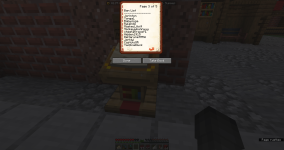
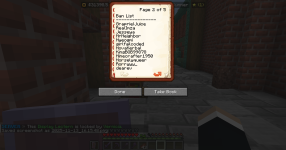
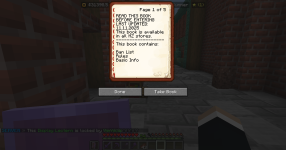
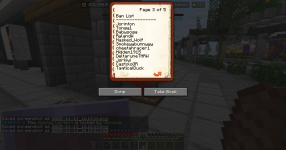
(ii) The third page of the book outside of one of the entrances to c995. The page is titled ‘ban list’, and the name of the Plaintiff is listed on the third line from the bottom;
(iii) Sales records showing the sale of 27 iron blocks at ‘1d11h23m ago; 300 coal blocks by the Plaintiff to Vernicia at ‘1d12h38m ago’; and the sale of 960 coal by the Plaintiff to Vernicia at ‘1d12h40m ago’.
(iv) Sales records showing the sale of 65 redstone blocks by the Plaintiff to MZCD at ‘11-11-2025 17:13:50’; the sale of 64 redstone by the Plaintiff to MZCD at ‘11-11-2025 17:13:39’; the sale of 66 lapis blocks by the Plaintiff to MZCD at ‘11-11-2025 17:13:30’; and the sale of 116 lapis lazuli by the Plaintiff to MZCD at ‘11-11-2025 17:13:07’.
(v) Sales records showing the sale of 3 iron blocks to MZCD at ‘11-11-2025 16:47:02’.
4. Only one screenshot includes a timestamp: 13 November 2025 at 05:12 (CET). Two others show indirect metadata; two show none.
5. No evidence is held by the DHS that the book outside c995 was updated to include the Plaintiff’s name prior to the Plaintiff transacting on the plots.
6. No instructions or notice banning the Plaintiff from a property has ever been served upon the Plaintiff by Vernicia. The Plaintiff had no reason to believe that he was banned from entering plots c108 or c995.
7. Plaintiff accessed both properties c108 and c995 exclusively by warp (‘/home vernicia’ and ‘/home mzcd’) and did not walk through the entrance, meaning the book shown in the second screenshot was never visible to him.
8. The property owner (Vernicia) has personally observed Plaintiff warping into c995 before and therefore knew Plaintiff would not see any book.
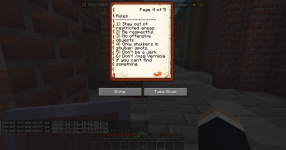
9. The books outside c108 and c995 do not specify what the ban relates to.
10. Plaintiff has knowledge from his work as a Police Trainee of the existence several other individuals who were charged with trespass at properties owned or controlled by the same private citizen, Vernicia.
11. In each of these cases, the method of ‘instruction’ was identical: reliance on a book placed at the property entrance, with no proof of service and no confirmation that the accused ever saw it.
12. In each of these cases, the ‘proof’ used by the DHS to support the conviction of Trespass is identical: a screenshot of the book showing the accused’s name, and a screenshot showing sales records. In each case, there is no evidence that any instruction was properly served by Vernicia to any of the accused individuals, or that the book was updated prior to the sales taking place.
13. The similarity of fact patterns across multiple cases indicates that DHS applied an unofficial, and unlawful low standard specifically when handling trespass complaints originating from Vernicia.
14. At 14:37 UTC on 13th November 2025, The Plaintiff attempted to dispute the charges through a government ticket (dhs-25445). As of 72 hours later, the DHS had not responded to the ticket and the decision remained uncorrected. At 15:47 UTC on 16th November 2025, with the ticket having become the oldest charge-dispute ticket on the DHS tickets list, the Plaintiff closed the ticket, and now files this action.

III. CLAIMS FOR RELIEF
1. Under the Criminal Code, a person commits the offence of Trespass if the person enters or remains in a non-public or restricted area against instructions’; or ‘is a landlord and enters a tenant's region without reasonable prior notice, unless an exemption applies’.
2. The ‘ban-list’ book relied upon by DHS does not constitute a valid instruction under any reasonable interpretation of the Criminal Code, as it provides no description of the conduct prohibited, no proof of service, and no confirmation that the Plaintiff ever received or could have received the alleged notice.
3. Even if the book were capable of constituting a lawful instruction, DHS possesses no evidence that the book was updated to include the Plaintiff’s name prior to his entry into plots c108 and c995, rendering any alleged instruction void for lack of temporal proof.
4. DHS acted arbitrarily and capriciously by issuing criminal findings without any reliable evidence that valid instructions were ever given, and by treating a book placed at an entrance, which the Plaintiff never uses, as if it constituted proper notice, despite there being no proof of service or receipt.
5. DHS relied on ambiguous evidence, as the ‘ban list’ book does not state what the ban relates to, making it legally insufficient to constitute a criminal instruction.
6. DHS therefore violated the administrative due-process principles applicable to agency decisions and exceeded its lawful authority.
7. DHS has engaged in selective enforcement, as demonstrated by multiple individuals being found guilty for Trespass, reliant on identical fact patterns linked to the same citizen complainant, indicating the presence of an unlawful or improperly supervised internal practice.
8. The systemic nature of the problem justifies class-wide administrative relief, as all individuals previously charged using the same defective evidence suffered the same due-process violation.

IV. PRAYER FOR RELIEF
The Plaintiff seeks the following from the Defendant:
1. An order vacating in full the DHS trespass decision against the Plaintiff, and reversing all findings of guilt;
2. An order expunging any related criminal record entry;
3. A refund of $2,900 for the fine imposed against the Plaintiff;
4. A declaration that ‘ban list’ books do not constitute lawful instructions for the purposes of the crime of Trespass, unless properly served to the individual;
6. An order requiring DHS to vacate all prior trespass findings in which the only evidence of ‘instruction’ was a book placed at a property entrance owned or controlled by Vernicia.
7. An order compelling DHS to review and reform its evidentiary and notice standards to prevent recurrence of these unlawful practices.
8. A declaration that DHS’s historical acceptance of these methods constitutes procedural unfairness affecting multiple citizens.
9. Legal fees of $2,000.

V. EVIDENCE ATTACHED
P-001. Criminal record of jsrkiwi (obtained from the DHS).
P-002. Government ticket DHS-25445, through which the Plaintiff attempted to appeal his Trespass conviction.
P-003, P-004, P-005, P-006, P-007. The screenshots that are included as evidence in the criminal record (P-001).
P-009, P-010, P-011, P-012, P-013. Screenshots showing the content of the ‘ban list’ book outside c995, at 16:15 UTC on 13th November 2025.
P-014, P-015, P-016, P-017, P-018. Screenshots showing the content of the ‘ban list’ book outside c108, at 16:18 UTC on 13th November 2025.
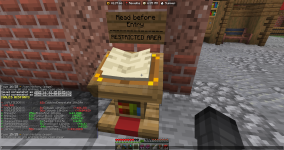
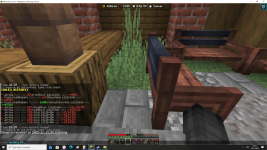
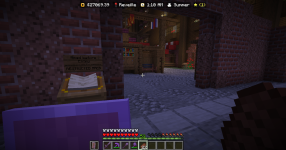
P-019, P-020. Screenshots showing the placement of book outside c995.
P-021, P-022. Screenshots showing the placement of the ‘ban list’ book outside c108.

By making this submission, I agree I understand the penalties of lying in court and the fact that I am subject to perjury should I knowingly make a false statement in court.

DATED: This 16th day of November 2025


Attachments

  • P-001.pdf
    P-001.pdf
    3.2 MB · Views: 83
  • P-002.pdf
    P-002.pdf
    797.9 KB · Views: 72
  • P-003.png
    P-003.png
    521.9 KB · Views: 83
  • P-004.png
    P-004.png
    392 KB · Views: 82
  • P-005.png
    P-005.png
    582.4 KB · Views: 81
  • P-006.png
    P-006.png
    975.3 KB · Views: 87
  • P-010.png
    P-010.png
    369.9 KB · Views: 237
  • P-009.png
    P-009.png
    370.2 KB · Views: 230
  • P-007.png
    P-007.png
    683.4 KB · Views: 73
  • P-011.png
    P-011.png
    370.1 KB · Views: 230
  • P-012.png
    P-012.png
    370.4 KB · Views: 231
  • P-015.png
    P-015.png
    675 KB · Views: 232
  • P-014.png
    P-014.png
    676.1 KB · Views: 228
  • P-013.png
    P-013.png
    371.7 KB · Views: 229
  • P-016.png
    P-016.png
    676 KB · Views: 225
  • P-017.png
    P-017.png
    678 KB · Views: 199
  • P-018.png
    P-018.png
    678.7 KB · Views: 202
  • P-019.png
    P-019.png
    707.4 KB · Views: 71
  • P-020.png
    P-020.png
    922.1 KB · Views: 71
  • P-021.png
    P-021.png
    665.1 KB · Views: 75
  • P-022.png
    P-022.png
    1.3 MB · Views: 82
Last edited by a moderator:

Motion


IN THE DISTRICT COURT OF THE COMMONWEALTH OF REDMONT

EMERGENCY MOTION FOR INTERIM ORDER BARRING ARREST AND IMPRISONMENT OF THE PLAINTIFF PENDING RESOLUTION OF THIS ACTION

The Plaintiff respectfully moves this Court, on an emergency basis, for an immediate interim order prohibiting the Department for Homeland Security (“DHS”) from arresting and imprisoning the Plaintiff until the final disposition of this civil action.

1. The DHS has issued a criminal record entry and imposed a custodial penalty of 35 minutes’ imprisonment arising from the trespass findings currently under challenge in this proceeding.
2. The validity of those findings is the direct subject of this litigation, and the Plaintiff seeks their full vacatur.
3. Executing any term of imprisonment before the Court has determined the lawfulness of the charges would irreparably prejudice the Plaintiff, as the harm of an imposed custodial sentence cannot be reversed once carried out.
4. The Plaintiff has acted in good faith by filing this action promptly after the DHS failed to address the dispute ticket (DHS-25445), and the matter is now properly before the Court.
5. Interim relief is necessary to preserve the Court’s ability to grant effective final relief and to prevent the Plaintiff from suffering an irreversible penalty in respect of charges that may be found unlawful.
6. The requested order imposes no prejudice on the Defendant, as it merely maintains the status quo until the Court adjudicates the underlying dispute.

RELIEF REQUESTED
The Plaintiff therefore respectfully requests that the Court issue an order:
1. Prohibiting the DHS from arresting or imposing any custodial sentence upon the Plaintiff arising from the trespass findings currently under challenge; and
2. Maintaining this prohibition until final judgment is entered in this case.


Writ of Summons

@Attorney General , is required to appear before the District Court in the case of jsrkiwi v Department of Homeland Security [2025] DCR 93

In the interest of more efficient Courtroom proceedings, the Court will permit responses to motions without prior Court permission. The deadline for said motions shall be 48 hours.

Furthermore, in obedience with Rule 1.4, parties are advised that engaging in conduct that obstructs or interferes with the administration of this Court or its proceedings may be held in Contempt of Court.


Failure to appear within 72 hours of this summons will result in a default judgement based on the known facts of the case.

Both parties should make themselves aware of the Court Rules and Procedures, including the option of an in-game trial should both parties request one.


Motion


IN THE DISTRICT COURT OF THE COMMONWEALTH OF REDMONT

EMERGENCY MOTION FOR INTERIM ORDER BARRING ARREST AND IMPRISONMENT OF THE PLAINTIFF PENDING RESOLUTION OF THIS ACTION

The Plaintiff respectfully moves this Court, on an emergency basis, for an immediate interim order prohibiting the Department for Homeland Security (“DHS”) from arresting and imprisoning the Plaintiff until the final disposition of this civil action.

1. The DHS has issued a criminal record entry and imposed a custodial penalty of 35 minutes’ imprisonment arising from the trespass findings currently under challenge in this proceeding.
2. The validity of those findings is the direct subject of this litigation, and the Plaintiff seeks their full vacatur.
3. Executing any term of imprisonment before the Court has determined the lawfulness of the charges would irreparably prejudice the Plaintiff, as the harm of an imposed custodial sentence cannot be reversed once carried out.
4. The Plaintiff has acted in good faith by filing this action promptly after the DHS failed to address the dispute ticket (DHS-25445), and the matter is now properly before the Court.
5. Interim relief is necessary to preserve the Court’s ability to grant effective final relief and to prevent the Plaintiff from suffering an irreversible penalty in respect of charges that may be found unlawful.
6. The requested order imposes no prejudice on the Defendant, as it merely maintains the status quo until the Court adjudicates the underlying dispute.

RELIEF REQUESTED
The Plaintiff therefore respectfully requests that the Court issue an order:
1. Prohibiting the DHS from arresting or imposing any custodial sentence upon the Plaintiff arising from the trespass findings currently under challenge; and
2. Maintaining this prohibition until final judgment is entered in this case.


Court Order


IN THE DISTRICT COURT OF THE COMMONWEALTH OF REDMONT
TEMPORARY INJUNCTION - WRIT OF MANDAMUS


Until such a time an Order is given from this Court, the Department of Homeland Security is enjoined from arresting p:jsrkiwi on the Offense of Trespass entered on 13th November, 2025; If there be a discrepancy between the time in the Complaint and the local time of any DHS official, the record entered by Goldendude15 shall not be made effective. This Order does not bar DHS from enforcing any other law nor offense undertaken by Plaintiff.

This order applies to all Law Enforcement Officers of the Department of Homeland Security. If Plaintiff is arrested after 17:14 EST on November 16th, 2025, the Court will use its contempt powers.

So ordered,
Magistrate Mug.


Writ of Summons

@Attorney General , is required to appear before the District Court in the case of jsrkiwi v Department of Homeland Security [2025] DCR 93

In the interest of more efficient Courtroom proceedings, the Court will permit responses to motions without prior Court permission. The deadline for said motions shall be 48 hours.

Furthermore, in obedience with Rule 1.4, parties are advised that engaging in conduct that obstructs or interferes with the administration of this Court or its proceedings may be held in Contempt of Court.


Failure to appear within 72 hours of this summons will result in a default judgement based on the known facts of the case.

Both parties should make themselves aware of the Court Rules and Procedures, including the option of an in-game trial should both parties request one.

Your Honor,

I am present on behalf of the Commonwealth.
 

Court Order


IN THE DISTRICT COURT OF THE COMMONWEALTH OF REDMONT
TEMPORARY INJUNCTION - WRIT OF MANDAMUS


Until such a time an Order is given from this Court, the Department of Homeland Security is enjoined from arresting p:jsrkiwi on the Offense of Trespass entered on 13th November, 2025; If there be a discrepancy between the time in the Complaint and the local time of any DHS official, the record entered by Goldendude15 shall not be made effective. This Order does not bar DHS from enforcing any other law nor offense undertaken by Plaintiff.

This order applies to all Law Enforcement Officers of the Department of Homeland Security. If Plaintiff is arrested after 17:14 EST on November 16th, 2025, the Court will use its contempt powers.

So ordered,
Magistrate Mug.


Motion


IN THE DISTRICT COURT OF THE COMMONWEALTH OF REDMONT
MOTION TO RECONSIDER

Your Honor,

The order is a bit tricky to enforce; I can ping everyone in the DHS to see if they got the message, but I worry that someone may miss a ping or just have a lapse of mind.

To prevent a lapse of mind or otherwise, the Commonweallth would ask that the DHS directed to do as follows:

  1. Archive the existing crime record, removing the wanted star.
  2. At the conclusion of the case, the DHS may create a new crime record for the trespass unless the Court orders otherwise.
This would remove the wanted star for the duration of the case, which would make it so that the individual does not appear wanted to DHS officers. At the end of the case, the DHS would be permitted to create the wanted point anew, thereby allowing us to enforce the imprisonment at an appropriate time absent an order from Your Honor.


Last edited:

Motion


IN THE FEDERAL COURT OF THE COMMONWEALTH OF REDMONT
MOTION TO RECONSIDER

Your Honor,

The order is a bit tricky to enforce; I can ping everyone in the DHS to see if they got the message, but I worry that someone may miss a ping or just have a lapse of mind.

To prevent a lapse of mind or otherwise, the Commonweallth would ask that the DHS directed to do as follows:

  1. Archive the existing crime record, removing the wanted star.
  2. At the conclusion of the case, the DHS may create a new crime record for the trespass unless the Court orders otherwise.
This would remove the wanted star for the duration of the case, which would make it so that the individual does not appear wanted to DHS officers. At the end of the case, the DHS would be permitted to create the wanted point anew, thereby allowing us to enforce the imprisonment at an appropriate time absent an order from Your Honor.


That's fine, I'll amend my order to DHS to the above.
 

Motion


IN THE DISTRICT COURT OF THE COMMONWEALTH OF REDMONT
MOTION TO DISMISS

Your Honor,

The Commonwealth seeks to dismiss the eighth alleged claim for relief on the basis of Rule 5.5 (Lack of Claim) and Rule 5.12 (Lack of Personal Jurisdiction).

III. CLAIMS FOR RELIEF

...

8. The systemic nature of the problem justifies class-wide administrative relief, as all individuals previously charged using the same defective evidence suffered the same due-process violation.

IV. PRAYER FOR RELIEF
The Plaintiff seeks the following from the Defendant:

...

6. An order requiring DHS to vacate all prior trespass findings in which the only evidence of ‘instruction’ was a book placed at a property entrance owned or controlled by Vernicia.

1. So-called "class-wide administrative relief" involving unnamed parties fails to state a claim for relief under the law.​

In the eighth alleged claim for relief, which is quoted above, the Plaintiff is seeking "class-wide administrative relief", praying that the which the DHS be ordered to vacate "all prior trespass findings" of unnamed parties that were created from a particular evidentiary pattern.

There is not statute that permits this, nor may the Courts grant it. The Federal Court has been fairly unequivocal about this.

1a. The Courts cannot grant class-wide administrative relief without an enabling statute present.​

Can Courts grant class-wide administrative relief without enabling legislation? The Federal Court has been clear: No.

As the Federal Court has noted in Privacy Matters v. Nexalin [2025] FCR 36: "Establishing a procedure robust enough to handle a class of people in a lawsuit would be substantial to a point of encroaching upon the powers of the legislative. See Constitution § 2(1)."

In other words: if we are going to have lawsuits that grant class-wide relief that affects people other than named parties, the legislature would need to act. It would be unconstitutional for the Court to create, as a matter of common law or otherwise, some sort of class action procedure to grant relief to anyone other than the named plaintiffs.

As the Federal Court has appeallate jurisdiction over the District Court, and also has original jurisdiction over questions of constitutionality (see: Article 18 of the Constitution), this precedent on constitutionality binds the District Court.

1b. No applicable statutory authority exists for class-wide administrative relief.​

Does statutory authority exist in this context for class-wide administrative relief? The answer is clear: No.

As the Federal Court noted in Privacy Matters v. Nexalin [2025] FCR 36 "[t]here is no statutory authorization for establishing 'classes' of people in a case". While multiple Plaintiffs may join themselves together to file against a defendant as if they were one single entity, there is no means to certify a broad class present in the law - no class action procedure exists in statute that would apply here.

The Plaintiff has not asserted a statute which permits them to seek class-wide administrative relief, and the Commonwealth cannot find one. There is one Plaintiff here, not many; the only claims for relief that the Plaintiff may seek are redress for actions which have harmed the Plaintiff. Absent a contrary showing, the Court should find that no claim for relief here arises from statutory text.

2. The Plaintiff lacks personal jurisdiction to seek class-wide administrative relief.​

Standing, in Redmont, is a three point test defined under Court Rule 2.1. As summarized by the Supreme Court in ToadKing v. Commonwealth of Redmont [2025] SCR 19:

Standing consists of three elements. First, the individual must have suffered an injury caused by a clearly identifiable second party or affected by an application of law. Second, the cause of the injury must be unlawful. Third, the injury must be capable of being remedied by a favorable decision under the relevant law.

The Plaintiff fails to meet the first element of standing as it pertains to the eighth prayer for relief. Simply put: the Plaintiff does not suffer injury when unnamed third parties are charged with trespass, and is not affected by an application of the law when unnamed third parties are charged with trespass. The Plaintiff therefore lacks standing for such a broad prayer for relief as it pertains to unnamed third parties, warranting dismissal of the claim under Rule 5.12.

3. Conclusion: The District Court should dismiss the eighth claim for relief and its associated prayers.​

Under Rule 5.5, "failure to state a claim for relief" may warrant dismissal. As noted above, a statutory authorization would be required for class-wide administrative relief to be granted, but no such authority exists in statute. The eighth claim for relief lacks legal basis under the law, and should be dismissed on this basis.

Separately, under Rule 5.12, dismissal is warranted when "the plaintiff fails to have sufficient standing in order to pursue the case". As established above, the Plaintiff fails the first prong of the standing test under Rule 2.1 as it pertains to claims for relief on behalf of unnamed third parties; this independently warrants dismissal of the claim.

Therefore, the defense humbly prays that this Court strike the eighth claim for relief, as well as any prayers for relief which rest wholly thereupon.

 
Last edited:

Motion


IN THE DISTRICT COURT OF THE COMMONWEALTH OF REDMONT
MOTION TO AMEND

Your honor,

The defense requests leave to:

  1. Amend filings erroneously formatted as if they were in the Federal Court to state that they were filed in the District Court; and
  2. To remove a stray quotation mark in the second paragraph of MTD argument 1b and fix associated italics.


Motion


IN THE FEDERAL COURT OF THE COMMONWEALTH OF REDMONT
MOTION TO DISMISS

Your Honor,

The Commonwealth seeks to dismiss the eighth alleged claim for relief on the basis of Rule 5.5 (Lack of Claim) and Rule 5.12 (Lack of Personal Jurisdiction).

1. So-called "class-wide administrative relief" involving unnamed parties fails to state a claim for relief under the law.​

In the eighth alleged claim for relief, which is quoted above, the Plaintiff is seeking "class-wide administrative relief", praying that the which the DHS be ordered to vacate "all prior trespass findings" of unnamed parties that were created from a particular evidentiary pattern.

There is not statute that permits this, nor may the Courts grant it. The Federal Court has been fairly unequivocal about this.

1a. The Courts cannot grant class-wide administrative relief without an enabling statute present.​

Can Courts grant class-wide administrative relief without enabling legislation? The Federal Court has been clear: No.

As the Federal Court has noted in Privacy Matters v. Nexalin [2025] FCR 36: "Establishing a procedure robust enough to handle a class of people in a lawsuit would be substantial to a point of encroaching upon the powers of the legislative. See Constitution § 2(1)."

In other words: if we are going to have lawsuits that grant class-wide relief that affects people other than named parties, the legislature would need to act. It would be unconstitutional for the Court to create, as a matter of common law or otherwise, some sort of class action procedure to grant relief to anyone other than the named plaintiffs.

As the Federal Court has appeallate jurisdiction over the District Court, and also has original jurisdiction over questions of constitutionality (see: Article 18 of the Constitution), this precedent on constitutionality binds the District Court.

1b. No applicable statutory authority exists for class-wide administrative relief.​

Does statutory authority exist in this context for class-wide administrative relief? The answer is clear: No.

As the Federal Court noted in Privacy Matters v. Nexalin [2025] FCR 36 "[t]here is no statutory authorization for establishing 'classes' of people in a case". While multiple Plaintiffs may join themselves together to file against a defendant as if they were one single entity, there is no means to certify a broad class present in the law - no class action procedure exists in statute that would apply here."

The Plaintiff has not asserted a statute which permits them to seek class-wide administrative relief, and the Commonwealth cannot find one. There is one Plaintiff here, not many; the only claims for relief that the Plaintiff may seek are redress for actions which have harmed the Plaintiff (see, for example . Absent a contrary showing, the Court should find that no claim for relief here arises from statutory text.

2. The Plaintiff lacks personal jurisdiction to seek class-wide administrative relief.​

Standing, in Redmont, is a three point test defined under Court Rule 2.1. As summarized by the Supreme Court in ToadKing v. Commonwealth of Redmont [2025] SCR 19:


The Plaintiff fails to meet the first element of standing as it pertains to the eighth prayer for relief. Simply put: the Plaintiff does not suffer injury when unnamed third parties are charged with trespass, and is not affected by an application of the law when unnamed third parties are charged with trespass. The Plaintiff therefore lacks standing for such a broad prayer for relief as it pertains to unnamed third parties, warranting dismissal of the claim under Rule 5.12.

3. Conclusion: The District Court should dismiss the eighth claim for relief and its associated prayers.​

Under Rule 5.5, "failure to state a claim for relief" may warrant dismissal. As noted above, a statutory authorization would be required for class-wide administrative relief to be granted, but no such authority exists in statute. The eighth claim for relief lacks legal basis under the law, and should be dismissed on this basis.

Separately, under Rule 5.12, dismissal is warranted when "the plaintiff fails to have sufficient standing in order to pursue the case". As established above, the Plaintiff fails the first prong of the standing test under Rule 2.1 as it pertains to claims for relief on behalf of unnamed third parties; this independently warrants dismissal of the claim.

Therefore, the defense humbly prays that this Court strike the eighth claim for relief, as well as any prayers for relief which rest wholly thereupon.

IN THE DISTRICT COURT OF THE COMMONWEALTH OF REDMONT

RESPONSE TO MOTION TO DISMISS

Your Honour,
The Plaintiff submits this response opposing the Commonwealth’s Motion to Dismiss.

The motion to dismiss misunderstands the nature of the eighth claim. Although the Complaint used the phrase “class-wide administrative relief,” the Plaintiff is not seeking class action damages, but a straightforward order directing DHS to correct unlawful administrative decisions made under an unlawful policy. This is something well within the Court’s ordinary remedial authority once a policy is declared unlawful.

I. THE PLAINTIFF’S REFERENCE TO “CLASS-WIDE ADMINISTRATIVE RELIEF” DOES NOT INVOKE A CLASS ACTION
1. Your Honour, in the Complaint, the Plaintiff used the phrase “class-wide administrative relief.” The Commonwealth now treats that phrase as if the Plaintiff were attempting to certify a class, litigate on behalf of unnamed individuals, or obtain damages for persons not before the Court.
2. That is not what the Plaintiff meant, nor what the filing actually seeks.
3. The point of the eighth claim is this:
  1. DHS adopted an unwritten de facto evidentiary policy, allowing Trespass findings without proper proof of “instruction”.
  2. That policy applied systemically and repeatedly, affecting the Plaintiff and many others in the same manner.
  3. If the Court holds the policy unlawful, it necessarily follows that DHS must be ordered to reverse its past administrative actions into compliance with the law.
  4. Directing DHS to correct its own unlawful decisions is not a class action, does not require statutory class-action authority, and does not require the Plaintiff to possess standing on behalf of others.
4. “Class-wide administrative relief” in the Complaint simply refers to the scope of the agency’s corrective duty once the Court has ruled on the legality of its policy, not the creation of a class of litigants.

II. RULE 5.5 DOES NOT APPLY: THE EIGHTH CLAIM STATES A VALID BASIS FOR JUDICIAL REVIEW AND ADMINISTRATIVE CORRECTION
1. Rule 5.5 addresses failure to state a claim. The claim does state one:
  • The Plaintiff alleges an unlawful DHS policy.
  • The Plaintiff seeks a declaration of unlawfulness.
  • The Plaintiff seeks an order requiring DHS to correct administrative decisions that flowed from that policy.
2. Courts routinely issue orders directing government agencies to rescind, vacate, or correct unlawful administrative acts after a legal defect in the underlying policy is established. There is nothing incoherent or unrecognisable about this remedy.
3. The Defence’s argument incorrectly assumes that any relief benefiting more than one person is automatically a “class action” requiring express statutory authorisation. That is simply not true. Administrative correction is not a class action procedure.

III. RULE 5.12 DOES NOT BAR THE CLAIM: THE PLAINTIFF’S STANDING IS BASED SOLELY ON HIS OWN UNLAWFUL TRESPASS FINDING
1. Standing requires:
  1. An injury to the Plaintiff by the Defendant;
  2. Caused by unlawful conduct; and
  3. Remediable by the Court.
2. All three are satisfied. The Plaintiff’s injury is his own Trespass conviction under the DHS policy. That establishes standing to challenge the policy’s legality.
3. The Commonwealth’s argument incorrectly suggests the Plaintiff must have standing on behalf of other individuals for the Court to direct DHS to correct its administrative record. But that is not how judicial review works. Once standing exists to challenge the policy:
  • The Court may craft appropriate remedies for the illegality it finds, including directing an agency to correct the structural consequences of that illegality.
  • This does not require the Plaintiff to rely on injuries suffered by others.
  • It simply recognises that an agency’s unlawful policy cannot remain in force for some people but not others once declared unlawful.
4. The Plaintiff is not asserting standing for third-party claims. He asserts standing for his own claim, and the remedy flows from the Court’s supervisory power over an executive agency.

IV. PRIVACY MATTERS V. NEXALIN [2025] FCR 36 IS DISTINGUISHABLE
1. The Commonwealth relies heavily on Privacy Matters V. Nexalin [2025] FCR 36 (hereinafter referred to as ‘Nexalin’), but that case is fundamentally different.
2. In Nexalin, the Court refused to award damages to unnamed individuals in a putative class action, emphasising that “establishing a procedure robust enough to handle a class of people in a lawsuit would be substantial to a point of encroaching upon the powers of the legislative.”
3. Nexalin involved six named plaintiffs plus 116 additional affected individuals, sought damages for all users, and the Court held there was no statutory mechanism for such broad relief.
4. In this action, the Plaintiff seeks:
  • No damages for anyone other than the Plaintiff.
  • No compensation to unnamed individuals.
5. The Plaintiff asks solely that DHS reverse its own unlawful administrative decisions, which is a normal form of administrative remedy.
6. Nexalin limits damages to named plaintiffs. It does not limit a Court’s power to order a government agency to bring its past actions into compliance with the law.

V. POLICY ARGUMENT
1. If the Commonwealth’s view were correct, then:
  • Even the most egregiously unlawful government policy would permanently stain hundreds of citizens’ records;
  • Only litigants with the time and resources to individually sue would ever receive relief;
  • Unequal treatment would become baked into the system purely because an agency broke the law on too large a scale.
2. Citizens are entitled to assume DHS follows the law. When DHS does not, the law must provide a mechanism to repair the systemic consequences.
3. Refusing such relief would incentivise agencies to violate the law more broadly, since widespread illegality would make their actions harder to correct.

For these reasons, the Plaintiff respectfully requests that the Motion to Dismiss be denied in full.
 

Motion


IN THE DISTRICT COURT OF THE COMMONWEALTH OF REDMONT
MOTION TO AMEND

Your honor,

The defense requests leave to:

  1. Amend filings erroneously formatted as if they were in the Federal Court to state that they were filed in the District Court; and
  2. To remove a stray quotation mark in the second paragraph of MTD argument 1b and fix associated italics.

Granted
 
IN THE DISTRICT COURT OF THE COMMONWEALTH OF REDMONT

RESPONSE TO MOTION TO DISMISS

Your Honour,
The Plaintiff submits this response opposing the Commonwealth’s Motion to Dismiss.

The motion to dismiss misunderstands the nature of the eighth claim. Although the Complaint used the phrase “class-wide administrative relief,” the Plaintiff is not seeking class action damages, but a straightforward order directing DHS to correct unlawful administrative decisions made under an unlawful policy. This is something well within the Court’s ordinary remedial authority once a policy is declared unlawful.

I. THE PLAINTIFF’S REFERENCE TO “CLASS-WIDE ADMINISTRATIVE RELIEF” DOES NOT INVOKE A CLASS ACTION
1. Your Honour, in the Complaint, the Plaintiff used the phrase “class-wide administrative relief.” The Commonwealth now treats that phrase as if the Plaintiff were attempting to certify a class, litigate on behalf of unnamed individuals, or obtain damages for persons not before the Court.
2. That is not what the Plaintiff meant, nor what the filing actually seeks.
3. The point of the eighth claim is this:
  1. DHS adopted an unwritten de facto evidentiary policy, allowing Trespass findings without proper proof of “instruction”.
  2. That policy applied systemically and repeatedly, affecting the Plaintiff and many others in the same manner.
  3. If the Court holds the policy unlawful, it necessarily follows that DHS must be ordered to reverse its past administrative actions into compliance with the law.
  4. Directing DHS to correct its own unlawful decisions is not a class action, does not require statutory class-action authority, and does not require the Plaintiff to possess standing on behalf of others.
4. “Class-wide administrative relief” in the Complaint simply refers to the scope of the agency’s corrective duty once the Court has ruled on the legality of its policy, not the creation of a class of litigants.

II. RULE 5.5 DOES NOT APPLY: THE EIGHTH CLAIM STATES A VALID BASIS FOR JUDICIAL REVIEW AND ADMINISTRATIVE CORRECTION
1. Rule 5.5 addresses failure to state a claim. The claim does state one:
  • The Plaintiff alleges an unlawful DHS policy.
  • The Plaintiff seeks a declaration of unlawfulness.
  • The Plaintiff seeks an order requiring DHS to correct administrative decisions that flowed from that policy.
2. Courts routinely issue orders directing government agencies to rescind, vacate, or correct unlawful administrative acts after a legal defect in the underlying policy is established. There is nothing incoherent or unrecognisable about this remedy.
3. The Defence’s argument incorrectly assumes that any relief benefiting more than one person is automatically a “class action” requiring express statutory authorisation. That is simply not true. Administrative correction is not a class action procedure.

III. RULE 5.12 DOES NOT BAR THE CLAIM: THE PLAINTIFF’S STANDING IS BASED SOLELY ON HIS OWN UNLAWFUL TRESPASS FINDING
1. Standing requires:
  1. An injury to the Plaintiff by the Defendant;
  2. Caused by unlawful conduct; and
  3. Remediable by the Court.
2. All three are satisfied. The Plaintiff’s injury is his own Trespass conviction under the DHS policy. That establishes standing to challenge the policy’s legality.
3. The Commonwealth’s argument incorrectly suggests the Plaintiff must have standing on behalf of other individuals for the Court to direct DHS to correct its administrative record. But that is not how judicial review works. Once standing exists to challenge the policy:
  • The Court may craft appropriate remedies for the illegality it finds, including directing an agency to correct the structural consequences of that illegality.
  • This does not require the Plaintiff to rely on injuries suffered by others.
  • It simply recognises that an agency’s unlawful policy cannot remain in force for some people but not others once declared unlawful.
4. The Plaintiff is not asserting standing for third-party claims. He asserts standing for his own claim, and the remedy flows from the Court’s supervisory power over an executive agency.

IV. PRIVACY MATTERS V. NEXALIN [2025] FCR 36 IS DISTINGUISHABLE
1. The Commonwealth relies heavily on Privacy Matters V. Nexalin [2025] FCR 36 (hereinafter referred to as ‘Nexalin’), but that case is fundamentally different.
2. In Nexalin, the Court refused to award damages to unnamed individuals in a putative class action, emphasising that “establishing a procedure robust enough to handle a class of people in a lawsuit would be substantial to a point of encroaching upon the powers of the legislative.”
3. Nexalin involved six named plaintiffs plus 116 additional affected individuals, sought damages for all users, and the Court held there was no statutory mechanism for such broad relief.
4. In this action, the Plaintiff seeks:
  • No damages for anyone other than the Plaintiff.
  • No compensation to unnamed individuals.
5. The Plaintiff asks solely that DHS reverse its own unlawful administrative decisions, which is a normal form of administrative remedy.
6. Nexalin limits damages to named plaintiffs. It does not limit a Court’s power to order a government agency to bring its past actions into compliance with the law.

V. POLICY ARGUMENT
1. If the Commonwealth’s view were correct, then:
  • Even the most egregiously unlawful government policy would permanently stain hundreds of citizens’ records;
  • Only litigants with the time and resources to individually sue would ever receive relief;
  • Unequal treatment would become baked into the system purely because an agency broke the law on too large a scale.
2. Citizens are entitled to assume DHS follows the law. When DHS does not, the law must provide a mechanism to repair the systemic consequences.
3. Refusing such relief would incentivise agencies to violate the law more broadly, since widespread illegality would make their actions harder to correct.

For these reasons, the Plaintiff respectfully requests that the Motion to Dismiss be denied in full.


Court Order


IN THE DISTRICT COURT OF THE COMMONWEALTH OF REDMONT
Motion to Dismiss - Department of Homeland Security

Movant wishes for dismissal of Complaint Claim #8 for failure to state a claim and for lack of standing. Non-movant offers arguments in defense and general denial of Movant’s assertion with the applicability of Nexalin.


On review of filings, the Court GRANTS the motion as Non-Movant’s arguments are purely academic.

The Court finds Plaintiff’s Claim #8 to be substantively academic. Although framed as a request for “class-wide administrative relief”, the prayer that DHS be ordered to vacate all prior trespass findings (Prayer #6) effectively seeks a class-action for un-named parties; This Court has no statutory authority to grant class-action relief and is in fact barred by Nexalin from considering it. Further, such a remedy does not address Plaintiff’s personal legal injuries, but would broaden the Court’s inquiry to citizens not involved in this case. This Court is not here to effect systemic changes or generate favourable case law for a particular viewpoint.


Claim #8 is struck.
Prayer(s) #6 is struck.


CORRECTION PRAYER #6 is NOT STRUCK, the Court orders Plaintiff to restrict that Prayer to Plaintiff's allegations only.

So ordered,
Magistrate Mug

 
Thanks. The CW shall have 48 hours to offer an Answer.
Your Honor,

The Commonwealth respectfully requests an extension of 24 hours to file its answer.
 
Your Honor,

The Commonwealth respectfully requests an extension of 24 hours to file its answer.
Granted, Answer due 11/19/25 @ 7:30 PM EST
 

Answer to Complaint


IN THE DISTRICT COURT OF THE COMMONWEALTH OF REDMONT
ANSWER TO COMPLAINT

jsrkiwi
Plaintiff

v.

Department of Homeland Security
Defendant


I. ANSWER TO COMPLAINT​

1. AFFIRMS that "On 13th November 2025, the Department of Homeland Security (DHS) created a criminal record for the Plaintiff, listing five trespass offences at locations c108 and c995."
2. AFFIRMS that "On 13th November 2025 at 10:37 UTC, the Plaintiff was fined $2,900 for ‘Trespass x5 (First, Second, and Subsequent charges)’; and a wanted point was created for 35 minutes imprisonment."
3. NEITHER AFFIRMS NOR DENIES:
The supporting evidence for the criminal record was five screenshots provided by Vernicia through ticket dhs-25341. These screenshots show:
(i) Sales records showing the sale of coal blocks by the Plaintiff to Vernicia at ‘14h24m ago’;
(ii) The third page of the book outside of one of the entrances to c995. The page is titled ‘ban list’, and the name of the Plaintiff is listed on the third line from the bottom;
(iii) Sales records showing the sale of 27 iron blocks at ‘1d11h23m ago; 300 coal blocks by the Plaintiff to Vernicia at ‘1d12h38m ago’; and the sale of 960 coal by the Plaintiff to Vernicia at ‘1d12h40m ago’.
(iv) Sales records showing the sale of 65 redstone blocks by the Plaintiff to MZCD at ‘11-11-2025 17:13:50’; the sale of 64 redstone by the Plaintiff to MZCD at ‘11-11-2025 17:13:39’; the sale of 66 lapis blocks by the Plaintiff to MZCD at ‘11-11-2025 17:13:30’; and the sale of 116 lapis lazuli by the Plaintiff to MZCD at ‘11-11-2025 17:13:07’.
(v) Sales records showing the sale of 3 iron blocks to MZCD at ‘11-11-2025 16:47:02’.

4. DENIES that "Only one screenshot includes a timestamp: 13 November 2025 at 05:12 (CET). Two others show indirect metadata; two show none".
5. DENIES that "No evidence is held by the DHS that the book outside c995 was updated to include the Plaintiff’s name prior to the Plaintiff transacting on the plots."
6. NEITHER AFFIRMS NOR DENIES that "No instructions or notice banning the Plaintiff from a property has ever been served upon the Plaintiff by Vernicia". DENIES that "The Plaintiff had no reason to believe that he was banned from entering plots c108 or c995."
7. NEITHER AFFIRMS NOR DENIES that "Plaintiff accessed both properties c108 and c995 exclusively by warp (‘/home vernicia’ and ‘/home mzcd’) and did not walk through the entrance". DENIES that "the book shown in the second screenshot was never visible to him", NOTING that it is plainly visible in the screenshot.
8. NEITHER AFFIRMS NOR DENIES that "[t]he property owner (Vernicia) has personally observed Plaintiff warping into c995 before and therefore knew Plaintiff would not see any book", NOTING that the Commonwealth cannot read Vernicia's memory.
9. NEITHER AFFIRMS NOR DENIES that "The books outside c108 and c995 do not specify what the ban relates to".
10. AFFIRMS that "Plaintiff has knowledge from his work as a Police Trainee of the existence several other individuals who were charged with trespass at properties owned or controlled by the same private citizen, Vernicia".
11. NEITHER AFFIRMS NOR DENIES that "in each of these cases, the method of ‘instruction’ was identical: reliance on a book placed at the property entrance, with no proof of service and no confirmation that the accused ever saw it", NOTING that it is not clear to the Commonwealth what specific cases "each of these cases" refers to.
12. NEITHER AFFIRMS NOR DENIES that "in each of these cases, the proof used by the DHS to support the conviction of Trespass is identical: a screenshot of the book showing the accused’s name, and a screenshot showing sales records. In each case, there is no evidence that any instruction was properly served by Vernicia to any of the accused individuals, or that the book was updated prior to the sales taking place", NOTING that it is not clear to the Commonwealth what specific cases "each of these cases" refers to.
13. DENIES that "The similarity of fact patterns across multiple cases indicates that DHS applied an unofficial, and unlawful low standard specifically when handling trespass complaints originating from Vernicia".
14. NEITHER AFFIRMS NOR DENIES that "At 14:37 UTC on 13th November 2025, The Plaintiff attempted to dispute the charges through a government ticket (dhs-25445). As of 72 hours later, the DHS had not responded to the ticket and the decision remained uncorrected. At 15:47 UTC on 16th November 2025, with the ticket having become the oldest charge-dispute ticket on the DHS tickets list, the Plaintiff closed the ticket, and now files this action."


II. Defenses​

1. Trespass occurred​

Trespass, as is relevant for this case, is defined as occurring when a person "enters or remains in a non-public or restricted area against instructions" (see: CCA Part VIII, Section 12).

Put alternatively, the following may constitute trespass:
  1. Entering a non-public area against instructions;
  2. Remaining in a non-public area against instructions;
  3. Entering a restricted area against instructions; or
  4. Remaining in a restricted area against instructions.
Now that the rule is clear, let's examine application of the rule to the facts and evidence.

1a. Plaintiff's own evidence shows that Plaintiff entered a restricted area​

In previous instances, the Courts found in Walmart co. v. Olisaurus123 and Montilou [2022] FCR 13 (affirmed on appeal in Supreme Court Case Olisaurus123 v. Walmart Co [2022] SCR 3) that "[g]iven the presence of a wall around the plot and the fact that the only entrance point was the roof, a reasonable person should conclude that they are not to enter".

We posit here: if there's a big wall around a plot, and there is a sign at the entrances saying that the area is restricted, the area would be restricted under the law.

Exhibits P-019 and P-020 (and P-003) show something quite clear: a lectern with a sign above it with "RESTRICTED AREA" in uppercase lettering. This clearly marks that the area (in this case, C995) as being restricted. This is incontestable.

1b. Instructions are given by books on lecterns at entrances​

The signs visible in (for example) Exhibits P-019 and P-020 instruct individuals to read the book before entry. Upon opening the books, there is a "ban list". In the whole context, there is nothing else that a ban list could plausibly refer to than those banned from entering the restricted area. This constitutes plain posting of instructions at the entrances to a plot.

1c. Plaintiff entered the area against instructions​

The books are datestamped and clearly mark the Plaintiff as among the individuals banned from the plot. Plaintiff admits to having the entered the property anyway. The Plaintiff claims to have done so by warping (see: seventh factual allegation in the initial complaint), but this does not matter - instructions were clearly posted at the entrance, and the Plaintiff had to have entered the property before setting a warp.

1d. Trespass occurred​

Trespass occurs when an individual enters a restricted area against the instructions. In this case, Plaintiff entered a restricted area despite being on the ban list posted at the entrances. The conclusion here is simple: trespass occurred.

2. Lack of evidence​

Several claims for relief simply lack evidence. For example, Plaintiff claims "selective enforcement, as demonstrated by multiple individuals being found guilty for Trespass, reliant on identical fact patterns linked to the same citizen complainant, indicating the presence of an unlawful or improperly supervised internal practice", but does not provide evidence to this effect. The Plaintiff has a burden of proof in a civil lawsuit here - Plaintiff must prove all claims.

3. Text Me Back Act Timeline​

In the alternative to the above, the Defense raises the question of whether the Text Me Back Act would protect the Commonwealth from suit in this instance.

Under the Text Me Back Act, "Executive Departments are required to provide a final decision on any new applications within a period of 14 days". Plaintiff alleges in the 14th factual allegation that the Plaintiff did not receive a reply within 72 hours, but this would be far short of 14 days.

Under the Text Me Back Act, "application" is intentionally quite broad. While the law initially only applied to employment applications, the law was amended by the Congress with the purpose of handling "[o]ther types of applications with government agencies".

If the Court finds that the Plaintiff's DHS appeal ticket were to constitute an application under the Text Me Back Act, then the Plaintiff would have prematurely closed it of their own volition before a response would have been required under the law. And, if so, the Plaintiff would have deprived the DHS from statutory time to gather a response and ask follow-up questions as permitted under the penumbra of Text Me Back Act 3(2)(a) ("If a Department requests additional information or documentation from the applicant, the 14-day deadline shall restart from the date the applicant provides the requested information").


By making this submission, I agree I understand the penalties of lying in court and the fact that I am subject to perjury should I knowingly make a false statement in court.

DATED: This 19th day of November 2025

 
Discovery is now open!
Due Date: 11/24/25 @1:00PM EST
 

Motion


IN THE FEDERAL COURT OF THE COMMONWEALTH OF REDMONT
MOTION TO COMPEL

Your Honor,

The Defense seeks to compel the following from the Plaintiff:

  1. Any Minecraft logs between 11 November and 13 November.
  2. A screenshot of all the Plaintiff’s /home warps that can be obtained by running /homes.
We believe that these logs will help to better establish the movement of the Plaintiff about the map, including to or from the plot c995.


Motion


IN THE FEDERAL COURT OF THE COMMONWEALTH OF REDMONT
MOTION TO COMPEL

Your Honor,

The Defense seeks to compel the following from the Plaintiff:

  1. Any Minecraft logs between 11 November and 13 November.
  2. A screenshot of all the Plaintiff’s /home warps that can be obtained by running /homes.
We believe that these logs will help to better establish the movement of the Plaintiff about the map, including to or from the plot c995.

The Plaintiff does not object to Request No. 1 and will produce his logs as requested.

Regarding request No. 2, the Plaintiff respectfully notes that certain home warps (specifically 'vernicia' and 'mzcd') were removed by the Plaintiff after the criminal charge and possibly after the commencement of this civil action. Accordingly, they no longer appear in the current /homes listing. The Plaintiff will review logs for subsequent days and will disclose those for the day when those warps were deleted. The Plaintiff will also shortly be filing a motion to request logs of the Plaintiff's '/home' activity from staff.
 

Motion


IN THE DISTRICT COURT OF THE COMMONWEALTH OF REDMONT

MOTION TO COMPEL PRODUCTION OF STAFF RECORDS


The Plaintiff respectfully moves this Honourable Court for an Order compelling the Staff Team to produce the records identified below, which are directly relevant to the issues in dispute and necessary for the fair adjudication of this matter.

  1. Any and all server logs reflecting the Plaintiff’s use of the commands “/home vernicia” and “/home mzcd” between 10 November 2025 and 13 November 2025, inclusive.
  2. Any logs or other records showing the teleportation coordinates associated with the Plaintiff’s warps “/home vernicia” and “/home mzcd”.
The Plaintiff submits that these records are within the Staff Team’s custody and control, and their production is necessary to resolve factual disputes concerning the travel of the Plaintiff.

Accordingly, the Plaintiff prays the Court issue an Order directing the Staff Team to disclose the above-specified materials.


Motion


IN THE FEDERAL COURT OF THE COMMONWEALTH OF REDMONT
MOTION TO COMPEL

Your Honor,

The Defense seeks to compel the following from the Plaintiff:

  1. Any Minecraft logs between 11 November and 13 November.
  2. A screenshot of all the Plaintiff’s /home warps that can be obtained by running /homes.
We believe that these logs will help to better establish the movement of the Plaintiff about the map, including to or from the plot c995.

The Plaintiff does not object to Request No. 1 and will produce his logs as requested.

Regarding request No. 2, the Plaintiff respectfully notes that certain home warps (specifically 'vernicia' and 'mzcd') were removed by the Plaintiff after the criminal charge and possibly after the commencement of this civil action. Accordingly, they no longer appear in the current /homes listing. The Plaintiff will review logs for subsequent days and will disclose those for the day when those warps were deleted. The Plaintiff will also shortly be filing a motion to request logs of the Plaintiff's '/home' activity from staff.
The Plaintiff provides the following items of discovery requested by the Defendant:

REQUEST 1
Attached are the Minecraft logs listed in Request No. 1 (11–13 November). They are labelled as follows:
P-101: 2025-11-11-1.log
P-102: 2025-11-11-2.log
P-103: 2025-11-12-1.log
P-104: 2025-11-12-2.log
P-105: 2025-11-13-1.log
P-106: 2025-11-13-2.log
P-107: 2025-11-13-3.log
P-108: 2025-11-13-4.log

REQUEST 2
As previously noted, certain home warps (‘vernicia’ and ‘mzcd’) were removed by the Plaintiff after the criminal charge, and therefore do not appear in the current /homes listing.
P-109: Screenshot as requested
P-110: 2025-11-14-1.log (this includes the result of "/homes", "/delhome vernicia", and "/delhome mzcd")
 

Attachments

Motion


IN THE DISTRICT COURT OF THE COMMONWEALTH OF REDMONT

MOTION TO COMPEL PRODUCTION OF STAFF RECORDS


The Plaintiff respectfully moves this Honourable Court for an Order compelling the Staff Team to produce the records identified below, which are directly relevant to the issues in dispute and necessary for the fair adjudication of this matter.

  1. Any and all server logs reflecting the Plaintiff’s use of the commands “/home vernicia” and “/home mzcd” between 10 November 2025 and 13 November 2025, inclusive.
  2. Any logs or other records showing the teleportation coordinates associated with the Plaintiff’s warps “/home vernicia” and “/home mzcd”.
The Plaintiff submits that these records are within the Staff Team’s custody and control, and their production is necessary to resolve factual disputes concerning the travel of the Plaintiff.

Accordingly, the Plaintiff prays the Court issue an Order directing the Staff Team to disclose the above-specified materials.


REQUEST TO AMEND MOTION TO COMPEL
The Plaintiff respectfully seeks leave of this Honourable Court to amend the pending Motion to Compel Production of Staff Records to include the following additional request as paragraph 3 of the requested materials:

3. Any logs or other records showing when the lecterns at the following locations were updated during November 2025:
  • 4184, 73, 4134
  • 4079, 73, 4136
  • 2637, 73, 3921
  • 2667, 73, 3921
These records fall within the Staff Team’s custody and control and are necessary for the fair resolution of factual issues concerning the chronology of events under examination.

Accordingly, the Plaintiff prays this Honourable Court permit the amendment and direct the Staff Team to produce the additional materials identified above as part of the original Motion to Compel.
 
REQUEST TO AMEND MOTION TO COMPEL
The Plaintiff respectfully seeks leave of this Honourable Court to amend the pending Motion to Compel Production of Staff Records to include the following additional request as paragraph 3 of the requested materials:

3. Any logs or other records showing when the lecterns at the following locations were updated during November 2025:
  • 4184, 73, 4134
  • 4079, 73, 4136
  • 2637, 73, 3921
  • 2667, 73, 3921
These records fall within the Staff Team’s custody and control and are necessary for the fair resolution of factual issues concerning the chronology of events under examination.

Accordingly, the Plaintiff prays this Honourable Court permit the amendment and direct the Staff Team to produce the additional materials identified above as part of the original Motion to Compel.

Denied as excessive. Staff will not search multiple days at multiple locations.
 

Motion


IN THE DISTRICT COURT OF THE COMMONWEALTH OF REDMONT

MOTION TO COMPEL PRODUCTION OF STAFF RECORDS


The Plaintiff respectfully moves this Honourable Court for an Order compelling the Staff Team to produce the records identified below, which are directly relevant to the issues in dispute and necessary for the fair adjudication of this matter.

  1. Any and all server logs reflecting the Plaintiff’s use of the commands “/home vernicia” and “/home mzcd” between 10 November 2025 and 13 November 2025, inclusive.
  2. Any logs or other records showing the teleportation coordinates associated with the Plaintiff’s warps “/home vernicia” and “/home mzcd”.
The Plaintiff submits that these records are within the Staff Team’s custody and control, and their production is necessary to resolve factual disputes concerning the travel of the Plaintiff.

Accordingly, the Plaintiff prays the Court issue an Order directing the Staff Team to disclose the above-specified materials.


Court Order


IN THE DISTRICT COURT OF THE COMMONWEALTH OF REDMONT
Order to Compel

On motion from Plaintiff, and not seeing a plausible response from Defendant, the Court orders the production of logs. If the response is prejudicial, the Court will hear from Defendant on reconsideration.

@Staff The Court humbly requests the following be produced by Staff in the Court Docket:

===============================================

  1. Any and all server logs reflecting the Plaintiff’s use of the commands “/home vernicia” and “/home mzcd” between 10 November 2025 and 13 November 2025, inclusive.
  2. Any logs or other records showing the teleportation coordinates associated with the Plaintiff’s warps “/home vernicia” and “/home mzcd”.
  3. Any logs or other records showing the time at which the lectern at the location 4079, 73, 4136 was updated on 11th November 2025.
===============================================

The Court will open a staff ticket and request that a Staff Member (or Staff Team) respond in this thread if possible. If not, the Court will post the entirety of the ticket thread to this forum. No deadline shall be affixed to this order.

So ordered,
Judge Mug.


Denied as excessive. Staff will not search multiple days at multiple locations.
I apologise Your Honour, I am unaware of the methods that staff use to search logs, and was not aware that such a search would be time-consuming for staff to carry out.

Would Your Honour consider including a significantly more limited version of the request:

3. Any logs or other records showing the time at which the lectern at the location 4079, 73, 4136 was updated on 11th November 2025.
 
I apologise Your Honour, I am unaware of the methods that staff use to search logs, and was not aware that such a search would be time-consuming for staff to carry out.

Would Your Honour consider including a significantly more limited version of the request:

3. Any logs or other records showing the time at which the lectern at the location 4079, 73, 4136 was updated on 11th November 2025.
Added to original order, marked green underlined texted.

I've made all three requests to Staff for their consideration.
 
Staff-1
1763662092648.png


Staff-2
1763662103903.png


Staff-3
1763662111677.png


Staff-4
1763662118967.png


Staff-5
1763662124324.png
 
Last edited:
Your Honor:

The Defense would like to add the following individual to its witness list:

  1. Vernicia
 

Motion


IN THE DISTRICT COURT OF THE COMMONWEALTH OF REDMONT

MOTION TO COMPEL

Your Honour, the Plaintiff seeks to compel the following from the Defendant:

  • Production of all records and evidence held by the DHS in respect of the five charges against jsrkiwi of Trespass, except for those already entered into evidence in this case;
JUSTIFICATION
The Defendant has denied Fact 5 (“No evidence is held by the DHS that the book outside c995 was updated to include the Plaintiff’s name prior to the Plaintiff transacting on the plots.”). This denial implies the existence of records or documentation in the custody of the DHS regarding the status of the book outside c995.

Without production of this evidence, the Plaintiff cannot properly respond, prepare arguments, or test the accuracy of the DHS’s denial.

 
PLAINTIFF'S WITNESS LIST
The Plaintiff will not be adding any additional witnesses at this time. The witness list, therefore, remains as originally filed:
  • jsrkiwi
  • Vernicia
  • Goldendude15
  • Roryyy_
 
RULE 4.6 EVIDENCE SUBMISSION
Persuant to rule 4.6, the Plaintiff enters the following into evidence:

P-111: The entirety of all Discord direct messages between Vernicia and jsrkiwi as of 21st November 2025.
 

Attachments

  • P-111.png
    P-111.png
    410.1 KB · Views: 65

Brief


IN THE DISTRICT COURT OF THE COMMONWEALTH OF REDMONT
SUBMISSION OF INTERROGATORIES

Your Honor:

The Defense submits the following interrogatories of the Plaintiff consistent with Rule 4.8:

  1. Have you ever entered the property C995 other than by warping to a /home?
  2. Have you ever entered the property c108 other than by warping to a /home?
  3. What does the Plaintiff understand “read before entry” to mean, as shown in exhibits P-003 and P-021?
  4. Why did Plaintiff presume permission to enter c995 when the sign outside it shown in Exhibit P-003 said “restricted area”?
  5. The Plaintiff has alleged in a claim that the DHS “violated the administrative due-process principles applicable to agency decisions”. What are the specific principles that the Plaintiff alleges were violated?


Motion


IN THE DISTRICT COURT OF THE COMMONWEALTH OF REDMONT

MOTION TO COMPEL

Your Honour, the Plaintiff seeks to compel the following from the Defendant:

  • Production of all records and evidence held by the DHS in respect of the five charges against jsrkiwi of Trespass, except for those already entered into evidence in this case;
JUSTIFICATION
The Defendant has denied Fact 5 (“No evidence is held by the DHS that the book outside c995 was updated to include the Plaintiff’s name prior to the Plaintiff transacting on the plots.”). This denial implies the existence of records or documentation in the custody of the DHS regarding the status of the book outside c995.

Without production of this evidence, the Plaintiff cannot properly respond, prepare arguments, or test the accuracy of the DHS’s denial.

Response


Your Honor,

The Defense opposes this request as the the relevant evidence is already compelled from the staff team and submitted here.

From what I understand, the Plaintiff essentially claims that they need additional files to prepare arguments around the time of book placement. We already have the relative time of the book being updated in Exhibit Staff-2, and the relative time of the Plaintiff’s teleports in Exhibits Staff-3, Staff-4, and Staff-5.

The staff team is going to be the ultimate source of truth on matter of when an item was placed or removed, as well as when an individual ran commands on the server, so we see no compelling reason to go on a further fishing expedition and command the Commonwealth to use its employees’ time in order to find what’s very plainly in the public record in this very case. The plaintiff can very simply use the staff records here for plaintiff’s purposes.


Motion


IN THE DISTRICT COURT OF THE COMMONWEALTH OF REDMONT

MOTION TO COMPEL

Your Honour, the Plaintiff seeks to compel the following from the Defendant:

  • Production of all records and evidence held by the DHS in respect of the five charges against jsrkiwi of Trespass, except for those already entered into evidence in this case;
JUSTIFICATION
The Defendant has denied Fact 5 (“No evidence is held by the DHS that the book outside c995 was updated to include the Plaintiff’s name prior to the Plaintiff transacting on the plots.”). This denial implies the existence of records or documentation in the custody of the DHS regarding the status of the book outside c995.

Without production of this evidence, the Plaintiff cannot properly respond, prepare arguments, or test the accuracy of the DHS’s denial.


DENIED.


Unless I'm mistaken, the only evidence of the criminal offense (at least for trespass) would be the images in Plaintiff's criminal record entry. Plaintiff as already included this evidence as part of the record when he entered them as part of the Complaint.
 
Judge Mug’s Trial Protocol and Rules

Pursuant to Rule 1.2, these shall be the rules herein imposed for the trial in jsrkiwi v Department of Homeland Security [2025] DCR 93. The timeframes listed for each section may be changed on application for an extension.


==================================================================================================

I. Opening Statements

  1. Each Party shall submit an Opening Statement to the Court.
  2. The purpose of the Opening Statement is to summarize what the Party intends to prove at trial and to present the strengths of its case.
  3. Opening Statements from both Parties are due within forty-eight (48) hours after the conclusion of Discovery.
  4. The Court will invite both parties to submit their opening statements by the same deadline. The Defendant will have the same deadline as Plaintiff.


II. Presentation of Witness Questions

  1. Within fourty-eight (48) hours after submitting his or her Opening Statement, each Party must submit all initial questions for witnesses in a single post.
  2. All objections to the submitted witness questions must be filed in one consolidated post.
  3. Objections are due within twenty-four (24) hours after the deadline for submitting witness questions.


III. Witness Summonses & Testimony

  1. Witnesses shall provide responses as directed by the Court.
  2. Any objections to witness testimony must be submitted within twenty-four (24) hours of the witness's response.


IV. Cross-Examination

  1. Each Party may conduct cross-examination of any witness.
  2. Cross-examination questions are due within fourty-eight (48) hours after the witness has responded to direct questioning.
  3. Cross-examination questions do not need to be consolidated.
  4. Any objections to cross-examination questions are due within twenty-four (24) hours of submission by the Witness.


V. Closing Statements

  1. Following the conclusion of all witness testimony and examination, the Court will invite each Party shall submit a Closing Statement.
    • Clearly label any legal arguments (e.g., “1. THEFT IS ILLEGAL” followed by the Party’s reasoning) - This is for the Court's sanity and ease of readability.
  2. Plaintiff shall have 72 Hours to submit a Closing Statement. On submission of Plaintiff's statement, Defendant shall immediately have 72 hours to submit a Closing Statement.


VI. Motions and Objections After Closing Statements

  1. After both Closing Statements have been submitted, either Party may file post-argument motions or objections (e.g., Motion to Reconsider, Objection for Perjury, etc.).
  2. The Party must notify the Court of its intent to file such motion or objection within twenty-four (24) hours of the Closing Statements being submitted.
  3. Upon advisement from the Court, the Party will have forty-eight (48) hours to submit the requested motion, objection, or brief.
 

Brief


IN THE DISTRICT COURT OF THE COMMONWEALTH OF REDMONT
SUBMISSION OF INTERROGATORIES

Your Honor:

The Defense submits the following interrogatories of the Plaintiff consistent with Rule 4.8:

  1. Have you ever entered the property C995 other than by warping to a /home?
  2. Have you ever entered the property c108 other than by warping to a /home?
  3. What does the Plaintiff understand “read before entry” to mean, as shown in exhibits P-003 and P-021?
  4. Why did Plaintiff presume permission to enter c995 when the sign outside it shown in Exhibit P-003 said “restricted area”?
  5. The Plaintiff has alleged in a claim that the DHS “violated the administrative due-process principles applicable to agency decisions”. What are the specific principles that the Plaintiff alleges were violated?

PLAINTIFF’S RESPONSE TO DEFENCE’S INTERROGATORIES

1. Have you ever entered the property C995 other than by warping to a /home?
Yes.

2. Have you ever entered the property c108 other than by warping to a /home?
Yes.

3. What does the Plaintiff understand “read before entry” to mean, as shown in exhibits P-003 and P-021?
The Plaintiff’s understanding is that “read before entry” refers to the book placed at the entrance of the property.

4. Why did Plaintiff presume permission to enter c995 when the sign outside it shown in Exhibit P-003 said “restricted area”?
The Plaintiff presumed permission to enter c995, because it is lawful for a person to enter a ‘restricted area’ if no instructions to the contrary have been served to him.

5. The Plaintiff has alleged in a claim that the DHS “violated the administrative due-process principles applicable to agency decisions”. What are the specific principles that the Plaintiff alleges were violated?
The plaintiff is referring to the principles that:
  • The DHS should not find a person guilty of a crime without all elements of the crime existing;
  • The DHS should not find a person guilty of a crime without sufficient evidence to support every element of the crime;
  • The DHS should not show preferential treatment towards certain citizens; and
  • Decisions by the DHS should be promptly reversed by the DHS when they were shown to be wrong or unlawful.
 
Your Honor:

Pursuant to Rule 4.6, the Commonwealth enters the following evidence:
1763831429326.png
1763831459435.png
1763831498205.png
1763831537982.png
 
RULE 4.6 EVIDENCE SUBMISSION
This might be improper, since these documents are already preserved on the forum. However, to ensure that the record is complete, the Plaintiff enters the following into evidence under Rule 4.6:
P-201: Testimony by Vernicia in the case jsrkiwi v Trentrick_Lamar [2025] DCR 90 (#39)
P-202: The repealed Trespassing and Theft Offenses Act, showing the evolution of Congress' definition of the crime of Trespass.​
 

Attachments

Last edited by a moderator:
RULE 4.6 EVIDENCE SUBMISSION
This might be improper, since these documents are already preserved on the forum. However, to ensure that the record is complete, the Plaintiff enters the following into evidence under Rule 4.6:
P-201: Testimony by Vernicia in the case jsrkiwi v Trentrick_Lamar [2025] DCR 90 (#39)

Objection


IN THE DISTRICT COURT OF THE COMMONWEALTH OF REDMONT
OBJECTION — RELEVANCE

Your Honor,

Under the objections guide, a relevance objection may be filed when “evidence presented is not relevant to the case”.

The Defense plainly fails to see how the statements of Vernicia on an entirely separate matter is relevant to this case. We therefore ask that the evidence be stricken from the record as plainly irrelevant.


Objection


IN THE DISTRICT COURT OF THE COMMONWEALTH OF REDMONT
OBJECTION — RELEVANCE

Your Honor,

Under the objections guide, a relevance objection may be filed when “evidence presented is not relevant to the case”.

The Defense plainly fails to see how the statements of Vernicia on an entirely separate matter is relevant to this case. We therefore ask that the evidence be stricken from the record as plainly irrelevant.

PLAINTIFF'S RESPONSE TO DEFENDANT'S OBJECTION (#42)
Your Honour,

Exhibit P-201 is directly tied to the Plaintiff’s planned questioning of Vernicia. It includes her sworn testimony regarding the context of Exhibit P-111. It is required to prevent Vernicia from giving misleading context regarding Exhibit P-111. The exhibit, therefore, goes to the accuracy and reliability of her forthcoming testimony and should remain in the record.
 
PLAINTIFF'S RESPONSE TO DEFENDANT'S OBJECTION (#42)
Your Honour,

Exhibit P-201 is directly tied to the Plaintiff’s planned questioning of Vernicia. It includes her sworn testimony regarding the context of Exhibit P-111. It is required to prevent Vernicia from giving misleading context regarding Exhibit P-111. The exhibit, therefore, goes to the accuracy and reliability of her forthcoming testimony and should remain in the record.
Sustained.

Vernicia's conduct in alleged settlement talks on an irrelevant case is not relevant here.

P-201 struck.
 

Motion


IN THE DISTRICT COURT OF THE COMMONWEALTH OF REDMONT
MOTION TO DISMISS

Your Honor,

The Defense seeks dismissal of the third claim for relief under Rule 5.5 (Lack of Claim). Under the rule, dismissal may be issued "against an [sic] claim for relief that has insufficient evidence to support the civil or criminal charge".

The third claim for relief is as follows:

3. Even if the book were capable of constituting a lawful instruction, DHS possesses no evidence that the book was updated to include the Plaintiff’s name prior to his entry into plots c108 and c995, rendering any alleged instruction void for lack of temporal proof.

The central question underlying this motion for is as follows: "Does the Plaintiff lack sufficient evidence to support the civil charge that there is no evidence that the book was updated prior to Plaintiff's entry into plots c108 and c995"? As has been made clear throughout the course of discovery, as we explain below, the answer is Yes, the Plaintiff lacks sufficient evidence here.

Following Your Honor's order to compel, the staff team produced screenshots of several log entries for this Court, numbered Staff-1 through Staff-5. These are in the public domain, and presently in the possession of the Commonwealth.

The log entries in Exhibit Staff-2 indicate the time at which the relevant book was updated, showing that it was "9.77" days ago.

The log entries in Exhibits Staff-3, Staff-4, and Staff-5 indicate the time at which the Plaintiff warped to the properties: "8.92" days ago, "8.99" days ago, and "8.12" days ago. Plaintiff, in factual allegation No. 7, confirms that Plaintiff used these warps to access the property.

Simply put - these warps into the plot occurred after the book was updated. Plaintiff's claim that "the DHS possesses no evidence that the book was updated to include the Plaintiff’s name prior to his entry into plots c108 and c995" itself lacks evidence.


Motion


IN THE DISTRICT COURT OF THE COMMONWEALTH OF REDMONT
MOTION TO DISMISS

Your Honor,

The Defense seeks dismissal of the third claim for relief under Rule 5.5 (Lack of Claim). Under the rule, dismissal may be issued "against an [sic] claim for relief that has insufficient evidence to support the civil or criminal charge".

The third claim for relief is as follows:


The central question underlying this motion for is as follows: "Does the Plaintiff lack sufficient evidence to support the civil charge that there is no evidence that the book was updated prior to Plaintiff's entry into plots c108 and c995"? As has been made clear throughout the course of discovery, as we explain below, the answer is Yes, the Plaintiff lacks sufficient evidence here.

Following Your Honor's order to compel, the staff team produced screenshots of several log entries for this Court, numbered Staff-1 through Staff-5. These are in the public domain, and presently in the possession of the Commonwealth.

The log entries in Exhibit Staff-2 indicate the time at which the relevant book was updated, showing that it was "9.77" days ago.

The log entries in Exhibits Staff-3, Staff-4, and Staff-5 indicate the time at which the Plaintiff warped to the properties: "8.92" days ago, "8.99" days ago, and "8.12" days ago. Plaintiff, in factual allegation No. 7, confirms that Plaintiff used these warps to access the property.

Simply put - these warps into the plot occurred after the book was updated. Plaintiff's claim that "the DHS possesses no evidence that the book was updated to include the Plaintiff’s name prior to his entry into plots c108 and c995" itself lacks evidence.

PLAINTIFF’S RESPONSE TO DEFENDANT’S RULE 5.5 MOTION

Your Honour,

The Defence incorrectly reframes the third claim for relief as a simple evidentiary dispute about when a book was updated. That is not what the claim is about. The claim is part of a broader allegation that the Department of Homeland Security charged the Plaintiff without sufficient evidence to support the elements of the criminal offence, and that this lack of evidentiary standard is systemic enough to warrant injunctive relief.

EVIDENTIARY SUPPORT
Claim 3 concerns DHS’s evidentiary burden at the moment of charging, not later-produced materials.

The Defendant has already conceded, by implication, in their own response to Plaintiff’s Motion to Compel (Filing #36) that the only evidence DHS ever possessed relating to the trespass charge is the images contained in the Plaintiff’s criminal record entry. Your Honour confirmed the same in your ruling on that motion (#37), stating:
Unless I'm mistaken, the only evidence of the criminal offense (at least for trespass) would be the images in Plaintiff's criminal record entry.

This is crucial, because the third claim for relief concerns DHS’s evidentiary burden at the time they chose to charge, not what staff logs later reveal during litigation. The Defendant attempts to wrongly substitute post-hoc staff logs for contemporaneous evidence. The claim states exactly that: DHS had no evidence establishing that any instruction was valid, updated, or temporally tied to the Plaintiff prior to entry. Your Honour’s own ruling (#37) finds that the DHS possessed nothing beyond five screenshots when issuing the charge. That is more than enough to support the plausibility of the claim.

The staff logs the Defence relies on were never possessed by DHS at the time the charge was issued, and therefore cannot have been part of the DHS’s charging rationale. Therefore, the staff logs are irrelevant to Claim 3.

MISREPRESENTATION OF CLAIM 3 BY THE DEFENDANT
The Defence also misstates the claim. Claim 3 is part of a wider argument: that the DHS charged the Plaintiff without sufficient evidence, and the Plaintiff therefore seeks injunctive relief to improve DHS evidentiary standards.

The Defendant has improperly reduced the claim to the single question “Does the Plaintiff lack sufficient evidence to support the civil charge that there is no evidence the book was updated?”

Claim 3 is not about whether there is sufficient evidence in the here and now. Claim 3 is about whether the DHS possessed sufficient evidence at the time of charging.

CONCLUSION
Since the third claim for relief is directed at DHS’s charging conduct and the adequacy of its evidentiary standards, and since the Defendant and Your Honour have already confirmed that DHS had no contemporaneous evidence establishing the temporal validity of the alleged instruction, the claim easily meets the threshold to survive a Rule 5.5 dismissal.

The motion to dismiss should therefore be denied.
 
The Court is confused atm;

Reaching out to DHS to seek clarity on procedure (I've never arrested someone, I not going to pretend to know what actually happens)
 

Opening Statement


IN THE FEDERAL COURT OF THE COMMONWEALTH OF REDMONT
OPENING STATEMENT

Your Honor:

1. Introduction​

This case is not about grand “systemic failures.” It is about a straightforward trespass and a department that did exactly what it is supposed to do: enforce the law on the evidence in front of it.

Our roadmap is simple:
  1. The Plaintiff trespassed on clearly marked plots c108 and c995 after being banned from them.
  2. DHS had a solid evidentiary basis and acted within its legal authority and timelines.
  3. The wider claims of bias and systemic due-process violations are unsupported and should be rejected.

2. The Plaintiff did commit trespass​

he entrances to c108 and c995 are not mysteries. Taking the Court through Exhibit P-003 through P-022: the entrances are marked with obvious “RESTRICTED AREA" and/or "read before entry” signage and lecterns, and inside those entrance books is a ban list containing the Plaintiff's name.

Staff logs (Exhibits Staff-1 through Staff-5) will show that the books were updated to include the Plaintiff and that his later entries occurred after that update. The Plaintiff's own materials show substantial activity at those plots, and at some point those homes had to be set by entering through the front like everyone else.

The Plaintiff’s argument boils down to this: “I warped in, so the rules at the door don’t count.” That is not what the trespass law says. The law prohibits entering a restricted area against instructions. Those instructions were clear, at the entrance, and they named him. He went in anyway. That is trespass.

3. The DHS acted reasonably and lawfully​

When the complaint came in, DHS had: screenshots of the ban list, screenshots of the restricted entrance, shop logs showing the Plaintiff dealing at the plots, and the complainant’s report (Exhibits P-001, P-003 through P-007; Exhibits D-T01 through D-T04). That is more than enough for a charging decision in this environment.

The Plaintiff invokes “administrative due-process principles,” but also complains that his DHS ticket was not answered within 72 hours. The Text Me Back Act gives departments up to 14 days to respond to applications of any sort. Plaintiff's ticket did not die in DHS’s inbox; the Plaintiff closed it himself after about three days. He cannot cut off the appeal process and then accuse the department of ignoring him.

4. The systemic and selective-enforcement claims lack evidence​

The Plaintiff talks about “multiple individuals” and “each of these cases,” but he does not bring the cases: no case numbers, no records, no tickets, no judgments. The Plaintiff has a burden of proof in a civil lawsuit here - Plaintiff must prove all claims. Without concrete cases of comparison, “selective enforcement” is just a label.

What the evidence will actually show is enforcement plainly consistent with the law: when a property owner uses entrance books and ban lists to restrict access, and backs a complaint with screenshots and logs, the DHS correctly applies the trespass law. That is equal treatment, not bias.

5. Concluding Remarks​

At the end of this case, we will ask the Court to find that:
  • The Plaintiff trespassed on restricted plots after clear notice.
  • DHS had a reasonable evidentiary basis, complied with its mandate, and did not violate any binding procedure.
  • The broader systemic allegations are unproven and should be dismissed along with the requested relief.
For those reasons, the Defendant will respectfully ask that the Plaintiff's claims for relief be rejected and the trespass findings left in place.

 
@jsrkiwi The Court's rules stated that Opening Statements were due 48 hours after end of Discovery.

Since most other judges would invite parties to Opening Statements (and out of general fairness), the Court will grant a courtesy and give you until 11/27/25 @ 1pm EST to respond.
 
============ WITNESSES TAB ==================
I'm going to have these notes and update as new witnesses (if any are called).

Present Witness List:
(Plaintiff/Defendant) / IGN / - Reason
(P) jsrkiwi
(P/D) Vernicia
(P)Goldendude15
(P)Roryyy_
 
The Plaintiff apologises to Your Honour and this Honourable Court for the delay in filing this opening statement.

Opening Statement


IN THE DISTRICT COURT OF THE COMMONWEALTH OF REDMONT
jsrkiwi v Department of Homeland Security [2025] DCR 93

OPENING STATEMENT

Your Honour, and may it please the court.

This case concerns two issues: the Plaintiff’s innocence on the trespass charge, and the DHS’s procedural failures in bringing that charge. The evidence will show (1) that the Plaintiff is not guilty of trespass under any fair or sensible standard, and (2) that the DHS acted without adequate proof when convicting him. In closing, the Plaintiff will explain why a book left near an entrance cannot operate as valid “instructions” for trespass purposes, and why the Text Me Back Act has no bearing on the matter.

1. THE PLAINTIFF’S INNOCENCE
Logs and screenshots will confirm that the Plaintiff carried out sales to Vernicia and to the business MZCD between 11–13 November 2025. DHS will attempt to rely on these transactions to argue that the Plaintiff entered plots from which he had supposedly been banned. The evidence will instead show that the Plaintiff accessed plots c995 and c108 solely through warp commands (‘/home vernicia’ and ‘/home mzcd’), not by walking through any entrance where the so-called “ban book” was placed.

The Plaintiff will testify that he never saw the updated ban-list book because the relevant entrance was not on the route he used.

The ban-list book itself will be presented. The Plaintiff will show that it is vague, undefined, and unfit for use as notice of prohibited conduct. It does not explain what “ban” means, what actions are forbidden, or what areas are covered. It also contains no term allowing unilateral updates without notice. Even if the Plaintiff had read it, it would not have informed him that he was barred from those plots.

Witness testimony will further show that the Plaintiff was never given any “instructions” by Vernicia.

2. DHS’S PROCEDURAL FAILURES
The Court will see the screenshots DHS relied upon: the ban-book page listing the Plaintiff’s name and the transaction logs. These screenshots cannot sustain a trespass conviction because they do not establish that any instructions were issued before the alleged trespass. DHS has no record of when the book was updated. There is a critical gap in proving that the Plaintiff’s name was listed prior to his entry.

The evidence will also include the Plaintiff’s efforts to dispute the charge through ticket dhs-25445. The Plaintiff followed procedure, attempted to engage with DHS, and received no timely response. Despite this, DHS proceeded to impose a criminal record. The ticket will demonstrate that the Plaintiff acted in good faith while DHS failed to meet basic procedural standards.

CONCLUSION AND RELIEF SOUGHT
At the conclusion of the evidence, the Plaintiff will ask this Court to vacate the trespass finding, expunge the criminal record, and refund the $2,900 fine.

The Plaintiff will further request that the Court recognise DHS’s use of ban-list books, without proper notice or evidentiary safeguards, as unlawful, and accordingly order the DHS to reform its enforcement practices so that no citizen is convicted on such insubstantial proof. The Plaintiff will also ask the Court to order DHS to overturn all past trespass convictions issued under these defective policies.

 
Witness Questions due on 11/29/25 at 5pm EST
 

Motion


IN THE DISTRICT COURT OF THE COMMONWEALTH OF REDMONT
MOTION TO DISMISS

Your Honor,

The Defense seeks dismissal of the third claim for relief under Rule 5.5 (Lack of Claim). Under the rule, dismissal may be issued "against an [sic] claim for relief that has insufficient evidence to support the civil or criminal charge".

The third claim for relief is as follows:


The central question underlying this motion for is as follows: "Does the Plaintiff lack sufficient evidence to support the civil charge that there is no evidence that the book was updated prior to Plaintiff's entry into plots c108 and c995"? As has been made clear throughout the course of discovery, as we explain below, the answer is Yes, the Plaintiff lacks sufficient evidence here.

Following Your Honor's order to compel, the staff team produced screenshots of several log entries for this Court, numbered Staff-1 through Staff-5. These are in the public domain, and presently in the possession of the Commonwealth.

The log entries in Exhibit Staff-2 indicate the time at which the relevant book was updated, showing that it was "9.77" days ago.

The log entries in Exhibits Staff-3, Staff-4, and Staff-5 indicate the time at which the Plaintiff warped to the properties: "8.92" days ago, "8.99" days ago, and "8.12" days ago. Plaintiff, in factual allegation No. 7, confirms that Plaintiff used these warps to access the property.

Simply put - these warps into the plot occurred after the book was updated. Plaintiff's claim that "the DHS possesses no evidence that the book was updated to include the Plaintiff’s name prior to his entry into plots c108 and c995" itself lacks evidence.


DENIED. This is part of Plaintiff's appeal against the Charges themselves. The Court will make note of your argument
 

Brief


IN THE DISTRICT COURT OF THE COMMONWEALTH OF REDMONT

PLAINTIFF’S CONSOLIDATED LIST OF WITNESS QUESTIONS

Your Honour, the Plaintiff’s consolidated list of witness questions is laid out below.

Witness 1: jsrkiwi, Plaintiff

Questions re logs, sales, and travel
Questions 1-18 relate to the Plaintiff’s Minecraft logs (exhibits P-101, P-102, P-103, P-104, P-105, P-106, P-107, P-108, and P-110). For ease, lines relevant to these questions have been extracted from the exhibits and have been included in the quotation box below.
P-102 (2025-11-11-2.log) lines 1158, 1160-1162, 1165-1183, 1186-1187, 1198-1201, 1203, 1205, 1209-1210
L1158: [15:30:42] [Render thread/INFO]: [System] [CHAT] Teleporting to vernicia.
L1160: [15:30:49] [Render thread/INFO]: [System] [CHAT] [Shop] You sold 26 Gold Block to Vernicia for $702.
L1161: [15:30:53] [Render thread/INFO]: [System] [CHAT] [Shop] You sold 64 Iron Block to Vernicia for $1,280.
L1162: [15:30:57] [Render thread/INFO]: [System] [CHAT] [Shop] You sold 34 Iron Block to Vernicia for $680.
L1165: [15:31:53] [Render thread/INFO]: [System] [CHAT] [Shop] You sold 64 Coal to Vernicia for $44.80.
L1166: [15:31:54] [Render thread/INFO]: [System] [CHAT] [Shop] You sold 64 Coal to Vernicia for $44.80.
L1167: [15:31:54] [Render thread/INFO]: [System] [CHAT] [Shop] You sold 64 Coal to Vernicia for $44.80.
L1168: [15:31:54] [Render thread/INFO]: [System] [CHAT] [Shop] You sold 64 Coal to Vernicia for $44.80.
L1169: [15:31:55] [Render thread/INFO]: [System] [CHAT] [Shop] You sold 64 Coal to Vernicia for $44.80.
L1170: [15:31:55] [Render thread/INFO]: [System] [CHAT] [Shop] You sold 64 Coal to Vernicia for $44.80.
L1171: [15:31:55] [Render thread/INFO]: [System] [CHAT] [Shop] You sold 64 Coal to Vernicia for $44.80.
L1172: [15:31:56] [Render thread/INFO]: [System] [CHAT] [Shop] You sold 64 Coal to Vernicia for $44.80.
L1173: [15:31:56] [Render thread/INFO]: [System] [CHAT] [Shop] You sold 64 Coal to Vernicia for $44.80.
L1174: [15:31:56] [Render thread/INFO]: [System] [CHAT] [Shop] You sold 64 Coal to Vernicia for $44.80.
L1175: [15:31:57] [Render thread/INFO]: [System] [CHAT] [Shop] You sold 64 Coal to Vernicia for $44.80.
L1176: [15:31:57] [Render thread/INFO]: [System] [CHAT] [Shop] You sold 64 Coal to Vernicia for $44.80.
L1177: [15:31:58] [Render thread/INFO]: [System] [CHAT] [Shop] You sold 64 Coal to Vernicia for $44.80.
L1178: [15:31:58] [Render thread/INFO]: [System] [CHAT] [Shop] You sold 64 Coal to Vernicia for $44.80.
L1179: [15:31:58] [Render thread/INFO]: [System] [CHAT] [Shop] You sold 64 Coal to Vernicia for $44.80.
L1180: [15:31:59] [Render thread/INFO]: [System] [CHAT] [Shop] You sold 64 Coal to Vernicia for $44.80.
L1181: [15:31:59] [Render thread/INFO]: [System] [CHAT] [Shop] You sold 64 Coal to Vernicia for $44.80.
L1182: [15:31:59] [Render thread/INFO]: [System] [CHAT] [Shop] You sold 64 Coal to Vernicia for $44.80.
L1183: [15:32:00] [Render thread/INFO]: [System] [CHAT] [Shop] You sold 64 Coal to Vernicia for $44.80.
L1186: [15:32:08] [Render thread/INFO]: [System] [CHAT] Teleporting to hq.
L1187: [15:32:35] [Render thread/INFO]: [System] [CHAT] Teleporting to vernicia.
L1198: [15:33:09] [Render thread/INFO]: [System] [CHAT] [Shop] You sold 64 Coal Block to Vernicia for $403.
L1199: [15:33:10] [Render thread/INFO]: [System] [CHAT] [Shop] You sold 64 Coal Block to Vernicia for $403.
L1200: [15:33:10] [Render thread/INFO]: [System] [CHAT] [Shop] You sold 64 Coal Block to Vernicia for $403.
L1201: [15:33:11] [Render thread/INFO]: [System] [CHAT] [Shop] You sold 28 Coal Block to Vernicia for $176.31.
L1203: [15:33:23] [Render thread/INFO]: [System] [CHAT] Teleporting to hq.
L1205: [15:33:34] [Render thread/INFO]: [System] [CHAT] Teleporting to vernicia.
L1209: [15:33:42] [Render thread/INFO]: [System] [CHAT] [Shop] You sold 64 Coal Block to Vernicia for $403.
L1210: [15:33:48] [Render thread/INFO]: [System] [CHAT] [Shop] You sold 16 Coal Block to Vernicia for $100.75.

P-102 (2025-11-11-2.log) lines 3124, 3127-3129, 3132-3133, 3148
L3124: [16:46:49] [Render thread/INFO]: [System] [CHAT] Teleporting to mzcd.
L3127: [16:47:02] [Render thread/INFO]: [System] [CHAT] [Shop] You sold 1 Iron Block to b:mzcd for $27.
L3128: [16:47:03] [Render thread/INFO]: [System] [CHAT] [Shop] You sold 1 Iron Block to b:mzcd for $27.
L3129: [16:47:05] [Render thread/INFO]: [System] [CHAT] [Shop] You sold 1 Iron Block to b:mzcd for $27.
L3132: [16:47:21] [Render thread/INFO]: [System] [CHAT] Teleporting to hq.
L3133: [16:47:24] [Render thread/INFO]: [System] [CHAT] Teleporting to vernicia.
L3148: [16:48:07] [Render thread/INFO]: [System] [CHAT] [Shop] You sold 27 Iron Block to Vernicia for $486.

P-102 (2025-11-11-2.log) lines 3391-3392, 3394-3397, 3399, 3404, 3406
L3391: [17:13:03] [Render thread/INFO]: [System] [CHAT] Teleporting to mzcd.
L3392: [17:13:07] [Render thread/INFO]: [System] [CHAT] [Shop] You sold 20 Lapis Lazuli to b:MZCD for $15.
L3394: [17:13:20] [Render thread/INFO]: [System] [CHAT] [Shop] You sold 64 Lapis Lazuli to b:MZCD for $48.
L3395: [17:13:21] [Render thread/INFO]: [System] [CHAT] [Shop] You sold 32 Lapis Lazuli to b:MZCD for $24.
L3396: [17:13:30] [Render thread/INFO]: [System] [CHAT] [Shop] You sold 64 Lapis Block to b:MZCD for $44.80.
L3397: [17:13:31] [Render thread/INFO]: [System] [CHAT] [Shop] You sold 2 Lapis Block to b:MZCD for $1.40.
L3399: [17:13:39] [Render thread/INFO]: [System] [CHAT] [Shop] You sold 64 Redstone to b:MZCD for $48.
L3404: [17:13:49] [Render thread/INFO]: [System] [CHAT] [Shop] You sold 64 Redstone Block to b:MZCD for $44.80.
L3406: [17:13:58] [Render thread/INFO]: [System] [CHAT] [Shop] You sold 1 Redstone Block to b:MZCD for $0.70.

P-103 (2025-11-12-1.log) lines 1078, 1081-1082
L1078: [13:39:09] [Render thread/INFO]: [System] [CHAT] Teleporting to vernicia.
L1081: [13:39:21] [Render thread/INFO]: [System] [CHAT] [Shop] You sold 64 Coal Block to Vernicia for $403.
L1082: [13:39:23] [Render thread/INFO]: [System] [CHAT] [Shop] You sold 50 Coal Block to Vernicia for $314.84.

P-103 (2025-11-12-1.log) line 1148
[13:46:06] [Render thread/INFO]: [System] [CHAT] Homes: house, hq, hills, police, storage, ikea, kiwi, gallery, vernicia, senate, houseofrepresentatives, mzcd, wild_village, ironside, mine, temp, hospital, tesco, foxnews, hive, coral, grinder, grinder1, trentrick, nether, bank, prison, westmill, underthesea

P-105 (2025-11-13-1.log) lines 1096, 1099, 1100
L1096: [15:06:13] [Render thread/INFO]: [System] [CHAT] SPAWN » Taking a trip to the City of Reveille...
L1099: [15:06:25] [Render thread/INFO]: [System] [CHAT] BUS » You have paid $0 for a ticket to the Amberley Bus Stop!
L1100: [15:06:35] [Render thread/INFO]: [System] [CHAT] SERVER » This Display Lectern is locked by Vernicia.

P-110 (2025-11-14-1.log) lines 1830, 1834
L1830: [17:07:12] [Render thread/INFO]: [System] [CHAT] Home vernicia has been removed.
L1834: [17:07:15] [Render thread/INFO]: [System] [CHAT] Home mzcd has been removed.
1. When the log says “Teleporting to vernicia”, where exactly does that warp drop you?
2. Do you ever pass the physical entrance or doorway when you use the ‘vernicia’ warp?
3. From the spot you warp into when using the ‘vernicia’ warp, can you see the entrance where the book sits?
4. Before DHS charged you, had you ever gone to the entrance of plot c995 to read the book?
5. When the log says “Teleporting to mzcd”, where exactly does that warp drop you?
6. Do you ever pass the physical entrance or doorway when you use the ‘mzcd’ warp?
7. From the spot you warp into when using the ‘mzcd’ warp, can you see the entrance where the book sits?
8. Before DHS charged you, had you ever gone to the entrance of plot c108 to read the book?
9. Based on your normal gameplay, do you ever walk through the entrance at c108 or c995, or do you always teleport straight inside?
10. Were you inside any private area, or solely inside the public shop space that buyers and sellers access?
11. Are these the sort of trades any member of the public is allowed to make at a sell shop?
12. Why are there multiple sequences like Teleport to vernicia → sell items → teleport to hq → teleport back?
13. At any point in these logs is there any indication you approached the door where the book sits?
14. Is there anything in the logs showing you opening and reading the books?
15. At any point in these logs, did you take any action indicating you knew you were banned?
16. When did you create the warps ‘vernicia’ and ‘mzcd’?
17. Do you create warps for other stores?
18. Has anyone ever observed you warping to ‘vernicia’ or ‘mzcd’?

Questions re instructions
19. Did you ever receive any instruction from Vernicia telling you that you were banned from using c995 or c108?
20. Did you ever receive any instruction from any other person telling you that you were banned from using c995 or c108?
21. On 11th November 2025 and 12th November 2025, did you believe that you were banned from the properties c108 and c995? Why?

Questions re the books
Questions 22-28 relate to the books outside plots c108 and c995. For ease, the books’ contents (P-009, P-010, P-011, P-012, P-013, P-014, P-015, P-016, P-017, and P-018) has been linked in the quotation box below.
22. Did you ever see the books outside c108 and c995 before you were charged with trespass?
23. Before being charged with trespass, had you ever read the books outside c108 or c995?
24. On page 4 of the book (P-012 for c995 and P-017 for c108), what is shown?
25. Look at exhibit P-019, showing one of the entrances to c995. What is visible above the book?
26. Given your answers to questions 24 and 25, why did you enter the entrance of c995 in the past?
27. What is shown on pages 2 and 3 of the books?
28. What does the book state that the ‘ban list’ is for?

Questions re criminal record and appeal attempt
29. When did you find out that you had been found guilty of trespass?
30. Did you make any attempt to appeal or dispute the trespass findings?
31. What was the outcome of any dispute or appeal, and was there any response from the department?
32. Based on your knowledge, is the book outside c995 the only evidence DHS had to support the ‘instruction’ element of their trespass finding against you?


Witness 2: Vernicia

Questions re instructions
1. When did you add the plaintiff’s name to the ‘ban list’ pages of the books outside the entrances to c108 and c995?
2. How did you notify the plaintiff that he was banned from c108 and c995?
3. Why did you not serve notice to the Plaintiff that he was banned from c108 and c995?
4. Have you ever been warned about toxic behaviour?

Questions re the books
Questions 5-11 relate to the books outside plots c108 and c995. For ease, the books’ contents (P-009, P-010, P-011, P-012, P-013, P-014, P-015, P-016, P-017, and P-018) has been linked in a quotation box below.
5. In the books outside c108 and c995, what do they state is the specific conduct that people whose name appears on the ‘ban list’ are banned from doing?
6. Where in these books does it state that the contents can be unilaterally updated and amended without notice?
7. Do the rules on page 4 of the books apply to everyone, or just to people listed on the ‘ban list’?
8. Look at exhibit P-019, showing one of the entrances to c995. You have designated c995 as a ‘restricted area’, have you not?
9. Based on your answers to questions 7 and 8, is everyone banned from c995?
10. What does it mean ‘this plot is part of MZ’?
11. Do you consider c108 and c995 to all be part of the same organisation?


Witness 3: Goldendude15, Police Officer

1. Please look at the discord ticket (exhibits D-T01, D-T02, D-T03, and D-T04) and the Plaintiff’s criminal record (exhibit P-001). What procedure did you follow when evaluating the complaint from Vernicia?
2. Did you verify that the Plaintiff had received any prior notice or ban instruction before issuing the trespass charge?
3. Did you confirm that the ‘ban list’ in the book was updated before the sales transactions that formed the basis for the trespass charges?
4. Have you used the ‘ban-list’ book method before in other trespass cases? Did the same evidentiary standards apply?
5. In your view, does a book placed outside a property entrance (without proof of service) meet the legal requirement of “instruction” for trespass under the Criminal Code?


Witness 4: Roryyy_, Secretary of Homeland Security

1. Is there an official or unofficial DHS policy that treats a property-owner’s ‘ban-list’ book placed outside a property entrance as a valid instruction of trespass ban?
2. Is there a requirement for proof of service or confirmation that the accused saw the book or was informed of a ban?
3. Have there been prior cases where DHS convicted people based solely on this ‘ban-list’ book evidence?
4. What standard of proof does DHS require before entering a criminal record for trespass arising from private citizen complaints using ‘ban-list’ books?
5. In your view, does a book placed outside a property entrance (without proof of service) meet the legal requirement of “instruction” for trespass under the Criminal Code?


Brief


IN THE DISTRICT COURT OF THE COMMONWEALTH OF REDMONT
SUBMISSION OF WITNESS QUESTIONS

Vernicia​

  1. The brick wall in Exhibit P-006 - what does it surround?
  2. Regarding the brick wall in Exhibit P-019 - what does it surround?
  3. Regarding the brick wall in Exhibit P-020 - what does it surround?
  4. What is the relationship, if any, between the brick wall in Exhibit P-006 and Exhibit P-019?
  5. The door in Exhibit P-021 - what does it lead into?
  6. The opening of the stone brick structure in Exhibit P-022 - what does it lead into?
  7. Why are there books on lecterns outside of your plot c995?
  8. Why are there books on lecterns outside of your plot c108?
  9. Please take a look at the staff logs in Exhibits Staff-1 and Staff-2. What is the written book that was placed in these logs?
  10. Regarding the book shown in Exhibits P-009 through P-013, where did you place copies of this book?
    1. When did you place these copies?
  11. What does it mean when someone is on the "ban list' shown in the books within Exhibits P-003 through P-022?
  12. In Exhibit P-010, it appears that "Rorryyy_" is on your ban list. Why is he on this ban list?
  13. In Exhibit D-T02 and D-T03, there are multiple strings of blue text ending in ".png". What were these strings of blue text at the time that you send them in the ticket?

 
Objections due all questions due on 11/30/25 @ 10pm EST; Extensions will be granted if requested within the window.

@Franciscus @jsrkiwi

For any objections, please don`t spam objection boxes! Put it all into one and just refer to the question
For example:

Goldendude15 Q1, <objection>, <reason>
Goldendude15 Q3, <objection>,<reason>
 

Brief


IN THE DISTRICT COURT OF THE COMMONWEALTH OF REDMONT

PLAINTIFF’S CONSOLIDATED LIST OF WITNESS QUESTIONS

Your Honour, the Plaintiff’s consolidated list of witness questions is laid out below.

Witness 1: jsrkiwi, Plaintiff

Questions re logs, sales, and travel
Questions 1-18 relate to the Plaintiff’s Minecraft logs (exhibits P-101, P-102, P-103, P-104, P-105, P-106, P-107, P-108, and P-110). For ease, lines relevant to these questions have been extracted from the exhibits and have been included in the quotation box below.

1. When the log says “Teleporting to vernicia”, where exactly does that warp drop you?
2. Do you ever pass the physical entrance or doorway when you use the ‘vernicia’ warp?
3. From the spot you warp into when using the ‘vernicia’ warp, can you see the entrance where the book sits?
4. Before DHS charged you, had you ever gone to the entrance of plot c995 to read the book?
5. When the log says “Teleporting to mzcd”, where exactly does that warp drop you?
6. Do you ever pass the physical entrance or doorway when you use the ‘mzcd’ warp?
7. From the spot you warp into when using the ‘mzcd’ warp, can you see the entrance where the book sits?
8. Before DHS charged you, had you ever gone to the entrance of plot c108 to read the book?
9. Based on your normal gameplay, do you ever walk through the entrance at c108 or c995, or do you always teleport straight inside?
10. Were you inside any private area, or solely inside the public shop space that buyers and sellers access?
11. Are these the sort of trades any member of the public is allowed to make at a sell shop?
12. Why are there multiple sequences like Teleport to vernicia → sell items → teleport to hq → teleport back?
13. At any point in these logs is there any indication you approached the door where the book sits?
14. Is there anything in the logs showing you opening and reading the books?
15. At any point in these logs, did you take any action indicating you knew you were banned?
16. When did you create the warps ‘vernicia’ and ‘mzcd’?
17. Do you create warps for other stores?
18. Has anyone ever observed you warping to ‘vernicia’ or ‘mzcd’?

Questions re instructions
19. Did you ever receive any instruction from Vernicia telling you that you were banned from using c995 or c108?
20. Did you ever receive any instruction from any other person telling you that you were banned from using c995 or c108?
21. On 11th November 2025 and 12th November 2025, did you believe that you were banned from the properties c108 and c995? Why?

Questions re the books
Questions 22-28 relate to the books outside plots c108 and c995. For ease, the books’ contents (P-009, P-010, P-011, P-012, P-013, P-014, P-015, P-016, P-017, and P-018) has been linked in the quotation box below.

22. Did you ever see the books outside c108 and c995 before you were charged with trespass?
23. Before being charged with trespass, had you ever read the books outside c108 or c995?
24. On page 4 of the book (P-012 for c995 and P-017 for c108), what is shown?
25. Look at exhibit P-019, showing one of the entrances to c995. What is visible above the book?
26. Given your answers to questions 24 and 25, why did you enter the entrance of c995 in the past?
27. What is shown on pages 2 and 3 of the books?
28. What does the book state that the ‘ban list’ is for?

Questions re criminal record and appeal attempt
29. When did you find out that you had been found guilty of trespass?
30. Did you make any attempt to appeal or dispute the trespass findings?
31. What was the outcome of any dispute or appeal, and was there any response from the department?
32. Based on your knowledge, is the book outside c995 the only evidence DHS had to support the ‘instruction’ element of their trespass finding against you?


Witness 2: Vernicia

Questions re instructions
1. When did you add the plaintiff’s name to the ‘ban list’ pages of the books outside the entrances to c108 and c995?
2. How did you notify the plaintiff that he was banned from c108 and c995?
3. Why did you not serve notice to the Plaintiff that he was banned from c108 and c995?
4. Have you ever been warned about toxic behaviour?

Questions re the books
Questions 5-11 relate to the books outside plots c108 and c995. For ease, the books’ contents (P-009, P-010, P-011, P-012, P-013, P-014, P-015, P-016, P-017, and P-018) has been linked in a quotation box below.

5. In the books outside c108 and c995, what do they state is the specific conduct that people whose name appears on the ‘ban list’ are banned from doing?
6. Where in these books does it state that the contents can be unilaterally updated and amended without notice?
7. Do the rules on page 4 of the books apply to everyone, or just to people listed on the ‘ban list’?
8. Look at exhibit P-019, showing one of the entrances to c995. You have designated c995 as a ‘restricted area’, have you not?
9. Based on your answers to questions 7 and 8, is everyone banned from c995?
10. What does it mean ‘this plot is part of MZ’?
11. Do you consider c108 and c995 to all be part of the same organisation?


Witness 3: Goldendude15, Police Officer

1. Please look at the discord ticket (exhibits D-T01, D-T02, D-T03, and D-T04) and the Plaintiff’s criminal record (exhibit P-001). What procedure did you follow when evaluating the complaint from Vernicia?
2. Did you verify that the Plaintiff had received any prior notice or ban instruction before issuing the trespass charge?
3. Did you confirm that the ‘ban list’ in the book was updated before the sales transactions that formed the basis for the trespass charges?
4. Have you used the ‘ban-list’ book method before in other trespass cases? Did the same evidentiary standards apply?
5. In your view, does a book placed outside a property entrance (without proof of service) meet the legal requirement of “instruction” for trespass under the Criminal Code?


Witness 4: Roryyy_, Secretary of Homeland Security

1. Is there an official or unofficial DHS policy that treats a property-owner’s ‘ban-list’ book placed outside a property entrance as a valid instruction of trespass ban?
2. Is there a requirement for proof of service or confirmation that the accused saw the book or was informed of a ban?
3. Have there been prior cases where DHS convicted people based solely on this ‘ban-list’ book evidence?
4. What standard of proof does DHS require before entering a criminal record for trespass arising from private citizen complaints using ‘ban-list’ books?
5. In your view, does a book placed outside a property entrance (without proof of service) meet the legal requirement of “instruction” for trespass under the Criminal Code?

Objections due all questions due on 11/30/25 @ 10pm EST; Extensions will be granted if requested within the window.

@Franciscus @jsrkiwi

For any objections, please don`t spam objection boxes! Put it all into one and just refer to the question
For example:

Goldendude15 Q1, <objection>, <reason>
Goldendude15 Q3, <objection>,<reason>

Objection


IN THE DISTRICT COURT OF THE COMMONWEALTH OF REDMONT
SUBMISSION OF OBJECTIONS TO WITNESS QUESTIONS

Your Honor:

The defense submits objections of the following witness questions, and as follows:

Witness 1: jsrkiwi​

Question 2 ("Do you ever pass the physical entrance or doorway when you use the ‘vernicia’ warp?") and Question 6 ("Do you ever pass the physical entrance or doorway when you use the ‘mzcd’ warp?").​

OBJECTION - LEADING QUESTIONS​

Your Honor,

In Redmont, “questions that suggest the desired answer or include information the examiner seeks to confirm” are considered leading questions (objections guide).

These questions include information that the examiner (plaintiff's counsel/plaintiff) seeks to confirm, regarding the passage through physical entrances or doorways.

Question 3 ("From the spot you warp into when using the ‘vernicia’ warp, can you see the entrance where the book sits?") and Question 7 ("From the spot you warp into when using the ‘mzcd’ warp, can you see the entrance where the book sits?")​

OBJECTION - LEADING QUESTIONS​

Your Honor,

These questions include information that the examiner (plaintiff's counsel/plaintiff) would appear to seek to confirm (i.e. that the Plaintiff can "see the entrance where the book sits").

Question 4 ("Before DHS charged you, had you ever gone to the entrance of plot c995 to read the book?") and Question 8 ("Before DHS charged you, had you ever gone to the entrance of plot c108 to read the book?").​

OBJECTION - LEADING QUESTIONS​

Your Honor,

This question includes information that the examiner (plaintiff's counsel/plaintiff) seeks to confirm. This one is especially leading, as it asks the Plaintiff to confirm whether or not they'd gone to the entrance of c995 to read the book, as if that was the purpose of going to the plot.

OBJECTION - RELEVANCE​

Your Honor,

The question asks if the Plaintiff has ever gone to a plot to read the book. The Defense argues that the purpose of visiting a plot is not relevant to this case.

Question 9 ("Based on your normal gameplay, do you ever walk through the entrance at c108 or c995, or do you always teleport straight inside?").​

OBJECTION - COMPOUND QUESTION​

Your Honor,

Per the Objections Guide, "A question that includes multiple inquiries" is a compound question, and it's objectionable because it "can confuse the witness". This appears to ask a bunch of different inquiries in one question. The question asks:
  1. Whether the witness ever walks through the entrance at c108
  2. Whether the witness ever walks through the entrance at c995
  3. Whether the witness "always" teleports straight inside (presumably at either plot).
These items should be asked separately; it is possible (for example) that the witness may have at times walked through the entrance at c108 and not at c995.

OBJECTION - LEADING QUESTIONS​

Your Honor,

This question includes information that the examiner (plaintiff's counsel/plaintiff) seeks to confirm (i.e. if the Plaintiff were to "always teleport straight inside" or if the Plaintiff were to "ever walk through the entrance at c108 or c995").

Question 10 ("Were you inside any private area, or solely inside the public shop space that buyers and sellers access?").​

OBJECTION - LEADING QUESTIONS​

Your Honor,

This question includes information that the examiner (plaintiff's counsel/plaintiff) seeks to confirm (i.e. if the Plaintiff were to have been "inside any private area" or if the Plaintiff were to "solely inside the public shop space that buyers and sellers access"). This also leads the witness against any other sort of answers that one might possibly give, such as being in a public space but not in the shop space.

OBJECTION - COMPOUND QUESTION​

Your Honor,

Per the Objections Guide, "A question that includes multiple inquiries" is a compound question, and it's objectionable because it "can confuse the witness". This appears to ask a bunch of different inquiries in one question. The question asks:
  1. Whether the witness was inside a private area
  2. Whether the witness, alternatively, was inside a "public shop space that buyers and sellers access"
These items should be asked separately, or alternatively in an open ended manner that permits the witness to describe for themself where they were.

Question 11 ("Are these the sort of trades any member of the public is allowed to make at a sell shop?"​

OBJECTION - LEADING QUESTIONS​

Your Honor,

This question includes information that the examiner (plaintiff's counsel/plaintiff) seeks to confirm (i.e. if "these" were "the sort of trades any member of the public is allowed to make at a sell shop".

OBJECTION - AMBIGUOUS​

Your Honor,

This is essentially a "yes" or "no" question asking about "the sort of trades", but this feels a bit unclear regarding what is meant by that.

Question 13 ("At any point in these logs is there any indication you approached the door where the book sits?")​

OBJECTION - CALLS FOR CONCLUSION​

Your Honor,

The question is essentially asking the witness to analyze the logs and come up with an opinion regarding whether or not there is evidence in the logs that the witness "approached the door where the book sits". This appears to be a subjective opinion, and the witness is not established as an expert on the analysis of Minecraft logs.

OBJECTION - LEADING QUESTIONS​

Your Honor,

This question includes information that the examiner (plaintiff's counsel/plaintiff) seeks to confirm, namely whether there is "is there any indication" in logs regarding whether the witness "approached the door where the book sits".

Question 14 ("Is there anything in the logs showing you opening and reading the books?")​

OBJECTION - COMPOUND QUESTION​

Your Honor,

Per the Objections Guide, "A question that includes multiple inquiries" is a compound question, and it's objectionable because it "can confuse the witness". This appears to ask a bunch of different inquiries in one question. The question's use of "and" here seems to include multiple inquiries here; it can only be answered in the affirmative if the logs showed both opening and reading the books.

OBJECTION - CALLS FOR CONCLUSION​

Your Honor,

The question is essentially asking the witness to analyze the logs and come up with an opinion regarding whether or not there is evidence in the logs that shows the witness "openinging and reading the books". This appears to be a subjective opinion, and the witness is not established as an expert on the analysis of Minecraft logs.

OBJECTION - LEADING QUESTIONS​

Your Honor,

This question includes information that the examiner (plaintiff's counsel/plaintiff) seeks to confirm, namely whether there is "anything in the logs" regarding whether the witness opened and read books.

Question 15. ("At any point in these logs, did you take any action indicating you knew you were banned?")​

OBJECTION - LEADING QUESTIONS​

Your Honor,

This question includes information that the examiner (plaintiff's counsel/plaintiff) seeks to confirm, namely whether there the Plaintiff took "any action indicating" that the witness knew that the witness was banned.

Question 17. ("Do you create warps for other stores?")​

OBJECTION - RELEVANCE​

Your Honor,

This case is about trespass for two stores - c108 and c995. I do not see how the creation of warps for other stores would be relevant here.

Question 18. ("Has anyone ever observed you warping to ‘vernicia’ or ‘mzcd’?")​

OBJECTION - SPECULATION​

Your Honor,

I do not believe that we have a foundation in evidence to establish whether the witness would have knowledge of whether others actually saw them warping - while third persons be able to testify to this fact, it's not obvious that the individual who may claim to have been seen would have this knowledge. Under the Objections guide, "Witnesses should only provide testimony about their own direct experiences and thoughts".

OBJECTION - LEADING QUESTIONS​

Your Honor,

In Redmont, “questions that suggest the desired answer or include information the examiner seeks to confirm” are considered leading questions (objections guide).

Again, this question includes information that the examiner (plaintiff's counsel/plaintiff) seeks to confirm, namely whether the "anyone ever observed " the Plaintiff warping to/from the relevant points.

Question 19. ("Did you ever receive any instruction from Vernicia telling you that you were banned from using c995 or c108?"​

OBJECTION - COMPOUND QUESTION​

Your Honor,

This question asks the witness about information pertaining to two separate plots - c995 and c108. Asking a "yes" or "no" question that joins them with a disjunctive conjunction ("or") turns this into a compound question where the witness is being asked essentially two queries at once.

OBJECTION - LEADING QUESTIONS​

Your Honor,

In this case, Plaintiff's counsel (Plaintiff) is asking witness (Plaintiff) to testify regarding whether the Plaintiff-witness-counsel "receive[d] any instruction from Vernicia", thereby including information the Plaintiff seeks to confirm.


Question 20. ("Did you ever receive any instruction from any other person telling you that you were banned from using c995 or c108?")​

OBJECTION - COMPOUND QUESTION​

Your Honor,

This question asks the witness about information pertaining to two separate plots - c995 and c108. Asking a "yes" or "no" question that joins them with a disjunctive conjunction ("or") turns this into a compound question where the witness is being asked essentially two queries at once.


OBJECTION - LEADING QUESTIONS​

Your Honor,

In this case, Plaintiff's counsel (Plaintiff) is asking witness (Plaintiff) to testify regarding whether the Plaintiff-witness-counsel believed that they "receive[d] any instruction from any other person ", thereby including information the Plaintiff seeks to confirm.

Question 21. ("On 11th November 2025 and 12th November 2025, did you believe that you were banned from the properties c108 and c995? Why?"​

OBJECTION - Compound Question​

Your Honor,

This plainly asks two questions. There are even two separate question marks. It also asks if the Plaintiff believed that they were banned from c108 and c995, which is another element of compounding here; two separate plots are mentioned.

OBJECTION - LEADING QUESTIONS​

Your Honor,

In this case, Plaintiff's counsel (Plaintiff) is asking witness (Plaintiff) to testify regarding whether the Plaintiff-witness-counsel believed that they "were banned from the properties c108 and c995", thereby including information the Plaintiff seeks to confirm.

Question 22. ("Did you ever see the books outside c108 and c995 before you were charged with trespass?")​

OBJECTION - LEADING QUESTIONS​

Your Honor,

In this case, Plaintiff's counsel (Plaintiff) is asking witness (Plaintiff) to testify regarding whether the Plaintiff-witness-counsel saw "the books outside c108 and c995", thereby including information the Plaintiff seeks to confirm.

Question 23. ("Before being charged with trespass, had you ever read the books outside c108 or c995?")​

OBJECTION - COMPOUND QUESTION​

This question asks the witness about information pertaining to two separate plots - c995 and c108. Asking a "yes" or "no" question that joins them with a disjunctive conjunction ("or") turns this into a compound question where the witness is being asked essentially two queries at once.

OBJECTION - LEADING QUESTIONS​

Your Honor,

In this case, Plaintiff's counsel (Plaintiff) is asking witness (Plaintiff) to testify regarding whether the Plaintiff-witness-counsel saw "read the books outside c108 or c995", thereby including information the Plaintiff seeks to confirm.

Question 31. ("What was the outcome of any dispute or appeal, and was there any response from the department?")​

OBJECTION - COMPOUND QUESTION​

Your Honor,

This is asking two substantial queries:
  1. Whether the department responded; and
  2. What the outcome of any dispute/appeal was.
These should be severed and asked separately, if at all.

Question 32. ("Based on your knowledge, is the book outside c995 the only evidence DHS had to support the ‘instruction’ element of their trespass finding against you?")​

OBJECTION - LEADING QUESTIONS​

Your Honor,

In this case, Plaintiff's counsel (Plaintiff) is asking witness (Plaintiff) to testify regarding whether the Plaintiff-witness-counsel believes that "the book outside c995 the only evidence DHS had to support the ‘instruction’ element of their trespass finding against", thereby including information the Plaintiff seeks to confirm.

Witness 2: Vernicia​

Question 3. ("Why did you not serve notice to the Plaintiff that he was banned from c108 and c995?")​

OBJECTION - ARGUMENTATIVE​

Your Honor:

Rather than neutrally asking what the witness did, the question frames her as having failed in a duty and more or less asks her to defend herself. The question should be rephrased neutrally, especially on direct.

OBJECTION - ASSUMES FACTS NOT IN EVIDENCE​

Your Honor,

In question 2, the Plaintiff asks the witness the question "How did you notify the plaintiff that he was banned from c108 and c995?".

Here, we are making an assumption - that no such notification was made. This needs to be established before such a question like this is made - we cannot assume the answer to the second question before it is answered.

Question 4. ("Have you ever been warned about toxic behaviour?")​

OBJECTION - PRIVILEGE​

Your Honor,

Under Server Rule 1, "Politicizing staff actions, for the sake of roleplay or otherwise, is strictly prohibited. There must be an undeniable separation between staffing and state and this is heavily policed." If a warning for toxicity were issued by staff, it cannot be used in the context of roleplay.

We therefore assert a staff rules privilege regarding this question, as it appears to directly ask about whether a staff punishment action occurred for use in roleplay purposes.

OBJECTION - RELEVANCE​

Your Honor,

Whether the witness has received a staff warning is not relevant to this case's substance.

OBJECTION - LEADING QUESTIONS​

Your Honor,

These questions include information that the examiner (plaintiff's counsel/plaintiff) seeks to confirm, regarding the existence or not of a staff warning for toxicity.

Question 5. ("In the books outside c108 and c995, what do they state is the specific conduct that people whose name appears on the ‘ban list’ are banned from doing?")​

OBJECTION – AMBIGUOUS / CALLS FOR A CONCLUSION​

Your Honor,

The question is unclear as to what “specific conduct” means and invites the witness to interpret or characterize the legal effect of the book, rather than simply state what the text says. Counsel should rephrase the question to ask the witness to identify or read the relevant wording.

Question 6. ("Where in these books does it state that the contents can be unilaterally updated and amended without notice?")​

OBJECTION - LEADING QUESTIONS and ASSUMES FACTS NOT IN EVIDENCE​

Your Honor,

The question a loaded proposition (“can be unilaterally updated and amended without notice”) and pushes the witness to agree there’s no such text – that's leading because it suggests the desired answer.

It also assumes that any authority to update must be written in the book itself; that hasn’t been established and is really a legal theory, not a fact already in evidence.

Question 8. ("Look at exhibit P-019, showing one of the entrances to c995. You have designated c995 as a ‘restricted area’, have you not?")​

OBJECTION - LEADING QUESTIONS​

Your Honor,

This is a classic leading question - the Plaintiff is including the information they seek to confirm, and then ask the witness "have you not?" in order to confirm it. This is among the most leading questions in the batch.

Question 9. ("Based on your answers to questions 7 and 8, is everyone banned from c995?")​

OBJECTION - CALLS FOR CONCLUSION

Your Honor,

This question seeks to ask the witness to provide an opinion based upon prior (not yet given) answers regarding a legal conclusion (whether everyone is banned from c995).

Question 10. ("What does it mean ‘this plot is part of MZ’?")​

OBJECTION - RELEVANCE​

Your Honor,

The Defense does not see how this would plausibly be relevant to any claim for relief or factual allegation.

Question 11. ("Do you consider c108 and c995 to all be part of the same organisation?")​

OBJECTION - RELEVANCE​

Your Honor,

Again, the Defense does not see how this would plausibly be relevant to any claim for relief or factual allegation.

Witness 3: Goldendude15​

Question 2. ("Did you verify that the Plaintiff had received any prior notice or ban instruction before issuing the trespass charge?")​

OBJECTION - LEADING QUESTIONS​

Your Honor,

These questions include information that the examiner (plaintiff's counsel/plaintiff) seeks to confirm, regarding whether or not the witness had "verif[ied] that the Plaintiff had received any prior notice or ban instruction before issuing the trespass charge". The Plaintiff should be directed to use open-ended questions.

Question 3. ("Did you confirm that the ‘ban list’ in the book was updated before the sales transactions that formed the basis for the trespass charges?")​

OBJECTION - LEADING QUESTIONS​

Your Honor,

These questions include information that the examiner (plaintiff's counsel/plaintiff) seeks to confirm, regarding whether or not the witness had confirmed "that the ‘ban list’ in the book was updated before the sales transactions that formed the basis for the trespass charges". The Plaintiff should be directed to use open-ended questions.

Question 4. ("Have you used the ‘ban-list’ book method before in other trespass cases? Did the same evidentiary standards apply?")​

OBJECTION - COMPOUND QUESTION​

Your Honor,

This is seeking to include multiple inquiries in one question. There are multiple sentences with multiple distinct questions here.

OBJECTION - LEADING QUESTIONS​

Your Honor,

These questions include information that the examiner (plaintiff's counsel/plaintiff) seeks to confirm. The Plaintiff should be directed to use open-ended questions.

Question 5. ("In your view, does a book placed outside a property entrance (without proof of service) meet the legal requirement of 'instruction' for trespass under the Criminal Code?")​

OBJECTION - CALLS FOR CONCLUSION​

Your Honor,

The question is asking the witness to give a legal opinion.

Witness 4: Roryyy_​

Question 1 ("Is there an official or unofficial DHS policy that treats a property-owner’s ‘ban-list’ book placed outside a property entrance as a valid instruction of trespass ban?")​

OBJECTION - COMPOUND QUESTION​

Your Honor,

This is asking two separate cognizable queries:
  1. Whether an unofficial policy exists;
  2. Whether an ofificial policy exists.
These should be severed.

OBJECTION - LEADING QUESTIONS​

These questions include information that the examiner (plaintiff's counsel/plaintiff) seeks to confirm. The Plaintiff should be directed to use open-ended questions.

Question 3 ("Have there been prior cases where DHS convicted people based solely on this ‘ban-list’ book evidence?")​

OBJECTION - AMBIGUOUS​

Your Honor,

It is unclear what "this 'ban-list' book evidence" means or how it would apply to others. The ban-list book evidence in this case pertains to one individual.

Question 5 ("In your view, does a book placed outside a property entrance (without proof of service) meet the legal requirement of “instruction” for trespass under the Criminal Code?")​

OBJECTION - CALLS FOR CONCLUSION​

Your Honor,

This asks for a legal opinion.

 
PLAINTIFF’S RESPONSE TO DEFENDANT’S OBJECTIONS TO WITNESS QUESTIONS

Your Honour, I’ve included the Defendant’s objections in quotation boxes throughout for clarity. Many of the objections are repetitive, so the Plaintiff addresses them in groups where relevant, for efficiency.

To save the Court’s time, a consolidated list of question amendments, and proposed alternatives in the event of objections being sustained, is provided at the end of this response instead of throughout.

Hostile witnesses: Vernicia, Goldendude15, Roryyy_​

For the sake of brevity, the Plaintiff addresses all leading question objections to these three witnesses in one section.

Witnesses Vernicia, Goldendude15, and Roryyy_ have interests opposed to the Plaintiff’s, and are therefore treated as hostile witnesses. Vernicia made the police complaint; Goldendude15 processed it, found the Plaintiff guilty, and issued a fine; Roryyy_, as Secretary of Homeland Security, oversees the Defendant department. Leading questions are, therefore, permissible.

Witness 1: jsrkiwi​

Questions 2, 3, 6, and 7 (Defendant’s objection: leading)

Question 2 ("Do you ever pass the physical entrance or doorway when you use the ‘vernicia’ warp?") and Question 6 ("Do you ever pass the physical entrance or doorway when you use the ‘mzcd’ warp?").​

OBJECTION - LEADING QUESTIONS​

Your Honor,

In Redmont, “questions that suggest the desired answer or include information the examiner seeks to confirm” are considered leading questions (objections guide).

These questions include information that the examiner (plaintiff's counsel/plaintiff) seeks to confirm, regarding the passage through physical entrances or doorways.

Question 3 ("From the spot you warp into when using the ‘vernicia’ warp, can you see the entrance where the book sits?") and Question 7 ("From the spot you warp into when using the ‘mzcd’ warp, can you see the entrance where the book sits?")​

OBJECTION - LEADING QUESTIONS​

Your Honor,

These questions include information that the examiner (plaintiff's counsel/plaintiff) would appear to seek to confirm (i.e. that the Plaintiff can "see the entrance where the book sits").
These questions are simple yes/no questions; they do not embed a contested fact. Therefore, the Plaintiff asks Your Honour to overrule these objections.

Questions 4 and 8 (Defendant’s objections: leading and relevance)

Question 4 ("Before DHS charged you, had you ever gone to the entrance of plot c995 to read the book?") and Question 8 ("Before DHS charged you, had you ever gone to the entrance of plot c108 to read the book?").​

OBJECTION - LEADING QUESTIONS​

Your Honor,

This question includes information that the examiner (plaintiff's counsel/plaintiff) seeks to confirm. This one is especially leading, as it asks the Plaintiff to confirm whether or not they'd gone to the entrance of c995 to read the book, as if that was the purpose of going to the plot.

OBJECTION - RELEVANCE​

Your Honor,

The question asks if the Plaintiff has ever gone to a plot to read the book. The Defense argues that the purpose of visiting a plot is not relevant to this case.
Re leading: Asking whether the witness has ever visited a certain location, and read a book at that location, is a straightforward factual question. The Plaintiff disagrees with the Defendant’s assertion that the question presupposes a special purposeful visit to the plot.

Re relevance: The Defendant’s own response makes clear that a key question of fact in this case is whether the Plaintiff had read the books in question. This question is directly pertinent to those facts.

Question 9 (Defendant’s objections: compound and leading)

Question 9 ("Based on your normal gameplay, do you ever walk through the entrance at c108 or c995, or do you always teleport straight inside?").​

OBJECTION - COMPOUND QUESTION​

Your Honor,

Per the Objections Guide, "A question that includes multiple inquiries" is a compound question, and it's objectionable because it "can confuse the witness". This appears to ask a bunch of different inquiries in one question. The question asks:
  1. Whether the witness ever walks through the entrance at c108
  2. Whether the witness ever walks through the entrance at c995
  3. Whether the witness "always" teleports straight inside (presumably at either plot).
These items should be asked separately; it is possible (for example) that the witness may have at times walked through the entrance at c108 and not at c995.

OBJECTION - LEADING QUESTIONS​

Your Honor,

This question includes information that the examiner (plaintiff's counsel/plaintiff) seeks to confirm (i.e. if the Plaintiff were to "always teleport straight inside" or if the Plaintiff were to "ever walk through the entrance at c108 or c995").
Your Honour, the Plaintiff does not oppose the objection.

Questions 10 and 11 (Defendant’s objections: leading, compound, and ambiguous)

Question 10 ("Were you inside any private area, or solely inside the public shop space that buyers and sellers access?").​

OBJECTION - LEADING QUESTIONS​

Your Honor,

This question includes information that the examiner (plaintiff's counsel/plaintiff) seeks to confirm (i.e. if the Plaintiff were to have been "inside any private area" or if the Plaintiff were to "solely inside the public shop space that buyers and sellers access"). This also leads the witness against any other sort of answers that one might possibly give, such as being in a public space but not in the shop space.

OBJECTION - COMPOUND QUESTION​

Your Honor,

Per the Objections Guide, "A question that includes multiple inquiries" is a compound question, and it's objectionable because it "can confuse the witness". This appears to ask a bunch of different inquiries in one question. The question asks:
  1. Whether the witness was inside a private area
  2. Whether the witness, alternatively, was inside a "public shop space that buyers and sellers access"
These items should be asked separately, or alternatively in an open ended manner that permits the witness to describe for themself where they were.

Question 11 ("Are these the sort of trades any member of the public is allowed to make at a sell shop?"​

OBJECTION - LEADING QUESTIONS​

Your Honor,

This question includes information that the examiner (plaintiff's counsel/plaintiff) seeks to confirm (i.e. if "these" were "the sort of trades any member of the public is allowed to make at a sell shop".

OBJECTION - AMBIGUOUS​

Your Honor,

This is essentially a "yes" or "no" question asking about "the sort of trades", but this feels a bit unclear regarding what is meant by that.
Your Honour, the Plaintiff does not oppose these objections.

Question 13 (Defendant’s objections: calls for conclusion and leading)

Question 13 ("At any point in these logs is there any indication you approached the door where the book sits?")​

OBJECTION - CALLS FOR CONCLUSION​

Your Honor,

The question is essentially asking the witness to analyze the logs and come up with an opinion regarding whether or not there is evidence in the logs that the witness "approached the door where the book sits". This appears to be a subjective opinion, and the witness is not established as an expert on the analysis of Minecraft logs.

OBJECTION - LEADING QUESTIONS​

Your Honor,

This question includes information that the examiner (plaintiff's counsel/plaintiff) seeks to confirm, namely whether there is "is there any indication" in logs regarding whether the witness "approached the door where the book sits".
This question asks the witness to examine the logs and present the lines when he approached the entrance where the books sit. It does not require him to conclude on whether he did in fact approach the entrance where the books sit.

This would be an improper question if the witness were unable to competently interpret logs. In such a case, the witness would be unable to give an objective fact (e.g. “the logs show me accessing the book at this time”) and would merely be able to offer a conclusion to a fact at issue (e.g. “yes I approached that entrance”). However, this is not the case, and in any case ought to have been brought as an incompetence objection.

Question 14 (Defendant’s objections: compound, calls for conclusion, and leading)

Question 14 ("Is there anything in the logs showing you opening and reading the books?")​

OBJECTION - COMPOUND QUESTION​

Your Honor,

Per the Objections Guide, "A question that includes multiple inquiries" is a compound question, and it's objectionable because it "can confuse the witness". This appears to ask a bunch of different inquiries in one question. The question's use of "and" here seems to include multiple inquiries here; it can only be answered in the affirmative if the logs showed both opening and reading the books.

OBJECTION - CALLS FOR CONCLUSION​

Your Honor,

The question is essentially asking the witness to analyze the logs and come up with an opinion regarding whether or not there is evidence in the logs that shows the witness "openinging and reading the books". This appears to be a subjective opinion, and the witness is not established as an expert on the analysis of Minecraft logs.

OBJECTION - LEADING QUESTIONS​

Your Honor,

This question includes information that the examiner (plaintiff's counsel/plaintiff) seeks to confirm, namely whether there is "anything in the logs" regarding whether the witness opened and read books.
Re compound: This question is not compound, as opening and reading are the same action in Minecraft.

Re calls for conclusion: This question asks the witness to examine the logs and present the lines when he opened a book. It does not require him to conclude on whether he did in fact open a book.

Re leading: This is a straightforward request for factual information from the witness’s own knowledge of logs. It does not presuppose any particular answer.

Question 15 (Defendant’s objection: leading)

Question 15. ("At any point in these logs, did you take any action indicating you knew you were banned?")​

OBJECTION - LEADING QUESTIONS​

Your Honor,

This question includes information that the examiner (plaintiff's counsel/plaintiff) seeks to confirm, namely whether there the Plaintiff took "any action indicating" that the witness knew that the witness was banned.
Your Honour, the Plaintiff does not oppose the objection, and humbly withdraws the question.

Question 17 (Defendant’s objection: relevance)

Question 17. ("Do you create warps for other stores?")​

OBJECTION - RELEVANCE​

Your Honor,

This case is about trespass for two stores - c108 and c995. I do not see how the creation of warps for other stores would be relevant here.
A key part of the Defendant’s answer to complaint is the DHS’ denial that “the book shown in the second screenshot was never visible to him”. In support of this disputed fact, the Plaintiff needs to show that he warps into the relevant plots (dealt with in other questions) and that warping into stores is a standard navigational tool, and part of his normal behaviour.

Question 18 (Defendant’s objection: leading)

Question 18. ("Has anyone ever observed you warping to ‘vernicia’ or ‘mzcd’?")​

OBJECTION - SPECULATION​

Your Honor,

I do not believe that we have a foundation in evidence to establish whether the witness would have knowledge of whether others actually saw them warping - while third persons be able to testify to this fact, it's not obvious that the individual who may claim to have been seen would have this knowledge. Under the Objections guide, "Witnesses should only provide testimony about their own direct experiences and thoughts".

OBJECTION - LEADING QUESTIONS​

Your Honor,

In Redmont, “questions that suggest the desired answer or include information the examiner seeks to confirm” are considered leading questions (objections guide).

Again, this question includes information that the examiner (plaintiff's counsel/plaintiff) seeks to confirm, namely whether the "anyone ever observed " the Plaintiff warping to/from the relevant points.
Your Honour, the Plaintiff does not oppose these objections.

Questions 19 and 20 (Defendant’s objection: compound and leading)

Question 19. ("Did you ever receive any instruction from Vernicia telling you that you were banned from using c995 or c108?"​

OBJECTION - COMPOUND QUESTION​

Your Honor,

This question asks the witness about information pertaining to two separate plots - c995 and c108. Asking a "yes" or "no" question that joins them with a disjunctive conjunction ("or") turns this into a compound question where the witness is being asked essentially two queries at once.

OBJECTION - LEADING QUESTIONS​

Your Honor,

In this case, Plaintiff's counsel (Plaintiff) is asking witness (Plaintiff) to testify regarding whether the Plaintiff-witness-counsel "receive[d] any instruction from Vernicia", thereby including information the Plaintiff seeks to confirm.


Question 20. ("Did you ever receive any instruction from any other person telling you that you were banned from using c995 or c108?")​

OBJECTION - COMPOUND QUESTION​

Your Honor,

This question asks the witness about information pertaining to two separate plots - c995 and c108. Asking a "yes" or "no" question that joins them with a disjunctive conjunction ("or") turns this into a compound question where the witness is being asked essentially two queries at once.

OBJECTION - LEADING QUESTIONS​

Your Honor,

In this case, Plaintiff's counsel (Plaintiff) is asking witness (Plaintiff) to testify regarding whether the Plaintiff-witness-counsel believed that they "receive[d] any instruction from any other person ", thereby including information the Plaintiff seeks to confirm.
Your Honour, the Plaintiff does not oppose these objections.

Question 21 (Defendant’s objections: compound and leading)

Question 21. ("On 11th November 2025 and 12th November 2025, did you believe that you were banned from the properties c108 and c995? Why?"​

OBJECTION - Compound Question​

Your Honor,

This plainly asks two questions. There are even two separate question marks. It also asks if the Plaintiff believed that they were banned from c108 and c995, which is another element of compounding here; two separate plots are mentioned.

OBJECTION - LEADING QUESTIONS​

Your Honor,

In this case, Plaintiff's counsel (Plaintiff) is asking witness (Plaintiff) to testify regarding whether the Plaintiff-witness-counsel believed that they "were banned from the properties c108 and c995", thereby including information the Plaintiff seeks to confirm.
Re compound: Vernicia considers c995 and c108 to all be “part of MZ”. Is it reasonable to expect that the Plaintiff would be banned from both simultaneously. The second part is a follow-up question, which is allowed.

Re leading: The fact that Vernicia intended to ban the Plaintiff from the plots is not in dispute, the question is whether or when did the Plaintiff become aware.

Questions 22 and 23 (Defendant’s objection: compound and leading)

Question 22. ("Did you ever see the books outside c108 and c995 before you were charged with trespass?")​

OBJECTION - LEADING QUESTIONS​

Your Honor,

In this case, Plaintiff's counsel (Plaintiff) is asking witness (Plaintiff) to testify regarding whether the Plaintiff-witness-counsel saw "the books outside c108 and c995", thereby including information the Plaintiff seeks to confirm.

Question 23. ("Before being charged with trespass, had you ever read the books outside c108 or c995?")​

OBJECTION - COMPOUND QUESTION​

This question asks the witness about information pertaining to two separate plots - c995 and c108. Asking a "yes" or "no" question that joins them with a disjunctive conjunction ("or") turns this into a compound question where the witness is being asked essentially two queries at once.

OBJECTION - LEADING QUESTIONS​

Your Honor,

In this case, Plaintiff's counsel (Plaintiff) is asking witness (Plaintiff) to testify regarding whether the Plaintiff-witness-counsel saw "read the books outside c108 or c995", thereby including information the Plaintiff seeks to confirm.
Re leading: The books have already been established by prior questions, allowing the books to be mentioned in follow-up questions.

Re compound: Vernicia considers c995 and c108 to all be “part of MZ”. Is it reasonable to expect that the Plaintiff’s name would be added to the books outside both simultaneously.

Question 31 (Defendant’s objection: compound)

Question 31. ("What was the outcome of any dispute or appeal, and was there any response from the department?")​

OBJECTION - COMPOUND QUESTION​

Your Honor,

This is asking two substantial queries:
  1. Whether the department responded; and
  2. What the outcome of any dispute/appeal was.
These should be severed and asked separately, if at all.
Your Honour, the Plaintiff does not oppose this objection.

Question 32 (Defendant’s objection: leading)

Question 32. ("Based on your knowledge, is the book outside c995 the only evidence DHS had to support the ‘instruction’ element of their trespass finding against you?")​

OBJECTION - LEADING QUESTIONS​

Your Honor,

In this case, Plaintiff's counsel (Plaintiff) is asking witness (Plaintiff) to testify regarding whether the Plaintiff-witness-counsel believes that "the book outside c995 the only evidence DHS had to support the ‘instruction’ element of their trespass finding against", thereby including information the Plaintiff seeks to confirm.
Your Honour, the Plaintiff does not oppose this objection.

Witness 2: Vernicia​

Question 3 (Defendant’s objection: argumentative and assumes facts not in evidence)

Question 3. ("Why did you not serve notice to the Plaintiff that he was banned from c108 and c995?")​

OBJECTION - ARGUMENTATIVE​

Your Honor:

Rather than neutrally asking what the witness did, the question frames her as having failed in a duty and more or less asks her to defend herself. The question should be rephrased neutrally, especially on direct.

OBJECTION - ASSUMES FACTS NOT IN EVIDENCE​

Your Honor,

In question 2, the Plaintiff asks the witness the question "How did you notify the plaintiff that he was banned from c108 and c995?".

Here, we are making an assumption - that no such notification was made. This needs to be established before such a question like this is made - we cannot assume the answer to the second question before it is answered.
Re argumentative: There is no implication of a ‘failure of duty’, as the Defendant claims.

Re assumes facts not in evidence: The underlying fact presupposed by question 3 is established in the answer to question 2. It is further shown through the absence of any notice within exhibit P-111.

Question 4 (Defendant’s objection: privilege, relevance, leading)

Question 4. ("Have you ever been warned about toxic behaviour?")​

OBJECTION - PRIVILEGE​

Your Honor,

Under Server Rule 1, "Politicizing staff actions, for the sake of roleplay or otherwise, is strictly prohibited. There must be an undeniable separation between staffing and state and this is heavily policed." If a warning for toxicity were issued by staff, it cannot be used in the context of roleplay.

We therefore assert a staff rules privilege regarding this question, as it appears to directly ask about whether a staff punishment action occurred for use in roleplay purposes.

OBJECTION - RELEVANCE​

Your Honor,

Whether the witness has received a staff warning is not relevant to this case's substance.

OBJECTION - LEADING QUESTIONS​

Your Honor,

These questions include information that the examiner (plaintiff's counsel/plaintiff) seeks to confirm, regarding the existence or not of a staff warning for toxicity.
This question relates to a line of inquiry that was eliminated, and its inclusion here appears to have been inadvertent. The Plaintiff apologises, and requests that Your Honour strike this question.

Question 5 (Defendant’s objection: ambiguous, calls for conclusion)

Question 5. ("In the books outside c108 and c995, what do they state is the specific conduct that people whose name appears on the ‘ban list’ are banned from doing?")​

OBJECTION – AMBIGUOUS / CALLS FOR A CONCLUSION​

Your Honor,

The question is unclear as to what “specific conduct” means and invites the witness to interpret or characterize the legal effect of the book, rather than simply state what the text says. Counsel should rephrase the question to ask the witness to identify or read the relevant wording.
The question does not ask for commentary. It simply asks the witness to identify and read any section from the book which specifies what conduct is ‘banned’. This is a simple factual question.

Question 6 (Defendant’s objection: leading, assumes facts not in evidence)

Question 6. ("Where in these books does it state that the contents can be unilaterally updated and amended without notice?")​

OBJECTION - LEADING QUESTIONS and ASSUMES FACTS NOT IN EVIDENCE​

Your Honor,

The question a loaded proposition (“can be unilaterally updated and amended without notice”) and pushes the witness to agree there’s no such text – that's leading because it suggests the desired answer.

It also assumes that any authority to update must be written in the book itself; that hasn’t been established and is really a legal theory, not a fact already in evidence.
Re leading: This is a hostile witness, and so leading questions are permitted (Please refer to the section at the beginning of this response entitled “Hostile witnesses: Vernicia, Goldendude15, and Roryyy_”).

Re assumes facts not in evidence: The question does not assume any fact. The Defendant admits in their objection that the ‘fact’ the objection relates to is a legal theory, not a fact.

Question 8 (Defendant’s objection: leading)

Question 8. ("Look at exhibit P-019, showing one of the entrances to c995. You have designated c995 as a ‘restricted area’, have you not?")​

OBJECTION - LEADING QUESTIONS​

Your Honor,

This is a classic leading question - the Plaintiff is including the information they seek to confirm, and then ask the witness "have you not?" in order to confirm it. This is among the most leading questions in the batch.
This is a hostile witness, and so leading questions are permitted (Please refer to the section at the beginning of this response entitled “Hostile witnesses: Vernicia, Goldendude15, and Roryyy_”).

Question 9 (Defendant’s objection: calls for conclusion)

Question 9. ("Based on your answers to questions 7 and 8, is everyone banned from c995?")​

OBJECTION - CALLS FOR CONCLUSION

Your Honor,

This question seeks to ask the witness to provide an opinion based upon prior (not yet given) answers regarding a legal conclusion (whether everyone is banned from c995).
Your Honour, the Plaintiff does not oppose the objection, and humbly withdraws the question.

Questions 10 and 11 (Defendant’s objection: relevance)

Question 10. ("What does it mean ‘this plot is part of MZ’?")​

OBJECTION - RELEVANCE​

Your Honor,

The Defense does not see how this would plausibly be relevant to any claim for relief or factual allegation.

Question 11. ("Do you consider c108 and c995 to all be part of the same organisation?")​

OBJECTION - RELEVANCE​

Your Honor,

Again, the Defense does not see how this would plausibly be relevant to any claim for relief or factual allegation.
The Plaintiff transited from c108 to c995 on the afternoon of 11 November 2025. The DHS treated this as two separate trespass charges. The Plaintiff seeks to challenge this, because if both plots are part of the same organisation, there ought to only be one charge of trespass.

Therefore, these questions are directly relevant to the Plaintiff’s claim.

Witness 3: Goldendude15​

Questions 2 and 3 (Defendant’s objection: leading)

Question 2. ("Did you verify that the Plaintiff had received any prior notice or ban instruction before issuing the trespass charge?")​

OBJECTION - LEADING QUESTIONS​

Your Honor,

These questions include information that the examiner (plaintiff's counsel/plaintiff) seeks to confirm, regarding whether or not the witness had "verif[ied] that the Plaintiff had received any prior notice or ban instruction before issuing the trespass charge". The Plaintiff should be directed to use open-ended questions.

Question 3. ("Did you confirm that the ‘ban list’ in the book was updated before the sales transactions that formed the basis for the trespass charges?")​

OBJECTION - LEADING QUESTIONS​

Your Honor,

These questions include information that the examiner (plaintiff's counsel/plaintiff) seeks to confirm, regarding whether or not the witness had confirmed "that the ‘ban list’ in the book was updated before the sales transactions that formed the basis for the trespass charges". The Plaintiff should be directed to use open-ended questions.
This is a hostile witness, and so leading questions are permitted (Please refer to the section at the beginning of this response entitled “Hostile witnesses: Vernicia, Goldendude15, and Roryyy_”).

Question 4 (Defendant’s objection: compound and leading)

Question 4. ("Have you used the ‘ban-list’ book method before in other trespass cases? Did the same evidentiary standards apply?")​

OBJECTION - COMPOUND QUESTION​

Your Honor,

This is seeking to include multiple inquiries in one question. There are multiple sentences with multiple distinct questions here.

OBJECTION - LEADING QUESTIONS​

Your Honor,

These questions include information that the examiner (plaintiff's counsel/plaintiff) seeks to confirm. The Plaintiff should be directed to use open-ended questions.
Re compound: The second question is a follow-up to the first.

Re leading: This is a hostile witness, and so leading questions are permitted (Please refer to the section at the beginning of this response entitled “Hostile witnesses: Vernicia, Goldendude15, and Roryyy_”).

Question 5 (Defendant’s objection: calls for conclusion)

Question 5. ("In your view, does a book placed outside a property entrance (without proof of service) meet the legal requirement of 'instruction' for trespass under the Criminal Code?")​

OBJECTION - CALLS FOR CONCLUSION​

Your Honor,

The question is asking the witness to give a legal opinion.
Ordinarily, this objection would be valid. However, this witness was the police officer who processed the complaint, found the Plaintiff guilty, and fined him. As such, they had to have made a determination on this question of law as part of that process of finding the Plaintiff guilty. Part of the Plaintiff’s claim relates to the DHS’ error in respect of this specific legal question. Therefore, it is relevant and necessary to know the opinion of the DHS on this question of law.

Witness 4: Roryyy_​

Question 1 (Defendant’s objection: compound and leading)

Witness 4: Roryyy_​

Question 1 ("Is there an official or unofficial DHS policy that treats a property-owner’s ‘ban-list’ book placed outside a property entrance as a valid instruction of trespass ban?")​

OBJECTION - COMPOUND QUESTION​

Your Honor,

This is asking two separate cognizable queries:
  1. Whether an unofficial policy exists;
  2. Whether an ofificial policy exists.
These should be severed.

OBJECTION - LEADING QUESTIONS​

These questions include information that the examiner (plaintiff's counsel/plaintiff) seeks to confirm. The Plaintiff should be directed to use open-ended questions.
Re compound: The question does not ask whether two policies exist. It asks whether a policy exists, irrespective of whether it is official or unofficial policy.

Re leading: This is a hostile witness, and so leading questions are permitted (Please refer to the section at the beginning of this response entitled “Hostile witnesses: Vernicia, Goldendude15, and Roryyy_”).

Question 3 (Defendant’s objection: ambiguous)

Question 3 ("Have there been prior cases where DHS convicted people based solely on this ‘ban-list’ book evidence?")​

OBJECTION - AMBIGUOUS​

Your Honor,

It is unclear what "this 'ban-list' book evidence" means or how it would apply to others. The ban-list book evidence in this case pertains to one individual.
The Plaintiff submits that the meaning of ‘ban list book’ is evident from the context of the question.

Question 5 (Defendant’s objection: calls for conclusion)

Question 5 ("In your view, does a book placed outside a property entrance (without proof of service) meet the legal requirement of “instruction” for trespass under the Criminal Code?")​

OBJECTION - CALLS FOR CONCLUSION​

Your Honor,

This asks for a legal opinion.

[/Objection]
Ordinarily, this objection would be valid. However, this witness is the Secretary of Homeland Security, and so the actions of the DHS are under his charge. Part of the Plaintiff’s claim relates to the DHS’ error in their answer to this specific legal question. Therefore, it is relevant and necessary to know the opinion of the DHS on this question of law.


Question amendments where Plaintiff does not oppose the Defendant’s Objections​

The Plaintiff does not oppose objections to the questions numbered below, and therefore requests leave to amend the questions as follows:

Witness 1 (jsrkiwi)
9a. How do you travel to plot c995?
9b. How do you travel to plot c108?
10a. When you were on plot c995, describe the areas you were in.
10b. When you were on plot c108, describe the areas you were in.
11a. When you were on plot c995, what activities were you engaged in?
11b. When you were on plot c108, what activities were you engaged in?
15. Withdrawn
18. Do you have any reason to believe that Vernicia has seen you enter c995?
19a. What communications, if any, did Vernicia have with you regarding access to c995?
19b. What communications, if any, did Vernicia have with you regarding access to c108?
20a. Did anyone else communicate to you any restrictions on your access to c995?
20b. Did anyone else communicate to you any restrictions on your access to c108?
31a. What was the outcome of the dispute or appeal?
31b. Did you receive any response from the department?
31c. If yes, what was it?
32. Besides the book outside c995, are you aware of any other evidence DHS presented to support their trespass claim?

Witness 2 (Vernicia)
4. Withdrawn
9. Withdrawn

Question amendments if the Court sustains an objection​

In the event of Your Honour sustaining objections in respect of questions numbered below, the Plaintiff requests leave to amend the questions as follows:

Witness 1 (jsrkiwi)
2. When you use the ‘vernicia’ warp, what do you see immediately around you?
3. Withdraw question
4. Prior to being charged by DHS, did you ever read the book by the entrance to plot c995?
6. When you use the ‘mzcd’ warp, what do you see immediately around you?
7. Withdraw question
8. Prior to being charged by DHS, did you ever read the book by the entrance to plot c108?
13. Do these logs show you accessing the book outside c995?
14. What, if anything, do the logs show in relation to your interaction with any books?
17. What is your usual practice regarding the creation of warps?
21a. On 11th November 2025, did you believe you were banned from c995?
21b. On 11th November 2025, did you believe you were banned from c108?
21c. On 12th November 2025, did you believe you were banned from c995?
21d. On 12th November 2025, did you believe you were banned from c108?
22a. Before you were charged with trespass, what, if anything, did you notice outside c995?
22b. Did you notice anything that might indicate restricted access?
22c. Were there any objects or postings outside the property?
22d. If yes, what did those objects or postings state?
23a. Before you were charged with trespass, what, if anything, did you notice outside c108?
23b. Did you notice anything that might indicate restricted access?
23c. Were there any objects or postings outside the property?
23d. If yes, what did those objects or postings state?

Witness 2 (Vernicia)
3. If you did not notify the Plaintiff, why did you choose not to notify him?
5. Please read from the ban-list book outside c995: what does the book say to be prohibited for persons whose names appear on the ban list?
6. Does the book state anywhere that the list may be changed or amended in future?

Witness 3 (Goldendude15)
2. Prior to issuing the trespass charge against the Plaintiff, what steps did you take to verify that he had received any prior notice or instruction banning him from the property?
3. What records did you check to verify the date on which the ban-list book was last updated relative to the sales transactions in question?
4a. Have you ever used a ban-list book as the basis for trespass charges in any other case?
4b. In those cases, how did you determine whether the ban-list constituted valid instruction?
5. In your view, what constitutes valid instruction under DHS policy when using a ban-list book?

Witness 4 (Roryyy_)
1a. Does DHS have any official policy regarding the use of ban-list books placed outside property entrances as notice for trespass?
1b. Is there any unofficial common practice regarding the use of ban-list books placed outside property entrances as notice for trespass?
3. Are you aware of any prior trespass convictions by DHS where the only evidence of notice or instruction was a ban-list book posted outside the entrance and no proof of service or other instruction to the defendant?
 
Your Honor,

The defense requests a sidebar so as to avoid clogging the thread with procedural questions.
 

Objection


IN THE DISTRICT COURT OF THE COMMONWEALTH OF REDMONT
SUBMISSION OF OBJECTIONS TO WITNESS QUESTIONS

Your Honor:

The defense submits objections of the following witness questions, and as follows:

Witness 1: jsrkiwi​

Question 2 ("Do you ever pass the physical entrance or doorway when you use the ‘vernicia’ warp?") and Question 6 ("Do you ever pass the physical entrance or doorway when you use the ‘mzcd’ warp?").​

OBJECTION - LEADING QUESTIONS​

Your Honor,

In Redmont, “questions that suggest the desired answer or include information the examiner seeks to confirm” are considered leading questions (objections guide).

These questions include information that the examiner (plaintiff's counsel/plaintiff) seeks to confirm, regarding the passage through physical entrances or doorways.

Question 3 ("From the spot you warp into when using the ‘vernicia’ warp, can you see the entrance where the book sits?") and Question 7 ("From the spot you warp into when using the ‘mzcd’ warp, can you see the entrance where the book sits?")​

OBJECTION - LEADING QUESTIONS​

Your Honor,

These questions include information that the examiner (plaintiff's counsel/plaintiff) would appear to seek to confirm (i.e. that the Plaintiff can "see the entrance where the book sits").

Question 4 ("Before DHS charged you, had you ever gone to the entrance of plot c995 to read the book?") and Question 8 ("Before DHS charged you, had you ever gone to the entrance of plot c108 to read the book?").​

OBJECTION - LEADING QUESTIONS​

Your Honor,

This question includes information that the examiner (plaintiff's counsel/plaintiff) seeks to confirm. This one is especially leading, as it asks the Plaintiff to confirm whether or not they'd gone to the entrance of c995 to read the book, as if that was the purpose of going to the plot.

OBJECTION - RELEVANCE​

Your Honor,

The question asks if the Plaintiff has ever gone to a plot to read the book. The Defense argues that the purpose of visiting a plot is not relevant to this case.

Question 9 ("Based on your normal gameplay, do you ever walk through the entrance at c108 or c995, or do you always teleport straight inside?").​

OBJECTION - COMPOUND QUESTION​

Your Honor,

Per the Objections Guide, "A question that includes multiple inquiries" is a compound question, and it's objectionable because it "can confuse the witness". This appears to ask a bunch of different inquiries in one question. The question asks:
  1. Whether the witness ever walks through the entrance at c108
  2. Whether the witness ever walks through the entrance at c995
  3. Whether the witness "always" teleports straight inside (presumably at either plot).
These items should be asked separately; it is possible (for example) that the witness may have at times walked through the entrance at c108 and not at c995.

OBJECTION - LEADING QUESTIONS​

Your Honor,

This question includes information that the examiner (plaintiff's counsel/plaintiff) seeks to confirm (i.e. if the Plaintiff were to "always teleport straight inside" or if the Plaintiff were to "ever walk through the entrance at c108 or c995").

Question 10 ("Were you inside any private area, or solely inside the public shop space that buyers and sellers access?").​

OBJECTION - LEADING QUESTIONS​

Your Honor,

This question includes information that the examiner (plaintiff's counsel/plaintiff) seeks to confirm (i.e. if the Plaintiff were to have been "inside any private area" or if the Plaintiff were to "solely inside the public shop space that buyers and sellers access"). This also leads the witness against any other sort of answers that one might possibly give, such as being in a public space but not in the shop space.

OBJECTION - COMPOUND QUESTION​

Your Honor,

Per the Objections Guide, "A question that includes multiple inquiries" is a compound question, and it's objectionable because it "can confuse the witness". This appears to ask a bunch of different inquiries in one question. The question asks:
  1. Whether the witness was inside a private area
  2. Whether the witness, alternatively, was inside a "public shop space that buyers and sellers access"
These items should be asked separately, or alternatively in an open ended manner that permits the witness to describe for themself where they were.

Question 11 ("Are these the sort of trades any member of the public is allowed to make at a sell shop?"​

OBJECTION - LEADING QUESTIONS​

Your Honor,

This question includes information that the examiner (plaintiff's counsel/plaintiff) seeks to confirm (i.e. if "these" were "the sort of trades any member of the public is allowed to make at a sell shop".

OBJECTION - AMBIGUOUS​

Your Honor,

This is essentially a "yes" or "no" question asking about "the sort of trades", but this feels a bit unclear regarding what is meant by that.

Question 13 ("At any point in these logs is there any indication you approached the door where the book sits?")​

OBJECTION - CALLS FOR CONCLUSION​

Your Honor,

The question is essentially asking the witness to analyze the logs and come up with an opinion regarding whether or not there is evidence in the logs that the witness "approached the door where the book sits". This appears to be a subjective opinion, and the witness is not established as an expert on the analysis of Minecraft logs.

OBJECTION - LEADING QUESTIONS​

Your Honor,

This question includes information that the examiner (plaintiff's counsel/plaintiff) seeks to confirm, namely whether there is "is there any indication" in logs regarding whether the witness "approached the door where the book sits".

Question 14 ("Is there anything in the logs showing you opening and reading the books?")​

OBJECTION - COMPOUND QUESTION​

Your Honor,

Per the Objections Guide, "A question that includes multiple inquiries" is a compound question, and it's objectionable because it "can confuse the witness". This appears to ask a bunch of different inquiries in one question. The question's use of "and" here seems to include multiple inquiries here; it can only be answered in the affirmative if the logs showed both opening and reading the books.

OBJECTION - CALLS FOR CONCLUSION​

Your Honor,

The question is essentially asking the witness to analyze the logs and come up with an opinion regarding whether or not there is evidence in the logs that shows the witness "openinging and reading the books". This appears to be a subjective opinion, and the witness is not established as an expert on the analysis of Minecraft logs.

OBJECTION - LEADING QUESTIONS​

Your Honor,

This question includes information that the examiner (plaintiff's counsel/plaintiff) seeks to confirm, namely whether there is "anything in the logs" regarding whether the witness opened and read books.

Question 15. ("At any point in these logs, did you take any action indicating you knew you were banned?")​

OBJECTION - LEADING QUESTIONS​

Your Honor,

This question includes information that the examiner (plaintiff's counsel/plaintiff) seeks to confirm, namely whether there the Plaintiff took "any action indicating" that the witness knew that the witness was banned.

Question 17. ("Do you create warps for other stores?")​

OBJECTION - RELEVANCE​

Your Honor,

This case is about trespass for two stores - c108 and c995. I do not see how the creation of warps for other stores would be relevant here.

Question 18. ("Has anyone ever observed you warping to ‘vernicia’ or ‘mzcd’?")​

OBJECTION - SPECULATION​

Your Honor,

I do not believe that we have a foundation in evidence to establish whether the witness would have knowledge of whether others actually saw them warping - while third persons be able to testify to this fact, it's not obvious that the individual who may claim to have been seen would have this knowledge. Under the Objections guide, "Witnesses should only provide testimony about their own direct experiences and thoughts".

OBJECTION - LEADING QUESTIONS​

Your Honor,

In Redmont, “questions that suggest the desired answer or include information the examiner seeks to confirm” are considered leading questions (objections guide).

Again, this question includes information that the examiner (plaintiff's counsel/plaintiff) seeks to confirm, namely whether the "anyone ever observed " the Plaintiff warping to/from the relevant points.

Question 19. ("Did you ever receive any instruction from Vernicia telling you that you were banned from using c995 or c108?"​

OBJECTION - COMPOUND QUESTION​

Your Honor,

This question asks the witness about information pertaining to two separate plots - c995 and c108. Asking a "yes" or "no" question that joins them with a disjunctive conjunction ("or") turns this into a compound question where the witness is being asked essentially two queries at once.

OBJECTION - LEADING QUESTIONS​

Your Honor,

In this case, Plaintiff's counsel (Plaintiff) is asking witness (Plaintiff) to testify regarding whether the Plaintiff-witness-counsel "receive[d] any instruction from Vernicia", thereby including information the Plaintiff seeks to confirm.


Question 20. ("Did you ever receive any instruction from any other person telling you that you were banned from using c995 or c108?")​

OBJECTION - COMPOUND QUESTION​

Your Honor,

This question asks the witness about information pertaining to two separate plots - c995 and c108. Asking a "yes" or "no" question that joins them with a disjunctive conjunction ("or") turns this into a compound question where the witness is being asked essentially two queries at once.

OBJECTION - LEADING QUESTIONS​

Your Honor,

In this case, Plaintiff's counsel (Plaintiff) is asking witness (Plaintiff) to testify regarding whether the Plaintiff-witness-counsel believed that they "receive[d] any instruction from any other person ", thereby including information the Plaintiff seeks to confirm.

Question 21. ("On 11th November 2025 and 12th November 2025, did you believe that you were banned from the properties c108 and c995? Why?"​

OBJECTION - Compound Question​

Your Honor,

This plainly asks two questions. There are even two separate question marks. It also asks if the Plaintiff believed that they were banned from c108 and c995, which is another element of compounding here; two separate plots are mentioned.

OBJECTION - LEADING QUESTIONS​

Your Honor,

In this case, Plaintiff's counsel (Plaintiff) is asking witness (Plaintiff) to testify regarding whether the Plaintiff-witness-counsel believed that they "were banned from the properties c108 and c995", thereby including information the Plaintiff seeks to confirm.

Question 22. ("Did you ever see the books outside c108 and c995 before you were charged with trespass?")​

OBJECTION - LEADING QUESTIONS​

Your Honor,

In this case, Plaintiff's counsel (Plaintiff) is asking witness (Plaintiff) to testify regarding whether the Plaintiff-witness-counsel saw "the books outside c108 and c995", thereby including information the Plaintiff seeks to confirm.

Question 23. ("Before being charged with trespass, had you ever read the books outside c108 or c995?")​

OBJECTION - COMPOUND QUESTION​

This question asks the witness about information pertaining to two separate plots - c995 and c108. Asking a "yes" or "no" question that joins them with a disjunctive conjunction ("or") turns this into a compound question where the witness is being asked essentially two queries at once.

OBJECTION - LEADING QUESTIONS​

Your Honor,

In this case, Plaintiff's counsel (Plaintiff) is asking witness (Plaintiff) to testify regarding whether the Plaintiff-witness-counsel saw "read the books outside c108 or c995", thereby including information the Plaintiff seeks to confirm.

Question 31. ("What was the outcome of any dispute or appeal, and was there any response from the department?")​

OBJECTION - COMPOUND QUESTION​

Your Honor,

This is asking two substantial queries:
  1. Whether the department responded; and
  2. What the outcome of any dispute/appeal was.
These should be severed and asked separately, if at all.

Question 32. ("Based on your knowledge, is the book outside c995 the only evidence DHS had to support the ‘instruction’ element of their trespass finding against you?")​

OBJECTION - LEADING QUESTIONS​

Your Honor,

In this case, Plaintiff's counsel (Plaintiff) is asking witness (Plaintiff) to testify regarding whether the Plaintiff-witness-counsel believes that "the book outside c995 the only evidence DHS had to support the ‘instruction’ element of their trespass finding against", thereby including information the Plaintiff seeks to confirm.

Witness 2: Vernicia​

Question 3. ("Why did you not serve notice to the Plaintiff that he was banned from c108 and c995?")​

OBJECTION - ARGUMENTATIVE​

Your Honor:

Rather than neutrally asking what the witness did, the question frames her as having failed in a duty and more or less asks her to defend herself. The question should be rephrased neutrally, especially on direct.

OBJECTION - ASSUMES FACTS NOT IN EVIDENCE​

Your Honor,

In question 2, the Plaintiff asks the witness the question "How did you notify the plaintiff that he was banned from c108 and c995?".

Here, we are making an assumption - that no such notification was made. This needs to be established before such a question like this is made - we cannot assume the answer to the second question before it is answered.

Question 4. ("Have you ever been warned about toxic behaviour?")​

OBJECTION - PRIVILEGE​

Your Honor,

Under Server Rule 1, "Politicizing staff actions, for the sake of roleplay or otherwise, is strictly prohibited. There must be an undeniable separation between staffing and state and this is heavily policed." If a warning for toxicity were issued by staff, it cannot be used in the context of roleplay.

We therefore assert a staff rules privilege regarding this question, as it appears to directly ask about whether a staff punishment action occurred for use in roleplay purposes.

OBJECTION - RELEVANCE​

Your Honor,

Whether the witness has received a staff warning is not relevant to this case's substance.

OBJECTION - LEADING QUESTIONS​

Your Honor,

These questions include information that the examiner (plaintiff's counsel/plaintiff) seeks to confirm, regarding the existence or not of a staff warning for toxicity.

Question 5. ("In the books outside c108 and c995, what do they state is the specific conduct that people whose name appears on the ‘ban list’ are banned from doing?")​

OBJECTION – AMBIGUOUS / CALLS FOR A CONCLUSION​

Your Honor,

The question is unclear as to what “specific conduct” means and invites the witness to interpret or characterize the legal effect of the book, rather than simply state what the text says. Counsel should rephrase the question to ask the witness to identify or read the relevant wording.

Question 6. ("Where in these books does it state that the contents can be unilaterally updated and amended without notice?")​

OBJECTION - LEADING QUESTIONS and ASSUMES FACTS NOT IN EVIDENCE​

Your Honor,

The question a loaded proposition (“can be unilaterally updated and amended without notice”) and pushes the witness to agree there’s no such text – that's leading because it suggests the desired answer.

It also assumes that any authority to update must be written in the book itself; that hasn’t been established and is really a legal theory, not a fact already in evidence.

Question 8. ("Look at exhibit P-019, showing one of the entrances to c995. You have designated c995 as a ‘restricted area’, have you not?")​

OBJECTION - LEADING QUESTIONS​

Your Honor,

This is a classic leading question - the Plaintiff is including the information they seek to confirm, and then ask the witness "have you not?" in order to confirm it. This is among the most leading questions in the batch.

Question 9. ("Based on your answers to questions 7 and 8, is everyone banned from c995?")​

OBJECTION - CALLS FOR CONCLUSION

Your Honor,

This question seeks to ask the witness to provide an opinion based upon prior (not yet given) answers regarding a legal conclusion (whether everyone is banned from c995).

Question 10. ("What does it mean ‘this plot is part of MZ’?")​

OBJECTION - RELEVANCE​

Your Honor,

The Defense does not see how this would plausibly be relevant to any claim for relief or factual allegation.

Question 11. ("Do you consider c108 and c995 to all be part of the same organisation?")​

OBJECTION - RELEVANCE​

Your Honor,

Again, the Defense does not see how this would plausibly be relevant to any claim for relief or factual allegation.

Witness 3: Goldendude15​

Question 2. ("Did you verify that the Plaintiff had received any prior notice or ban instruction before issuing the trespass charge?")​

OBJECTION - LEADING QUESTIONS​

Your Honor,

These questions include information that the examiner (plaintiff's counsel/plaintiff) seeks to confirm, regarding whether or not the witness had "verif[ied] that the Plaintiff had received any prior notice or ban instruction before issuing the trespass charge". The Plaintiff should be directed to use open-ended questions.

Question 3. ("Did you confirm that the ‘ban list’ in the book was updated before the sales transactions that formed the basis for the trespass charges?")​

OBJECTION - LEADING QUESTIONS​

Your Honor,

These questions include information that the examiner (plaintiff's counsel/plaintiff) seeks to confirm, regarding whether or not the witness had confirmed "that the ‘ban list’ in the book was updated before the sales transactions that formed the basis for the trespass charges". The Plaintiff should be directed to use open-ended questions.

Question 4. ("Have you used the ‘ban-list’ book method before in other trespass cases? Did the same evidentiary standards apply?")​

OBJECTION - COMPOUND QUESTION​

Your Honor,

This is seeking to include multiple inquiries in one question. There are multiple sentences with multiple distinct questions here.

OBJECTION - LEADING QUESTIONS​

Your Honor,

These questions include information that the examiner (plaintiff's counsel/plaintiff) seeks to confirm. The Plaintiff should be directed to use open-ended questions.

Question 5. ("In your view, does a book placed outside a property entrance (without proof of service) meet the legal requirement of 'instruction' for trespass under the Criminal Code?")​

OBJECTION - CALLS FOR CONCLUSION​

Your Honor,

The question is asking the witness to give a legal opinion.

Witness 4: Roryyy_​

Question 1 ("Is there an official or unofficial DHS policy that treats a property-owner’s ‘ban-list’ book placed outside a property entrance as a valid instruction of trespass ban?")​

OBJECTION - COMPOUND QUESTION​

Your Honor,

This is asking two separate cognizable queries:
  1. Whether an unofficial policy exists;
  2. Whether an ofificial policy exists.
These should be severed.

OBJECTION - LEADING QUESTIONS​

These questions include information that the examiner (plaintiff's counsel/plaintiff) seeks to confirm. The Plaintiff should be directed to use open-ended questions.

Question 3 ("Have there been prior cases where DHS convicted people based solely on this ‘ban-list’ book evidence?")​

OBJECTION - AMBIGUOUS​

Your Honor,

It is unclear what "this 'ban-list' book evidence" means or how it would apply to others. The ban-list book evidence in this case pertains to one individual.

Question 5 ("In your view, does a book placed outside a property entrance (without proof of service) meet the legal requirement of “instruction” for trespass under the Criminal Code?")​

OBJECTION - CALLS FOR CONCLUSION​

Your Honor,

This asks for a legal opinion.


JSRKIWI 2 & 6 | LEADING | SUSTAINED
JSRKIWI 3 & 7 | LEADING | SUSTAINED
JSRKIWI 4 & 8 | LEADING | SUSTAINED
JSRKIWI 9 | COMPOUND | SUSTAINED
JSRKIWI 10 | LEADING| SUSTAINED, COMPOUND NOT CONSIDERED
JSRKIWI 11 | LEADING | SUSTAINED
JSRKIWI 13 | LEADING | SUSTAINED, CONCLUSORY NOT CONSIDERED
JSRKIWI 14 | LEADING | SUSTAINED, ALL OTHERS NOT CONSIDERED
JSRKIWI 15 | LEADING | SUSTAINED
JSRKIWI 17 | RELEVANCE | OVERRULED. - POINTS TO HABIT.
JSRKIWI 18 | LEADING | SUSTAINED
JSRKIWI 19 | LEADING | SUSTAINED
JSRKIWI 20 | LEADING | SUSTAINED
JSKRIWI 21 | LEADING | SUSTAINED
JSRKIWI 22 | LEADING | SUSTAINED
JSRKIWI 23 | LEADING | SUSTAINED, COMPOUNT NOT CONSIDERED
JSRKIWI 31 | LEADING | SUSTAINED
JSRKIWI 32 | LEADING | SUSTAINED

VERNICIA 3 | ARGUMENTATIVE | SUSTAINED
VERNICIA 4 | "PRIVILEGE" | ABSOLUTELY SUSTAINED, WILL NOT BE HEARD ON RECONSIDERATION. LORD TUK, AND HIS MINIONS (STAFF), SHALL NOT BE QUESTIONED. TOXICITY IS A STAFF ACTION, THE COURT WILL NOT CONSIDER IT.
VERNICIA 5 | CONCLUSORY, AMBIGUOUS | OVERRULED - PROBITIVE VALUE FOR LEGALITY OF BAN BOOKS
VERNICIA 6 | LEADING | SUSTAINED
VERNICIA 8 | LEADING | SUSTAINED
VERNICIA 9 | CONCLUSORY | SUTAINED
VERNICIA 10, 11 | RELEVANCE | SUSTAINED,

GOLDEN 2 | LEADING | OVERRULED - PROBITIVE VALUE
GOLDEN 3 | LEADING | SUSTAINED
GOLDEN 4 | LEADING | SUSTAINED
GOLDEN 5 | CONCLUSORY | SUSTAINED

RORRY 1 | LEADING, COMPOUND | OVERRULED - NOT COMPOUND, PROBITIVE VALUE
RORRY 3 | AMBIGUOUS | SUSTAINED
RORRY 5 | CONCLUSORY | SUSTAINED
 

Writ of Summons

@Vernicia @Goldendude15 @Rory are required to appear before the Federal Court in the case of jsrkiwi v. Department of Homeland Security [2025] DCR 93

Failure to appear within 72 hours of this summons will result in a default judgement based on the known facts of the case.

Both parties should make themselves aware of the Court Rules and Procedures, including the option of an in-game trial should both parties request one.

 
@Vernicia

PLAINTIFF:

Questions re instructions
1. When did you add the plaintiff’s name to the ‘ban list’ pages of the books outside the entrances to c108 and c995?
2. How did you notify the plaintiff that he was banned from c108 and c995?
3. If you did not notify the Plaintiff, why did you choose not to notify him?
4.Please read from the ban-list book outside c995: what does the book say to be prohibited for persons whose names appear on the ban list?
12. Does the book state anywhere that the list may be changed or amended in future?

Questions re the books
Questions 5-11 relate to the books outside plots c108 and c995. For ease, the books’ contents (P-009, P-010, P-011, P-012, P-013, P-014, P-015, P-016, P-017, and P-018) has been linked in a quotation box below.
p-009-png.66997

p-010-png.66998

p-011-png.66999

p-012-png.67000

p-013-png.67001

p-014-png.67002

p-015-png.67003

p-016-png.67004

p-017-png.67005

p-018-png.67006

Click to expand...
5. In the books outside c108 and c995, what do they state is the specific conduct that people whose name appears on the ‘ban list’ are banned from doing?
6.
7. Do the rules on page 4 of the books apply to everyone, or just to people listed on the ‘ban list’?
8.
9.
10.
11.


DEFENSE:
  1. The brick wall in Exhibit P-006 - what does it surround?
  2. Regarding the brick wall in Exhibit P-019 - what does it surround?
  3. Regarding the brick wall in Exhibit P-020 - what does it surround?
  4. What is the relationship, if any, between the brick wall in Exhibit P-006 and Exhibit P-019?
  5. The door in Exhibit P-021 - what does it lead into?
  6. The opening of the stone brick structure in Exhibit P-022 - what does it lead into?
  7. Why are there books on lecterns outside of your plot c995?
  8. Why are there books on lecterns outside of your plot c108?
  9. Please take a look at the staff logs in Exhibits Staff-1 and Staff-2. What is the written book that was placed in these logs?
  10. Regarding the book shown in Exhibits P-009 through P-013, where did you place copies of this book?
    1. When did you place these copies?
  11. What does it mean when someone is on the "ban list' shown in the books within Exhibits P-003 through P-022?
  12. In Exhibit P-010, it appears that "Rorryyy_" is on your ban list. Why is he on this ban list?
  13. In Exhibit D-T02 and D-T03, there are multiple strings of blue text ending in ".png". What were these strings of blue text at the time that you send them in the ticket?
 
@Goldendude15

1. Please look at the discord ticket (exhibits D-T01, D-T02, D-T03, and D-T04) and the Plaintiff’s criminal record (exhibit P-001). What procedure did you follow when evaluating the complaint from Vernicia?
2. Did you verify that the Plaintiff had received any prior notice or ban instruction before issuing the trespass charge?
3. What records did you check to verify the date on which the ban-list book was last updated relative to the sales transactions in question?
4a. Have you ever used a ban-list book as the basis for trespass charges in any other case?
4b. In those cases, how did you determine whether the ban-list constituted valid instruction?
5. In your view, what constitutes valid instruction under DHS policy when using a ban-list book?
 
@Rory
1. Is there an official or unofficial DHS policy that treats a property-owner’s ‘ban-list’ book placed outside a property entrance as a valid instruction of trespass ban?
2. Is there a requirement for proof of service or confirmation that the accused saw the book or was informed of a ban?
3. Are you aware of any prior trespass convictions by DHS where the only evidence of notice or instruction was a ban-list book posted outside the entrance and no proof of service or other instruction to the defendant?
4. What standard of proof does DHS require before entering a criminal record for trespass arising from private citizen complaints using ‘ban-list’ books?
 
@jsrkiwi
1. When the log says “Teleporting to vernicia”, where exactly does that warp drop you?
2. When you use the ‘vernicia’ warp, what do you see immediately around you?

4. Prior to being charged by DHS, did you ever read the book by the entrance to plot c995?
5. When the log says “Teleporting to mzcd”, where exactly does that warp drop you?
6. When you use the ‘mzcd’ warp, what do you see immediately around you?
8. Prior to being charged by DHS, did you ever read the book by the entrance to plot c108?

12. Why are there multiple sequences like Teleport to vernicia → sell items → teleport to hq → teleport back?
13. Do these logs show you accessing the book outside c995?
16. When did you create the warps ‘vernicia’ and ‘mzcd’?
17. Do you create warps for other stores?


21a. On 11th November 2025, did you believe you were banned from c995?
21b. On 11th November 2025, did you believe you were banned from c108?
21c. On 12th November 2025, did you believe you were banned from c995?
21d. On 12th November 2025, did you believe you were banned from c108?
22a. Before you were charged with trespass, what, if anything, did you notice outside c995?
22b. Did you notice anything that might indicate restricted access?
22c. Were there any objects or postings outside the property?
22d. If yes, what did those objects or postings state?
23a. Before you were charged with trespass, what, if anything, did you notice outside c108?
23b. Did you notice anything that might indicate restricted access?
23c. Were there any objects or postings outside the property?
23d. If yes, what did those objects or postings state?


24. On page 4 of the book (P-012 for c995 and P-017 for c108), what is shown?
25. Look at exhibit P-019, showing one of the entrances to c995. What is visible above the book?
26. Given your answers to questions 24 and 25, why did you enter the entrance of c995 in the past?
27. What is shown on pages 2 and 3 of the books?
28. What does the book state that the ‘ban list’ is for?


29. When did you find out that you had been found guilty of trespass?
30. Did you make any attempt to appeal or dispute the trespass findings?
 
Present, your Honour.
 
Present, your Honour.
 
ANSWERS TO WITNESS QUESTIONS (jsrkiwi)

1. When the log says “Teleporting to vernicia”, where exactly does that warp drop you?
This home-warp was located within plot c995, underground. The approximate coordinates are 4141, -40, 4095.

2. When you use the ‘vernicia’ warp, what do you see immediately around you?
In my immediate view there were chestshops buying and selling iron, coal, netherite, emeralds, diamonds, gold and other similar items. In the opposite direction is a doorway arch leading to a hall made of stone bricks.

4. Prior to being charged by DHS, did you ever read the book by the entrance to plot c995?
Yes, I read the book whenever I walk through the entrance. The most recent time that I read the book, prior to being charged, was at 16:41:13 UTC on 10th November 2025.

5. When the log says “Teleporting to mzcd”, where exactly does that warp drop you?
This home-warp was located within plot c108, on the ground floor. The approximate coordinates are 2671, 73, 3935.

6. When you use the ‘mzcd’ warp, what do you see immediately around you?
In my immediate view there were chestshops buying and selling iron, gold, diamonds, emeralds, and other similar items. Behind me was a row of other chestshops buying and selling other items. On my left, part of main entrance to the building was visible.

8. Prior to being charged by DHS, did you ever read the book by the entrance to plot c108?
Yes, I read the book whenever I walk through the entrance. The most recent time that I read the book, prior to being charged, was at 16:11:55 BST(UTC+1) on 13th October 2025.

12. Why are there multiple sequences like Teleport to vernicia → sell items → teleport to hq → teleport back?
This is because I am teleporting back to ‘hq’ to pick up further items to sell at vernicia or mzcd.

13. Do these logs show you accessing the book outside c995?
Yes, the logs show the line “This Display Lectern is locked by Vernicia” at 15:06:35 UTC on 13th November 2025.

16. When did you create the warps ‘vernicia’ and ‘mzcd’?
I created the vernicia home-warp on 21 October 2025 at 17:53:35 BST(UTC+1). I created the mzcd home-warp on 28 October 2025 at 19:36:08 UTC.

17. Do you create warps for other stores?
Yes. I currently have warps at GnomeCorp (c028), Hive (c026), Papillon (c151), Toe (c207), and XineCo (nbd012). In the past, I have created and used home-warps at a number of other stores, depending on visit frequency.

21a. On 11th November 2025, did you believe you were banned from c995?
No, because I had not received any notice or instructions telling me that I was banned.

21b. On 11th November 2025, did you believe you were banned from c108?
No, because I had not received any notice or instructions telling me that I was banned.

21c. On 12th November 2025, did you believe you were banned from c995?
No, because I had not received any notice or instructions telling me that I was banned.

21d. On 12th November 2025, did you believe you were banned from c108?
No, because I had not received any notice or instructions telling me that I was banned.

22a. Before you were charged with trespass, what, if anything, did you notice outside c995?
I have only observed the south side of c995. There is a wall, and two entrances. Outside each of the two entrances is a lectern and a sign above it stating “Read before | Entry | --------------- | RESTRICTED AREA”.

22b. Did you notice anything that might indicate restricted access?
The sign included the words “restricted area”.

22c. Were there any objects or postings outside the property?
Outside each of the two entrances is a lectern and a sign above it.

22d. If yes, what did those objects or postings state?
The signs stated “Read before | Entry | --------------- | RESTRICTED AREA”.

23a. Before you were charged with trespass, what, if anything, did you notice outside c108?
There were two entrances, one that immediately takes the person underground. Outside each of the two entrances is a lectern with a sign in front of it stating “READ BEFORE | ENTRY | --------------- | UPDATE : 11.11.25”.

23b. Did you notice anything that might indicate restricted access?
No.

23c. Were there any objects or postings outside the property?
Outside each of the two entrances is a lectern with a sign in front of it.

23d. If yes, what did those objects or postings state?
The signs stated “READ BEFORE | ENTRY | --------------- | UPDATE : 11.11.25”.

24. On page 4 of the book (P-012 for c995 and P-017 for c108), what is shown?
Page 4 has a list of rules stated. They are: “1) Stay out of restricted areas. | 2) Be respectful. | 3) No offensive objects. | 4) Only shulkers in shulker spots. | 5) Don’t be a jerk. | 6) Don’t /msg Vernicia if you can’t find something.”

25. Look at exhibit P-019, showing one of the entrances to c995. What is visible above the book?
There is a sign, which states “Read before | Entry | --------------- | RESTRICTED AREA”.

26. Given your answers to questions 24 and 25, why did you enter the entrance of c995 in the past?
I entered c995 in spite of it being labelled as a “restricted area” because I read the criminal code and noted that a person may enter restricted areas unless they are instructed otherwise.

27. What is shown on pages 2 and 3 of the books?
Pages two and three of the books are titled “Ban List”, and have a list of names.

28. What does the book state that the ‘ban list’ is for?
The book does not explain what the “ban list” is for, or what conduct is banned.

29. When did you find out that you had been found guilty of trespass?
I found out that I had been found guilty of trespass in the early afternoon of 13th November 2025. I found out because I had been mailed a notice stating that I had been fined $2,900 for five trespass offences.

30. Did you make any attempt to appeal or dispute the trespass findings?
Yes. I opened a ticket with the DHS to attempt to appeal. The DHS did not respond, so 72 hours later I closed the ticket.
 
@Goldendude15

1. Please look at the discord ticket (exhibits D-T01, D-T02, D-T03, and D-T04) and the Plaintiff’s criminal record (exhibit P-001). What procedure did you follow when evaluating the complaint from Vernicia?
2. Did you verify that the Plaintiff had received any prior notice or ban instruction before issuing the trespass charge?
3. What records did you check to verify the date on which the ban-list book was last updated relative to the sales transactions in question?
4a. Have you ever used a ban-list book as the basis for trespass charges in any other case?
4b. In those cases, how did you determine whether the ban-list constituted valid instruction?
5. In your view, what constitutes valid instruction under DHS policy when using a ban-list book?
1.
The DHS has a broad set policy referred to as the "department ticket guide" which covers general ticket handling, that said the policy doesn't specifically outline how to handle crime report tickets, rather what I followed comes from general police experience with tickets as well as police training for dealing with crimes. I did as as follows: a) evaluate the evidence and examine the offence within the Criminal Code Act to evaluate whether or not the report suffices to the crime. b) If it does, a criminal record is created and a fine and/or wanted point for the offence is created. This is what I followed for this ticket.
2.
Yes, the 'ban-book' showed instruction.
3.
I did not check any records.
4a.
Myself, no.
4b.
N/A, see previous answer.
5.
The DHS as far as I am aware has no policy regarding this, rather I based my decision to charge on similar cases which have occurred before in my experience as a PO where the 'ban-book' sufficed. That said I do consider a 'ban-book,' a sign, or an in-game message to constitute valid instruction
 
@Vernicia

PLAINTIFF:

Questions re instructions
1. When did you add the plaintiff’s name to the ‘ban list’ pages of the books outside the entrances to c108 and c995?
2. How did you notify the plaintiff that he was banned from c108 and c995?
3. If you did not notify the Plaintiff, why did you choose not to notify him?
4.Please read from the ban-list book outside c995: what does the book say to be prohibited for persons whose names appear on the ban list?
12. Does the book state anywhere that the list may be changed or amended in future?

Questions re the books
Questions 5-11 relate to the books outside plots c108 and c995. For ease, the books’ contents (P-009, P-010, P-011, P-012, P-013, P-014, P-015, P-016, P-017, and P-018) has been linked in a quotation box below.
5. In the books outside c108 and c995, what do they state is the specific conduct that people whose name appears on the ‘ban list’ are banned from doing?
6.
7. Do the rules on page 4 of the books apply to everyone, or just to people listed on the ‘ban list’?
8.
9.
10.
11.


DEFENSE:
  1. The brick wall in Exhibit P-006 - what does it surround?
  2. Regarding the brick wall in Exhibit P-019 - what does it surround?
  3. Regarding the brick wall in Exhibit P-020 - what does it surround?
  4. What is the relationship, if any, between the brick wall in Exhibit P-006 and Exhibit P-019?
  5. The door in Exhibit P-021 - what does it lead into?
  6. The opening of the stone brick structure in Exhibit P-022 - what does it lead into?
  7. Why are there books on lecterns outside of your plot c995?
  8. Why are there books on lecterns outside of your plot c108?
  9. Please take a look at the staff logs in Exhibits Staff-1 and Staff-2. What is the written book that was placed in these logs?
  10. Regarding the book shown in Exhibits P-009 through P-013, where did you place copies of this book?
    1. When did you place these copies?
  11. What does it mean when someone is on the "ban list' shown in the books within Exhibits P-003 through P-022?
  12. In Exhibit P-010, it appears that "Rorryyy_" is on your ban list. Why is he on this ban list?
  13. In Exhibit D-T02 and D-T03, there are multiple strings of blue text ending in ".png". What were these strings of blue text at the time that you send them in the ticket?


Questions re instructions
1. When did you add the plaintiff’s name to the ‘ban list’ pages of the books outside the entrances to c108 and c995?

Shortly after he was banned from wallgreens, ( I managed to update wallgreens book at 10.11.25 ) Documents in MZ were updated still in 10.11.25 but book infront of stores was updated after midnight meaning 11.11.25 shortly after midnight
2. How did you notify the plaintiff that he was banned from c108 and c995?

Each book have date of update on first page. Plaintiff in addition was told at early morning of 10.11.25 that MZ will be considering issueing sanctions against him. Voting on sanctions started soon after, plaintiff in past was interested working in MZ thus i belive he is familiar with MZ documents.
3. If you did not notify the Plaintiff, why did you choose not to notify him?

VIZ question 2 answer.
4.Please read from the ban-list book outside c995: what does the book say to be prohibited for persons whose names appear on the ban list?

Ban list is self explanatory, Book on itself does not provide more info than JOIN DISCORD HERE .
12. Does the book state anywhere that the list may be changed or amended in future?

Book got update date meaning it is expected by common sense that book is getting updated.
Questions re the books
Questions 5-11 relate to the books outside plots c108 and c995. For ease, the books’ contents (P-009, P-010, P-011, P-012, P-013, P-014, P-015, P-016, P-017, and P-018) has been linked in a quotation box below.
Spoiler


5. In the books outside c108 and c995, what do they state is the specific conduct that people whose name appears on the ‘ban list’ are banned from doing?

I belive common sense applies and people realise combination of RESTRICTED AREA and BAN LIST and JOIN DISCORD gives person impression they shoud not do anything on the plot if their name is on the list.
7. Do the rules on page 4 of the books apply to everyone, or just to people listed on the ‘ban list’?

Rules applies to everyone

DEFENSE:
  1. The brick wall in Exhibit P-006 - what does it surround?
    It surrounds lil russia whitch is RESTRICTED AREA

  2. Regarding the brick wall in Exhibit P-019 - what does it surround?
    Same as question 1

  3. Regarding the brick wall in Exhibit P-020 - what does it surround?
    same as quesiton 1

  4. What is the relationship, if any, between the brick wall in Exhibit P-006 and Exhibit P-019?
    Its the same continuous wall

  5. The door in Exhibit P-021 - what does it lead into?
    MZCD store
  6. The opening of the stone brick structure in Exhibit P-022 - what does it lead into?
    MZCD store
  7. Why are there books on lecterns outside of your plot c995?
    To let people know basic information, rules and who cannot access.
  8. Why are there books on lecterns outside of your plot c108?
    Same as asnwer for 7
  9. Please take a look at the staff logs in Exhibits Staff-1 and Staff-2. What is the written book that was placed in these logs?
    It is MZ entrance book with fixed related to voting seassion in 10.11.25. This book contains:Ban ListRules Basic Info.

  10. Regarding the book shown in Exhibits P-009 through P-013, where did you place copies of this book?
    1. When did you place these copies?
      This books were placed in all shops related to MZ that i was able to place them in and was functional or maintaned. Wallgreens was placed first before midnight, then after midnight were placed in rest of MZ stores shortly after midnight.
  11. What does it mean when someone is on the "ban list' shown in the books within Exhibits P-003 through P-022?
    That MZ council approved their banning from the MZ services and they are added to sanction list as procedure dictates. All names on the list except few are confirmed by MZ council.

  12. In Exhibit P-010, it appears that "Rorryyy_" is on your ban list. Why is he on this ban list?
    Official record of voting session of 20.10.25 confirmed that ban from the services is for : Slander, Dishonorable behavior , Ungratefull. Unofficialy ban is for slandering me , attacking me for no reason after all thingis MZ did for him and switchcoating towards hostile actors. We are not on good terms but MZ council ofc allows him to simply partialy return the ammount invested in him back in 2024 + 10k for slander.

  13. In Exhibit D-T02 and D-T03, there are multiple strings of blue text ending in ".png". What were these strings of blue text at the time that you send them in the ticket?
    It was screenshots of tresspassing. DHS for years require image or video prof for tresspassing charges to my knowlage.
 
ANSWERS TO WITNESS QUESTIONS (jsrkiwi)

1. When the log says “Teleporting to vernicia”, where exactly does that warp drop you?
This home-warp was located within plot c995, underground. The approximate coordinates are 4141, -40, 4095.

2. When you use the ‘vernicia’ warp, what do you see immediately around you?
In my immediate view there were chestshops buying and selling iron, coal, netherite, emeralds, diamonds, gold and other similar items. In the opposite direction is a doorway arch leading to a hall made of stone bricks.

4. Prior to being charged by DHS, did you ever read the book by the entrance to plot c995?
Yes, I read the book whenever I walk through the entrance. The most recent time that I read the book, prior to being charged, was at 16:41:13 UTC on 10th November 2025.

5. When the log says “Teleporting to mzcd”, where exactly does that warp drop you?
This home-warp was located within plot c108, on the ground floor. The approximate coordinates are 2671, 73, 3935.

6. When you use the ‘mzcd’ warp, what do you see immediately around you?
In my immediate view there were chestshops buying and selling iron, gold, diamonds, emeralds, and other similar items. Behind me was a row of other chestshops buying and selling other items. On my left, part of main entrance to the building was visible.

8. Prior to being charged by DHS, did you ever read the book by the entrance to plot c108?
Yes, I read the book whenever I walk through the entrance. The most recent time that I read the book, prior to being charged, was at 16:11:55 BST(UTC+1) on 13th October 2025.

12. Why are there multiple sequences like Teleport to vernicia → sell items → teleport to hq → teleport back?
This is because I am teleporting back to ‘hq’ to pick up further items to sell at vernicia or mzcd.

13. Do these logs show you accessing the book outside c995?
Yes, the logs show the line “This Display Lectern is locked by Vernicia” at 15:06:35 UTC on 13th November 2025.

16. When did you create the warps ‘vernicia’ and ‘mzcd’?
I created the vernicia home-warp on 21 October 2025 at 17:53:35 BST(UTC+1). I created the mzcd home-warp on 28 October 2025 at 19:36:08 UTC.

17. Do you create warps for other stores?
Yes. I currently have warps at GnomeCorp (c028), Hive (c026), Papillon (c151), Toe (c207), and XineCo (nbd012). In the past, I have created and used home-warps at a number of other stores, depending on visit frequency.

21a. On 11th November 2025, did you believe you were banned from c995?
No, because I had not received any notice or instructions telling me that I was banned.

21b. On 11th November 2025, did you believe you were banned from c108?
No, because I had not received any notice or instructions telling me that I was banned.

21c. On 12th November 2025, did you believe you were banned from c995?
No, because I had not received any notice or instructions telling me that I was banned.

21d. On 12th November 2025, did you believe you were banned from c108?
No, because I had not received any notice or instructions telling me that I was banned.

22a. Before you were charged with trespass, what, if anything, did you notice outside c995?
I have only observed the south side of c995. There is a wall, and two entrances. Outside each of the two entrances is a lectern and a sign above it stating “Read before | Entry | --------------- | RESTRICTED AREA”.

22b. Did you notice anything that might indicate restricted access?
The sign included the words “restricted area”.

22c. Were there any objects or postings outside the property?
Outside each of the two entrances is a lectern and a sign above it.

22d. If yes, what did those objects or postings state?
The signs stated “Read before | Entry | --------------- | RESTRICTED AREA”.

23a. Before you were charged with trespass, what, if anything, did you notice outside c108?
There were two entrances, one that immediately takes the person underground. Outside each of the two entrances is a lectern with a sign in front of it stating “READ BEFORE | ENTRY | --------------- | UPDATE : 11.11.25”.

23b. Did you notice anything that might indicate restricted access?
No.

23c. Were there any objects or postings outside the property?
Outside each of the two entrances is a lectern with a sign in front of it.

23d. If yes, what did those objects or postings state?
The signs stated “READ BEFORE | ENTRY | --------------- | UPDATE : 11.11.25”.

24. On page 4 of the book (P-012 for c995 and P-017 for c108), what is shown?
Page 4 has a list of rules stated. They are: “1) Stay out of restricted areas. | 2) Be respectful. | 3) No offensive objects. | 4) Only shulkers in shulker spots. | 5) Don’t be a jerk. | 6) Don’t /msg Vernicia if you can’t find something.”

25. Look at exhibit P-019, showing one of the entrances to c995. What is visible above the book?
There is a sign, which states “Read before | Entry | --------------- | RESTRICTED AREA”.

26. Given your answers to questions 24 and 25, why did you enter the entrance of c995 in the past?
I entered c995 in spite of it being labelled as a “restricted area” because I read the criminal code and noted that a person may enter restricted areas unless they are instructed otherwise.

27. What is shown on pages 2 and 3 of the books?
Pages two and three of the books are titled “Ban List”, and have a list of names.

28. What does the book state that the ‘ban list’ is for?
The book does not explain what the “ban list” is for, or what conduct is banned.

29. When did you find out that you had been found guilty of trespass?
I found out that I had been found guilty of trespass in the early afternoon of 13th November 2025. I found out because I had been mailed a notice stating that I had been fined $2,900 for five trespass offences.

30. Did you make any attempt to appeal or dispute the trespass findings?
Yes. I opened a ticket with the DHS to attempt to appeal. The DHS did not respond, so 72 hours later I closed the ticket.

Brief


IN THE FEDERAL COURT OF THE COMMONWEALTH OF REDMONT
SUBMISSION OF CROSS-EXAMINATION QUESTIONS - jsrkiwi

  1. You are the Plaintiff in this case, correct?
  2. At the time of filing, you identified yourself on the forum as a Police Trainee, correct?
  3. What is your current position in the Department of Homeland Security?
    1. As a Department of Homeland Security employee, you are familiar with the concept that private property owners can impose restrictions on entry, correct?
    2. You are also familiar with the concept that “instructions” can be communicated in writing at or near a location, correct?
  4. You agree that you were charged with trespassing under the Criminal Code Act, correct?
    1. You agree the trespass statute in the Criminal Code Act speaks in terms of entering or remaining “against instructions,” correct?
    2. Nothing in the Trespass section of the Criminal Code Act uses the word “service,” correct?
    3. And nothing in the Criminal Code Act says the instruction must be delivered by direct message to the accused, correct?
  5. The trespass findings against you concerned plots identified as c108 and c995, correct?
    1. Those plots were not owned by you, correct?
    2. You engaged in commercial transactions involving those plots during 11–13 November 2025, correct?
    3. Your position is that you accessed the plots “solely through warp commands,” specifically /home vernicia and /home mzcd, correct?
    4. You allege no instruction or notice banning you from these properties was “ever served upon” you by Vernicia, correct?
    5. You agree your entries were not limited to one isolated moment—you entered repeatedly over multiple dates, correct?
  6. Your case is not that you stayed outside the area; your argue that you entered by teleport rather than walking, correct?
    1. You accept that the staff logs submitted as evidence show you used /home mzcd on 11 Nov 2025 at 18:19:18 UTC, correct?
    2. You accept that the staff logs submitted as evidence show you used /home vernicia on 11 Nov 2025 at 19:55:49 UTC, correct?
    3. You accept that the staff logs submitted as evidence show you used /home vernicia again on 12 Nov 2025 at 13:39:12 UTC, correct?
    4. Your use of /home mzcd resulted in you entering the property c108, correct?
    5. Your use of /home vernicia resulted in you entering the property c995, correct?
  7. You agree that, at minimum, by the time you filed this lawsuit you knew your name appeared on a “ban list” page in the entrance books you submitted in evidence, correct?
    1. In fact, your own description of the evidence states your name appears on a book page is titled “ban list,” correct?
      1. You are not claiming that the book page does not contain your name—you are claiming you did not see it before your entries, correct?
  8. One of your central allegations is that “no evidence is held by DHS” that the book was updated to include your name prior to your transactions/entry, correct?
    1. You have now seen Staff-2, showing the relevant written book being added/removed “9.77d ago” in container transactions tied to the lectern location, correct?
    2. And you have seen Staff-3/Staff-4/Staff-5 showing your /home teleports at “8.99d ago,” “8.92d ago,” and “8.18d ago,” correct?
    3. On the staff log timestamps, the book update reflected in Staff-2 occurred before the /home entries in evidence reflected in Staff-3/4/5, correct?
    4. You are not offering any staff log showing the opposite ordering—i.e., your /home entries in evidence occurring before the book update—correct?
  9. You claim the entrance book was “never visible” to you because you did not walk through the entrance, correct?
    1. Your ability to prove precisely where your /home commands landed—relative to entrances, signage, or lecterns—depends on knowing the teleport coordinates, correct?
    2. Staff indicated that the /home vernicia and /home mzcd locations from you “have been deleted,” so the coordinate locations could not be determined, correct?
    3. You personally control whether your saved /home locations exist or are deleted, correct?
    4. You deleted at least one of those /home locations at some point prior to staff attempting to determine the coordinates, correct?
    5. As a result, you have not presented the Court with staff-confirmed coordinates proving you always landed “past” any entrance notice, correct?
    6. And you cannot exclude, based on evidence in this case, the possibility that at least one of your entries placed you within visual proximity of posted restrictions, correct?
  10. You allege DHS’s “supporting evidence” consisted of five screenshots included in your criminal record entry, correct?
    1. You were not the complainant in ticket dhs-25341, correct?
    2. You were not present in that complainant ticket thread when the report and attachments were submitted, correct?
    3. You therefore do not have firsthand knowledge of everything Vernicia submitted to DHS when initiating the complaint, correct?
    4. You agree the ticket excerpts show the complaint was treated as “Solved, charges filed,” correct?
    5. And you agree that the complainant ticket materials include narrative allegations (for example, statements like “trespassed 2 times… thats 3 charges”), correct?
  11. You filed a dispute ticket (dhs-25445) after the fine and wanted point were created, correct?
    1. You state you filed it at 14:37 UTC on 13 Nov 2025, correct?
    2. You state that roughly 72 hours later you closed that dispute ticket yourself, correct?
    3. You did not leave the dispute ticket open for 14 days before closing it, correct?
    4. And you did not receive a formal denial on that dispute ticket before you closed it, correct?
  12. You allege “multiple citizens” have been charged based on the same “ban-list book” method, correct?
    1. As you sit here today, you have not provided the Court with criminal record numbers for those alleged other cases from your personal filing, correct?
    2. You have not provided the Court with copies of those alleged other citizens’ DHS tickets, correct?
    3. You have not provided the Court with criminal records kept on the forums as part of your own evidence in this record, correct?
    4. Your “knowledge” of other cases is something you attribute to your work as a Police Trainee, not to your personal participation as a party in those matters, correct?
    5. You are not testifying from direct personal observation that DHS had “no evidence” in each of those other alleged matters, correct?
  13. Your requested relief includes not only vacating your own trespass findings and refunding your fine, but also relief affecting other people’s prior trespass findings, correct?
    1. You are asking the Court to make broad declarations about what kinds of “instructions” may count for trespass, correct?
    2. You agree that your preferred rule would require DHS to treat posted entrance materials as legally insufficient unless they were “properly served” to the individual, correct?
      1. And you agree that “service” and the mechanics of “proper service” do not appear in the trespass definition you quoted, correct?
  14. Your account depends heavily on the proposition that you “never saw” the entrance book before entry, correct?
    1. Yet the staff-confirmed teleport coordinates that would best corroborate that proposition are unavailable because the /home locations were deleted, correct?
  15. You further alleged a lack of temporal proof, yet the staff logs show the book update preceding your logged /home entries, correct?
    1. So if the Court accepts the staff logs, your “no evidence the book was updated before my entry” allegation is not accurate, correct?
  16. And with that, your remaining position is that—even if the instruction existed before you entered—you believe it should not count unless personally “served,” correct?

 
1.
The DHS has a broad set policy referred to as the "department ticket guide" which covers general ticket handling, that said the policy doesn't specifically outline how to handle crime report tickets, rather what I followed comes from general police experience with tickets as well as police training for dealing with crimes. I did as as follows: a) evaluate the evidence and examine the offence within the Criminal Code Act to evaluate whether or not the report suffices to the crime. b) If it does, a criminal record is created and a fine and/or wanted point for the offence is created. This is what I followed for this ticket.
2.
Yes, the 'ban-book' showed instruction.
3.
I did not check any records.
4a.
Myself, no.
4b.
N/A, see previous answer.
5.
The DHS as far as I am aware has no policy regarding this, rather I based my decision to charge on similar cases which have occurred before in my experience as a PO where the 'ban-book' sufficed. That said I do consider a 'ban-book,' a sign, or an in-game message to constitute valid instruction

Brief


IN THE FEDERAL COURT OF THE COMMONWEALTH OF REDMONT
SUBMISSION OF CROSS-EXAMINATION QUESTIONS - Goldendude19

1. Exhibit D-T01 fairly and accurately reflects part of the dhs-25341 ticket transcript as it existed at the time DHS received it, correct?
2. Exhibit D-T02 fairly and accurately reflects part of the dhs-25341 ticket transcript as it existed at the time DHS received it, correct?
3. Exhibit D-T03 fairly and accurately reflects part of the dhs-25341 ticket transcript as it existed at the time DHS received it, correct?
4. Exhibit D-T04fairly and accurately reflects part of the dhs-25341 ticket transcript as it existed at the time DHS received it, correct?


Brief


IN THE FEDERAL COURT OF THE COMMONWEALTH OF REDMONT
SUBMISSION OF CROSS-EXAMINATION QUESTIONS - jsrkiwi

  1. You are the Plaintiff in this case, correct?
  2. At the time of filing, you identified yourself on the forum as a Police Trainee, correct?
  3. What is your current position in the Department of Homeland Security?
    1. As a Department of Homeland Security employee, you are familiar with the concept that private property owners can impose restrictions on entry, correct?
    2. You are also familiar with the concept that “instructions” can be communicated in writing at or near a location, correct?
  4. You agree that you were charged with trespassing under the Criminal Code Act, correct?
    1. You agree the trespass statute in the Criminal Code Act speaks in terms of entering or remaining “against instructions,” correct?
    2. Nothing in the Trespass section of the Criminal Code Act uses the word “service,” correct?
    3. And nothing in the Criminal Code Act says the instruction must be delivered by direct message to the accused, correct?
  5. The trespass findings against you concerned plots identified as c108 and c995, correct?
    1. Those plots were not owned by you, correct?
    2. You engaged in commercial transactions involving those plots during 11–13 November 2025, correct?
    3. Your position is that you accessed the plots “solely through warp commands,” specifically /home vernicia and /home mzcd, correct?
    4. You allege no instruction or notice banning you from these properties was “ever served upon” you by Vernicia, correct?
    5. You agree your entries were not limited to one isolated moment—you entered repeatedly over multiple dates, correct?
  6. Your case is not that you stayed outside the area; your argue that you entered by teleport rather than walking, correct?
    1. You accept that the staff logs submitted as evidence show you used /home mzcd on 11 Nov 2025 at 18:19:18 UTC, correct?
    2. You accept that the staff logs submitted as evidence show you used /home vernicia on 11 Nov 2025 at 19:55:49 UTC, correct?
    3. You accept that the staff logs submitted as evidence show you used /home vernicia again on 12 Nov 2025 at 13:39:12 UTC, correct?
    4. Your use of /home mzcd resulted in you entering the property c108, correct?
    5. Your use of /home vernicia resulted in you entering the property c995, correct?
  7. You agree that, at minimum, by the time you filed this lawsuit you knew your name appeared on a “ban list” page in the entrance books you submitted in evidence, correct?
    1. In fact, your own description of the evidence states your name appears on a book page is titled “ban list,” correct?
      1. You are not claiming that the book page does not contain your name—you are claiming you did not see it before your entries, correct?
  8. One of your central allegations is that “no evidence is held by DHS” that the book was updated to include your name prior to your transactions/entry, correct?
    1. You have now seen Staff-2, showing the relevant written book being added/removed “9.77d ago” in container transactions tied to the lectern location, correct?
    2. And you have seen Staff-3/Staff-4/Staff-5 showing your /home teleports at “8.99d ago,” “8.92d ago,” and “8.18d ago,” correct?
    3. On the staff log timestamps, the book update reflected in Staff-2 occurred before the /home entries in evidence reflected in Staff-3/4/5, correct?
    4. You are not offering any staff log showing the opposite ordering—i.e., your /home entries in evidence occurring before the book update—correct?
  9. You claim the entrance book was “never visible” to you because you did not walk through the entrance, correct?
    1. Your ability to prove precisely where your /home commands landed—relative to entrances, signage, or lecterns—depends on knowing the teleport coordinates, correct?
    2. Staff indicated that the /home vernicia and /home mzcd locations from you “have been deleted,” so the coordinate locations could not be determined, correct?
    3. You personally control whether your saved /home locations exist or are deleted, correct?
    4. You deleted at least one of those /home locations at some point prior to staff attempting to determine the coordinates, correct?
    5. As a result, you have not presented the Court with staff-confirmed coordinates proving you always landed “past” any entrance notice, correct?
    6. And you cannot exclude, based on evidence in this case, the possibility that at least one of your entries placed you within visual proximity of posted restrictions, correct?
  10. You allege DHS’s “supporting evidence” consisted of five screenshots included in your criminal record entry, correct?
    1. You were not the complainant in ticket dhs-25341, correct?
    2. You were not present in that complainant ticket thread when the report and attachments were submitted, correct?
    3. You therefore do not have firsthand knowledge of everything Vernicia submitted to DHS when initiating the complaint, correct?
    4. You agree the ticket excerpts show the complaint was treated as “Solved, charges filed,” correct?
    5. And you agree that the complainant ticket materials include narrative allegations (for example, statements like “trespassed 2 times… thats 3 charges”), correct?
  11. You filed a dispute ticket (dhs-25445) after the fine and wanted point were created, correct?
    1. You state you filed it at 14:37 UTC on 13 Nov 2025, correct?
    2. You state that roughly 72 hours later you closed that dispute ticket yourself, correct?
    3. You did not leave the dispute ticket open for 14 days before closing it, correct?
    4. And you did not receive a formal denial on that dispute ticket before you closed it, correct?
  12. You allege “multiple citizens” have been charged based on the same “ban-list book” method, correct?
    1. As you sit here today, you have not provided the Court with criminal record numbers for those alleged other cases from your personal filing, correct?
    2. You have not provided the Court with copies of those alleged other citizens’ DHS tickets, correct?
    3. You have not provided the Court with criminal records kept on the forums as part of your own evidence in this record, correct?
    4. Your “knowledge” of other cases is something you attribute to your work as a Police Trainee, not to your personal participation as a party in those matters, correct?
    5. You are not testifying from direct personal observation that DHS had “no evidence” in each of those other alleged matters, correct?
  13. Your requested relief includes not only vacating your own trespass findings and refunding your fine, but also relief affecting other people’s prior trespass findings, correct?
    1. You are asking the Court to make broad declarations about what kinds of “instructions” may count for trespass, correct?
    2. You agree that your preferred rule would require DHS to treat posted entrance materials as legally insufficient unless they were “properly served” to the individual, correct?
      1. And you agree that “service” and the mechanics of “proper service” do not appear in the trespass definition you quoted, correct?
  14. Your account depends heavily on the proposition that you “never saw” the entrance book before entry, correct?
    1. Yet the staff-confirmed teleport coordinates that would best corroborate that proposition are unavailable because the /home locations were deleted, correct?
  15. You further alleged a lack of temporal proof, yet the staff logs show the book update preceding your logged /home entries, correct?
    1. So if the Court accepts the staff logs, your “no evidence the book was updated before my entry” allegation is not accurate, correct?
  16. And with that, your remaining position is that—even if the instruction existed before you entered—you believe it should not count unless personally “served,” correct?

ANSWERS TO CROSS-EXAMINATION QUESTIONS (jsrkiwi)

1. That is correct.
2. That is correct.
3. I am a Police Officer and a Detective.
3.1. That is correct.
3.2. I understand that some people might assert that position, yes.
4. That is correct.
4.1. That is correct.
4.2. That is correct.
4.3. That is correct.
5. That is correct.
5.1. That is correct.
5.2. That is correct.
5.3. That is partially correct; between 11 November 2025 and 13 November 2025, I accessed the plots solely through the use of /home vernicia and /home mzcd.
5.4. That is correct.
5.5. That is correct.
6. That is correct.
6.1. That is incorrect; the staff logs show that I used /home mzcd on 11 November 2025 at 18:19:19 UTC.
6.2. That is incorrect; the staff logs show that I used /home vernicia on 11 November 2025 at 19:55:48 UTC.
6.3. That is correct.
6.4. That is correct.
6.5. That is correct.
7. That is correct.
7.1. That is correct.
7.1.1. That is correct.
8. That is correct.
8.1. That is correct.
8.2. That is correct.
8.3. That is correct.
8.4. That is correct.
9. That is correct.
9.1. That is correct.
9.2. That is correct.
9.3. That is correct.
9.4. That is correct. /home vernicia was deleted at 17:07:12 UTC on 14th November 2025; and /home mzcd was deleted at 17:07:15 UTC on 14th November 2025, to free up limited home-warps.
9.5. That is correct.
9.6. That is incorrect; I have testified that this was not the case.
10. That is correct.
10.1. That is correct.
10.2. That is correct.
10.3. That is correct.
10.4. That is correct.
10.5. That is correct.
11. That is correct.
11.1. That is correct.
11.2. That is partially correct; it was more than 72 hours.
11.3. That is correct.
11.4. That is correct; I received no reply.
12. That is correct.
12.1. That is correct.
12.2. That is correct.
12.3. That is correct.
12.4. That is partially correct; I have had private discussions with the defendants.
12.5. That is incorrect; I have observed officers processing charges of trespassing based upon similar insufficient evidence.
13. That is correct.
13.1 That is an incorrect characterisation of my position.
13.2 That is an incorrect characterisation of my position.
13.2.1. That is correct.
14. That is correct.
14.1. That is correct.
15. That is correct.
15.1. That is incorrect; my assertion was that the DHS had no evidence that the book was updated before my entry. That assertion is correct.
16. That is an incorrect characterisation of my position.
 

Brief


IN THE FEDERAL COURT OF THE COMMONWEALTH OF REDMONT
SUBMISSION OF CROSS-EXAMINATION QUESTIONS - Goldendude19

1. Exhibit D-T01 fairly and accurately reflects part of the dhs-25341 ticket transcript as it existed at the time DHS received it, correct?
2. Exhibit D-T02 fairly and accurately reflects part of the dhs-25341 ticket transcript as it existed at the time DHS received it, correct?
3. Exhibit D-T03 fairly and accurately reflects part of the dhs-25341 ticket transcript as it existed at the time DHS received it, correct?
4. Exhibit D-T04fairly and accurately reflects part of the dhs-25341 ticket transcript as it existed at the time DHS received it, correct?

1. That is partially correct, the exhibits do not include the images within the original ticket.
2. Partially correct, see 1.
3. Partially correct, see 1.
4. Partially correct, see 1.
 
Respond to the above questions when able.

@Rory
When present, please answer questions presented to you.
Your Honor,

May I post follow-up questions to witness answers to cross examinations?
 
Questions re instructions
1. When did you add the plaintiff’s name to the ‘ban list’ pages of the books outside the entrances to c108 and c995?

Shortly after he was banned from wallgreens, ( I managed to update wallgreens book at 10.11.25 ) Documents in MZ were updated still in 10.11.25 but book infront of stores was updated after midnight meaning 11.11.25 shortly after midnight
2. How did you notify the plaintiff that he was banned from c108 and c995?

Each book have date of update on first page. Plaintiff in addition was told at early morning of 10.11.25 that MZ will be considering issueing sanctions against him. Voting on sanctions started soon after, plaintiff in past was interested working in MZ thus i belive he is familiar with MZ documents.
3. If you did not notify the Plaintiff, why did you choose not to notify him?

VIZ question 2 answer.
4.Please read from the ban-list book outside c995: what does the book say to be prohibited for persons whose names appear on the ban list?

Ban list is self explanatory, Book on itself does not provide more info than JOIN DISCORD HERE .
12. Does the book state anywhere that the list may be changed or amended in future?

Book got update date meaning it is expected by common sense that book is getting updated.
Questions re the books
Questions 5-11 relate to the books outside plots c108 and c995. For ease, the books’ contents (P-009, P-010, P-011, P-012, P-013, P-014, P-015, P-016, P-017, and P-018) has been linked in a quotation box below.
Spoiler


5. In the books outside c108 and c995, what do they state is the specific conduct that people whose name appears on the ‘ban list’ are banned from doing?

I belive common sense applies and people realise combination of RESTRICTED AREA and BAN LIST and JOIN DISCORD gives person impression they shoud not do anything on the plot if their name is on the list.
7. Do the rules on page 4 of the books apply to everyone, or just to people listed on the ‘ban list’?

Rules applies to everyone

DEFENSE:
  1. The brick wall in Exhibit P-006 - what does it surround?
    It surrounds lil russia whitch is RESTRICTED AREA

  2. Regarding the brick wall in Exhibit P-019 - what does it surround?
    Same as question 1

  3. Regarding the brick wall in Exhibit P-020 - what does it surround?
    same as quesiton 1

  4. What is the relationship, if any, between the brick wall in Exhibit P-006 and Exhibit P-019?
    Its the same continuous wall

  5. The door in Exhibit P-021 - what does it lead into?
    MZCD store
  6. The opening of the stone brick structure in Exhibit P-022 - what does it lead into?
    MZCD store
  7. Why are there books on lecterns outside of your plot c995?
    To let people know basic information, rules and who cannot access.
  8. Why are there books on lecterns outside of your plot c108?
    Same as asnwer for 7
  9. Please take a look at the staff logs in Exhibits Staff-1 and Staff-2. What is the written book that was placed in these logs?
    It is MZ entrance book with fixed related to voting seassion in 10.11.25. This book contains:Ban ListRules Basic Info.

  10. Regarding the book shown in Exhibits P-009 through P-013, where did you place copies of this book?
    1. When did you place these copies?
      This books were placed in all shops related to MZ that i was able to place them in and was functional or maintaned. Wallgreens was placed first before midnight, then after midnight were placed in rest of MZ stores shortly after midnight.
  11. What does it mean when someone is on the "ban list' shown in the books within Exhibits P-003 through P-022?
    That MZ council approved their banning from the MZ services and they are added to sanction list as procedure dictates. All names on the list except few are confirmed by MZ council.

  12. In Exhibit P-010, it appears that "Rorryyy_" is on your ban list. Why is he on this ban list?
    Official record of voting session of 20.10.25 confirmed that ban from the services is for : Slander, Dishonorable behavior , Ungratefull. Unofficialy ban is for slandering me , attacking me for no reason after all thingis MZ did for him and switchcoating towards hostile actors. We are not on good terms but MZ council ofc allows him to simply partialy return the ammount invested in him back in 2024 + 10k for slander.

  13. In Exhibit D-T02 and D-T03, there are multiple strings of blue text ending in ".png". What were these strings of blue text at the time that you send them in the ticket?
    It was screenshots of tresspassing. DHS for years require image or video prof for tresspassing charges to my knowlage.

Brief


IN THE FEDERAL COURT OF THE COMMONWEALTH OF REDMONT
SUBMISSION OF CROSS-EXAMINATION QUESTIONS - VERNICIA (Defense)

  1. You are not an employee of the Department of Homeland Security, correct?
  2. You own or control plot c995, correct?
  3. You own or control plot c108, correct?
  4. Plot c995 contains MZ-related commercial facilities (including chestshops), correct?
  5. Plot c108 contains the MZCD store, correct?
  6. You consider c995 and c108 to be private property (not a public/government facility), correct?
  7. At the entrances to c995, you placed a lectern and a book intended to be read by entrants, correct? (See Exhibits P-003, P-019, P-020.)
  8. At the entrances to c108, you placed a lectern and a book intended to be read by entrants, correct? (See Exhibits P-021, P-022.)
  9. The sign above the c995 entrance lectern states "Read before Entry" and "RESTRICTED AREA," correct? (Exhibits P-003, P-019, P-020.)
  10. The sign at the c108 entrance lectern states “READ BEFORE ENTRY” and “UPDATE : 11.11.25,” correct? (Exhibits P-021, P-022.)
  11. You placed these signs and lecterns so that entrants would see them at or immediately before entry, correct?
  12. The book shown in Exhibits P-009 and P-014 begins by stating: “READ THIS BOOK BEFORE ENTERING,” correct?
  13. That same first page states “LAST UPDATED: 11.11.2025,” correct? (Exhibits P-009, P-014.)
  14. When you wrote dates like “10.11.25” and “11.11.25” in your witness answers, you meant 10 November 2025 and 11 November 2025, correct?
  15. The purpose of putting the “last updated” date on the first page is to signal that the book can change and that entrants should rely on the current version, correct?
  16. The book’s “Basic Info” section states: “Access is a privilege that can be revoked,” correct? (Exhibits P-013, P-018.)
  17. When you placed that statement in the book, you intended it to communicate that permission to enter/use the premises can be withdrawn, correct?
  18. Pages 2 and 3 of the book are titled “Ban List,” correct? (Exhibits P-010, P-011, P-015, P-016.)
  19. The ban list includes the name jsrkiwi, correct? (Exhibits P-011, P-016, and also P-004.)
  20. Your intent is that a person whose name appears on the “Ban List” is not permitted to access MZ services, correct?
  21. Your intent is also that a person on the “Ban List” is not permitted to enter or remain on MZ store premises (including c995 and c108), correct?
  22. You do not intend the “Ban List” to be merely informational or ceremonial; you intend it to be an access restriction, correct?
  23. So the inclusion of a name on that list is not random—it reflects a decision to bar access, correct?
  24. Once a person is on that list, you expect them to not enter MZ stores, correct?
  25. You have not given jsrkiwi permission to enter c995 after his name was placed on the ban list, correct?
  26. You have not given jsrkiwi permission to enter c108 after his name was placed on the ban list, correct?
  27. You have not told jsrkiwi that he is an exception to the ban list, correct?
  28. In your witness answers, you stated you updated the “Wallgreens” book on 10 November 2025 before midnight, correct?
  29. You also stated that books “in front of stores” (including the entrance books) were updated after midnight, i.e., shortly after midnight on 11 November 2025, correct?
  30. So your testimony is that, by early on 11 November 2025, the entrance books at c995 and c108 reflected the updated ban list including jsrkiwi’s name, correct?
  31. You did not send jsrkiwi a direct message saying “you are banned from c995 and c108; do not enter,” correct?
  32. Instead, you relied on the posted entrance signs and books as the way the restriction would be communicated at the location, correct?
  33. You also agree that jsrkiwi had been told that MZ would be considering sanctions against him, correct?
  34. And you testified that voting on those sanctions started soon after, correct?
  35. You understand that people can enter a plot either by walking in or by teleporting/warping, correct?
  36. Your access restrictions are not limited to “walk-ins”—if a person on the ban list teleports into the premises, you still consider that an unauthorized entry, correct?
  37. Exhibit P-005 is a screenshot of your sales-history/logs for c995, correct?
  38. Those logs include multiple entries stating that jsrkiwi sold you coal blocks, correct? (Exhibit P-005.)
  39. Under the chestshop system, those sales entries require the player to be physically present at the shop to make the transaction, correct?
  40. Exhibit P-006 is a screenshot of sales to MZCD as accessed through the /db sales interface, correct?
  41. That MZCD business-sales log includes multiple transactions by jsrkiwi dated 11-11-2025, correct? (Exhibit P-006.)
  42. Those business-sales entries likewise reflect transactions that occur only when the player is present and interacting with the store systems, correct?
  43. Based on the ban list and your understanding of those sales logs, you believed jsrkiwi entered and conducted transactions on c995 and/or c108 after he was banned, correct?
  44. That is why you reported the conduct to DHS as “trespassing,” correct?
  45. You opened a DHS ticket to report this alleged trespass, correct?
  46. The Discord ticket screenshots in Exhibits D-T01, D-T02, D-T03, and D-T04 are screenshots from that same ticket thread, correct?
  47. In that ticket thread, you posted multiple images, which are rendered in the aforementioned screenshots as blue “.png” links, correct?
  48. You provided those screenshots so DHS could verify the underlying facts (ban list/signage and the underlying transactions/entries), correct?
  49. You did not fabricate or materially alter those screenshots before providing them to DHS, correct?
  50. Exhibit D-T04 reflects that DHS closed the ticket as “Solved, charges filed,” correct?
  51. In your ticket messages, you described multiple alleged incidents and referred to multiple charges, correct? (Exhibits D-T02, D-T03)
  52. Regardless of your own counting language in the ticket, your report to DHS was that there were multiple unauthorized entries/transactions by jsrkiwi over the relevant period, correct?
  53. And you told the DHS that this was trespassing because you had updated the books before the purchases were made, correct? (Exhibits D-T02, D-T03)
  54. To be clear: as of 11 November 2025 and continuing through at least 12 November 2025, you did not consent to jsrkiwi being on c995, correct?
  55. And as of 11 November 2025 and continuing through at least 12 November 2025, you did not consent to jsrkiwi being on c108, correct?
  56. You intended the entrance signage and books (including the ban list and the “access can be revoked” statement) to operate as written instructions restricting entry for those whose access had been revoked, correct?


Brief


IN THE FEDERAL COURT OF THE COMMONWEALTH OF REDMONT
SUBMISSION OF CROSS-EXAMINATION QUESTIONS - VERNICIA (Defense)

  1. You are not an employee of the Department of Homeland Security, correct?
  2. You own or control plot c995, correct?
  3. You own or control plot c108, correct?
  4. Plot c995 contains MZ-related commercial facilities (including chestshops), correct?
  5. Plot c108 contains the MZCD store, correct?
  6. You consider c995 and c108 to be private property (not a public/government facility), correct?
  7. At the entrances to c995, you placed a lectern and a book intended to be read by entrants, correct? (See Exhibits P-003, P-019, P-020.)
  8. At the entrances to c108, you placed a lectern and a book intended to be read by entrants, correct? (See Exhibits P-021, P-022.)
  9. The sign above the c995 entrance lectern states "Read before Entry" and "RESTRICTED AREA," correct? (Exhibits P-003, P-019, P-020.)
  10. The sign at the c108 entrance lectern states “READ BEFORE ENTRY” and “UPDATE : 11.11.25,” correct? (Exhibits P-021, P-022.)
  11. You placed these signs and lecterns so that entrants would see them at or immediately before entry, correct?
  12. The book shown in Exhibits P-009 and P-014 begins by stating: “READ THIS BOOK BEFORE ENTERING,” correct?
  13. That same first page states “LAST UPDATED: 11.11.2025,” correct? (Exhibits P-009, P-014.)
  14. When you wrote dates like “10.11.25” and “11.11.25” in your witness answers, you meant 10 November 2025 and 11 November 2025, correct?
  15. The purpose of putting the “last updated” date on the first page is to signal that the book can change and that entrants should rely on the current version, correct?
  16. The book’s “Basic Info” section states: “Access is a privilege that can be revoked,” correct? (Exhibits P-013, P-018.)
  17. When you placed that statement in the book, you intended it to communicate that permission to enter/use the premises can be withdrawn, correct?
  18. Pages 2 and 3 of the book are titled “Ban List,” correct? (Exhibits P-010, P-011, P-015, P-016.)
  19. The ban list includes the name jsrkiwi, correct? (Exhibits P-011, P-016, and also P-004.)
  20. Your intent is that a person whose name appears on the “Ban List” is not permitted to access MZ services, correct?
  21. Your intent is also that a person on the “Ban List” is not permitted to enter or remain on MZ store premises (including c995 and c108), correct?
  22. You do not intend the “Ban List” to be merely informational or ceremonial; you intend it to be an access restriction, correct?
  23. So the inclusion of a name on that list is not random—it reflects a decision to bar access, correct?
  24. Once a person is on that list, you expect them to not enter MZ stores, correct?
  25. You have not given jsrkiwi permission to enter c995 after his name was placed on the ban list, correct?
  26. You have not given jsrkiwi permission to enter c108 after his name was placed on the ban list, correct?
  27. You have not told jsrkiwi that he is an exception to the ban list, correct?
  28. In your witness answers, you stated you updated the “Wallgreens” book on 10 November 2025 before midnight, correct?
  29. You also stated that books “in front of stores” (including the entrance books) were updated after midnight, i.e., shortly after midnight on 11 November 2025, correct?
  30. So your testimony is that, by early on 11 November 2025, the entrance books at c995 and c108 reflected the updated ban list including jsrkiwi’s name, correct?
  31. You did not send jsrkiwi a direct message saying “you are banned from c995 and c108; do not enter,” correct?
  32. Instead, you relied on the posted entrance signs and books as the way the restriction would be communicated at the location, correct?
  33. You also agree that jsrkiwi had been told that MZ would be considering sanctions against him, correct?
  34. And you testified that voting on those sanctions started soon after, correct?
  35. You understand that people can enter a plot either by walking in or by teleporting/warping, correct?
  36. Your access restrictions are not limited to “walk-ins”—if a person on the ban list teleports into the premises, you still consider that an unauthorized entry, correct?
  37. Exhibit P-005 is a screenshot of your sales-history/logs for c995, correct?
  38. Those logs include multiple entries stating that jsrkiwi sold you coal blocks, correct? (Exhibit P-005.)
  39. Under the chestshop system, those sales entries require the player to be physically present at the shop to make the transaction, correct?
  40. Exhibit P-006 is a screenshot of sales to MZCD as accessed through the /db sales interface, correct?
  41. That MZCD business-sales log includes multiple transactions by jsrkiwi dated 11-11-2025, correct? (Exhibit P-006.)
  42. Those business-sales entries likewise reflect transactions that occur only when the player is present and interacting with the store systems, correct?
  43. Based on the ban list and your understanding of those sales logs, you believed jsrkiwi entered and conducted transactions on c995 and/or c108 after he was banned, correct?
  44. That is why you reported the conduct to DHS as “trespassing,” correct?
  45. You opened a DHS ticket to report this alleged trespass, correct?
  46. The Discord ticket screenshots in Exhibits D-T01, D-T02, D-T03, and D-T04 are screenshots from that same ticket thread, correct?
  47. In that ticket thread, you posted multiple images, which are rendered in the aforementioned screenshots as blue “.png” links, correct?
  48. You provided those screenshots so DHS could verify the underlying facts (ban list/signage and the underlying transactions/entries), correct?
  49. You did not fabricate or materially alter those screenshots before providing them to DHS, correct?
  50. Exhibit D-T04 reflects that DHS closed the ticket as “Solved, charges filed,” correct?
  51. In your ticket messages, you described multiple alleged incidents and referred to multiple charges, correct? (Exhibits D-T02, D-T03)
  52. Regardless of your own counting language in the ticket, your report to DHS was that there were multiple unauthorized entries/transactions by jsrkiwi over the relevant period, correct?
  53. And you told the DHS that this was trespassing because you had updated the books before the purchases were made, correct? (Exhibits D-T02, D-T03)
  54. To be clear: as of 11 November 2025 and continuing through at least 12 November 2025, you did not consent to jsrkiwi being on c995, correct?
  55. And as of 11 November 2025 and continuing through at least 12 November 2025, you did not consent to jsrkiwi being on c108, correct?
  56. You intended the entrance signage and books (including the ban list and the “access can be revoked” statement) to operate as written instructions restricting entry for those whose access had been revoked, correct?


1 Not DHS employee lucky for me
2 yes
3 yes
4 yes
5 yes
6 I dont understand the question. It is privately own there is no shareholders etc
7 yes
8 yes
9 yes
10 yes
11 yes
12 yes
13 yes
14 yes
15 yes
16 yes
17 yes also for people to realise that it is reward to use my shop for good behavior
18 yes
19 yes
20 yes
21 yes
22 yes
23 yes
24 yes
25 yes
26 yes
27 He was not given any exception
28 yes
29 yes
30 yes
31 Duo to fear of staff punishment after seeing him non responsive i did not send any other message than original message that we will discuss sanctions.
32 Well kinda , He was told at 10th we are discussing this sooo he cound expect book being changed that day. I strongly belived it is sufficient.
33 yes
34 voting was at 10.11.25
35 yes
36 Yes it woud be unreasonable to place books everywhere around plot as it woud increase entity count to ridicilous number.
37 yes
38 yes
39 yes
40 yes
41 yes
42 yes
43 yes
44 yes
45 Yes
46 yes
47 yes
48 yes
49 I dont even know how to do that
50 I belive so
51 yes
52 yes
53 yes
54 Nope he is not allowed even now on the plot
55 Nope he is not allowed on the plot
56 I dont fully understand the question but book is there to prevent people who shoud not enter to enter and to give me less of a headache when dealing with kids that cannot follow basic logic.
 
1. That is partially correct, the exhibits do not include the images within the original ticket.
2. Partially correct, see 1.
3. Partially correct, see 1.
4. Partially correct, see 1.

Brief


IN THE FEDERAL COURT OF THE COMMONWEALTH OF REDMONT
FOLLOW-UPS TO CROSS-EXAMINATION OF GOLDENDUDE15

  1. You were acting in your capacity as a DHS Police Officer when you handled Vernicia’s trespass complaint involving jsrkiwi, correct?
  2. That complaint was submitted through DHS’s ticketing system under ticket dhs-25341, correct?
  3. Ticket dhs-25341 is the source of the Discord-ticket screenshots offered as Exhibits D-T01, D-T02, D-T03, and D-T04, correct?
  4. In ticket dhs-25341, the complainant was Vernicia, correct?
  5. In ticket dhs-25341, Vernicia provided both (i) written statements describing the alleged trespasses and (ii) screenshot evidence via image attachments or linked image files, correct?
  6. The blue “.png” hyperlinks shown within D-T01 through D-T03 corresponded to image files that could be opened/viewed from within the ticket, correct?
  7. When you processed dhs-25341, you personally opened and viewed the image files Vernicia provided in that ticket, correct?
  8. You did not rely solely on Vernicia’s written narrative; you relied on the screenshots as corroborating evidence as well, correct?
  9. The screenshot evidence you relied upon from dhs-25341 is the same screenshot set that later appears within the Plaintiff’s criminal record offered as Exhibit P-001, correct?
  10. And those screenshots are the same ones offered separately as Exhibits P-003 through P-007, correct?
  11. The image showing a sign stating “Read before Entry” and “Restricted Area” alongside a lectern/book is Exhibit P-003, and you relied on that image as evidence of posted instructions/restriction, correct?
  12. The image showing the “Ban List” page containing jsrkiwi is Exhibit P-004, and you relied on that image as evidence of instruction directed at jsrkiwi, correct?
  13. The screenshots showing sales/history logs reflecting transactions tied to the locations at issue are Exhibits P-005, P-006, and P-007, and you relied on those screenshots as evidence of jsrkiwi’s presence/entry, correct?
  14. In the ticket, Vernicia also described the number of alleged entries/incidents and linked them to specific screenshots, correct?
  15. You used Vernicia’s written explanation in the ticket to help interpret how many distinct incidents were being alleged, correct?
  16. When you evaluated dhs-25341, you followed DHS’s general ticket-handling process (sometimes referred to as the “department ticket guide”) plus your general police training/experience, correct?
  17. Your process in substance was: (a) review the evidence submitted, (b) compare it to the legal test in the Criminal Code Act, and (c) if satisfied, create the criminal record and issue the fine/wanted point, correct?
  18. You understood Trespass to be a summary offence that DHS may enforce directly, correct?
  19. You understood the trespass legal test to include: “entering or remaining in a non-public or restricted area against instructions,” correct?
  20. You did not understand the law to require proof that the instructions were personally “served” on the accused in a formal way before they could be enforced, correct?
  21. In this case, you concluded there were “instructions” based on the combination of the posted signage and the ban-list book system reflected in the evidence, correct?
  22. You specifically regarded the “ban-book”/ban-list system as conveying a “do not enter/remain” instruction for listed individuals, correct?
  23. You also regarded signage such as “Restricted Area” as constituting instruction that entry is not permitted absent permission/authorization, correct?
  24. You did not require proof that jsrkiwi actually read the book before you could treat the posted instructions as “instructions” for trespass purposes, correct?
  25. You also consider that an in-game message can constitute instruction in appropriate cases, correct?
  26. You believed the evidence in the ticket was sufficient for a charge decision without staff log verification, correct?
  27. Since then, staff-log exhibits Staff-1 through Staff-5 have been produced in this case, correct?
  28. You have reviewed Staff-1 through Staff-5, correct?
  29. Staff-2 reflects Vernicia adding/removing a written book at the relevant lectern location at “9.77d ago,” correct?
  30. Staff-3, Staff-4, and Staff-5 reflect jsrkiwi using /home mzcd and/or /home vernicia at later relative times (e.g., “8.99d,” “8.92d,” “8.18d”), correct?
  31. Based on those exhibits, the book update reflected in Staff-2 occurs earlier than the /home entries shown in Staff-3/4/5, correct?
  32. Nothing in Staff-1 through Staff-5 contradicts your conclusion that instructions existed before the entries reflected in those logs, correct?
  33. In your enforcement understanding, transactions reflected in the shop/company logs shown in P-005/P-006/P-007 are evidence of physical presence at or within the relevant plot/store area, correct?
  34. In your enforcement understanding, using /home to teleport into a plot is still “entry” into that plot for purposes of trespass, correct?
  35. There is no exception in the trespass legal test for entering by teleport/warp rather than walking through an entrance, correct?
  36. You charged five trespass counts because you concluded the evidence reflected at least five distinct trespass incidents/entries/remainings, correct?
  37. You treat separate entries at materially different times as separate trespass incidents for charging purposes, correct?
  38. You treat entry into different restricted plots (e.g., c995 and c108) as separately chargeable incidents when supported by evidence, correct?
  39. Your fine of $2,900 corresponds to applying the trespass penalty schedule across a first, second, and subsequent-offence structure, correct?
  40. Your wanted point of 35 minutes likewise corresponds to applying the imprisonment schedule across second and subsequent offences, correct?
  41. You stated previously that DHS has no specific written policy “regarding” ban-books, correct?
  42. Even so, you based your decision in part on DHS/police practice from similar prior matters where ban-books or posted notices sufficed as instruction, correct?
  43. In those similar matters you are referring to, DHS did not require formal proof of personal service of instructions as a prerequisite to enforcement, correct?
  44. The approach you used here was consistent with what you understood to be established DHS practice, correct?
  45. You did not fabricate any evidence in dhs-25341, correct?
  46. You did not alter Vernicia’s screenshots, correct?
  47. The criminal record entry in P-001 was created as a result of your charge decision based on the evidence you reviewed, correct?
  48. If you had been shown Staff-1 through Staff-5 at the time you processed the ticket, those logs would have supported—rather than undermined—your conclusion that the instruction existed before entry, correct?
  49. As you sit here now, having reviewed D-T01–D-T04, P-001, P-003–P-007, and Staff-1–Staff-5, you still believe your decision to charge jsrkiwi with trespass in this matter was correct, correct?

 
@Rory
1. Is there an official or unofficial DHS policy that treats a property-owner’s ‘ban-list’ book placed outside a property entrance as a valid instruction of trespass ban?
2. Is there a requirement for proof of service or confirmation that the accused saw the book or was informed of a ban?
3. Are you aware of any prior trespass convictions by DHS where the only evidence of notice or instruction was a ban-list book posted outside the entrance and no proof of service or other instruction to the defendant?
4. What standard of proof does DHS require before entering a criminal record for trespass arising from private citizen complaints using ‘ban-list’ books?
I am present

1. Unofficial I'd guess
2. No
3. Yes
4. Generally the proof we require for tresspassing is proof showing the criminal is banned from said area and proof the criminal is on said area.
 

Brief


IN THE FEDERAL COURT OF THE COMMONWEALTH OF REDMONT
FOLLOW-UPS TO CROSS-EXAMINATION OF GOLDENDUDE15

  1. You were acting in your capacity as a DHS Police Officer when you handled Vernicia’s trespass complaint involving jsrkiwi, correct?
  2. That complaint was submitted through DHS’s ticketing system under ticket dhs-25341, correct?
  3. Ticket dhs-25341 is the source of the Discord-ticket screenshots offered as Exhibits D-T01, D-T02, D-T03, and D-T04, correct?
  4. In ticket dhs-25341, the complainant was Vernicia, correct?
  5. In ticket dhs-25341, Vernicia provided both (i) written statements describing the alleged trespasses and (ii) screenshot evidence via image attachments or linked image files, correct?
  6. The blue “.png” hyperlinks shown within D-T01 through D-T03 corresponded to image files that could be opened/viewed from within the ticket, correct?
  7. When you processed dhs-25341, you personally opened and viewed the image files Vernicia provided in that ticket, correct?
  8. You did not rely solely on Vernicia’s written narrative; you relied on the screenshots as corroborating evidence as well, correct?
  9. The screenshot evidence you relied upon from dhs-25341 is the same screenshot set that later appears within the Plaintiff’s criminal record offered as Exhibit P-001, correct?
  10. And those screenshots are the same ones offered separately as Exhibits P-003 through P-007, correct?
  11. The image showing a sign stating “Read before Entry” and “Restricted Area” alongside a lectern/book is Exhibit P-003, and you relied on that image as evidence of posted instructions/restriction, correct?
  12. The image showing the “Ban List” page containing jsrkiwi is Exhibit P-004, and you relied on that image as evidence of instruction directed at jsrkiwi, correct?
  13. The screenshots showing sales/history logs reflecting transactions tied to the locations at issue are Exhibits P-005, P-006, and P-007, and you relied on those screenshots as evidence of jsrkiwi’s presence/entry, correct?
  14. In the ticket, Vernicia also described the number of alleged entries/incidents and linked them to specific screenshots, correct?
  15. You used Vernicia’s written explanation in the ticket to help interpret how many distinct incidents were being alleged, correct?
  16. When you evaluated dhs-25341, you followed DHS’s general ticket-handling process (sometimes referred to as the “department ticket guide”) plus your general police training/experience, correct?
  17. Your process in substance was: (a) review the evidence submitted, (b) compare it to the legal test in the Criminal Code Act, and (c) if satisfied, create the criminal record and issue the fine/wanted point, correct?
  18. You understood Trespass to be a summary offence that DHS may enforce directly, correct?
  19. You understood the trespass legal test to include: “entering or remaining in a non-public or restricted area against instructions,” correct?
  20. You did not understand the law to require proof that the instructions were personally “served” on the accused in a formal way before they could be enforced, correct?
  21. In this case, you concluded there were “instructions” based on the combination of the posted signage and the ban-list book system reflected in the evidence, correct?
  22. You specifically regarded the “ban-book”/ban-list system as conveying a “do not enter/remain” instruction for listed individuals, correct?
  23. You also regarded signage such as “Restricted Area” as constituting instruction that entry is not permitted absent permission/authorization, correct?
  24. You did not require proof that jsrkiwi actually read the book before you could treat the posted instructions as “instructions” for trespass purposes, correct?
  25. You also consider that an in-game message can constitute instruction in appropriate cases, correct?
  26. You believed the evidence in the ticket was sufficient for a charge decision without staff log verification, correct?
  27. Since then, staff-log exhibits Staff-1 through Staff-5 have been produced in this case, correct?
  28. You have reviewed Staff-1 through Staff-5, correct?
  29. Staff-2 reflects Vernicia adding/removing a written book at the relevant lectern location at “9.77d ago,” correct?
  30. Staff-3, Staff-4, and Staff-5 reflect jsrkiwi using /home mzcd and/or /home vernicia at later relative times (e.g., “8.99d,” “8.92d,” “8.18d”), correct?
  31. Based on those exhibits, the book update reflected in Staff-2 occurs earlier than the /home entries shown in Staff-3/4/5, correct?
  32. Nothing in Staff-1 through Staff-5 contradicts your conclusion that instructions existed before the entries reflected in those logs, correct?
  33. In your enforcement understanding, transactions reflected in the shop/company logs shown in P-005/P-006/P-007 are evidence of physical presence at or within the relevant plot/store area, correct?
  34. In your enforcement understanding, using /home to teleport into a plot is still “entry” into that plot for purposes of trespass, correct?
  35. There is no exception in the trespass legal test for entering by teleport/warp rather than walking through an entrance, correct?
  36. You charged five trespass counts because you concluded the evidence reflected at least five distinct trespass incidents/entries/remainings, correct?
  37. You treat separate entries at materially different times as separate trespass incidents for charging purposes, correct?
  38. You treat entry into different restricted plots (e.g., c995 and c108) as separately chargeable incidents when supported by evidence, correct?
  39. Your fine of $2,900 corresponds to applying the trespass penalty schedule across a first, second, and subsequent-offence structure, correct?
  40. Your wanted point of 35 minutes likewise corresponds to applying the imprisonment schedule across second and subsequent offences, correct?
  41. You stated previously that DHS has no specific written policy “regarding” ban-books, correct?
  42. Even so, you based your decision in part on DHS/police practice from similar prior matters where ban-books or posted notices sufficed as instruction, correct?
  43. In those similar matters you are referring to, DHS did not require formal proof of personal service of instructions as a prerequisite to enforcement, correct?
  44. The approach you used here was consistent with what you understood to be established DHS practice, correct?
  45. You did not fabricate any evidence in dhs-25341, correct?
  46. You did not alter Vernicia’s screenshots, correct?
  47. The criminal record entry in P-001 was created as a result of your charge decision based on the evidence you reviewed, correct?
  48. If you had been shown Staff-1 through Staff-5 at the time you processed the ticket, those logs would have supported—rather than undermined—your conclusion that the instruction existed before entry, correct?
  49. As you sit here now, having reviewed D-T01–D-T04, P-001, P-003–P-007, and Staff-1–Staff-5, you still believe your decision to charge jsrkiwi with trespass in this matter was correct, correct?

Objection

IN THE DISTRICT COURT OF THE COMMONWEALTH OF REDMONT
OBJECTION: BREACH OF PROCEDURE

The 49 purported ‘follow‑up questions’ for GoldenDude15 posted at #81 are not genuine follow‑ups (as would be permitted by Your Honour at #78) and are therefore in breach of the procedural rules imposed by Your Honour at #38. The Defendant is plainly attempting to circumvent the strict time limit set by the Court, namely that “cross-examination questions are due within fourty-eight hours after the witness has responded to direct questioning.”

Chronology of Relevant Events

  • Goldendude responded to direct at 20:28 UTC on 11 December 2025 (#71).
  • The Defendant submitted 4 cross-examination questions at 20:29 UTC on 13 December 2025 (#74); by this time, the deadline for cross-examination questions had expired.
  • Goldendude responded to the cross-examination questions (#76).
  • Your Honour gave permission for the Defendant to post ‘follow-up questions’ (#78).
  • The Defendant has now submitted forty‑nine additional questions, presented as ‘follow‑ups’, at #81.

Grounds for Objection

There is no plausible basis on which these forty‑nine questions could be characterised as genuine follow‑ups. A follow‑up question must arise from, and be responsive to, the witness’s answers. These questions do not do so. They raise new lines of inquiry which could, and should, have been included in any timely cross‑examination.

Accordingly, these questions constitute an untimely attempt to introduce further cross‑examination after the expiry of the Court‑ordered deadline, in direct contravention of Your Honour’s rules established at #38.

Relief Sought

For these reasons, the Plaintiff respectfully prays that Your Honour strike in full all forty‑nine purported ‘follow‑up’ questions submitted by the Defendant at #81.


Objection

IN THE DISTRICT COURT OF THE COMMONWEALTH OF REDMONT
OBJECTION: BREACH OF PROCEDURE

The 49 purported ‘follow‑up questions’ for GoldenDude15 posted at #81 are not genuine follow‑ups (as would be permitted by Your Honour at #78) and are therefore in breach of the procedural rules imposed by Your Honour at #38. The Defendant is plainly attempting to circumvent the strict time limit set by the Court, namely that “cross-examination questions are due within fourty-eight hours after the witness has responded to direct questioning.”

Chronology of Relevant Events

  • Goldendude responded to direct at 20:28 UTC on 11 December 2025 (#71).
  • The Defendant submitted 4 cross-examination questions at 20:29 UTC on 13 December 2025 (#74); by this time, the deadline for cross-examination questions had expired.
  • Goldendude responded to the cross-examination questions (#76).
  • Your Honour gave permission for the Defendant to post ‘follow-up questions’ (#78).
  • The Defendant has now submitted forty‑nine additional questions, presented as ‘follow‑ups’, at #81.

Grounds for Objection

There is no plausible basis on which these forty‑nine questions could be characterised as genuine follow‑ups. A follow‑up question must arise from, and be responsive to, the witness’s answers. These questions do not do so. They raise new lines of inquiry which could, and should, have been included in any timely cross‑examination.

Accordingly, these questions constitute an untimely attempt to introduce further cross‑examination after the expiry of the Court‑ordered deadline, in direct contravention of Your Honour’s rules established at #38.

Relief Sought

For these reasons, the Plaintiff respectfully prays that Your Honour strike in full all forty‑nine purported ‘follow‑up’ questions submitted by the Defendant at #81.


Response


IN THE FEDERAL COURT OF THE COMMONWEALTH OF REDMONT
RESPONSE TO OBJECTION

Your Honor,

I asked to present follow-ups because I wanted to ask further questions of the witness. It is My understanding of is that this is what a follow-up question is; to borrow from RaiTheGuy v. lukeyyyMC_ [2025] FCR 30, follow-ups generally "repeat till all questions are asked and answered". It's a chain of live questioning, not a restrictive mechanism where all questions have to be asked on first instance and additional questions would only be permitted for clarification as to the first list (see: MysticPhunky V. Naezaratheus [2025] FCR 26, "[t]he witnesses have a further 48 hours to answer, after which any follow-up questions may be asked within a further 48 hours, and so on.").

Your Honor has issued special rules for this case (Post No. 39). But, even under these rules, cross examination questions do not need to be consolidated (Post No. 39, Section IV.3). The Plaintiff is asking you to construe narrowly "follow-ups" as if all questions on cross needed to be consolidated into a single post for each individual. But they don't, and I don't see any cases cited or precedent presented by the Plaintiff that supports the Plaintiff's reading.

Separately: even if the Court were to find that some subset of the follow-up questions goes beyond what the Court intended, Plaintiff seeks the most extreme remedy—striking all follow-up questions in full. That is not a tailored response, particularly where particular follow-ups are directly responsive to Goldendude15’s testimony about what is missing from D-T01–D-T04.

For these reasons, Defendant respectfully requests that the Court deny the objection and allow the follow-up questions to stand. In the alternative, if the Court believes narrowing is appropriate, Defendant requests leave to conform the question set to any limits the Court specifies rather than striking the follow-up examination wholesale.


Response


IN THE FEDERAL COURT OF THE COMMONWEALTH OF REDMONT
RESPONSE TO OBJECTION

Your Honor,

I asked to present follow-ups because I wanted to ask further questions of the witness. It is My understanding of is that this is what a follow-up question is; to borrow from RaiTheGuy v. lukeyyyMC_ [2025] FCR 30, follow-ups generally "repeat till all questions are asked and answered". It's a chain of live questioning, not a restrictive mechanism where all questions have to be asked on first instance and additional questions would only be permitted for clarification as to the first list (see: MysticPhunky V. Naezaratheus[2025] FCR 26, "[t]he witnesses have a further 48 hours to answer, after which any follow-up questions may be asked within a further 48 hours, and so on.").

Your Honor has issued special rules for this case (Post No. 39). But, even under these rules, cross examination questions do not need to be consolidated (Post No. 39, Section IV.3). The Plaintiff is asking you to construe narrowly "follow-ups" as if all questions on cross needed to be consolidated into a single post for each individual. But they don't, and I don't see any cases cited or precedent presented by the Plaintiff that supports the Plaintiff's reading.

Separately: even if the Court were to find that some subset of the follow-up questions goes beyond what the Court intended, Plaintiff seeks the most extreme remedy—striking all follow-up questions in full. That is not a tailored response, particularly where particular follow-ups are directly responsive to Goldendude15’s testimony about what is missing from D-T01–D-T04.

For these reasons, Defendant respectfully requests that the Court deny the objection and allow the follow-up questions to stand. In the alternative, if the Court believes narrowing is appropriate, Defendant requests leave to conform the question set to any limits the Court specifies rather than striking the follow-up examination wholesale.


OVERRULED.

The Court made no limits as to the limits of the number of questions. That being said, ideally we don`t have citizens answer exams in Court, Counselor.

That being said, there won`t be any additional followups. 53 questions to one witness is excessive. No action will be taken to existing questions.
 
I am present

1. Unofficial I'd guess
2. No
3. Yes
4. Generally the proof we require for tresspassing is proof showing the criminal is banned from said area and proof the criminal is on said area.

Brief


IN THE FEDERAL COURT OF THE COMMONWEALTH OF REDMONT
SUBMISSION OF CROSS EXAMINATION QUESTIONS - @Rory

  1. You currently hold the position of Secretary of Homeland Security, correct?
  2. As Secretary, you oversee DHS law-enforcement operations and enforcement practices, correct?
  3. DHS officers rely on departmental enforcement practice and training when processing citizen complaints, correct?
  4. DHS processes many citizen complaints through the DHS ticket system, correct?
  5. DHS’s trespass enforcement commonly involves complaints from private property owners, correct?
  6. DHS has not issued any written policy stating that ban-list books posted at entrances are invalid for trespass purposes, correct?
  7. DHS officers are not instructed that they must disregard entrance books/posted ban lists, correct?
  8. DHS does not require a property owner to send a direct DM to the accused as a prerequisite to trespass enforcement, correct?
  9. DHS does not require a property owner to obtain a “read receipt” or acknowledgement from the accused, correct?
  10. In your response, you described DHS’s general proof requirement for trespass as: (a) proof the person is banned from the area, and (b) proof the person was on the area, correct?
  11. That two-part approach is the general standard DHS uses for ticket-based trespass enforcement, correct?
  12. DHS does not generally require more than those two categories of proof to proceed on a trespass charge, correct?
  13. “Proof the person is banned” can include evidence that the property owner posted a restriction at the entrance, correct?
  14. “Proof the person is banned” can include a posted ban list that specifically names the accused, correct?
  15. A ban-list book placed at or near an entrance is one recognized method of communicating restrictions for DHS enforcement purposes, correct?
  16. DHS does not treat “teleporting in” as an exception to trespass, correct?
  17. “Proof the person was on the area” can include logs showing transactions that require the player’s in-game presence, correct?
  18. “Proof the person was on the area” can include screenshots of shop logs, sales history, or comparable systems showing the accused conducted transactions at that location, correct?
  19. “Proof the person was on the area” can include staff logs showing teleport/warp events into a plot, correct?
  20. “Proof the person was on the area” can include other screenshots or records that reliably show the accused entered or remained in the restricted area, correct?
  21. DHS ticket complaints often include both written descriptions and image evidence (attachments or linked images), correct?
  22. DHS officers are permitted to rely on screenshot evidence provided in tickets, correct?
  23. DHS officers are not required to independently recreate the complainant’s screenshots from scratch in every case, correct?
  24. DHS officers are permitted to rely on narrative given by credible citizens making a police report when those citizens present screenshot evidence to support their narrative, correct?
  25. If an officer has credible proof that a property owner barred a player (e.g., posted ban list naming the player), and credible proof that the player nonetheless entered/remained (e.g., shop/teleport logs), that meets the DHS standard you described, correct?
  26. Under that approach, DHS does not need separate proof that the accused subjectively “believed” they were banned, correct?
  27. Under that approach, DHS does not need separate proof that the accused was personally handed a notice, correct?
  28. As Secretary, you would not view an officer as acting outside DHS practice merely for relying on posted ban-list books plus logs/screenshots to enforce trespass, correct?
  29. DHS does not discipline officers simply because the restriction evidence was a posted book rather than a private DM, correct?


Brief


IN THE FEDERAL COURT OF THE COMMONWEALTH OF REDMONT
FOLLOW-UPS TO CROSS-EXAMINATION OF GOLDENDUDE15

  1. You were acting in your capacity as a DHS Police Officer when you handled Vernicia’s trespass complaint involving jsrkiwi, correct?
  2. That complaint was submitted through DHS’s ticketing system under ticket dhs-25341, correct?
  3. Ticket dhs-25341 is the source of the Discord-ticket screenshots offered as Exhibits D-T01, D-T02, D-T03, and D-T04, correct?
  4. In ticket dhs-25341, the complainant was Vernicia, correct?
  5. In ticket dhs-25341, Vernicia provided both (i) written statements describing the alleged trespasses and (ii) screenshot evidence via image attachments or linked image files, correct?
  6. The blue “.png” hyperlinks shown within D-T01 through D-T03 corresponded to image files that could be opened/viewed from within the ticket, correct?
  7. When you processed dhs-25341, you personally opened and viewed the image files Vernicia provided in that ticket, correct?
  8. You did not rely solely on Vernicia’s written narrative; you relied on the screenshots as corroborating evidence as well, correct?
  9. The screenshot evidence you relied upon from dhs-25341 is the same screenshot set that later appears within the Plaintiff’s criminal record offered as Exhibit P-001, correct?
  10. And those screenshots are the same ones offered separately as Exhibits P-003 through P-007, correct?
  11. The image showing a sign stating “Read before Entry” and “Restricted Area” alongside a lectern/book is Exhibit P-003, and you relied on that image as evidence of posted instructions/restriction, correct?
  12. The image showing the “Ban List” page containing jsrkiwi is Exhibit P-004, and you relied on that image as evidence of instruction directed at jsrkiwi, correct?
  13. The screenshots showing sales/history logs reflecting transactions tied to the locations at issue are Exhibits P-005, P-006, and P-007, and you relied on those screenshots as evidence of jsrkiwi’s presence/entry, correct?
  14. In the ticket, Vernicia also described the number of alleged entries/incidents and linked them to specific screenshots, correct?
  15. You used Vernicia’s written explanation in the ticket to help interpret how many distinct incidents were being alleged, correct?
  16. When you evaluated dhs-25341, you followed DHS’s general ticket-handling process (sometimes referred to as the “department ticket guide”) plus your general police training/experience, correct?
  17. Your process in substance was: (a) review the evidence submitted, (b) compare it to the legal test in the Criminal Code Act, and (c) if satisfied, create the criminal record and issue the fine/wanted point, correct?
  18. You understood Trespass to be a summary offence that DHS may enforce directly, correct?
  19. You understood the trespass legal test to include: “entering or remaining in a non-public or restricted area against instructions,” correct?
  20. You did not understand the law to require proof that the instructions were personally “served” on the accused in a formal way before they could be enforced, correct?
  21. In this case, you concluded there were “instructions” based on the combination of the posted signage and the ban-list book system reflected in the evidence, correct?
  22. You specifically regarded the “ban-book”/ban-list system as conveying a “do not enter/remain” instruction for listed individuals, correct?
  23. You also regarded signage such as “Restricted Area” as constituting instruction that entry is not permitted absent permission/authorization, correct?
  24. You did not require proof that jsrkiwi actually read the book before you could treat the posted instructions as “instructions” for trespass purposes, correct?
  25. You also consider that an in-game message can constitute instruction in appropriate cases, correct?
  26. You believed the evidence in the ticket was sufficient for a charge decision without staff log verification, correct?
  27. Since then, staff-log exhibits Staff-1 through Staff-5 have been produced in this case, correct?
  28. You have reviewed Staff-1 through Staff-5, correct?
  29. Staff-2 reflects Vernicia adding/removing a written book at the relevant lectern location at “9.77d ago,” correct?
  30. Staff-3, Staff-4, and Staff-5 reflect jsrkiwi using /home mzcd and/or /home vernicia at later relative times (e.g., “8.99d,” “8.92d,” “8.18d”), correct?
  31. Based on those exhibits, the book update reflected in Staff-2 occurs earlier than the /home entries shown in Staff-3/4/5, correct?
  32. Nothing in Staff-1 through Staff-5 contradicts your conclusion that instructions existed before the entries reflected in those logs, correct?
  33. In your enforcement understanding, transactions reflected in the shop/company logs shown in P-005/P-006/P-007 are evidence of physical presence at or within the relevant plot/store area, correct?
  34. In your enforcement understanding, using /home to teleport into a plot is still “entry” into that plot for purposes of trespass, correct?
  35. There is no exception in the trespass legal test for entering by teleport/warp rather than walking through an entrance, correct?
  36. You charged five trespass counts because you concluded the evidence reflected at least five distinct trespass incidents/entries/remainings, correct?
  37. You treat separate entries at materially different times as separate trespass incidents for charging purposes, correct?
  38. You treat entry into different restricted plots (e.g., c995 and c108) as separately chargeable incidents when supported by evidence, correct?
  39. Your fine of $2,900 corresponds to applying the trespass penalty schedule across a first, second, and subsequent-offence structure, correct?
  40. Your wanted point of 35 minutes likewise corresponds to applying the imprisonment schedule across second and subsequent offences, correct?
  41. You stated previously that DHS has no specific written policy “regarding” ban-books, correct?
  42. Even so, you based your decision in part on DHS/police practice from similar prior matters where ban-books or posted notices sufficed as instruction, correct?
  43. In those similar matters you are referring to, DHS did not require formal proof of personal service of instructions as a prerequisite to enforcement, correct?
  44. The approach you used here was consistent with what you understood to be established DHS practice, correct?
  45. You did not fabricate any evidence in dhs-25341, correct?
  46. You did not alter Vernicia’s screenshots, correct?
  47. The criminal record entry in P-001 was created as a result of your charge decision based on the evidence you reviewed, correct?
  48. If you had been shown Staff-1 through Staff-5 at the time you processed the ticket, those logs would have supported—rather than undermined—your conclusion that the instruction existed before entry, correct?
  49. As you sit here now, having reviewed D-T01–D-T04, P-001, P-003–P-007, and Staff-1–Staff-5, you still believe your decision to charge jsrkiwi with trespass in this matter was correct, correct?

1) Correct
2) Correct
3) Correct
4) Correct
5) Correct
6) Correct
7) Correct
8) Correct
9) Partially correct - I mistakenly forgot to copy and paste one image of the 'ban-book' located at c-108 which Vernicia provided in the ticket.
10) Correct
11) Correct
12) Correct
13) Correct
14) Correct
15) Correct
16) Correct
17) Correct
18) Correct
19) Correct
20) Correct
21) Correct
22) Correct
23) Correct, I concluded that those authorized to enter are those not included within the ban-books.
24) Correct
25) Correct
26) Correct
27) Correct
28) Correct
29) Correct
30) Correct
31) Correct
32) Correct
33) Correct
34) Correct
35) Correct
36) Correct
37) Correct
38) Correct
39) Correct
40) Correct
41) Correct
42) Correct
43) Correct
44) Correct
45) Correct
46) Correct
47) Correct
48) Correct
49) Yes
 

Brief


IN THE FEDERAL COURT OF THE COMMONWEALTH OF REDMONT
SUBMISSION OF CROSS EXAMINATION QUESTIONS - @Rory

  1. You currently hold the position of Secretary of Homeland Security, correct?
  2. As Secretary, you oversee DHS law-enforcement operations and enforcement practices, correct?
  3. DHS officers rely on departmental enforcement practice and training when processing citizen complaints, correct?
  4. DHS processes many citizen complaints through the DHS ticket system, correct?
  5. DHS’s trespass enforcement commonly involves complaints from private property owners, correct?
  6. DHS has not issued any written policy stating that ban-list books posted at entrances are invalid for trespass purposes, correct?
  7. DHS officers are not instructed that they must disregard entrance books/posted ban lists, correct?
  8. DHS does not require a property owner to send a direct DM to the accused as a prerequisite to trespass enforcement, correct?
  9. DHS does not require a property owner to obtain a “read receipt” or acknowledgement from the accused, correct?
  10. In your response, you described DHS’s general proof requirement for trespass as: (a) proof the person is banned from the area, and (b) proof the person was on the area, correct?
  11. That two-part approach is the general standard DHS uses for ticket-based trespass enforcement, correct?
  12. DHS does not generally require more than those two categories of proof to proceed on a trespass charge, correct?
  13. “Proof the person is banned” can include evidence that the property owner posted a restriction at the entrance, correct?
  14. “Proof the person is banned” can include a posted ban list that specifically names the accused, correct?
  15. A ban-list book placed at or near an entrance is one recognized method of communicating restrictions for DHS enforcement purposes, correct?
  16. DHS does not treat “teleporting in” as an exception to trespass, correct?
  17. “Proof the person was on the area” can include logs showing transactions that require the player’s in-game presence, correct?
  18. “Proof the person was on the area” can include screenshots of shop logs, sales history, or comparable systems showing the accused conducted transactions at that location, correct?
  19. “Proof the person was on the area” can include staff logs showing teleport/warp events into a plot, correct?
  20. “Proof the person was on the area” can include other screenshots or records that reliably show the accused entered or remained in the restricted area, correct?
  21. DHS ticket complaints often include both written descriptions and image evidence (attachments or linked images), correct?
  22. DHS officers are permitted to rely on screenshot evidence provided in tickets, correct?
  23. DHS officers are not required to independently recreate the complainant’s screenshots from scratch in every case, correct?
  24. DHS officers are permitted to rely on narrative given by credible citizens making a police report when those citizens present screenshot evidence to support their narrative, correct?
  25. If an officer has credible proof that a property owner barred a player (e.g., posted ban list naming the player), and credible proof that the player nonetheless entered/remained (e.g., shop/teleport logs), that meets the DHS standard you described, correct?
  26. Under that approach, DHS does not need separate proof that the accused subjectively “believed” they were banned, correct?
  27. Under that approach, DHS does not need separate proof that the accused was personally handed a notice, correct?
  28. As Secretary, you would not view an officer as acting outside DHS practice merely for relying on posted ban-list books plus logs/screenshots to enforce trespass, correct?
  29. DHS does not discipline officers simply because the restriction evidence was a posted book rather than a private DM, correct?

1) Correct
2) Correct
3) Correct
4) Correct
5) Correct
6) Correct
7) Correct
8) Correct
9) Correct
10) Correct
11) Correct
12) Correct
13) Correct
14) Correct
15) Correct
16) Correct
17) Correct
18) Correct
19) Correct
20) Correct
21) Correct
22) Correct
23) Correct
24) Correct
25) Correct
26) Correct
27) Correct
28) Correct
29) Correct
 
Witnesses are excused. Thanks for participating!

@jsrkiwi @Franciscus

We will now proceed to Closing Arguments. Plaintiff has until 12/21/25 @ 5pm to present their statement and Defendant has until 12/24/25 @ 5pm to present their statement.

Absent any extensions, the Court will enter recess on 12/26/25 @ 5pm.
 

Closing Statement

IN THE DISTRICT COURT OF THE COMMONWEALTH OF REDMONT
CLOSING STATEMENT

Your Honour, and may it please the Court.

I appear before Your Honour today to show that the Plaintiff committed no trespass. I will first address the questions of law; next, demonstrate the Plaintiff’s innocence; then expose the DHS’s multiple procedural failings; and last discuss issues with sentencing. At every step, the evidence confirms that the charges against the Plaintiff are unsustainable.

1: Summary of the charges​

The DHS created five charges of Trespass against the Plaintiff. They relate to:
1. Plot c995, around 15:30:49 to 15:33:48 (UTC) on 11th November 2025;
2. Plot c108, around 16:47:02 to 16:47:05 (UTC) on 11th November 2025;
3. Plot c995, around 16:48:07 (UTC) on 11th November 2025;
4. Plot c108, around 17:13:07 to 17:13:58 (UTC) on 11th November 2025; and
5. Plot c995, around 13:39:21 to 13:39:23 (UTC) on 11th November 2025.

2: The meaning of “instructions”​

A person commits the offence of Trespass if the person “enters or remains in a non-public or restricted area against instructions”.

The Plaintiff submits to this Honourable Court that a passive book, periodically updated without notice, does not constitute “instructions”.

A: Legislative history

Trespassing and Theft Offenses Act 2022
‘The act of entering or being in a place without the consent of the owner, occupier or person having control or management of the place; or to remain in the place after being requested by a person in authority to leave the place.’

Trespassing and Theft Offenses Act 2024
‘The act of entering or being in a place that is not open to the public, is posted as no entry, or in which the owner, occupier, or person having control or management of the place has specifically instructed to leave and allowed no entry.’

Criminal Code Act 2025
A person commits the offence of trespass if the person ‘enters or remains in a non-public or restricted area against instructions.’

B: Textual analysis

The shift from 2022 to 2024 is a straight broadening of the offence. In 2022, trespass was anchored in consent and personal interaction: either you entered without consent, or you stayed after being directly told to leave by someone in authority. It was reactive and individualised, with liability hinging on a specific request. In 2024, Congress loosened that structure by adding objective conditions that operate without confrontation. “Posted as no entry” and “not open to the public” allow trespass to exist purely by reference to the status of the place itself, while still retaining the option of a specific instruction to leave.

The move from 2024 to 2025 cuts back rather than extends that approach. The 2025 wording strips out all references to signage and public access, leaving only the requirement that a person acts “against instructions”. That is a deliberate narrowing of language. Where the 2024 Act expressly criminalised entry based on posted notices or access status, the 2025 Act abandons those triggers entirely. Under ordinary statutory interpretation, the removal of those terms signals intent: Congress chose not to preserve signage or implied restrictions, making “instructions” the key operative element of the offence.

In this case, the Plaintiff’s name was added to a ‘ban-list’ contained on pages 2 and 3 of a book placed near the entrances to plots c995 and c108. The Defendant, in asserting that such a book constitutes “instructions”, is effectively asking this Honourable Court to re-import the broader, signage-based logic that Congress expressly abandoned when it passed the Criminal Code Act 2025.

C: Strict linguistic analysis of ‘instruction’

Ordinary use of the word “instruction” requires:
  • An instructor;
  • An instructed person;
  • A communicative act; and
  • A direction or command.
When a person says “I was never given any instructions”, they do not mean “there were no books nearby”. They mean “no one told me what to do or not to do”.

A book is not an instruction. Those are objects, not communicators. Only a person, or an agent of that person, can give an ‘instruction’. Calling a book an instruction is a legal fiction. It is not the way real people actual use the term ‘instructions’. This is precisely why criminal law should never rely on them.

D: Policy argument: Signs are ambiguous, people are not

Books can be old, ambiguous, misunderstood, or poorly placed. A person giving instructions can give clarifications, confirm boundaries, give reasons, withdraw or modify directions, and ensure understanding.

If Your Honour will indulge me one hypothetical scenario: would it be reasonable to find a person guilty of trespass because they did not read every line of a 100-page book placed near an entrance, where a line on page 73 stated “@name is banned from entering this plot”?

Only direct human instruction meets the standard appropriate for a criminal offence.

E: Resolution of legislative ambiguity

Your Honour, trespass is a criminal offence. Under a liberty-based interpretation, ambiguity in a criminal definition must be resolved in favour of the citizen, not in favour of the state.

A broader interpretation favoured by the Defendant allows for entrapment, mass criminalisation, arbitrary enforcement, and retrospective excuse-making (e.g. ‘there was a sign and book somewhere’). The narrower interpretation, which the Plaintiff submits is the correct interpretation, ensures transparency, fair warning, personal accountability, and ensures a clear evidence trail.

Then there’s the issue of cases where the book is by the entrance of a building that’s set back from the edge of the property boundary. This would necessitate trespassing on the plot in order to check whether the person is allowed inside the building.

Where an otherwise public area is to be made off-limits to a specific person, requiring properly served instructions to the person ensures only knowing, intentional wrongdoing is punished. Basing criminal liability on “you maybe saw a book” is vague, potentially authoritarian, and ripe for abuse.

F: Conclusion

Your Honour, the 2025 statute narrowed the offence of trespass deliberately. It stripped away implied notice, and consent language, leaving only one thing: ‘instructions’.

If an area is permanently off-limits to every person, or access is only to be granted to a specific class of person (e.g. employee-only area or a members’ club), it might be reasonable to conclude that a sign placed immediately next to the entrance would suffice. This, however, does not apply to the facts in this case, where a book containing a ‘ban-list’ is periodically updated without notice.

Except for that narrow carve-out, the only legally, logically, and linguistically coherent interpretation is this: a criminal defendant must be directly instructed by the owner (or an agent of the owner), and only after receiving that instruction is it possible for them to commit trespass. Without a properly served instruction, there is no crime.

3: The Text Me Back Act does not apply to departmental tickets​

The Defendant’s construction of the Text Me Back Act is unsustainable as a matter of ordinary statutory interpretation. Even as amended, the Act regulates applications made to executive departments for discretionary administrative outcomes. A departmental ticket to appeal a summary offence is not such an application.

A: Ordinary meaning and statutory context

The original Act applied to “new employment applications”. The Also Text Me Back Act removed the word “employment”, broadening the subject-matter of qualifying applications, not the procedural character of what counts as an application.

Read naturally, “applications” continues to mean initial requests made to an executive body seeking approval, permission, or a benefit. This would include grant applications, billboard applications, political party registration applications, and patent applications.

An appeal made by departmental ticket is procedurally distinct: it invokes a right of review following enforcement action. It is procedural, not discretionary.

B: Legislative purpose confirms the narrow reading

The stated rationale of the Also Text Me Back Act states “other types of applications with government agencies should be quick as well”.

That naturally reads as things like grant applications, billboard applications, political party registration applications, and patent applications; i.e. matters where applicants wait passively for executive action. A person appealing a summary conviction is not waiting passively. In this case, the Plaintiff was left in limbo, potentially subject to arrest at any time.

C: The Defendant's view would lead to absurd results

The Defendant’s reading would silently impose a universal 14-day “final decision” requirement on every departmental ticket across every executive department. As Your Honour knows, it is commonplace in some departments for tickets on some complex matters to remain open significantly in excess of fourteen days. Legislatures do not effect such sweeping procedural change by implication or by deleting a single word. The absence of any express reference to tickets is decisive.

D: Conclusion

Properly construed, the amended Act expands which kinds of administrative applications are covered, not what kinds of processes are transformed into applications. A departmental ticket to appeal a summary offence is outside the Act’s scope. The Defendant’s argument stretches the statute beyond its text, purpose, and sensible operation, and should be rejected.

4: Plaintiff did not commit trespass​

There is no dispute between the Plaintiff and the Defendant that:
1. Around midnight of 10th/11th November 2025, Vernicia added the Plaintiff’s name to page 3 of the books outside the entrances of c995 and c108.
2. On 11th November 2025 and 12th November 2025, the Plaintiff entered c995 and c108 multiple times by using ‘/home vernicia’ and ‘/home mzcd’ respectively.

A: Instructions were not given to the Plaintiff

Under direct examination, Vernicia said:
2. How did you notify the plaintiff that he was banned from c108 and c995?

Each book have date of update on first page. Plaintiff in addition was told at early morning of 10.11.25 that MZ will be considering issueing sanctions against him. Voting on sanctions started soon after, plaintiff in past was interested working in MZ thus i belive he is familiar with MZ documents.
I draw your attention to P-111, the entirety of all discord communication between Vernicia and the Plaintiff. There is no mention anywhere within P-111 of any ban or prohibition from entry only any plots. There is only mention of strange “sanctions” and “penalties”, which the Plaintiff understood from context to be somehow relating to the trial [2025] DCR 90. Indeed, during the course of that trial, Vernicia stated in sworn testimony that “this was settlement discussion” ([2025] DCR 90 #39).

It is absurd to expect the Plaintiff to guess that “i will today talk about sanctioning you and adding some extra penalities to you personaly” (P-111) is somehow an instruction that the Plaintiff is banned from c995 and c108.

Therefore, on the basis of the argument presented in section 2 of this closing argument, it must be concluded that the Plaintiff did not receive instructions from Vernicia.

B: The “restricted area” contradiction re c995

The Defendant has, multiple times, attempted to rely on the fact that c995 has signs stating “Read before | Entry | --------------- | RESTRICTED AREA” (shown in exhibits P-019 and P-020).

i: This does not negate the requirement for “instructions”
Trespass occurs when a person “enters or remains in a non-public or restricted area against instructions.” The requirement for instructions is still required, irrespective of an area being designated a “restricted area”.

ii: Self-contradiction
If Your Honour looks at page 4 of the books by the entrances to plot c995 (exhibit P-012), you will see a page titled “Rules”, and the first rule “1) Stay out of restricted areas.”

Under direct examination, Vernicia said:
5. In the books outside c108 and c995, what do they state is the specific conduct that people whose name appears on the ‘ban list’ are banned from doing?

I belive common sense applies and people realise combination of RESTRICTED AREA and BAN LIST and JOIN DISCORD gives person impression they shoud not do anything on the plot if their name is on the list.

7. Do the rules on page 4 of the books apply to everyone, or just to people listed on the ‘ban list’?

Rules applies to everyone
Therefore, if we take the book with Vernicia’s answer to question 7, the book was written such that every single person is banned from plot c995. However, Vernicia’s answer to question 5 implies that she intends to only ban people from entering c995 if “their name is on the list.” This is a direct contradiction arising from the book’s ambiguity. That the book is ambiguous in this respect alone shows that, were books to count as ‘instructions’, the system would be fundamentally flawed.

C: c108 is not a “restricted area”

The signs by the entrances to plot c108 (exhibits P-021 and P-022) state “READ BEFORE | ENTRY | --------------- | UPDATE : 11.11.25”.

There is nothing to indicate that c108 is a “non-public or restricted area”. Indeed, exhibits P-021 and P-022 show open entrances to a publicly accessible store.

Therefore, the Plaintiff cannot be found guilty of entering a “non-public or restricted area against instructions.”

D: No specific conduct is banned by the ‘ban list’

Under direct examination, Vernicia said:
4.Please read from the ban-list book outside c995: what does the book say to be prohibited for persons whose names appear on the ban list?

Ban list is self explanatory, Book on itself does not provide more info than JOIN DISCORD HERE .

5. In the books outside c108 and c995, what do they state is the specific conduct that people whose name appears on the ‘ban list’ are banned from doing?

I belive common sense applies and people realise combination of RESTRICTED AREA and BAN LIST and JOIN DISCORD gives person impression they shoud not do anything on the plot if their name is on the list.
The books’ content (exhibits P-009 to P-018) do not state anywhere what conduct is banned for persons whose name is listed on the ‘ban list’. There is no language inside it stating that the ‘ban’ relates to the issue of trespass. It could just as easily be understood by any person to be a ban on transacting on the plot; a ban on renting apartments on the plot; or any manner of conduct.

Even if Your Honour were to find that a book could be sufficient “instructions”, this specific book is clearly defective in not stating what the ‘ban list’ relates to.

5: Procedural failures of the DHS​

Your Honour, before turning to these procedural defects, I want to be clear about scope. I am not repeating here the substantive legal argument as to whether a so-called “ban list” book can lawfully constitute instructions for the purposes of a trespass offence. That issue is dealt with fully and at length in Section 2. It is, however, worth noting that the Plaintiff’s position is that the DHS’ belief that ‘ban-list’ books constitute legally sufficient “instructions” is errant.

The only evidence DHS relied on to support trespass is the screenshot of a book showing the Plaintiff’s name on the “ban list” of the book by the entrance to plot c995 (exhibit P-004) and screenshots of sales records (P-003, P-005, P-006, P-007). The entirety of evidence held by the DHS at the time of charging can be found in the Plaintiff’s criminal record (P-001).

A: The DHS had no evidence the ban-list book was updated before the sales occurred

Trespass requires a person to enter “a non-public or restricted area against instructions”, however the DHS did not request or obtain any evidence that the Plaintiff’s name was added to the “ban list” of the books prior to making sales.

B: The DHS had no evidence that the Plaintiff’s name was listed in a ban-list book at c108

The evidence held by the DHS included a screenshot of the Plaintiff’s name on page 3 of the book at c995, but the Plaintiff’s criminal record did not have evidence showing the Plaintiff’s name in a book at c108.

It is important to note that Goldendude15 under cross-examination stated that there may have been a sixth screenshot showing “the 'ban-book' located at c-108” which they “mistakenly forgot to copy and paste” into the Plaintiff’s criminal record. However, all evidence on which a charge is based should be permanently recorded by the DHS in a person’s criminal record.

C: The DHS had no evidence of the locations where the Plaintiff sold goods to Vernicia and MZCD

DHS’s entire evidentiary scheme hinged on linking the allegation of a ban to the Plaintiff’s entering plots c995 and c108, but it possessed no evidence that the sales to Vernicia and ‘MZCD’ took place on those plots.

D: The DHS did not determine whether c108 was a ‘restricted area’

Trespass requires a person to enter “a non-public or restricted area against instructions”, however the DHS did not request or obtain any evidence showing that c108 is designated a restricted area.

E: Conclusionary remarks and relief

Any one of these procedural defects is problematic on its own. Collectively, they demonstrate a systemic failure by the DHS to meet even the most basic evidentiary standards required to charge the Plaintiff of trespass. Such a catalogue of deficiencies demands substantial relief, and so the Plaintiff prays Your Honour to order the DHS to review all prior charges brought for trespass in the four months preceding the filing of this Action, and remedy them as appropriate.

6: Sentencing issues​

The prescribed penalties for Trespass are:
(a) First offence - 3 Penalty Units
(b) Second offence - 5 Penalty Units + 5 min imprisonment
(c) Subsequent offences - 7 Penalty Units + 10 min imprisonment

The Criminal Code Act does not define the terms “first offence”, “second offence” and “subsequent offences”. Plainly, separate offences must arise from separate, unconnected events. In this case, the Plaintiff first became aware of his ban on c995 and c108 only upon being charged with five counts of Trespass. Prior to that, the Plaintiff had no notice that entering these plots could constitute a crime.

Accordingly, even if the Court were to treat each alleged entry as a separate offence, the Plaintiff can only have been considered to have committed a first offence for sentencing purposes. The maximum applicable penalty under the law is therefore 3 penalty units, and no custodial sentence is warranted.

7: Conclusionary remarks​

Your Honour, I do not repeat here the legal arguments set out in Sections 2 and 3, which stand fully on their own. However, on the basis of the argument set out in Section 2, all five charges of Trespass should be vacated.

What is clear from the facts before the Court is that:
1. Plot c108 is not a non-public or restricted area (please see section 4C), and therefore two of the five charges of Trespass should be vacated accordingly.
2. The book outside c995 is ambiguous, giving no clear indication whether all persons are banned or only some, and it fails to specify what conduct is prohibited (please see section 4B and 4C). The resolution of this ambiguity should be in favour of the Plaintiff, and all charges of Trespass should be vacated accordingly.
3. The DHS, in relying on these defective books and inadequate evidence, has committed multiple procedural errors, including failing to establish when the books were updated; failing to establish whether the sales took place on plots from which the Plaintiff was allegedly banned; failing to confirm the Plaintiff’s name appeared at c108; and failing to determine whether c108 was restricted at all (please see section 5). Such a catalogue of deficiencies demands substantial relief.

Therefore, the Plaintiff seeks the following from Your Honour:
1. An order finding the Plaintiff innocent of Trespass, vacating in full the DHS trespass decision against the Plaintiff, and reversing all findings of guilt;
2. An order for the DHS to remove any related criminal record entry;
3. An order that the DHS unfine the Plaintiff $2,900 for the fine imposed against the Plaintiff;
4. A declaration that ‘ban list’ books do not constitute lawful instructions for the purposes of the crime of Trespass, unless properly served to the individual;
5. An order requiring DHS review its prior trespass charges and apply appropriate remedies where applicable.
6. An order compelling DHS to review and reform its evidentiary and notice standards to prevent recurrence of these unlawful practices.
7. A declaration that DHS’s historical acceptance of these methods constituted procedural unfairness.
8. Legal fees of $2,000.

 
Witnesses are excused. Thanks for participating!

@jsrkiwi @Franciscus

We will now proceed to Closing Arguments. Plaintiff has until 12/21/25 @ 5pm to present their statement and Defendant has until 12/24/25 @ 5pm to present their statement.

Absent any extensions, the Court will enter recess on 12/26/25 @ 5pm.
Your Honor,

In the spirit of Christmas, may the Commonwealth have a 2-day extension here?
 
Your Honor,

In the spirit of Christmas, may the Commonwealth have a 2-day extension here?

Denied, the Commonwealth has not introduced "the spirit of Christmas" as evidence.

======================
(Above is a joke), deadline for Closing Statement is 12/26/25 @ 5pm. Court will enter recess on 12/28/25 @ 5pm.
 

Closing Statement


Your Honor and may it please the Court:

This case is very simple. The Plaintiff was caught red-handed entering private property where posted instructions on all entrances indicated that the Plaintiff was banned, and was charged with trespass. The Plaintiff is now principally suing to contest a trespass charge resulting from this.

This closing statement identifies key questions, lays out a factual section, and then performs an analysis on those questions that yields a clear conclusion: that the Commonwealth is not liable here and that the relief sought should be denied in full.

1. Background​

1.1 Vernicia, MZCD, c995, and c108​

Vernicia is a citizen of the Commonwealth of Redmont. She owns and operates a store at plot c995 (Post No. 80, Vernicia's answer to cross-examination questions 2,4). She owns and operates the MZCD store at c108 (Post No. 72, Vernicia's answer to defense questions 5-6; Post No. 80, Vernicia's answer to cross-examination questions 3,5).

The c995 and c108 plots host these shops, which are enclosed behind perimeter structures, with entry controlled through designated entrances (Post No. 80, Vernicia's answer to cross-examination questions 7-8, Post No. 72, Vernicia's answer to Defense questions 1-4, 7-9; Exhibit P-019; Exhibit P-020; Exhibit P-021; Exhibit P-022). At each entrance, Vernicia placed a locked lectern displaying an instruction book and signage directing entrants to read the book before entry (e.g., Exhibits P-019 through P-022). These books are the mechanism by which Vernicia communicates plot rules, including bans, to prospective entrants (Post No. 80, Vernicia's answer to cross-examination questions 11, 17, 56; Exhibit P-003; Exhibit P-009 through P-013).

1.2 DHS Handling of police reports involving trespass​

The Department of Homeland Security (DHS) is empowered to execute summary punishments for summary offenses under Criminal Code Act, Part I(6)(3)(a-b) (c.f. [2025] FCR 78 - Appeal Request 1, "Individuals may be found guilty of summary offenses without a trial"; xEndeavour v. Commonwealth of Redmont [2025] DCR 55, Post No 50, "The CCA makes an important distinction in its governance, Summary offenses shall be executed by the relevant Government Department (the DHS), subject to Criminal Jurisdiction rules") and Executive Standards Act 7(1)(a) (empowering the DHS to "maintain[] the peace and good order of the nation, through lawfully exercising its power equally to enforce the laws of the Commonwealth of Redmont").

As a result, citizens who seek to report criminal activity frequently open discord tickets with the Department of Homeland Security (Post No. 88, Roryyy_'s answer to cross-examination question No. 4, Post No. 71, Goldendude15's answer to Plaintiff question No. 1). These discord tickets often contain both written descriptions of events and screenshots to support the written descriptions (Post No. 88, Roryyy_'s answer to cross-examination question No. 21). When handling police reports, the Department of Homeland Security may rely on both narrative given by individuals filing reports and corroborating screenshots as evidence (Post No. 88, Roryyy_'s answer to cross-examination No. 24; Post No. 87, Goldendude15's response to cross-examination question No. 8). Police officers then weight the evidence in front of them and evaluate whether or not a player should be charged and punished for a summary offense (Post No. 87, Goldendude15's response to cross-examination question No. 17; Post No. 71, Goldendude15's response to direct examination question No 1).

As it comes to trespass in particular, the DHS has adopted common practices borne out of the Criminal Code’s summary offense framework and the ordinary evidentiary realities of ticket-based policing on DemocracyCraft (Post No. 88, Roryyy_'s response to cross-examination questions 10-12; Post No. 87, Goldendude15's response to cross-examination questions 16-17).

1.3 Vernicia opened ticket dhs-25341 with the DHS to report trespass​

On 9 November 2025, Vernicia opened ticked dhs-25341 to report trespass (Exhibit D-T01). On 13 November, Vernicia identified in the ticket that Plaintiff jsrkiwi had trespassed on her plots (Exhibits D-T02, D-T03). In this ticket, Vernicia provided narrative around the trespass, as well as several screenshots (Post No. 87, Goldendude15's answers to cross-examination questions 9-14, 45-46).

1.4 Vernicia's banning of Plaintiff jsrkiwi from plots c995 and c108 on 10-11 November 2025​

On 10 November 2025, citizen Vernicia informed Plaintiff jsrkiwi that she was considering instituting "sanctions" against the individual (Exhibit P-111; Post No. 72, Vernicia's answer to Plaintiff question 2). After a decision was made to do so on 10 November (Post No. 72, Vernicia's answer to Plaintiff question 1), and Vernicia set about updating books (hereafter "instruction books") at the various entrances to the plots c995 and c108, which was completed by the early morning of 11 November (Exhibits Staff 1 through Staff 2; Post No. 72, Vernicia's answer to defense question 10/10.1; Post No. 80, Vernicia's answer to cross-examination questions 29-30). During this time, ticket dhs-25341 was still open (Exhibits D-T01 through D-T04).

The instruction books were placed at all entrances to the relevant plots' stores (Post No. 72, Vernicia's answer to defense questions 9-10.1, indicating that the book placed in Exhibits Staff-1 and Staff-2 are the aforementioned books; Post No. 80, Vernicia's answer to cross-examination questions 7-8, confirming that books were placed at the entrances; Exhibits Staff 1 through Staff 5; Exhibits P-009 through P-022) with an intent that people read them before entering (Post No. 80, Vernicia's answer to cross-examination questions 7-12; Exhibits P-019 through P-022, instructing players to, while capitalization varies, "READ BEFORE ENTRY").

1.5 Contents of the instruction books and surrounding context​

The very first page of the instruction books placed by Vernicia describes the contents thereof (Exhibits P-009, P-014). The first pages describe that the instruction books contain a "ban list", "rules", and other "basic info"; the pages also contain the date on which the instruction books were last updated (Exhibits P-009, P-014; Post No. 72, Vernicia's answer to Defense question 9). The ban list in the book contains a list of names of various individuals, which includes Plaintiff jsrkiwi (Exhibit P-011 and P-016) and Plaintiff's witness Roryyy_ (Exhibit P-010 and P-015). The "basic info" pages in each of the books note that "access is a privilege that can be revoked" (Exhibits P-013 and P-018).

To display these books to incoming individuals, the books are placed on display lecturns outside of entrances to the plots c995 and c108 (Exhibits P-009 and P-014, "this display lectern is locked by Vernicia"); signs on the lecturns instruct individuals to read the books before entry (Post No. 70, Answer to questions 22a and 23a; Exhibits P-003, P-019 through P-022).

1.6 Plaintiff jsrkiwi, and his activities on plots c995 and plots c108 between 11 and 13 November 2025​

The Plaintiff in this case is jsrkiwi (Complaint, Parties, Par. 1). At the time of the Complaint, the Plaintiff was a Police Trainee (Post No. 75, jsrkiwi's answer to cross-examination question No. 2), and has since become a Police Officer and Detective (Post No. 75, jsrkiwi's answer to cross-examination question No. 3).

Between 11 and 13 November 2025, the Plaintiff repeatedly accessed the c995 and c108 shop areas to conduct transactions. The evidence includes screenshots of multiple sales records showing the Plaintiff selling coal, iron, redstone, and lapis to Vernicia and/or the MZCD shop account on 11 November and 12 November 2025 (Exhibits P-003, P-005 through P-007). Those sales records are contemporaneous indicia of the Plaintiff’s presence on the plots after the ban instruction books had been installed at the entrances (see Part 1.4-1.5).

The Plaintiff’s own testimony confirms he was familiar with the existence of the entrance lecterns and their “READ BEFORE ENTRY” signage on both plots prior to the trespass charges, even if he often accessed the shops by teleport/warp rather than walking through the entrances (Post No. 70, answers to questions 22-23).

1.7 Trespassing charges against jsrkiwi were filed​

The Commonwealth, having received a report from Vernicia and screenshot evidence, charged jsrkiwi with multiple charges of trespass on 13 November (Post No. 9; Answer to Complaint, Part I, Par. 1-2). The trespass charges were supported by the narrative in the police report made by Vernicia (Exhibit D-T01 through D-T04), the screenshots presented by Vernicia to the DHS as to the text of the relevant "ban list" page of the contemporaneous instruction book (Exhibit P-004), and screenshots confirming that jsrkiwi had made purchase or sale transactions with Vernicia and/or b:MZCD on or after 11 November (Exhibits P-003, P-005 through P-007).

1.8 Discovery and events-in-case​

Following the issuance of the trespass record on 13 November 2025, the Plaintiff attempted to dispute the charges through DHS ticket dhs-25445 and then filed this civil action on 16 November 2025.

The parties then proceeded through motion practice and discovery, including the production of the DHS ticket record (D-T01 through D-T04), the minecraft logs of jsrkiwi on the relevant days (Exhibits P-101 through P-108), and staff logs regarding lectern/book placement (Staff-1 through Staff-5). The Court also resolved preliminary motions limiting the scope of relief to the Plaintiff’s own claims (Post No. 14, ruling on Motion to Dismiss) and proceeded to witness testimony from the four listed witnesses.

1.9 Witness testimony​

Four witnesses were called in this case: Vernicia, jsrkiwi, Roryyy_, and Goldendude15.

1.9.1 Testimony of Plaintiff​


On direct examination, the Plaintiff testified that he has observed entrances of both plots c995 and c108 prior to 13 November.

As to c995, Plaintiff testified that he has only observed the south side prior to trespassing charges being filed against him, but did notice that there was a wall with two entrances, each of which had a sign posted on a lectern that instructed him to read the books on the lecturn before entry (Post No. 70, answer to questions 22a-d).​
As to c108, Plaintiff jsrkiwi was aware that there were two entrances, each of which had a lecturn on them with instructions to "READ BEFORE ENTRY" (Post No. 70, answer to question 23a-b,d).​
The Plaintiff also testified that he repeatedly entered c995 and c108 on 11-12 November (Post No. 75, Answer to question 5.5) and described the staff logs.

1.9.2 Testimony of Other Witnesses​

Vernicia testified that she owns and operates the shop plots c995 and c108, and that the entrance books exist specifically to communicate conditions of entry, including bans, to the public. She confirmed that she decided to ban the Plaintiff on 10 November 2025 and updated the instruction books during the night of 10-11 November, placing copies at all relevant entrances with the intent that entrants read them before entering (Post No. 72; Post No. 80; Exhibits Staff-1 through Staff-5; Exhibits P-009 through P-022). She further confirmed that she did not consent to the Plaintiff entering the plots after the ban (Post No. 80, answer to cross-examination No. 54) and that she reported the incidents via ticket dhs-25341, attaching screenshots as evidence (Exhibits D-T01 through D-T04).

Goldendude15 testified regarding DHS practice when processing citizen tickets. He confirmed that he reviewed both the narrative and the attached screenshots in dhs-25341, assessed whether there was proof of (i) an instruction/ban and (ii) entry/presence, and then made a charge decision based on that evidentiary record (Post No. 71; Post No. 87). He testified that DHS does not require proof that the accused actually read the posted instruction in order for it to constitute "instructions" for trespass purposes, and that the ticket record supported five separate incidents. Goldendude assessed that the evidence in this trial made a stronger case for trespass, and had no change-of-mind as to whether or not the charging decision was corredt.

Roryyy_, Secretary of DHS, testified that DHS has an established policy and practice of treating posted entry books and signage as valid “instructions” where they objectively communicate access restrictions, and that DHS does not require personal service, a DM, or proof of subjective knowledge before enforcing trespass. He further described DHS’s standard of proof in ticket-based policing and confirmed that this standard applies consistently across complainants (Post No. 88).

2. Discussion​

In this case, the Plaintiff has alleged seven claims for relief (an eighth has been stricken as academic):

III. CLAIMS FOR RELIEF
1. Under the Criminal Code, a person commits the offence of Trespass if the person enters or remains in a non-public or restricted area against instructions’; or ‘is a landlord and enters a tenant's region without reasonable prior notice, unless an exemption applies’.
2. The ‘ban-list’ book relied upon by DHS does not constitute a valid instruction under any reasonable interpretation of the Criminal Code, as it provides no description of the conduct prohibited, no proof of service, and no confirmation that the Plaintiff ever received or could have received the alleged notice.
3. Even if the book were capable of constituting a lawful instruction, DHS possesses no evidence that the book was updated to include the Plaintiff’s name prior to his entry into plots c108 and c995, rendering any alleged instruction void for lack of temporal proof.
4. DHS acted arbitrarily and capriciously by issuing criminal findings without any reliable evidence that valid instructions were ever given, and by treating a book placed at an entrance, which the Plaintiff never uses, as if it constituted proper notice, despite there being no proof of service or receipt.
5. DHS relied on ambiguous evidence, as the ‘ban list’ book does not state what the ban relates to, making it legally insufficient to constitute a criminal instruction.
6. DHS therefore violated the administrative due-process principles applicable to agency decisions and exceeded its lawful authority.
7. DHS has engaged in selective enforcement, as demonstrated by multiple individuals being found guilty for Trespass, reliant on identical fact patterns linked to the same citizen complainant, indicating the presence of an unlawful or improperly supervised internal practice.

The first claim for relief merely identifies the statutory text of the crime of trespass. The second and fifth essentially allege that the instruction book referred to in evidence does not constitute a valid instruction for the Plaintiff to not enter the relevant plots (c995 and c108). The third essentially alleges that insufficient evidence to prove trespass exists, even if the books were to constitute valid instruction. The fourth and sixth essentially allege violations of due process rights, alleging that arbitrary punishment occurred and that the "administrative due-process principles applicable to agency decisions" were violated. The seventh alleges a pattern of selective enforcement arising from an alleged unlawful practice of punishing others for trespass on fact patterns.

In broad strokes, this can be cut down to three major questions, as well as their sub-issues. The first is whether or not the Plaintiff committed trespass under the law. The second is whether the Plaintiff's due process rights were violated. The third is whether a longstanding pattern of selective enforcement exists. In our discussion below, we also raise questions related to the Plaintiff's Duty to Mitigate and the burden of proof in this case.

Issue 1: Did the Plaintiff commit trespass?​

Under the Criminal Code Act Part VIII, Section 12, the crime of Trespass is defined as follows:
A person commits an offence if the person:​
(a) enters or remains in a non-public or restricted area against instructions.​
(b) is a landlord and enters a tenant's region without reasonable prior notice, unless an exemption applies.​

Therefore, for each offense, we must examine whether:
  1. the area was non-public or restricted;
  2. instructions existed restricting entry; and
  3. the Plaintiff entered or remained contrary to those instructions

Sub-issue 1: Does posted notice at entrances constitute "instructions" for purposes of the trespass offense?​

To examine this, we will provide an analysis of legislative history, an analysis of the text based upon the Criminal Code Act and the structural purpose of the trespass law, and rebut Plaintiff's assertions regarding a so-called "strict linguistic analysis".
Legislative History
The crime of trespassing appears to have been a part of the Commonwealth's original law. Early attempts to replace it, such as the Bubbarc’s Law Revision Act 2020, contains the original law of trespassing as:

To enter or be in the place without the consent of the owner, occupier or person having control or management of the place; or to remain in the place after being requested by a person in authority to leave the place.

This is largely preserved in the 2022 version of the Trespassing and Theft Offenses Act:
The act of entering or being in a place without the consent of the owner, occupier or person having control or management of the place; or to remain in the place after being requested by a person in authority to leave the place.
Upon amendment in 2024, we see the definition changed to:
The act of entering or being in a place that is not open to the public, is posted as no entry, or in which the owner, occupier, or person having control or management of the place has specifically instructed to leave and allowed no entry

And in the CCA, we see the definition (excluding landlords) as:
A person commits an offence if the person:​
(a) enters or remains in a non-public or restricted area against instructions.​

(Inter-)Textual Analysis
The Criminal Code Act has three purposes given within it:
(1) To provide a single source of truth for offences.
(2) To simplify existing laws.
(3) To provide a legal test for offences and establish a more robust way of listing offences and their meanings.
In other words, the point of the Criminal Code Act is a bill to consolidate existing acts, and to simplify them in order to reduce over-stipulation in statutory text. The Code itself requires that it be "interpreted to give effect to its purpose and the spirit of the law" (CCA Part 1, Section 2(1)) and to be interpreted in a manner consistent with the pre-existing Common law (CCA Part 1, Section 1(1)).

The Plaintiff argues that the changes in statutory text constitute a deliberate narrowing of the language in an attempt to change the definition of trespass. The Plaintiff cites no authorities for this, and does so to their own detriment. Looking at the legislative record, the reason for reducing the langauge becomes quite clear: it is not an attempt by the congress to change meaning, but an attempt to carry forward the spirit of prior trespassing laws in fewer words.

Prior trespassing laws were quite explicit that posted signage constituted notice; "is posted as no entry" in the 2024 version of the trespassing and theft offenses act makes it crystal clear that signage is sufficient. Thus, in order to give effect to the purpose and spirit of the law, as the Criminal Code Act requires, posted instructions in must be considered to be "instructions".

As for a book, once again we must look at the purpose and spirit of the law. Evidence indicates that there are a large number of individuals on the ban list in the instruction books. It would be highly defeating to require that each individual be placed on a sign with separate instructions of no entry; the purpose of the law and spirit of the law require otherwise to ensure property rights.

Rebuttal of Plaintiff's "Linguistic Analysis"
Plaintiff provides a pseudo-linguistic analysis of "instructions" in their closing statement. But they cite no authorities, and appear to be wholly making their argument up from whole cloth.

People commonly refer to "written instructions" as a coherent item. When one gives another written instructions, whether it be in the form of an email or a text message, that act gives instructions. It is not an excuse to say "well, I did not check my discord dms, so I was not given instructions". It is not an excuse to say "well, I missed the no trespassing sign in the bank, so I wasn't given instructions and therefore I was not trespassing". When there is a plain sign in the middle of a plot, saying "read before entry" - that sign clearly gives instructions.

Conclusion: Posted notices in a book constitute "instructions" for purposes of the trespass offense.
From the evidence, testimony, and argument, it is clear that the books on the posted lecterns constitute instructions for purpose of the trespass offense. They communicate a condition for entry, identify banned individuals, and note that access may be revoked.

Sub-issue 2: When charging trespass, must the DHS to prove that the alleged "instructions" were personally served on the Plaintiff?​

No. There is nothing in statute that requires personal service. Likewise, at no point in the legislative history has this been required (see Sub-issue 1). This is a novel requirement that the Plaintiff has invented in this case, and the Court should not give it the time of day.

Sub-issue 3: Did books posted at entrances of c995 and c108 indicate that the Plaintiff was banned from entry to plots c995 and c108?​

Yes. When examining the context in which the books are placed, a "ban list" posted outside an entrance to a building is clearly a list of people banned from that building. The "basic info" pages in each of the books note that "access is a privilege that can be revoked" (Exhibits P-013 and P-018), and the context is so plainly obvious that it beggars belief for the Plaintiff to argue otherwise.

Sub-issue 4: Are the shops on c995 and c108 a "non-public or restricted area"?​

Yes. As testimony, evidence, and the text of the books makes clear, the shops are private property, not a public area. Plaintiff, in testimony even acknowledged that Private Property owners can place restrictions on entry (Post No. 75, answer 3.1).

Sub-issue 5: After being banned from the plots, did the Plaintiff enter plots c995 and c108?​

Yes. Plaintiff admits to entry (Post No. 75, Exhibits P-101 through P-108). As the staff logs Staff-1 through Staff-5 confirm, entry occurred after the books were updated at each plot.

Sub-issue 6: Is each instance of trespass charged to the Plaintiff a separate incident?​

Yes. Each separate entrance is documented in evidence (Exhibits P-101 through P-108, Exhibit P-003, P-005 through P-007, Exhibits Staff 1 through Staff 5). Plaintiff does not contest, and indeed has affirmed, that he entered the shops when using /home mzcd or /home vernicia.

Conclusion: Plaintiff committed multiple trespass offenses, for which he is charged correctly.​

Accepting the books as valid instruction, the Plaintiff’s argument boils down to this: “I warped in, so the rules at the door don’t count.” That is not what the trespass law says. The law prohibits entering a non-public area (such as a private shop with specific entry restrictions) against instructions. Those instructions were clear, at the entrance, and they named him. He went in anyway. That is trespass.

Issue 2: Did the DHS violate the Plaintiff's due process rights in charging them with trespass?​

Before we examine whether or not the DHS violated Plaintiff's due process rights, we must understand what they are in the context of summary offenses. After all, the Charter rights are subject to "reasonable limits prescribed by law that are justified in a free and democratic society" (Const. 32), and the Supreme Court has recognized that limits on the the ordinary right to trial (c.f. Const. 32(9)) are reasonable in the context of summary offenses (see: [2025] FCR 78 - Appeal Request 1, "Individuals may be found guilty of summary offenses without a trial").

So our question then becomes as follows: "What is the limitation of due process in the context of summary offenses"?

Sub-issue 1: Does the Plaintiff possess due process rights in the context of summary offenses?​

As it so happens, the issue of due process rights afforded to individuals charged with summary offenses has been previously explored by this Court. This Court has found that due process rights, in the context of the execution of summary offenses, do not exist:
  1. "[N]o due process right exists prior to the execution of a summary offense. Plaintiff makes no cognizable argument that would extend full due process rights to summary proceedings" (xEndeavour v. Commonwealth of Redmont [2025] DCR 55, Order of Dismissal in Post No. 42).
  2. "[D]ue process can’t be required for summary offenses, as the law stands, without undermining the lawful operation of Government" (ibid, Denial of Motion to Reconsider in Post No. 48)
In this case, the Plaintiff was charged with trespass, a summary offense (Answer to Complaint, Part I, Par. 1-2; Criminal Code Act Part VIII, Section 12). As "due process can't be required for summary offenses", the claims of due process violations arising from the summary offenses charged to the Plaintiff are plainly without merit.

On this basis alone, we must conclude that the Commonwealth is not liable for violation of due process rights.

Sub-issue 2: If no due process issue rights exist for summary offenses, what may individuals do to obtain relief from false summary offense convictions?​

The Criminal Code Act provides ways to contest summary offenses after the fact by contesting the charge in front of a judicial officer. (CCA Part I, Section 7(2): "Summary Offence means an offence that may be dealt with by immediate penalty, without the need for formal trial. This can be contested before a judicial officer after issue".)

Part I, Section 6(2)(c) of the Criminal Code Act states "if an individual is found to be not guilty of a crime after punishment has been imposed, they shall be compensated $50 per minute spent in jail for offences found unproven, alongside a reimbursement of any fine paid for unproven offences."

Issue 3: Has the Plaintiff failed to prove selective enforcement?

The Plaintiff’s selective-enforcement theory fails for a straightforward evidentiary reason: there is no proof that DHS treated the Plaintiff differently from any similarly situated individual, or that any enforcement decision was driven by an improper purpose rather than the neutral application of the Trespass statute. At most, the Plaintiff may allege that Vernicia has filed other complaints and that DHS has, on other occasions, treated posted ban books as "instructions." But the consistent practice testified to applied across cases in this case (see testimony from GoldenDude15 in Post No. 87 and Roryyy_ in Post No. 88) is the opposite of selective enforcement; it is uniform enforcement.

Moreover, to the extent the Plaintiff’s seventh claim is an attempt to obtain relief on behalf of unnamed third parties, the Court has already limited the case to the Plaintiff’s own alleged injuries (Post No. 14, dismissing-in-part when "a remedy does not address Plaintiff’s personal legal injuries, but would broaden the Court’s inquiry to citizens not involved in this case"). The Plaintiff therefore cannot meet the necessary threshold to convert a generalized policy disagreement into a judicial finding of "selective enforcement." On this record, DHS evaluated dhs-25341 using the same ticket-handling process and evidentiary approach described by Goldendude15 and Roryyy_, and the Plaintiff has not carried the burden of proving otherwise.

Issue 4: Has the Plaintiff failed to perform their Duty to Mitigate?

Under Legal Damages Act 4(3)(a), Plaintiffs are required "to make reasonable efforts to limit the harm they suffer from another party’s actions. In order to prove this damage, a party must prove that the other side did not exhaust measures to protect the other side’s interest". This is known as the "duty to mitigate".

Sub-issue 1: Was the Plaintiff aware of ticket dhs-25341 before entering c108 and c995 on 11 November 2025?

Plaintiff claims to have knowledge of the DHS tickets broadly, alleging that his ticket to contest the charges ticket had "become the oldest charge-dispute ticket on the DHS tickets list" (Complaint, Factual Allegation No. 14). As Plaintiff was a police trainee at the time of filing (Post No. 75, jsrkiwi's answer to cross-examination question No. 2), it is reasonable to conclude Plaintiff had access to DHS department tickets from the time of his hiring to the DHS. But if this were the case, as Vernicia's ticket dhs-25341 was opened on 9 November (Exhibit D-T01), well before the time of any alleged trespass violation.

Sub-issue 2: Did the DHS did not violate any statutory timeline for response?

The Plaintiff’s own account is that he closed his dispute ticket after roughly 72 hours (Post No. 70, jsrkiwi's answer to question No. 30). Even if the Text Me Back Act applies to departmental dispute tickets, its baseline timeline is 14 days for a final decision. Closing the ticket after three days is not evidence of governmental delay; it is evidence of the Plaintiff’s premature escalation. The Court should therefore decline to treat the Plaintiff’s self-imposed 72-hour deadline as a legally cognizable procedural fault that would justify overturning otherwise lawful summary enforcement.

Sub-issue 3: Did the plaintiff close the ticket themself of their own volition?

Yes. The record reflects that the Plaintiff affirmatively closed the dispute ticket himself. Having elected to terminate the administrative channel before DHS provided any final response, the Plaintiff cannot persuasively argue that DHS denied him relief that he prevented the department from giving. This further supports denial of discretionary relief on mitigation grounds.

Conclusion: Plaintiff failed to perform their duty to mitigate

Plaintiff was likely aware of, and had access to, Ticket dhs-25341 (Exhibits D-T01 through D-T04; sub-issue 1). If Vernicia posted multiple images in the thread (Post No. 80, Vernicia's answer to questions 46-48) with respect to others (such Novakerbal), and was aware of this ticket's contents before the Plaintiff entered plots c108 and c995, Plaintiff surely failed to undertake his duty to mitigate. Likewise, closing a DHS ticket to contest charges early

Issue 5: Does the Plaintiff possess the burden of proof in this case?

This is a civil action challenging an agency’s execution of a summary offense. Consistent with Judicial Standards Act Section 13(1)(a), the standard of proof in a civil action is balance of probabilities; as a civil action, and consistent with Judicial Standards Act Section 14, the burden of proof is on the Plaintiff here.

As such, the Plaintiff bears the burden of establishing, on the balance of probabilities, that DHS acted outside its lawful authority or in a manner that gives rise to a cognizable claim for relief. That burden is not met by identifying theoretical evidentiary gaps or by proposing additional procedural requirements that do not exist in the Criminal Code Act’s summary-offense scheme. Where, as here, the record contains objective proof of posted instructions and objective proof of entry through transaction logs, the Plaintiff must do more than argue he personally did not read the instruction. He must show that the law requires personal service, subjective knowledge, or pre-execution due process. The Plaintiff has not done so.

3. On Relief

For the reasons set out above, the Commonwealth respectfully requests that the Court deny the Complaint in full. Specifically, the Court should:

  1. Find that the instruction books and entrance signage constitute “instructions” for purposes of the Trespass offence, and that the evidence supports DHS’s conclusion that the Plaintiff entered restricted plots c995 and c108 against those instructions.
  2. Dismiss the Plaintiff’s due-process theories as inconsistent with the summary-offence framework previously recognized by this Court.
  3. Reject the Plaintiff’s selective-enforcement claim for want of proof and lack of a legally cognizable basis for relief beyond the Plaintiff’s own record.
  4. Dissolve any interim order or temporary injunction previously entered in this matter upon final judgment.

Accordingly, the Commonwealth prays that judgment be entered for the Defendant, and that the Commonwealth be found not liable for damages.

 
The Court thanks parties for their filings.


@jsrkiwi @Franciscus

The Court takes judicial notice of the following and advises parties:

1) "Little Russia" is generally synonymous with C995 and other associated plots around x=4131, z=4117
2) The Court sought clarity on how an arrest on a report from DHS would be conducted (Court's Advisement to DHS). The Court was advised on the general protocol surrounding an arrest is made. On review of party filings, the Court's misapprehension was satisfied.

As per this Court's trial rules, the Court will wait 48 Hours prior to entering recess to permit any objections/motions/briefs that may arise.

The Court will enter recess on 12/28/25 @ 5pm EST.
 

Verdict


IN THE DISTRICT COURT OF THE COMMONWEALTH OF REDMONT
Verdict - jsrkiwi v Department of Homeland Security [2025] DCR 93

Summary of Controversy

On 11/13/25, an agent of the Department of Homeland Security summarily found Plaintiff guilty of Trespass x5 at multiple plots owned by Vernicia. These charges were based on 1) chest-shop transaction logs and 2) an entry of Plaintiff's username in a "ban-list" book displayed at an entrance to C995. (The reports made by Vernicia include C108, but fail to be mentioned in C995.) Plaintiff accessed the properties by warping and did not pass through the entrances where the books and signs were placed. He claimed he didn't get any direct instructions from Vernicia and thus could not have known that he was trespassed. He argues that the ban-list book and sign were insufficient notice and that the CW violated due-procees by convicting him without insufficient evidence. In response, the CW alleges that the plots were expressly restricted to Plaintiff. Further in response, CW alleges there is significant fact-finding supporting that a reasonable person would reasonably conclude these plots were restricted. Parties appear before the Court, presenting full briefing.


Opinion of the Court

Plaintiff approaches the Court seeking relief both as an appeal from Criminal Charges (CW's assertion otherwise is unfounded) and for equitable relief arising from said charges. In order to proceed in analysis, the Court reviews the evidence presented and makes the following short-form findings.


I. Trespass of C108 dismissed

Charge #2 (11/11/25 @ 16:47:02) dismissed.
Charge #4 (11/11/25 @ 17:13:07) dismissed.

On review of the Criminal Record (P-001), Police Officer Goldendude15 failed to include an evidence that a "ban-book" existed at C108. The Court, in its site visit noted a bank book at the entrance, but this needed to be included at the time of the summary conviction for Trespass.

II. "Text-Me Back Act is Academic in this Controversy

The Text Me Back Act was enacted regarding applications for Executive Dept. positions and other similar inquiries. This issue has no relevance to the appeal at hand, nor does it apply to any Claim for Relief as mentioned in the Complaint. All arguments to this point, except Duty to Mitigate are disregarded as academic and as such are not considered by this Court.

III. Trespass Instructions

The Court appreciates the lengthy and verbose filings made by Plaintiff in support of his assertions, but the Court is not convinced. The Court finds that a ban-book placed on a locked lectern at the entrance to a private plot constitutes a lawful “instruction” within the meaning of Criminal Code Act Part VIII, Section 12, as it is a written directive issued by the owner or controller of the premises governing conditions of entry. The law does not require personal service, nor any other direction from a property owner advising any passerby of the regulations that exist; it requires only that instructions exist and that entry or remaining occurs contrary to those instructions. First, when a book is displayed at designated entrances, a reasonable person would understand that the contents of the book form binding conditions for access to the restricted area. Little Russia, although a high-traffic locale in commerce, remains private property under the direct control of Vernicia. (Unlike in Ligthiago v. FuriousPaladin, [2023] FCR 79, there exists a demonstrated showing that the area in question is "protected"). Second, the District Court explored a similar issue in relation to the service of trespass notices ( see lucaaasserole v. FearlessNacktmul, [2025] DCR 45). Furthermore, trespass is not distinguished based on the actions of a passerby, it's based on the location of the offense ( see noah7899 v. The Commonwealth of Redmont [2025] DCR 50). (In noah7899, the DCR sua sponte dismissed a claim that bank robbery should be replaced with trespass since nothing was stolen. The act of trespass does not evaporate merely because the defendant’s underlying objective failed or differed from the charged offense; rather, the offense is complete upon the unauthorized entry into a protected area with the requisite intent. Lastly, to require individualized signage or personal service of instructions would undermine private property rights and frustrate the enforcement of trespass laws, contrary to the purpose and spirit of the Criminal Code Act.


IV. Noting Specific Plaintiff Arguments

1. Ambiguity: Plaintiff's specific argument stating the ban-book at C995 is ambiguous is not well received; Ambiguity cannot be manufactured by ignoring the physical context, placement, and plain language of the instruction. There is a book with a list of names under a title of "Ban List." a reasonable person would imply that these are people that are banned.

2. Specific Conduct not defined: This argument is not germane because trespass does not turn on whether specific conduct is prohibited, but on whether entry itself is permitted. A ban list operates as a categorical revocation of permission to enter, rendering any subsequent entry unlawful regardless of the entrant’s intended or actual conduct. Once access is revoked, no further specification of banned behavior is required to satisfy the instruction element of trespass.

3. Sentencing Issues: The Court agrees with jsrkiwi and adjusts the charges as described in his Closing Statement. Escalating penalties apply only to prior established offences, because the Criminal Code Act ties sentencing to an offender’s criminal history, which necessarily consists of recorded charges or punishments rather than undiscovered conduct. Reading "first", "second", and "subsequent" offenses to include uncharged behaviour would require speculation, producing absurd and unjust results.

Order of the Court
1. Court affirms the summary conviction of Trespass x3 against jsrkiwi. He shall be fined $900 and serve no jail time.
2. The Court finds jsrkiwi NOT GUILTY of Trespass x2 at plot C108. All evidence must exist within the criminal record at the time of the action.
3. All other Plaintiff prayers denied.
4. All temporary injunctions, orders, and prohibitions are dissolved.


So ordered,
Judge Mug, in the District Court
REVEILLE, FEDERAL COURT

 
Status
Not open for further replies.
Back
Top