Lawsuit: Pending waygooda v. Department of Homeland Security [2026] FCR 60

lnvlsbie

Citizen
lnvlsbie
lnvlsbie
Attorney
Joined
May 24, 2026
Messages
28
ase Filing


IN THE FEDERAL COURT OF THE COMMONWEALTH OF REDMONT
CIVIL ACTION


.CrownedEtyYT and waygooda (Plaintiffs)
v.
Department of Homeland Security (Defendant)


COMPLAINT


The Plaintiffs bring this action against the Defendant for wrongful arrest, prosecution, and conviction for bank robbery based on insufficient, unreliable, and non-determinative evidence. The Plaintiffs contend that the Defendant relied primarily on map screenshots and coordinate-based inference without establishing an essential element of the offence, namely actual entry into the bank vault.


The Plaintiffs further allege that the Defendant’s investigative and prosecutorial conduct failed to meet the required evidentiary threshold under the Criminal Code, resulting in wrongful convictions, financial loss, and significant reputational harm.


I. PARTIES


  1. .CrownedEtyYT (Plaintiff)
  2. waygooda (Plaintiff)
  3. Department of Homeland Security (Defendant)

II. FACTS


  1. The Plaintiffs were charged and convicted of bank robbery by the Defendant.
  2. The Defendant’s case relied primarily upon map screenshots and coordinate-based evidence.
  3. No direct evidence was produced establishing that either Plaintiff entered the bank vault.
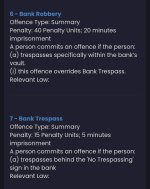
  4. The Criminal Code distinguishes bank trespassing from bank robbery, requiring proof of vault entry for robbery charges.
  5. Despite this distinction, the Defendant proceeded with charges and convictions.
  6. The Plaintiffs were fined and penalised as a result of these convictions.
  7. The Plaintiffs suffered reputational harm, loss of standing, and other consequential damages within the server community.
  8. DHS officers confirming they use coordinates from the map site without providing timestamps in the screenshots in arrest filings and using it as evidence which can be considered fabrication of evidence due to there being a 2 block tall gap between the floor and ground accessible with some glitches making the map an unreliable source.

III. CLAIMS FOR RELIEF


  1. The Defendant wrongfully convicted the Plaintiffs based on insufficient evidence.
  2. The Defendant failed to establish all required elements of the offence beyond reasonable evidentiary standards.
  3. The Defendant relied on speculative or inferential mapping evidence in place of direct proof.
  4. The Defendant’s actions constitute negligent investigation and procedural misconduct.
  5. The Defendant’s conduct caused financial, reputational, and psychological harm to the Plaintiffs.
  6. The Defendant’s actions materially reduced the Plaintiffs’ ability to enjoy and participate in the server environment.

IV. PRAYER FOR RELIEF

  1. An order directing the immediate removal of all bank robbery convictions from both Plaintiffs’ criminal records.
  2. Full reimbursement of all fines paid as a result of the wrongful convictions.
  3. Compensation for time served at a rate of $100 per minute for each Plaintiff.
  4. Compensation of $30,000 to each Plaintiff for reputational damages suffered.
  5. Compensation of $25,000 to each Plaintiff for emotional distress, humiliation, anxiety, and mental suffering.
  6. Compensation of $25,000 to each Plaintiff for loss of enjoyment, reduced quality of gameplay, and diminished server participation.
  7. Compensation of $20,000 to each Plaintiff for time and resources expended in attempting to resolve the matter prior to litigation.
  8. Compensation of $15,000 to each Plaintiff for loss of opportunities and damage to standing within the community.
  9. Compensation of $15,000 to each Plaintiff for negligent investigation and failure to properly verify evidentiary requirements prior to conviction.
  10. Pre-judgment and post-judgment interest on all monetary awards where permitted.
  11. Legal fees equal to twenty percent (20%) of the total judgment, or such greater amount as the Court deems appropriate.
  12. Any other relief this Honorable Court deems just and proper.

Total sum being

V. EVIDENCE


P-001 Police statement indicating potential reliance on inferential or insufficient evidence.
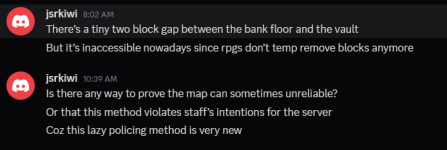
image.png
P-002 Arrest report relating to the Plaintiffs.

Screenshot_2026-06-16_201041.png
P-003 Prior DHS arrest documentation demonstrating pattern of similar evidentiary practice.

Screenshot_2026-06-23_164500.png
P-004 Criminal Code Act, Part VIII §§6–7 establishing required legal elements of the offence.
Screenshot_20260621_230924_Chrome.jpg
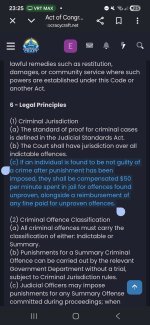
P-005 Criminal Code Act further supporting clai
Screenshot_20260621_232520_Chrome.jpg

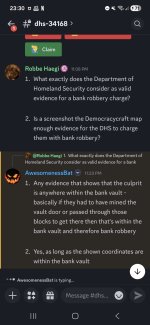
P-006 Supporting screenshots and server records relevant to the conviction.
Screenshot_20260624_233024_Discord.jpg
P-007 officer being asked about the situation

Screenshot_20260624_233615_Chrome.jpg
P-008 officer answering questions regarding the situation and admitting it

Screenshot_20260624_233629_Chrome.jpg
P-009 officer confirming the allegations

Screenshot_20260624_233635_Chrome.jpg
P-010 further officer confirmation
Screenshot_20260624_233642_Chrome.jpg
P-011 Proof of representation of waygooda

Screenshot 2026-07-01 154657.png
P-012 Proof of representation of .CrownedEtyYT
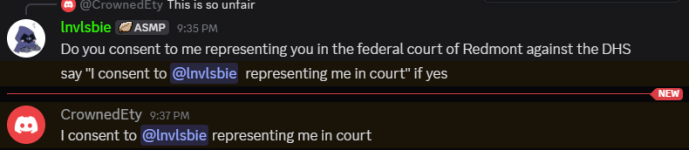
Screenshot 2026-06-30 213802.png

By submitting this filing, the Plaintiffs acknowledge that knowingly providing false statements to the Court may result in penalties including perjury under the Court’s rules.


DATED: This 30th day of June, 2026.
 

Writ of Summons


@AmityBlamity is required to appear before the Federal Court in the case of .CrownedEtyYT, waygooda v. Department of Homeland Security [2026] FCR 60

Failure to appear within 72 hours of this summons will result in a default judgement based on the known facts of the case.

Both parties should make themselves aware of the Court Rules and Procedures, including the option of an in-game trial should both parties request one.


Court Order


IN THE FEDERAL COURT OF THE COMMONWEALTH OF REDMONT
ORDER TO SHOW CAUSE - QUALIFICATION

The Court, upon sua sponte review of @lnvlsbie's legal qualifications, finds that counsel lacks the admin law qualification.
The Court is concerned that the subject matter of this case may require said specialisation. As such, @lnvlsbie please answer the following question: What makes you qualified to represent the Plaintiff in this case?

Should you attain further qualifications, please inform the Court in your answer to this Order.


1783363057667.png


Court Order


IN THE FEDERAL COURT OF THE COMMONWEALTH OF REDMONT
ORDER TO SHOW CAUSE - QUALIFICATION

The Court, upon sua sponte review of @lnvlsbie's legal qualifications, finds that counsel lacks the admin law qualification.
The Court is concerned that the subject matter of this case may require said specialisation. As such, @lnvlsbie please answer the following question: What makes you qualified to represent the Plaintiff in this case?

Should you attain further qualifications, please inform the Court in your answer to this Order.


View attachment 89506

Your honor may I have a colleague with the qualification needed take over instead due to IRL issues?
 

Motion


IN THE FEDERAL COURT OF THE COMMONWEALTH OF REDMONT
MOTION TO STRIKE/HEARSAY

The defense moves that P-001 is struck from the record. The conversation took place in private DM's and not through a Department of Homeland Security ticket, this is an unsworn out of court statement that the individual made, which could be considered hearsay (I found a motion to strike more fitting than an objection for hearsay). This statement was not made in the name of the DHS and it is improperly presented as such. If the Defense wishes to use this individual's testimony, they should add this individual to their witness list.

 
Last edited:

Motion


IN THE FEDERAL COURT OF THE COMMONWEALTH OF REDMONT
MOTION TO STRIKE

The defense moves that P-003 is struck from the record. This piece of evidence is not relevant to the case. Furthermore, the Plaintiff has failed to provide any proof of the person that is shown in these criminal records has given permission for their criminal records to be used at trial. And the evidence raises questions about how this evidence was obtained.

 
Your Honour,
We apologize for the delays, we're very busy with the influx of defense cases. May we get a 24-hour extension to post an answer?
Additionally to this, as I'm sure the court's aware, we have recently gone through leadership changes again and the majority of DoJ personnel is on strike. Therefore, I would like to request an additional extension of 24 hours from this post. It is not our intention to delay this case.
 

Motion


IN THE FEDERAL COURT OF THE COMMONWEALTH OF REDMONT
MOTION TO DISMISS

Your Honor and counsel, I'd like to inform the court that Plaintiff .CrownedEtyYT has been long deported.

View attachment 90994
The Defense moves that all claims relating to .CrownedEtyYT be dismissed, as this individual has been permanently deported.


Response


IN THE DISTRICT COURT OF THE COMMONWEALTH OF REDMONT
Response to Motions to Dismiss

Motion


IN THE FEDERAL COURT OF THE COMMONWEALTH OF REDMONT
MOTION TO STRIKE/HEARSAY

The defense moves that P-001 is struck from the record. The conversation took place in private DM's and not through a Department of Homeland Security ticket, this is an unsworn out of court statement that the individual made, which could be considered hearsay (I found a motion to strike more fitting than an objection for hearsay). This statement was not made in the name of the DHS and it is improperly presented as such. If the Defense wishes to use this individual's testimony, they should add this individual to their witness list.

The Defense argues that P-001 should be struck because it consists of an out-of-court statement. The Plaintiff respectfully disagrees. Hearsay is explicitly allowed if it relates to a person's reputation or character. Nearly every line in this exhibit gives or contributes to a characterization of the DHS. The last line characterizes the DHS's policing as 'lazy', and the first two lines explain that an area is inaccessible, which better explains why the policing of the DHS is lazy. As all of the statements in this exhibit serve to either characterize or provide context for the characterization of the DHS, the Defense's Motion to Strike should be denied.

Motion


IN THE FEDERAL COURT OF THE COMMONWEALTH OF REDMONT
MOTION TO STRIKE

The defense moves that P-003 is struck from the record. This piece of evidence is not relevant to the case. Furthermore, the Plaintiff has failed to provide any proof of the person that is shown in these criminal records has given permission for their criminal records to be used at trial. And the evidence raises questions about how this evidence was obtained.

The Plaintiff concedes. This evidence is not related to the case at hand, and should be struck accordingly.

Motion


IN THE FEDERAL COURT OF THE COMMONWEALTH OF REDMONT
MOTION TO DISMISS

The Defense moves that all claims relating to .CrownedEtyYT be dismissed, as this individual has been permanently deported.

The Plaintiff concedes. .CrownedEtyYT should be dismissed from this case; however, waygooda still retains the right to legal representation.

 
Your Honor and counsel, I'd like to inform the court that Plaintiff .CrownedEtyYT has been long deported.

View attachment 90994
Acknowledged.

All parties note that I am currently away and will be back Wednesday. All pending items will be ruled upon then.
 
Additionally to this, as I'm sure the court's aware, we have recently gone through leadership changes again and the majority of DoJ personnel is on strike. Therefore, I would like to request an additional extension of 24 hours from this post. It is not our intention to delay this case.
Leadership changes and an increased caseload are not excuses for missing deadlines. They are factors taken into consideration when granting extensions.

The Commonwealth is warned that future instances where the Commonwealth fails to adhere to court deadlines may carry contempt charges.

You have 24 hours from this post to submit an answer to complaint.
 

Answer to Complaint


IN THE FEDERAL COURT OF THE COMMONWEALTH OF REDMONT
ANSWER TO COMPLAINT

.CrownedEtyYT and waygooda
Plaintiff

v.

Department of Homeland Security
Defendant

I. ANSWER TO COMPLAINT
1. AFFIRM the Plaintiffs were charged and convicted of bank robbery by the Defendant.
2. AFFIRM the Defendant’s ‘case’ relied primarily on map screenshots and coordinate-based evidence.
3. DENY no direct evidence was produced establishing that either Plaintiff entered the bank vault.
4. AFFIRM the Criminal Code distinguishes bank trespassing from bank robbery, requiring proof of vault entry for robbery charges.
5. AFFIRM the Defendant proceeded with charges and convictions.
6. AFFIRM the Plaintiffs were fined and penalised as a result of these convictions.
7. DENY the Plaintiffs suffered reputational harm, loss of standing, and other consequential damages within the server community.
8. NO CONTEST “DHS officers confirming they use coordinates from the map site without providing timestamps in the screenshots in arrest filings and using it as evidence”
9. DENY this can be considered fabrication of evidence.
10. NO CONTEST there being a 2 block tall gap between the floor and ground accessible with some glitches DENY this making the map an unreliable source.

II. DEFENCES
1. Criminal records are not public, even if the arrest is found to be unjustified, the Plaintiff’s claim about their reputation being damaged is unfounded.
2. The Plaintiff’s filing does not show any evidence relating to waygooda’s claims.
3. P-001 is titled as a “Police statement”, it is however important to note (if this piece of evidence is not struck) that this is not a statement from the Department of Homeland Security. The defense would also like to note that this piece of evidence does not support the Plaintiff’s claim: “...due to there being a 2 block tall gap between the floor and ground accessible with some glitches making the map an unreliable source.” as P-001 shows the opposite “But it’s inaccessible nowadays”.
4. The Plaintiff states “this can be considered fabrication of evidence.” However, even if the evidence were to be considered insufficient by the Court, it would not be considered “fabrication” as the evidence was not altered or “fabricated” in any way.

By making this submission, I agree I understand the penalties of lying in court and the fact that I am subject to perjury should I knowingly make a false statement in court.

DATED: This 14th day of July 2026

 
Last edited:

Answer to Complaint


IN THE FEDERAL COURT OF THE COMMONWEALTH OF REDMONT
ANSWER TO COMPLAINT

.CrownedEtyYT and waygooda
Plaintiff

v.

Department of Homeland Security
Defendant

I. ANSWER TO COMPLAINT
1. AFFIRM the Plaintiffs were charged and convicted of bank robbery by the Defendant.
2. AFFIRM the Defendant’s ‘case’ relied primarily on map screenshots and coordinate-based evidence.
3. DENY no direct evidence was produced establishing that either Plaintiff entered the bank vault.
4. AFFIRM the Criminal Code distinguishes bank trespassing from bank robbery, requiring proof of vault entry for robbery charges.
5. AFFIRM the Defendant proceeded with charges and convictions.
6. AFFIRM the Plaintiffs were fined and penalised as a result of these convictions.
7. DENY the Plaintiffs suffered reputational harm, loss of standing, and other consequential damages within the server community.
8. NO CONTEST “DHS officers confirming they use coordinates from the map site without providing timestamps in the screenshots in arrest filings and using it as evidence”
9. DENY this can be considered fabrication of evidence.
10. NO CONTEST there being a 2 block tall gap between the floor and ground accessible with some glitches making the map an unreliable source.

II. DEFENCES
1. Criminal records are not public, even if the arrest is found to be unjustified, the Plaintiff’s claim about their reputation being damaged is unfounded.
2. The Plaintiff’s filing does not show any evidence relating to waygooda’s claims.
3. P-001 is titled as a “Police statement”, it is however important to note (if this piece of evidence is not struck) that this is not a statement from the Department of Homeland Security. The defense would also like to note that this piece of evidence does not support the Plaintiff’s claim: “...due to there being a 2 block tall gap between the floor and ground accessible with some glitches making the map an unreliable source.” as P-001 shows the opposite “But it’s inaccessible nowadays”.
4. The Plaintiff states “this can be considered fabrication of evidence.” However, even if the evidence were to be considered insufficient by the Court, it would not be considered “fabrication” as the evidence was not altered or “fabricated” in any way.

By making this submission, I agree I understand the penalties of lying in court and the fact that I am subject to perjury should I knowingly make a false statement in court.

DATED: This 14th day of July 2026

Your Honor, the defense respectfully requests that the court allows the defense to amend this answer to complaint to show:
"10. NO CONTEST there being a 2 block tall gap between the floor and ground accessible with some glitches DENY this making the map an unreliable source." pursuant to Court Rule 3.4.
 
Your Honor, the defense respectfully requests that the court allows the defense to amend this answer to complaint to show:
"10. NO CONTEST there being a 2 block tall gap between the floor and ground accessible with some glitches DENY this making the map an unreliable source." pursuant to Court Rule 3.4.
Granted.
 

Motion


IN THE FEDERAL COURT OF THE COMMONWEALTH OF REDMONT
MOTION TO DISMISS

The Defense moves that all claims relating to .CrownedEtyYT be dismissed, as this individual has been permanently deported.

Seeing as their legal status in Redmont has changed, all claims arising from .CrownedEtyYT are dismissed. Claims arising from the co-Plaintiff (waygooda) stand.
The case thread will be renamed accordingly.
 
Apologies, Your Honor. I was caught up in the chaos of the recent few days; and, to my understanding, the Federal Court was on strike. Attached is waygooda's criminal record.
Image

Image
 

Motion


IN THE FEDERAL COURT OF THE COMMONWEALTH OF REDMONT
MOTION TO STRIKE/HEARSAY

The defense moves that P-001 is struck from the record. The conversation took place in private DM's and not through a Department of Homeland Security ticket, this is an unsworn out of court statement that the individual made, which could be considered hearsay (I found a motion to strike more fitting than an objection for hearsay). This statement was not made in the name of the DHS and it is improperly presented as such. If the Defense wishes to use this individual's testimony, they should add this individual to their witness list.

This motion is granted. The evidence is struck. Opposing counsel is free to call upon them as a witness.

Motion


IN THE FEDERAL COURT OF THE COMMONWEALTH OF REDMONT
MOTION TO STRIKE

The defense moves that P-003 is struck from the record. This piece of evidence is not relevant to the case. Furthermore, the Plaintiff has failed to provide any proof of the person that is shown in these criminal records has given permission for their criminal records to be used at trial. And the evidence raises questions about how this evidence was obtained.

This motion is granted.
 

Motion


IN THE FEDERAL COURT OF THE COMMONWEALTH OF REDMONT

MOTION TO STRIKE

The defense moves that P-002 is struck from the record. This piece of evidence is not relevant to the case as it is regarding the Plaintiff that has been removed from the case.


Motion


IN THE FEDERAL COURT OF THE COMMONWEALTH OF REDMONT

MOTION TO STRIKE

The defense moves that P-002 is struck from the record. This piece of evidence is not relevant to the case as it is regarding the Plaintiff that has been removed from the case.

Motion granted. Evidence is struck.
 
The Plaintiff submits the following witness list:

waygooda
jsrkiwi
CreeperTD

Additionally, the images containing waygooda's criminal record seem to have expired. They are reattached below.
waygooda record.png
waygooda 2.png
waygooda3.png
 
Last edited:

Motion


IN THE FEDERAL COURT OF THE COMMONWEALTH OF REDMONT
MOTION TO DISMISS

The Defense moves to dismiss the case with prejudice pursuant to Court Rule 5.5, on the grounds that the Plaintiff has failed to produce any evidence supporting the claims in the Complaint.

The Plaintiff alleges that they were unjustly charged with Bank Robbery and that the Department of Homeland Security lacked sufficient evidence to support the charge. However, the Plaintiff has not submitted any evidence demonstrating that the DHS acted improperly. The only valid evidence submitted by the Plaintiff of are a screenshot of the Plaintiff’s in‑game criminal record, which merely confirms the existence of the Bank Robbery charge and does not prove that the charge was improper and screenshots a DHS ticket describing the general evidence typically in order to charge an individual with Bank Robbery, which does not specifically reference to the Plaintiff. Neither exhibit provides any basis to support the Plaintiff’s claim that the DHS lacked evidence and acted improperly.

Pursuant to Court Rule 5.5, the Court may dismiss a case after discovery when the Plaintiff has failed to produce evidence sufficient to support the claim presented in the Complaint. Discovery has concluded and the Plaintiff has failed to produce any evidence supporting the claim that the DHS acted improperly, that the DHS lacked evidence to support the Bank Robbery charge.

For the above reasons, the Defense respectfully requests that this Court Dismiss the case with prejudice pursuant to Court Rule 5.5.


Response


IN THE FEDERAL COURT OF COMMONWEALTH OF REDMONT
RESPONSE TO MOTION TO DISMISS

The Defense claims that no evidence supporting the claims in the initial complaint has been provided. This is incorrect.

Lack of Claim applies if a claim for relief has insufficient evidence to support the civil charge. This is not the case. The claims for relief base themselves on the fact that an arrest happened, and that this arrest was wrongful. Based on the provided criminal record, we know for a fact that at least the Defendant was arrested by an officer of the DHS; thus, we have, at the bare minimum, some relevant evidence capable of supporting our claim for relief. Basis is provided for our claim.

We are also given screenshots detailing the process that the DHS uses to determine what constitutes bank robbery as opposed to bank trespassing. While this does not directly support our claim, it certainly does indirectly. As the Defense identified, these screenshots show "the general evidence typically in order to charge an individual with Bank Robbery"; however, this evidence can indirectly support the general claim. If standards for arrest have been established, then if they can be proven to have been violated through further argumentation and testimony, we can prove our claim of wrongful arrest.

The Plaintiff has also provided multiple relevant witnesses, including the DHS officer directly responsible for the arrest, whose testimonies could potentially be relevant. Dismissing this case without hearing these testimonies when they could serve to back the purported claims would be premature.

This should serve as sufficient reason to continue ligitating this case.

 
Requesting that the deadline for the Plaintiff's Opening Statement be tolled pending a ruling on the Defense's Motion to Dismiss. I'm pretty busy this weekend and I'd prefer not to spend time writing an opening only to have it dismissed.
 

Motion


IN THE FEDERAL COURT OF THE COMMONWEALTH OF REDMONT
MOTION TO DISMISS

The Defense moves to dismiss the case with prejudice pursuant to Court Rule 5.5, on the grounds that the Plaintiff has failed to produce any evidence supporting the claims in the Complaint.

The Plaintiff alleges that they were unjustly charged with Bank Robbery and that the Department of Homeland Security lacked sufficient evidence to support the charge. However, the Plaintiff has not submitted any evidence demonstrating that the DHS acted improperly. The only valid evidence submitted by the Plaintiff of are a screenshot of the Plaintiff’s in‑game criminal record, which merely confirms the existence of the Bank Robbery charge and does not prove that the charge was improper and screenshots a DHS ticket describing the general evidence typically in order to charge an individual with Bank Robbery, which does not specifically reference to the Plaintiff. Neither exhibit provides any basis to support the Plaintiff’s claim that the DHS lacked evidence and acted improperly.

Pursuant to Court Rule 5.5, the Court may dismiss a case after discovery when the Plaintiff has failed to produce evidence sufficient to support the claim presented in the Complaint. Discovery has concluded and the Plaintiff has failed to produce any evidence supporting the claim that the DHS acted improperly, that the DHS lacked evidence to support the Bank Robbery charge.

For the above reasons, the Defense respectfully requests that this Court Dismiss the case with prejudice pursuant to Court Rule 5.5.

The Court finds that a ruling in favour of this motion would be premature.
An evidentiary basis has been set for the charge, it is now on the Plaintiff to explain (and show through witness testimony) how they allege the conduct rises to the level of Wrongful Arrest or Detention under the Act of Congress - Redmont Civil Code Act using available evidence.

As such, the motion is denied. We shall now move on with the rest of the trial.
 
The Court finds that a ruling in favour of this motion would be premature.
An evidentiary basis has been set for the charge, it is now on the Plaintiff to explain (and show through witness testimony) how they allege the conduct rises to the level of Wrongful Arrest or Detention under the Act of Congress - Redmont Civil Code Act using available evidence.

As such, the motion is denied. We shall now move on with the rest of the trial.
Your Honor, I'd like to inform the court that I am no longer representing the Commonwealth on this matter.
 
Requesting a 48-hour extension. School just started for me and I'm sorting through a plethora of initial problems, which is taking up most of my free time.
 

Opening Statement


IN THE FEDERAL COURT OF THE COMMONWEALTH OF REDMONT
OPENING STATEMENT

The Department of Homeland Security is charged with maintaining the peace and good order of the server, through lawfully exercising its power to enforce the laws of the server. The arrest of waygooda is in direct contrast with the duty of the DHS.

I. THE DHS DID NOT HAVE SUFFICIENT EVIDENCE TO CONVICT WAYGOODA

The Defendant arrested waygooda with insufficient evidence. The Defense has affirmed that the Plaintiff's arrest was based primarily off of map screenshots and coordinate-based evidence. The Defense also does not contest that there may be a 2-block tall gap allowing access into an area below the bank's vault.

Essentially, what this means is that the DHS arrested waygooda based solely on his coordinates- coordinates that, given the existence of a potential gap allowing alternative access, may not have been inside of the bank vault. These potentially faulty coordinates were the primary evidence for waygooda's arrest. In P-008, a DHS officer quite explicitly admits that they don't know the exact coordinates of the bank vault. Waygooda may have been in an area unintended to be accessed by means of a gap, with coordinates quite sovereign of the bank vault. Unfortunately, we can't know for certain, since the DHS did not actually secure evidence proving waygooda was in the bank vault (besides, of course, the map screenshots, which we have proven are unreliable).

Map screenshots are easy to take- much easier than going to check if a culprit is in the bank vault in person. Rather than take time to secure damning evidence, the DHS arrested waygooda on a convenient whim- on the mere suspicion that he may have been inside of the bank vault. This was a wrongful conviction.

II. CRIMINAL RECORDS MAY DAMAGE REPUTATION

The Defense asserts that since criminal records are only available to the DHS and not to the general public, the Plaintiff's standing has not been affected. However, the Defense seems to be ignoring that the DHS may still see these records. This inarguably affects the Plaintiff's standing within the DHS; it gives him the reputation of a criminal.

III. CONCLUSION

The DHS's standard policy for bank robbery conviction ultimately led to this issue. Officers failed to exhibit proper care and proper procurement of evidence before arresting waygooda, resulting in an arrest that was not only unjustified but also unlawful.

I thank the court for their time.


Opening Statement


Your Honor,

The principle at the center of this case is straightforward: a challenge to a criminal conviction is not, without more, proof that the Government committed a civil wrong.

The Plaintiff asks this Court to overturn a summary conviction for Bank Robbery and, from that alleged evidentiary deficiency, award an extraordinary collection of civil damages. But those are separate inquiries. The Court may review whether the underlying summary charge was properly imposed. That does not automatically establish Wrongful Arrest or Detention under the Redmont Civil Code Act, and it certainly does not automatically establish tens of thousands of dollars in reputational, emotional, consequential, and other damages.

The Commonwealth will show four things.

First, an independent statutory claim for Wrongful Arrest or Detention was not properly identified in the Plaintiff's Claims for Relief, and a claim for wrongful detention was not pleaded at all. To the extent the Plaintiff attempts to introduce a materially new cause of action after discovery, the Commonwealth objects under the Court Rules.

Second, even if the Court permits that Civil Code theory, the Plaintiff cannot establish it. The Court has already found that an evidentiary basis existed for the Bank Robbery charge. The Civil Code expressly provides that Wrongful Arrest or Detention does not occur where the officer possessed reasonable grounds to believe the arrest or detention was lawful.

Third, the overwhelming majority of the Plaintiff's requested damages are unsupported, duplicative, or contrary to the statutory measure of compensation. Alleging damages is not evidence of damages.

Fourth and finally, that the bank robbery charges can be upheld under the beyond a reasonable doubt standard.

I. THE COURT SHOULD DISTINGUISH THE REVIEW OF THE SUMMARY CONVICTION FROM AN INDEPENDENT CIVIL CAUSE OF ACTION​

The Complaint is formally captioned as a civil action, but substantively asks this Court to overturn a criminal conviction. Redmont precedent recognizes that these two forms of relief can coexist, but they remain legally distinct.

In jsrkiwi v. Department of Homeland Security [2025] DCR 93, the District Court recognized that a proceeding challenging summary convictions may simultaneously operate as an appeal from the criminal charges and as an action seeking equitable relief arising from those charges. (see https://www.democracycraft.net/threads/jsrkiwi-v-department-of-homeland-security-2025-dcr-93.33123/post-130903).

Likewise, in xEndeavour v. Commonwealth [2025] DCR 55, the District Court characterized a civil action challenging a summary criminal determination as a "pseudo-appeal." Importantly, the Court treated the validity of the underlying government action separately from the Plaintiff's entitlement to monetary recovery. (see Lawsuit: Adjourned - xEndeavour v. Commonwealth of Redmont [2025] DCR 55).

If the Plaintiff asks this Court to review whether Bank Robbery was sufficiently proven, the applicable criminal standard is beyond a reasonable doubt that the Defendant must prove. (see Part II, § 3(1)(b), Judicial Standards Act. See also Part I, § 3(f)(v), Act of Congress - Criminal Code Act). It is our burden as the prosecution to prove guilty beyond a reasonable doubt.

But if the Plaintiff seeks to impose independent civil liability upon the Department of Homeland Security, the Plaintiff bears that burden and must establish the civil claim on a balance of probabilities. (see Part II, §§ 2(1)(a), 3(1)(a), Act of Congress - Judicial Standards Act).

A finding that the evidence was insufficient to sustain the criminal conviction would therefore not, standing alone, establish that DHS committed Wrongful Arrest or Detention. The Plaintiff must independently establish the elements of that civil violation.

II. THE COMMONWEALTH PRESERVES ITS OBJECTION TO AN UNPLEADED WRONGFUL ARREST OR DETENTION CLAIM​

The Complaint contains the phrase "wrongful arrest" in its introductory narrative. The Commonwealth does not dispute that fact.

What the Complaint does not do is identify Wrongful Arrest or Detention under the Redmont Civil Code Act as a statutory cause of action in its Claims for Relief. Nor does the Complaint allege wrongful detention as a cause of action at all.

Instead, the Claims for Relief allege: wrongful conviction based upon insufficient evidence; failure to establish the criminal elements; reliance upon speculative mapping evidence; negligent investigation and procedural misconduct; financial, reputational, and psychological harm; and diminished server enjoyment.

That omission matters because the Court's required civil complaint template specifically directs a plaintiff, under "Claims for Relief," to explain why the facts create a claim and "which laws were broken if any." (see Court Templates).

The Court Rules then expressly provide a procedure for curing precisely this issue. During discovery, a plaintiff may amend the Claims for Relief contained in the Complaint. (see Rule 3.3, Court Rules and Procedures). The purpose of discovery is to place all material before the Court prior to argument so that each party may know the case against it and properly formulate its arguments. (see Rule 4.1, Court Rules and Procedures).

Most importantly:

Material must have been included within the complaint, within the answer, within an amendment to a complaint, within an amendment to an answer, or within a discovery submission. Otherwise the material will be deemed inadmissible and the argument can be voided by the presiding judge.
(see Rule 4.2, Court Rules and Procedures).

The Commonwealth recognizes the Court's prior order directing the Plaintiff to explain how the alleged conduct rises to Wrongful Arrest or Detention under the Redmont Civil Code Act. The Commonwealth respectfully submits, however, that the Court's order should not operate as a post-discovery amendment of the Complaint or enlarge the Plaintiff's pleaded Claims for Relief beyond what was disclosed to the Defendant.

Accordingly, to the extent the Plaintiff attempts to prosecute a new claim of wrongful detention, or a materially distinct statutory theory that was never included in the Complaint, an amendment, or discovery, the Commonwealth objects under Rule 4.2.

In all events, the Commonwealth proceeds on the merits in the alternative.

III. EVEN IF WRONGFUL ARREST OR DETENTION IS BEFORE THE COURT, THE PLAINTIFF CANNOT ESTABLISH THE VIOLATION​

The Redmont Civil Code Act defines Wrongful Arrest or Detention narrowly. A law-enforcement officer must arrest or detain the plaintiff "without lawful authority," or a government officer must detain the plaintiff beyond the period authorized by law. Critically, the statute expressly provides that the violation does not occur where "the officer had reasonable grounds to believe the arrest or detention was lawful." (see Part XI, § 5(a)–(c), Redmont Civil Code Act). This exception substantially resolves the civil component of this case.

The Court has already found, in denying the Commonwealth's Motion to Dismiss, that "[a]n evidentiary basis has been set for the charge." The Court then placed upon the Plaintiff the task of showing how DHS's conduct rises to Wrongful Arrest or Detention. The Plaintiff's Opening Statement does not bridge that gap. The Plaintiff argues that waygooda may have occupied a different location because a gap may have provided access beneath the vault. The Plaintiff concedes that "we can't know for certain." That is not proof that the arresting officers lacked reasonable grounds. It is a hypothetical alternative explanation advanced after the fact.

The record establishes that DHS relied primarily upon map screenshots and coordinate-based evidence. The Commonwealth has never denied that fact. Nor has the Commonwealth conceded that the evidence was fabricated or that the existence of a two-block gap rendered the mapping evidence unreliable. Those are materially different propositions.

Indeed, P-001—the evidence originally offered to support the theory regarding the alleged gap—was struck from the record by this Court. P-003 was likewise struck. The Court subsequently struck P-002 because it concerned the former co-Plaintiff. The Plaintiff therefore cannot revive excluded evidence through argument.

The applicable Criminal Code defined Bank Robbery as a summary offense committed where a person "trespasses specifically within the bank's vault." (see Part VIII, § 6(a), Criminal Code Act applicable when this action was filed). That same Code defined a Summary Offence as one which "may be dealt with by immediate penalty, without the need for formal trial" and which may thereafter be contested before a judicial officer. (see Part I, § 7(2), Criminal Code Act). It likewise authorized the relevant Government Department to carry out punishment for a Summary Criminal Offence without a trial. (see Part I, § 6(2)(b), Criminal Code Act).

The Plaintiff repeatedly treats the absence of a pre-enforcement criminal trial as if it made the enforcement itself unlawful. The statutory scheme says otherwise. Summary offenses are specifically designed to permit immediate enforcement followed by judicial review.

And Redmont precedent has already applied this framework to Bank Robbery. In Noah7899 v. Commonwealth of Redmont [2025] DCR 50, the District Court held that the offense turns upon trespass within the bank vault; actual theft is irrelevant. The Court further rejected an attempt to downgrade Bank Robbery into ordinary trespass because Bank Robbery expressly overrides that offense. (see Lawsuit: Dismissed - Noah7899 v. The Commonwealth of Redmont [2025] DCR 50).

The question for the civil claim therefore is not whether the Plaintiff can imagine some uncertainty in the evidence. It is whether the Plaintiff proves that officers lacked lawful authority and lacked reasonable grounds to believe their actions were lawful. The evidence does not establish that.

At minimum, coordinate and mapping evidence placing the Plaintiff at the relevant bank location supplied reasonable grounds for DHS's enforcement decision. A later dispute concerning the exact physical boundary of the vault may bear upon the Court's review of the conviction, but it does not retroactively eliminate the reasonable grounds upon which the officers acted.

Accordingly, even if this Court were ultimately to conclude that the Bank Robbery charge cannot survive the criminal standard of proof, the Plaintiff has not thereby established Wrongful Arrest or Detention under Part XI, § 5.

IV. THE PLAINTIFF'S REQUESTED DAMAGES ARE LARGELY UNSUPPORTED AND DUPLICATIVE​

The Prayer for Relief illustrates why the civil and criminal components of this case must remain separate.

The Plaintiff seeks reimbursement of fines, $100 per minute of imprisonment, $30,000 in reputational damages, $25,000 for emotional distress and humiliation, $25,000 for loss of enjoyment, $20,000 for time and resources expended, $15,000 for loss of opportunities and community standing, another $15,000 for negligent investigation, interest, and legal fees.

Those figures are pleaded. They have not thereby been proven.

A. The request for $100 per minute is contrary to the statutory compensation scheme​

The Criminal Code applicable when this suit was commenced provided that, where an individual was found not guilty after punishment had already been imposed, compensation was $50 per minute spent in jail for the unproven offense together with reimbursement of the fine. (see Part I, § 6(1)(c), Criminal Code Act).

The Judicial Standards Act similarly provides compensation of up to $50 per minute, together with reimbursement of fines, where an individual is found innocent after punishment. (see Part II, § 6(1)(b), Judicial Standards Act).

There is therefore no legal basis for the Plaintiff's requested $100-per-minute rate.

If this Court overturns the underlying conviction through the criminal-review component of this proceeding, any statutory compensation for imprisonment and fines must conform to the lawful measure—not a figure selected by the Plaintiff.

B. Compensatory damages require proof of actual pecuniary loss​

The Civil Code expressly provides that compensatory damages will not be awarded without proof of pecuniary loss and limits such damages to the actual amount proven or the applicable statutory limit, whichever is lower. (see Part III, § 2(2)(a)–(b), Redmont Civil Code Act).

The Plaintiff has not established $20,000 in resources expended, $15,000 in lost opportunities, or any comparable monetary loss merely by placing those numbers in the Prayer for Relief.

This principle was applied in xEndeavour, where the District Court denied compensatory recovery for refunded fines because the Plaintiff had failed to supply sufficient pecuniary proof. (see Lawsuit: Adjourned - xEndeavour v. Commonwealth of Redmont [2025] DCR 55).

The same evidentiary requirement applies here.

C. The Plaintiff has not proven the claimed consequential damages​

The Civil Code recognizes consequential damages, including humiliation and loss of enjoyment. But their availability does not mean that they are presumed.

Humiliation concerns circumstances in which a person is disgraced, belittled, or made to look foolish. Loss of enjoyment concerns a diminished ability to engage in activities as the injured party did before the alleged harm. Both must be proven on a balance of probabilities. (see Part III, § 5(1)(a)(i), (iii), § 5(1)(b), § 5(2)(a), Redmont Civil Code Act).

The Plaintiff's Opening Statement offers no evidence establishing humiliation, emotional suffering, anxiety, or diminished ability to participate in the server. As to reputation, the Plaintiff argues principally that DHS personnel can view criminal records and that the existence of a criminal record therefore affects standing within DHS. That establishes, at most, that certain government personnel may have access to the record. It does not establish that anyone actually thought less of the Plaintiff, denied the Plaintiff an opportunity, humiliated the Plaintiff, or otherwise caused the claimed $30,000 injury.

Likewise, the separate request for $15,000 for "loss of opportunities and damage to standing within the community" substantially repeats the Plaintiff's claimed reputational injury. Renaming the same asserted harm does not prove a second loss.

The same is true of the $15,000 demand for "negligent investigation." Negligence is a theory of liability, not proof that an additional $15,000 of injury occurred.

The Court should require the Plaintiff to prove each injury, its causal connection to DHS, and the amount recoverable under the Civil Code. The Plaintiff cannot multiply recovery simply by assigning separate labels and arbitrary dollar values to substantially overlapping allegations.

V. THE BANK ROBBERY CONVICTION IS SUPPORTED BEYOND A REASONABLE DOUBT​

Even if this Court reviews the underlying Bank Robbery conviction under the criminal standard of proof, the conviction should be sustained.

The Judicial Standards Act provides that the Commonwealth bears the burden of proof in a criminal case and must establish guilt beyond a reasonable doubt. (see Part II, § 2(1)(b), § 3(1)(b), Judicial Standards Act). The Commonwealth does not ask this Court to apply anything less.

The offense itself is narrow. Under the Criminal Code Act applicable to this action, a person commits Bank Robbery where that person “trespasses specifically within the bank’s vault.” Bank Robbery is classified as a summary offense and expressly overrides Bank Trespass. (see Part VIII, § 6(a)(i), Criminal Code Act). The Commonwealth therefore need not prove that waygooda removed money, mined a gold block, or otherwise completed what the ordinary meaning of “robbery” might suggest. It need only prove beyond a reasonable doubt that waygooda trespassed specifically within the bank vault.

Redmont precedent is particularly instructive on what evidence may satisfy that burden. In Dartanman v. Commonwealth of Redmont [2022] FCR 72, the Federal Court held that proof beyond a reasonable doubt does not require video evidence of the criminal act. The Court explained that evidence showing a person inside the vault could itself constitute proof beyond a reasonable doubt. The conviction in Dartanman failed because the Commonwealth had no proof that Dartanman had ever entered the vault. (see Lawsuit: Adjourned - Dartanman v. Commonwealth of Redmont [2022] FCR 72).

That distinction is dispositive here. Unlike Dartanman, this is not a case in which DHS possessed evidence merely placing the accused somewhere near the vault. The Defendant has affirmed that its evidence consisted primarily of map screenshots and coordinate-based evidence and has expressly denied the allegation that no direct evidence established entry into the vault. The Plaintiff's own theory necessarily acknowledges that the coordinates placed waygooda at the relevant bank location; the Plaintiff instead argues that those coordinates might correspond to an unintended area beneath the vault because of a two-block gap. The law does not require the Commonwealth to eliminate every conceivable hypothetical explanation before guilt may be established.

The Supreme Court has recently made clear that criminal liability need not depend upon direct evidence. In In re [2025] FCR 123 | [2026] SCR 5, the Supreme Court rejected the proposition that criminal liability cannot rest upon implication and explained in dicta that circumstantial evidence is not merely permissible in criminal proceedings, but “just as good as direct evidence.” The Court further explained that the implications reasonably derived from circumstantial evidence may prove controlling and convincing in a criminal case. (see Appeal: Accepted - In re [2025] FCR 123 | [2026] SCR 5).

Accordingly, the fact that DHS relied upon coordinate and map evidence does not inherently diminish that evidence below the beyond-a-reasonable-doubt threshold. The question is what that evidence reasonably establishes when considered as a whole.

Here, the evidence identified waygooda at the bank during the relevant Bank Robbery event and placed him at coordinates corresponding with the vault area. The Plaintiff does not offer affirmative evidence establishing that waygooda was somewhere else. Instead, the Plaintiff argues that waygooda “may have been” in an unintended space underneath the vault and expressly concedes that “we can't know for certain.” That proposition establishes a theoretical possibility, not necessarily a reasonable doubt arising from the evidence.

The Commonwealth does not suggest that the Plaintiff bears a burden to prove innocence. Dartanman expressly rejects any shifting of the criminal burden to the accused. The burden remains with the Commonwealth. (see Lawsuit: Adjourned - Dartanman v. Commonwealth of Redmont [2022] FCR 72). But maintaining that burden does not require the Court to treat every proposed alternative explanation as reasonable merely because counsel can articulate it.

The Plaintiff must distinguish between uncertainty in the abstract and reasonable doubt created by the evidentiary record. Nothing presently establishes that waygooda actually accessed the alleged space beneath the vault, that he occupied that space at the relevant time, or that the map evidence depicted such a location rather than the vault itself. The mere existence of a two-block gap therefore does not, by itself, negate the evidentiary inference arising from the coordinates and screenshots.

This case is consequently the inverse of Dartanman. There, the Court overturned the charge because there was no evidence that the appellant had ever entered the vault. Here, the Commonwealth possesses location evidence placing waygooda within the relevant vault area, and the Plaintiff seeks to defeat that evidence through the possibility that he might instead have occupied another space.

The Supreme Court's holding in In re [2025] FCR 123 forecloses the proposition that such location evidence must be disregarded merely because it is circumstantial. The Court must consider the reasonable implications of the evidence. Those implications establish that waygooda was within the bank vault when the offense occurred.

Accordingly, the Commonwealth submits that the admitted evidence is sufficient to establish beyond a reasonable doubt that waygooda trespassed specifically within the bank's vault and therefore committed Bank Robbery under Part VIII, § 6(a) of the Criminal Code Act. The underlying summary conviction should be affirmed.

 
Back
Top