Lawsuit: Pending Boykisse v. Musclebound [2026] DCR 19

Boykisser

Citizen
Boykisse
Boykisse
Attorney
Joined
Nov 13, 2025
Messages
1

Case Filing


IN THE DISTRICT COURT OF THE COMMONWEALTH OF REDMONT
CIVIL ACTION

Boykisse
Plaintiff

v.

Musclebound
Defendant

COMPLAINT
The Plaintiff complains against the Defendant as follows:

WRITTEN STATEMENT FROM THE PLAINTIFF

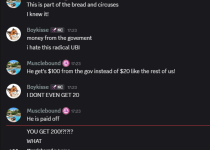
On 15/02/2026, the Defendant publicly made repeated statements in chat claiming that I was receiving government payments, bribed, and paid off. These statements were false, damaging to my reputation, and caused other players to question my integrity and trustworthiness.

I. PARTIES
1. Boykisse (Plaintiff)
2. Musclebound (Defendant)

II. FACTS
1. On 15/02/2026, the Defendant, Musclebound, made repeated statements in public chat alleging that I was receiving government payments (UBI), was bribed, and was “paid off,” which were presented as factual claims.
2. These statements were made in the presence of multiple other players in chat, including Superwoops and MrNeighbor, and were repeated despite my clear denials.
3. The Defendant continued to assert that I was receiving more money than other players and suggested I was corrupt or untrustworthy.
4. These statements were false, and the Defendant had no evidence to support them.
5. As a result, other players questioned my integrity and trustworthiness within the server community.

III. CLAIMS FOR RELIEF
1. The Defendant’s repeated statements that the Plaintiff was “paid off,” received government payments (UBI), and was bribed constitute SLANDER, as defined by the Defamation Act.
2. Under the Defamation Act, a statement is slanderous if it is a false representation presented as fact which injures another person’s reputation.
3. The Defendant's murders were without any clear motive or reason; nor were they necessary for his safety, the safety of his property or anyone's else safety.

IV. PRAYER FOR RELIEF
1. $2,000 in damages for reputational harm caused by the Defendant’s false statements.
2. A public retraction and apology from the Defendant correcting the record in the same medium the statements were made.
3. An order restraining the Defendant from repeating or publishing the defamatory allegations in the future.
4. Any other relief the Court deems just and appropriate under the circumstances.
1771186019636.png

1771186035936.png

1771186081781.png

1771186136672.png


By making this submission, I agree I understand the penalties of lying in court and the fact that I am subject to perjury should I knowingly make a false statement in court.

DATED: This 15h day of February 2026.


Attachments
  • Screenshot 2026-02-15 172351.png
    Screenshot 2026-02-15 172351.png
    57.1 KB · Views: 4
Last edited:

Writ of Summons

@Musclebound , is required to appear before the District Court in the case of Boykisse v. Musclebound [2026] DCR 19

Failure to appear within 72 hours of this summons will result in a default judgement based on the known facts of the case.

Both parties should make themselves aware of the Court Rules and Procedures, including the option of an in-game trial should both parties request one.

 
Present, Your Honor.

1771188881376.png

 
Your Honour,
I wish to provide an amicus brief regarding the applicability of the No More Defamation Act to this case.
 

Answer to Complaint


IN THE DISTRICT COURT OF THE COMMONWEALTH OF REDMONT
ANSWER TO COMPLAINT

Boykisse
Plaintiff

v.

Musclebound
Defendant

I. ANSWER TO COMPLAINT
1. AFFIRM that the Defendant, Musclebound, made repeated statements in public chat alleging that I was receiving government payments (UBI), was bribed, and was “paid off,” DENY that they were presented as factual claims.
2. AFFIRM that these statements were made in the presence of multiple other players in chat, including Superwoops and MrNeighbor, and were repeated despite my clear denials.
3. AFFIRM the Defendant continued to assert that I was receiving more money than other players and suggested I was corrupt or untrustworthy, NOTING that they were made in a jovial and light-hearted atmosphere, which the Plaintiff took apart in, and that no reasonable person would construe them as fact. (D-001 to D-004)
4. AFFIRM that these statements were false, and the Defendant had no evidence to support them.
5.
DENY that as a result, other players questioned my integrity and trustworthiness within the server community.

II. DEFENCES
1. The Defendant's statements were made in a conversation that was jovial and light-hearted in nature, and that no reasonable person could mistake the statements made therein as facts. The Plaintiff himself engaged in this conversation and made jokes and statements that cannot be taken seriously. (D-001 to D-004)
2. The case Anthony_org v. Culls [2025] DCR 67 confirms the precedent set by the case Vernicia v. RylandW [2025] FCR 5, which defines the standards for defamation (and thus slander) as such:

  1. The Statement has to be Published
  2. The statement has to be False
  3. The statement has to cause reputational harm
All three criteria must be fulfilled in order for it to be considered defamation. The Plaintiff fails to prove that the statement has caused any reputational harm.
3. It can be seen that the other participants of the conversation (mainly EATB and Superwoops) played along with the joke set by the Defendant and thus it can be deduced that there was no reasonable reputational damage done.

1771192296668.png

1771192326099.png

1771192355725.png

1771192382390.png

By making this submission, I agree I understand the penalties of lying in court and the fact that I am subject to perjury should I knowingly make a false statement in court.

DATED: This 15th day of February 2026


Answer to Complaint


IN THE DISTRICT COURT OF THE COMMONWEALTH OF REDMONT
ANSWER TO COMPLAINT

Boykisse
Plaintiff

v.

Musclebound
Defendant

I. ANSWER TO COMPLAINT
1. AFFIRM that the Defendant, Musclebound, made repeated statements in public chat alleging that I was receiving government payments (UBI), was bribed, and was “paid off,” DENY that they were presented as factual claims.
2. AFFIRM that these statements were made in the presence of multiple other players in chat, including Superwoops and MrNeighbor, and were repeated despite my clear denials.
3. AFFIRM the Defendant continued to assert that I was receiving more money than other players and suggested I was corrupt or untrustworthy, NOTING that they were made in a jovial and light-hearted atmosphere, which the Plaintiff took apart in, and that no reasonable person would construe them as fact. (D-001 to D-004)
4. AFFIRM that these statements were false, and the Defendant had no evidence to support them.
5.
DENY that as a result, other players questioned my integrity and trustworthiness within the server community.

II. DEFENCES
1. The Defendant's statements were made in a conversation that was jovial and light-hearted in nature, and that no reasonable person could mistake the statements made therein as facts. The Plaintiff himself engaged in this conversation and made jokes and statements that cannot be taken seriously. (D-001 to D-004)
2. The case Anthony_org v. Culls [2025] DCR 67 confirms the precedent set by the case Vernicia v. RylandW [2025] FCR 5, which defines the standards for defamation (and thus slander) as such:

  1. The Statement has to be Published
  2. The statement has to be False
  3. The statement has to cause reputational harm
All three criteria must be fulfilled in order for it to be considered defamation. The Plaintiff fails to prove that the statement has caused any reputational harm.
3. It can be seen that the other participants of the conversation (mainly EATB and Superwoops) played along with the joke set by the Defendant and thus it can be deduced that there was no reasonable reputational damage done.


By making this submission, I agree I understand the penalties of lying in court and the fact that I am subject to perjury should I knowingly make a false statement in court.

DATED: This 15th day of February 2026

Thank you. Discovery shall now begin lasting 5 days
Discovery ends feb. 20th 2026 @ 16:58 EST
 

Brief


IN THE DISTRICT COURT OF THE COMMONWEALTH OF REDMONT
AMICUS BRIEF

Your Honour, I respectfully submit this brief to assist the Court in considering a threshold legal issue that affects the viability of the Plaintiff's claims as currently pleaded. This brief does not advocate for either party but seeks to provide the Court with an analysis of the applicable law governing defamation claims in the Commonwealth as of the filing date of this action.

I. THE NO MORE DEFAMATION ACT HAS BEEN REPEALED​

The Plaintiff's Complaint cites the "Defamation Act" and seeks relief under what appears to be the No More Defamation Act for claims of slander. However, the No More Defamation Act was fully repealed by the Redmont Civil Code Amendments Act, which was enacted on 7 February 2026 - eight days before this action was filed.

Section 3(1) of the Redmont Civil Code Amendments Act explicitly provides:
While this repeal has not yet been administratively effectuated by the congressional clerks, its legal effect occurred immediately upon enactment. A plaintiff cannot maintain a cause of action under a statute that no longer exists.

II. THE CIVIL CODE ACT NOW GOVERNS DEFAMATION CLAIMS​

The Redmont Civil Code Act (RCCA), enacted before this case was filed, establishes the current legal framework for defamation claims in the Commonwealth. Part V of that Act provides three distinct civil violations relating to defamation:
  1. Defamation - a general defamation tort requiring:
    • A false statement or communication that injures a third party's reputation;
    • Publication to at least one person other than the plaintiff; and
    • Presentation as fact rather than opinion.
  2. Libel - defamation expressed through documents, signs, published media, or physical communication.
  3. Slander - defamation made verbally, through Discord messages, or in-game messages.
Each violation is classified as "Intentional". Under Part II, Section 7(2) of the RCCA, an "Intentional Violation" is defined as:
(2) Intentional Violation means a violation where the violator acts with the purpose of causing harm or with substantial certainty that harm will result from their conduct.
Consequently, Section 9(2) requires that:
(2) Intentional Violations require the plaintiff to prove that the defendant acted with the purpose of causing harm or with substantial certainty that harm would result from their conduct.
This represents a material departure from the repealed No More Defamation Act, which did not impose such a specific intent requirement.

III. IMPLICATIONS FOR PRIOR PRECEDENT​

The Court may note that the prior precedent cited in previous defamation cases - including the three-part test established in Anthony_org v. Culls [2025] DCR 67 - was developed under the now-repealed No More Defamation Act.

While these cases may retain persuasive value regarding evidentiary standards and the assessment of reputational harm, the Court should consider whether their legal frameworks remain fully applicable given the substantive changes in the statutory language. Notably:
  • The Act establishes specific statutory defences not previously codified, including:
This violation shall not occur where:
(d) The statement is substantially true; or
(e) The statement is a genuinely held opinion based on disclosed facts;
(f) The statement was made in the course of legitimate political communication;
(g) The plaintiff consented to the publication.
  • The three-part test in [2025] DCR 67 (publication, falsity, reputational harm) may require reconsideration in light of the RCCA's specific elements and the intent requirement discussed above.

IV. CONSIDERATIONS FOR THE PRESENT CASE​

Without advocating for either party, the Court may wish to consider the following:
  1. The Plaintiff has pleaded claims under a repealed statute. The Court may consider whether the Plaintiff should be afforded an opportunity to amend their Complaint to assert claims under the applicable RCCA, or whether the claims should be dismissed for failure to state a claim under current law.
  2. Should the Plaintiff amend to proceed under the RCCA, the Court may consider whether the "Intentional" classification of the slander violation requires the Plaintiff to prove the Defendant's intent to harm or substantial certainty that harm would result, pursuant to Part II, Section 7(2) of the RCCA.

V. CONCLUSION​

The No More Defamation Act no longer provides a valid legal basis for the claims asserted in this Complaint. The RCCA, enacted eight days before this action was filed, now governs all civil defamation violations in the Commonwealth. The Court should address this threshold issue before proceeding to the merits of the Plaintiff's claims.

Thank you for your consideration.


Brief


IN THE DISTRICT COURT OF THE COMMONWEALTH OF REDMONT
AMICUS BRIEF

Your Honour, I respectfully submit this brief to assist the Court in considering a threshold legal issue that affects the viability of the Plaintiff's claims as currently pleaded. This brief does not advocate for either party but seeks to provide the Court with an analysis of the applicable law governing defamation claims in the Commonwealth as of the filing date of this action.

I. THE NO MORE DEFAMATION ACT HAS BEEN REPEALED​

The Plaintiff's Complaint cites the "Defamation Act" and seeks relief under what appears to be the No More Defamation Act for claims of slander. However, the No More Defamation Act was fully repealed by the Redmont Civil Code Amendments Act, which was enacted on 7 February 2026 - eight days before this action was filed.

Section 3(1) of the Redmont Civil Code Amendments Act explicitly provides:

While this repeal has not yet been administratively effectuated by the congressional clerks, its legal effect occurred immediately upon enactment. A plaintiff cannot maintain a cause of action under a statute that no longer exists.

II. THE CIVIL CODE ACT NOW GOVERNS DEFAMATION CLAIMS​

The Redmont Civil Code Act (RCCA), enacted before this case was filed, establishes the current legal framework for defamation claims in the Commonwealth. Part V of that Act provides three distinct civil violations relating to defamation:
  1. Defamation - a general defamation tort requiring:
    • A false statement or communication that injures a third party's reputation;
    • Publication to at least one person other than the plaintiff; and
    • Presentation as fact rather than opinion.
  2. Libel - defamation expressed through documents, signs, published media, or physical communication.
  3. Slander - defamation made verbally, through Discord messages, or in-game messages.
Each violation is classified as "Intentional". Under Part II, Section 7(2) of the RCCA, an "Intentional Violation" is defined as:

Consequently, Section 9(2) requires that:

This represents a material departure from the repealed No More Defamation Act, which did not impose such a specific intent requirement.

III. IMPLICATIONS FOR PRIOR PRECEDENT​

The Court may note that the prior precedent cited in previous defamation cases - including the three-part test established in Anthony_org v. Culls [2025] DCR 67 - was developed under the now-repealed No More Defamation Act.

While these cases may retain persuasive value regarding evidentiary standards and the assessment of reputational harm, the Court should consider whether their legal frameworks remain fully applicable given the substantive changes in the statutory language. Notably:
  • The Act establishes specific statutory defences not previously codified, including:

  • The three-part test in [2025] DCR 67 (publication, falsity, reputational harm) may require reconsideration in light of the RCCA's specific elements and the intent requirement discussed above.

IV. CONSIDERATIONS FOR THE PRESENT CASE​

Without advocating for either party, the Court may wish to consider the following:
  1. The Plaintiff has pleaded claims under a repealed statute. The Court may consider whether the Plaintiff should be afforded an opportunity to amend their Complaint to assert claims under the applicable RCCA, or whether the claims should be dismissed for failure to state a claim under current law.
  2. Should the Plaintiff amend to proceed under the RCCA, the Court may consider whether the "Intentional" classification of the slander violation requires the Plaintiff to prove the Defendant's intent to harm or substantial certainty that harm would result, pursuant to Part II, Section 7(2) of the RCCA.

V. CONCLUSION​

The No More Defamation Act no longer provides a valid legal basis for the claims asserted in this Complaint. The RCCA, enacted eight days before this action was filed, now governs all civil defamation violations in the Commonwealth. The Court should address this threshold issue before proceeding to the merits of the Plaintiff's claims.

Thank you for your consideration.

Thank you.
 
Back
Top