
Lawsuit: Adjourned KukkiNekko v. Zombie_Bro_ [2026] DCR 5

Status
Not open for further replies.

Aboundedcomet

CEO of Fish's Corporation
Supporter
Homeland Security Department
Commerce Department
Health Department
AboundedComet
AboundedComet
Sergeant
Joined
Jul 23, 2025
Messages
250

Case Filing


IN THE FEDERAL COURT OF THE COMMONWEALTH OF REDMONT
CIVIL ACTION


KukkiNekko
Plaintiff

v.

Zombie_Bro_
Defendant

COMPLAINT
The Plaintiff complains against the Defendant as follows:

WRITTEN STATEMENT FROM THE PLAINTIFF

The Defendant had forged tokens for “Kukki’s Casino”, which can be sold to the casino for money and are intended to be used to redeem winnings, by taking the same item that the casino uses for a token and renaming it the same as the tokens. The Defendant went to the Plaintiff and claimed that their forged tokens would not redeem at the chestshop by alleging that the chestshop is not working because of a glitch (though they did not state that it was a false copy,) and they gave it to the Plaintiff to manually redeem. The Plaintiff, none the wiser, paid them the full value of the fraudulent tokens ($14,000) as if they were real tokens, not realising they were fake.

I. PARTIES
1. KukkiNekko
2. Zombie_Bro_

II. FACTS
1. The Defendant created fraudulent tokens for the Plaintiff’s casino.
2. The Defendant intended to use these fraudulent tokens to scam the Plaintiff out of $14,000.
3. The Plaintiff took the fraudulent tokens thinking they were real and paid the Defendant $14,000.
4. The Defendant never stated that the tokens were not real.

III. CLAIMS FOR RELIEF
1. The Defendant never stated that the tokens were real and used them to fraudulently gain money from the Plaintiff, constituting fraud under the Criminal Code Act (§7 (7)).

IV. PRAYER FOR RELIEF
The Plaintiff seeks the following from the Defendant:
1. $14,000 in compensatory damages for the money lost by the Plaintiff.
2. $13,000 in punitive damages to discourage the Defendant from further fraudulent acts.

Screenshot 2026-01-13 183245.png

Screenshot 2026-01-13 183204.png

image (4).webp

image (5).webp

image (6).webp

image (7).webp

Screenshot 2026-01-13 184827.png

By making this submission, I agree I understand the penalties of lying in court and the fact that I am subject to perjury should I knowingly make a false statement in court.

DATED: This 13th day of January 2026


Attachments
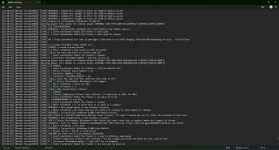
  • Screenshot 2026-01-13 183204.png
    Screenshot 2026-01-13 183204.png
    191.8 KB · Views: 102
Last edited by a moderator:

Writ of Summons

@Zombie_Bro_ is required to appear before the District Court in the case of KukkiNekko v. Zombie_Bro_ [2026] DCR 5.

Failure to appear within 72 hours of this summons will result in a default judgement based on the known facts of the case.

Both parties should make themselves aware of the Court Rules and Procedures, including the option of an in-game trial should both parties request one.

 
Last edited:

Motion


IN THE DISTRICT COURT OF THE COMMONWEALTH OF REDMONT
MOTION TO AMEND

I have made an error with the filing, in fact three it should be “thinking they were real” not “thinking they were fake”.


Motion


IN THE DISTRICT COURT OF THE COMMONWEALTH OF REDMONT
MOTION TO AMEND

I have made an error with the filing, in fact three it should be “thinking they were real” not “thinking they were fake”.

Granted, you may now make the necessary amendments.
 
Defendant is not present after the deadline, this a Public Defender shall be assigned shortly.
 

Objection


IN THE DISTRICT COURT OF THE COMMONWEALTH OF REDMONT
OBJECTION - IMPROPER EVIDENCE

Your Honour:
In SCR 20 [2025], the Supreme Court ruled that text logs must be corroborated by independent evidence to be admissible.

Plaintiff has not provided any independent corroborating evidence for P-001, while P-002 is only partially corroborated through P-006.

Therefore, Defence Counsel respectfully requests the Court to strike both pieces of evidence as improper.


Objection


IN THE DISTRICT COURT OF THE COMMONWEALTH OF REDMONT
OBJECTION - IMPROPER EVIDENCE

Your Honour:
In SCR 20 [2025], the Supreme Court ruled that text logs must be corroborated by independent evidence to be admissible.

Plaintiff has not provided any independent corroborating evidence for P-001, while P-002 is only partially corroborated through P-006.

Therefore, Defence Counsel respectfully requests the Court to strike both pieces of evidence as improper.

Your Honour:
Defendant respectfully requests the Court to postpone the deadline for an Answer to Complaint until after a ruling has been made on #9.
 

Objection


IN THE DISTRICT COURT OF THE COMMONWEALTH OF REDMONT
OBJECTION - IMPROPER EVIDENCE

Your Honour:
In SCR 20 [2025], the Supreme Court ruled that text logs must be corroborated by independent evidence to be admissible.

Plaintiff has not provided any independent corroborating evidence for P-001, while P-002 is only partially corroborated through P-006.

Therefore, Defence Counsel respectfully requests the Court to strike both pieces of evidence as improper.

Sustained, the Court hereby strikes P-001 and P-002.

Accordingly, the Court hereby requests that the Defendant submit their Answer to Complaint in the next 24 hours (1/24/26 @ 5am EST).
@Julia_ @Aboundedcomet
 

Answer to Complaint


IN THE DISTRCT COURT OF THE COMMONWEALTH OF REDMONT
ANSWER TO COMPLAINT

KukkiNekko
Plaintiff

v.

Zombie_Bro_ (Represented by the Public Defender Program)
Defendant

I. ANSWER TO COMPLAINT

1. AFFIRM that Defendant created the tokens; DENY that Defendant intended to use them for fraudulent purposes.
2. DENY.
3. DENY that Plaintiff paid $14,000 to Defendant; NEITHER AFFIRM NOR DENY that Plaintiff thought the tokens were real.
4. DENY.

II. DEFENCES

1. Plaintiff has provided insufficient evidence to prove that Defendant had fraudulent intent.
2. Plaintiff has provided insufficient evidence to prove that Defendant intended to use the tokens.
3. Plaintiff has provided insufficient evidence to prove that Plaintiff thought the tokens were real.
4. Plaintiff has provided insufficient evidence to prove that Defendant never stated the tokens were real.
5. Plaintiff paid $14,000 to an individual named "Christophern Blackwood". Defendant is not Christophern Blackwood, they are Zombie_Bro_.
6. Fraud, as defined in the Criminal Code Act, is an indictable offence and may only be pursued in Court by the Department of Justice.
7. Were this a prosecution by the Department of Justice, a charge of Fraud could not be proven as insufficient evidence has been provided to prove that Defendant knowingly or recklessly misrepresented or omitted a material fact.
8. Punitive damages do not apply as conduct by Defendant was not outrageous.

By making this submission, I agree I understand the penalties of lying in court and the fact that I am subject to perjury should I knowingly make a false statement in court.

DATED: This 23rd day of January 2025

 
Discovery is now open for 5 calendar days (29/1/26 @ 2am EST). Any reasonable extensions or early closures can be granted, given its acceptance by both parties.
@Aboundedcomet @Julia_
 
The defence does not concur as of right now.
 
Additional Evidence:

image (9).webp

image (8).webp

image (10).webp

Screenshot 2026-01-28 223227.png
 
Last edited:

Motion


IN THE FEDERAL COURT OF THE COMMONWEALTH OF REDMONT
MOTION TO AMEND

I have submitted the same evidence twice when I mean to submit a different evidence, my apologies.

 
Your Honour,
Given that new evidence has been submitted, Defendant requests a 12-hour-extension to the Discovery process.
 

Motion


IN THE FEDERAL COURT OF THE COMMONWEALTH OF REDMONT
MOTION TO AMEND

I have submitted the same evidence twice when I mean to submit a different evidence, my apologies.

Granted. Please make the relevant changes and notify all parties when that is completed.
 
Your Honour,
Given that new evidence has been submitted, Defendant requests a 12-hour-extension to the Discovery process.
Granted. Deadline for discovery is now 30/1/26 @ 10am EST.
 
Discovery for this case is hereby closed. The Plaintiff shall now submit their opening statements to the Court within 72 hours (6/2/26 @ 7pm EST).
@Aboundedcomet
 

Opening Statement


IN THE FEDERAL COURT OF THE COMMONWEALTH OF REDMONT
OPENING STATEMENT

This is a clear case of fraudulent activity by the defendant, they clearly admitted (as shown in P-007 and P-009) to scamming the Plaintiff with counterfeit tokens for their own personal gain. The Defendant abused the good faith of the Plaintiff by an (successful) attempt to steal money from the Plaintiff's casino (as shown in P-003 and P-004). The Plaintiff has suffered significant financial loss because of the Defendant's. The Plaintiff wishes they are punished for their crime.

The Plaintiff wishes for $27,000 (plus any legal fees awarded by the court) to punish the Defendant and discourage further fraudulent acts.

 
The Plaintiff requests to respond to the Defendant's request.
 
Defendant respectfully request a 16-hour extension.
Your honour, the Defendant has already postponed the case enough by requesting two extensions totalling 24h. This case has been going on for almost a month as of right now, so I would request that we have no more extensions in the spirit of a fast trial.
 
Your honour, the Defendant has already postponed the case enough by requesting two extensions totalling 24h. This case has been going on for almost a month as of right now, so I would request that we have no more extensions in the spirit of a fast trial.
Although the extensions mentioned were not used by the Defendant (making them redundant), the total time granted was inconsequential compared to the standard response times granted to both parties.

Additionally, while the Court sympathises with the Plaintiff on the duration of the case so far, the Court wishes to uphold a speedy trial rather than a fast one, where unnecessary delays are mitigated or reduced, rather than the absolute time used is shortened.

Accordingly, the Court grants the extension requested by the Defendant. The new deadline for their opening statements is 12/2/26 @ 12am EST.
@Julia_
 
Your Honour,
I have formally tendered my resignation from the Public Defender's Office. I will no longer be representing Defendant.
 
Your Honour,
I have formally tendered my resignation from the Public Defender's Office. I will no longer be representing Defendant.
Thank you for your notice, the Court shall assign a new PD for the Defendant.
 
Morning,
I am present for the PD program. I would request to get 24 hours to read into the case and decide a course of action.
 
Morning,
I am present for the PD program. I would request to get 24 hours to read into the case and decide a course of action.
Granted. The Defendant is given until 12/2/26 @ 9pm EST to submit their opening statements.
 

Opening Statement


IN THE FEDERAL COURT OF THE COMMONWEALTH OF REDMONT

This case does not involve fraud. The Plaintiff is trying to portray this situation as a serious crime, but the evidence does not support that claim. Nothing the Plaintiff has presented proves that the Defendant intentionally scammed anyone or that there was any real misrepresentation to start with. The Plaintiff points to P-007 and P-009, claiming the Defendant “admitted” to scamming them. These messages are taken out of context and do not demonstrate any actual plan or intent to deceive the Plaintiff during the trade. Chat messages that come after an event do not reveal what someone meant beforehand. The Plaintiff also cites P-003 and P-004 as proof of financial harm, but those payments were not made to the Defendant. The money went to Christophern Blackwood, not Zombie_Bro_. You cannot claim someone caused you harm if they never received any of the money. Additionally, there is no proof that the Plaintiff relied on anything the Defendant said. In the chats, the Plaintiff expressed uncertainty but chose to complete the deal anyway. This breaks the reliance requirement for fraud as specified by law. Overall, the Plaintiff has not shown any of the necessary elements for fraud: no intentional lie, no material fact misrepresented, no legitimate reliance, and no harm caused by the Defendant. Because of this, the damages they seek do not make sense and are not supported by the evidence.

Submitted respectfully,
PD Soga


Motion


IN THE DISTRICT COURT OF THE COMMONWEALTH OF REDMONT

The Defence requests the dismissal of this case in full. The Plaintiff has not provided sufficient evidence to establish fraud under §7 of the Commercial Standards Act. There is no proof of any intentional or reckless misrepresentation by the Defendant. The Plaintiff has also not shown that they relied on anything the Defendant said or that the Defendant caused any financial harm. The payments shown were made to a third party, not the Defendant. Since the basic elements of the offence lack supporting evidence, this case cannot move forward. The Plaintiff’s claims are based on assumptions and do not meet the legal standard required for an indictable offence. The Defence respectfully asks the Court to dismiss the case.

PD Soga

 
Last edited:

Motion


IN THE DISTRICT COURT OF THE COMMONWEALTH OF REDMONT

The Defence requests the dismissal of this case in full. The Plaintiff has not provided sufficient evidence to establish fraud under §7 of the Commercial Standards Act. There is no proof of any intentional or reckless misrepresentation by the Defendant. The Plaintiff has also not shown that they relied on anything the Defendant said or that the Defendant caused any financial harm. The payments shown were made to a third party, not the Defendant. Since the basic elements of the offence lack supporting evidence, this case cannot move forward. The Plaintiff’s claims are based on assumptions and do not meet the legal standard required for an indictable offence. The Defence respectfully asks the Court to dismiss the case.

PD Soga

Honorable Magistrate,
could we get a ruling on this?
 

Motion


IN THE DISTRICT COURT OF THE COMMONWEALTH OF REDMONT

The Defence requests the dismissal of this case in full. The Plaintiff has not provided sufficient evidence to establish fraud under §7 of the Commercial Standards Act. There is no proof of any intentional or reckless misrepresentation by the Defendant. The Plaintiff has also not shown that they relied on anything the Defendant said or that the Defendant caused any financial harm. The payments shown were made to a third party, not the Defendant. Since the basic elements of the offence lack supporting evidence, this case cannot move forward. The Plaintiff’s claims are based on assumptions and do not meet the legal standard required for an indictable offence. The Defence respectfully asks the Court to dismiss the case.

PD Soga

The Court finds that the evidence provided by the Plaintiff has sufficiently met the prima facie standard of reasonable inference that the elements of fraud could have been met. While some points are rather ambiguous or yet to be considered, the Court believes that the inclusion of Opening and Closing statements will allow both parties to argue their points for the Court to deliberate on.

Accordingly, this motion to dismiss is denied.
 
Given the lack of witnesses to be called upon, the Court shall now move into Closing Statements. The Plaintiff shall now be given 72 hours (18/2/26 @ 8pm EST) to submit their Closing Statements to the Court.
@Aboundedcomet
 

Closing Statement


IN THE FEDERAL COURT OF THE COMMONWEALTH OF REDMONT
CLOSING STATEMENT

Your honour.
This is a clear and cut case of the Defendant committing fraudulent actions, obviously scamming the Plaintiff out of their hard earned money. The presented evidence clearly shows the Defendant giving the Plaintiff fraudulent tokens with the intent to steal their money. Not much more is needed to be said as the evidence says all that is needed. I thank you for your time and hope you rule in the Plaintiff's favour.


Closing Statement


Closing Statement


IN THE FEDERAL COURT OF THE COMMONWEALTH OF REDMONT
CLOSING STATEMENT

Your Honor,
the Plaintiff asks this Court to find criminal fraud where none exists. The evidence, when examined objectively, supports at most a civil dispute not the severe criminal liability sought.

The Defendant did not commit fraud under §7(7).

Fraud requires intentional deception. The Defendant's tokens bore clear markings: "Autograph by Zombie_Bro." This was visible, unhidden, and discoverable through basic inspection. The Plaintiff, an experienced business operator, accepted the tokens and initiated payment without verification. The Defendant made no affirmative representation that these were official casino tokens. Silence is not fraud. A buyer's assumption is not a seller's deception.

The "glitch" comment, while illadvised, did not create a material misrepresentation. The Defendant suggested the chestshop malfunctioned not that the tokens were authentic. The Plaintiff chose manual redemption. The Plaintiff chose to pay. These were voluntary business decisions, not coerced actions induced by fraud.

The damages sought are disproportionate and punitive.

14,000 in compensatory damages presumes the tokens held zero value. They were crafted items, exchanged in a consensual transaction. 13,000 in punitive damages would serve not justice, but annihilation. The Defendant has no prior record of fraudulent conduct. This single disputed trade does not warrant financial destruction.

The Plaintiff shares responsibility.

A casino operator accepting high-value tokens bears duty of care. The Plaintiff failed to authenticate. The Plaintiff failed to inspect. The Plaintiff now seeks to externalize every consequence of that failure onto the Defendant.

This Court should reject the criminal characterization. Dismiss the fraud claim. If any remedy is warranted, limit it to good faith negotiation not the ruinous judgment requested.

respectfully submitted,
PD Soga

 
Your honour, may I have an update on the status of a verdict? (@Pepecuu)
 

Verdict


IN THE DISTRICT COURT OF THE COMMONWEALTH OF REDMONT
VERDICT - KukkiNekko v. Zombie_Bro_ [2026] DCR 5


I. Summary of Case​

Plaintiff (KukkiNekko) alleges that they were defrauded by Defendant (Zombie_Bro_) in the amount of $14,000. Plaintiff alleges that Defendant created fake tokens for Plaintiff's casino, that Plaintiff accepted the tokens and paid out $14,000 on the mistaken belief that the tokens were real, and that Defendant did not volunteer that information to the Plaintiff at any point relevant to this case.

Defendant denies all factual allegations except for affirming that the Defendant created the tokens and neither affirming nor denying whether or not the Plaintiff thought the tokens were real. Defendant raises defenses of insufficient evidence, mistaken identity, inability of citizens to prosecute crimes, and lack-of-outrageousness.

This is a civil case seeking damages Plaintiff alleges were caused by a violation of the Criminal Code Act, and this Court draws conclusions herein regarding civil liability. As to criminal liability itself, "the court will not make any ruling" (Lucaaasserole v. Naezaratheus et al. [2025] FCR 50).

II. Factual Analysis​

No witness testimony was presented in this case. Two exhibits have been stricken (Exhibit P-001 and P-002), and thus are not considered in the Court's verdict. The Court has considered the evidence-in-case, filings by both parties, and previous court decisions in this case's factual analysis.

II.A "Christophern Blackwood", "Zombian Blackwood", and Defendant Zombie_Bro_ are all the same person​

It is clear from Exhibit P-010 that "Zombian Blackwood" is the Defendant, Zombie_Bro_. The more difficult question is whether 'Christophern Blackwood' is the same person as the Defendant.

Defense has represented that "Defendant is not Christophern Blackwood, they are Zombie_Bro_" (Answer, Section II(5)), and that the funds transferred in Exhibits P-003 and P-004 "went to Christophern Blackwood, not Zombie_Bro_" (Defense's Opening Statement).

We must now examine the evidence-in-case and filings to see whether, on a balance of probabilities, "Christophern Blackwood" is the same person as these two. This information need not come from a single piece of evidence alone, but may come from a broader examination of the evidentiary record (see: Superwoops v. Trentrick_Lamar [2026] DCR 18, Verdict, Section II.I.I).

Exhibit P-006 shows "Christophern Blackwood" as having stated "its bugged". This came after a certain "Kukki The creator" stated "payout" and "sell em upstairs pls" in local chat. Defense admits that "[t]he Defendant suggested the chestshop malfunctioned not that the tokens were authentic" (Defense Closing Statement). The Court, putting these two together, sees this as evidence in support of identifying Christophern Blackwood with the Defendant. The Plaintiff paid $14,000 to Christophern Blackwood (Compl., Exhibits P-003 and P-004), which is equal to the total face value of the tokens in Exhibit P-005 ($500 times 28 equals $14,000). Defendant admits to having created the tokens (Answer, Section I(1)).

Exhibit P-010 shows "Zombian Blackwood" saying, unprompted, "kukki hi \ remember me \ your money is gone btw". In Exhibit P-007, "You" (who has the same face as "Kukki the Creator" in Exhibit P-006) asked Zombian Blackwood "the money you got by cashing out your chips". Zombian Blackwood responds "yeah" in the affirmative. Zombian Blackwood responds with remorse to the comment "why so much" made by "You", and subsequently wrote "im basically admitting but your moneys gone".

There are a few gaps in the record. Screenshot cropping does obscure, to some extent, the greater context. It also prevents the Court from knowing, with certainty, the order in which the various messages were sent. Nor was any witness called to corroborate the message order.

But the gaps cut against the identification of "Christophern Blackwood" with the Defendant less than the evidence points towards the two being the same person. On balance of probabilities, therefore, this Court finds that the "Christophern Blackwood" in the evidence-in-case is the same person as the Defendant.

II.B Defendant Zombie_Bro_ created 28 counterfeit $500 tokens​

The Plaintiff alleges that Defendant "created fraudulent tokens for the Plaintiff’s casino" (Compl., factual allegations No. 1 and No. 2). In reviewing evidentiary support, Plaintiff provided a screenshot of 28 lime dye named "Kukki's 500$" and signed by "Zombie_Bro_" (Compl., Exhibit P-005). Defendant affirms "that Defendant created the tokens" (Answer, Section I(1)), but denies that the tokens were intended to be used fraudulently (ibid) and argues that the Defendant "made no affirmative representation that these were official casino tokens" (Defense Closing Statement). As such, the Court analyzes whether or not these tokens were created as counterfeits for the Plaintiff's casino.

The Court's analysis is as follows:

II.B.1 Defendant created 28 tokens titled "Kukki's 500$"​

This part is straightforward. Exhibit P-005 shows signed lime dye with a title of "Kukki's 500$". Defendant admits to having created the tokens (Answer, Section I(1)). The Court sees no reason to doubt this affirmation, and concludes that Zombie_Bro_ created the tokens in Exhibit P-005.

II.B.2 The Court concludes, on balance of probabilities, that the tokens in Exhibit P-005 are counterfeit gaming chips​

What is more complicated is tying these tokens to a casino based on the evidence-in-case. No witness testimony was provided walking the Court through the existence of a casino owned by the Plaintiff, as no witness testimony was presented. Plaintiff did not present the Court with images of casino machines, chip-cashing equipment, nor legitimate chips.

We thus turn to an examination of the admissions by the Defense in the answer, as well as other evidence-in-case that may indirectly reflect on this point.

The first factual allegation of the Plaintiff ("The Defendant created fraudulent tokens for the Plaintiff’s casino") directly alleges that the tokens were (1) created by the Defendant, (2) fraudulent, and (3) created "for the Plaintiff's casino". The answer to that allegation by the defense (Answer, Section I(1), "AFFIRM that Defendant created the tokens; DENY that Defendant intended to use them for fraudulent purposes") affirms (1), denies (2), but does not directly address the portion of the allegation "for Plaintiff's casino". No general denial saver clause (e.g. "the defense denies all factual allegations except those expressly affirmed herein") is present.

What is the Court to infer from this? Is it that the defense saw two substantial questions (e.g. "The Defendant created fraudulent tokens" and "The Defendant created... tokens for the Plaintiff’s casino")? Or is it merely that the Defendant omitted information that ought to have been there?

This Court finds that the Defendant's answer simply omitted information pertaining to the question of whether the tokens were created "for the Plaintiff's casino". The Plaintiff did have remedies available under Rule 3.6 (Default Judgement, Failure to Submit Defense), which requires that "[d]efendants must amend any answer to have affirmations or denials on all facts". But the presiding judicial officer cannot grant default judgement sua sponte under that rule; "[f]ailure to include the necessary information is grounds for plaintiffs to request the presiding judge to grant default judgment against the defendant". This Court sees no such request, so default judgement cannot be granted at this time under Rule 3.6.

We now know that no direct evidence of the alleged casino's existence is in-case, and we see no affirmation from the defense as to whether or not the tokens were created for the Plaintiff's casino. This Court next turns to whether or not indirect evidence would meet the burden of proof (c.f. In re [2025] FCR 123 | [2026] SCR 5, Dicta, "Circumstantial evidence, by its very nature, is evidence that is implicit. The implications derived from circumstantial evidence may very well prove controlling and convincing").

Turning to indirect evidence: Exhibit P-007 contains a conversation in which the Defendant responds to the affirmative in response to the question "the money you got by cashing out your chips?". The term "chips" has many meanings in different contexts, such as a type of fried potato, thin and flat pieces of wood, and counters used as a token for money in poker and other games. Only one makes sense in the context of the broader conversation depicted in Exhibits P-007 through P-010: "chips" refers to the sorts of items used as tokens of value in a gaming or gambling context.

This reading is reinforced by previous rulings. The Federal Court has previously noted that certain dye may be used as a banknote (YeetGlazer v. Commonwealth of Redmont [2025] FCR 76, Findings of Fact, No. 2, "In the auction thread, Dearev posted an image of 'GlobalCenter's bank acc' displaying various dyes. Expert witness AsexualDinosaur identified these dyes as DNB banknotes valued at approximately $177,400," internal references omitted).

The Court draws an inference, on balance of probabilities, that the "Kukki's" in "Kukki's 500$" refers to Plaintiff, KukkiNekko. The name of the item being "Kukki's 500$", on first glance, would suggest to an observer that the item is a store of value of $500 that KukkiNekko would be in some way obligated to pay. These were gaming chips of some sort, and the Court concludes on balance of probabilities that KukkiNekko ran a gaming institution that used chips as a store of value.

The Defense admits to having created the tokens (Answer, Section I(1)). These tokens, thus, were not legitimate debt obligations created by the Plaintiff. Instead, this Court concludes that the chips were deliberate counterfeits.

II.C Plaintiff paid the Defendant $14,000 for the 28 counterfeit tokens​

The Plaintiff alleges in their complaint that "The Plaintiff took the fraudulent tokens thinking they were real and paid the Defendant $14,000" (Compl., Factual Allegation No. 3). The Court identifies that Plaintiff provided evidence of two payments by Plaintiff to a certain "Christophern Blackwood" (Compl., Exhibits P-003 and P-004).

The defense, in its Answer to Complaint, chose to "deny that Plaintiff paid $14,000 to Defendant" (Answer, Section I(3)). This denial continued in the defense's opening statement (Defense Opening Statement, "those payments were not made to the Defendant. The money went to Christophern Blackwood, not Zombie_Bro_"), in a subsequent motion to dismiss (Post No. 39, "The payments shown were made to a third party, not the Defendant"). In closing, however, the Defense stated that "[t]he Defendant suggested the chestshop malfunctioned[,] not that the tokens were authentic" (Defense Closing Statement).

This Court has already found that "Christophern Blackwood", "Zombian Blackwood", and the Defendant are the same person (see: Section II.A). Applying that finding here, Exhibits P-003 and P-004 demonstrate a transfer of $14,000 from the Plaintiff to the Defendant. In the context of the conversation depicted in Exhibit P-006, the District Court concludes that the payment of $14,000 was made by Plaintiff to Defendant when "cashing out [Defendant's] chips".

Drawing this all together, the Court concludes on balance of probabilities that the Plaintiff paid the Defendant $14,000 in exchange for Defendant's 28 counterfeit tokens.

II.D Defendant intentionally deceived the Plaintiff, causing the Plaintiff's losses​

What was the Defense's response to this? The defense later admitted that "[t]he Defendant suggested the chestshop malfunctioned" while maintaining that the Defendant did not suggest "that the tokens were authentic" (Defense Closing Statement).

This is a distinction without a difference. Defendant knew that the tokens Defendant had created were not authentic tokens, having made them himself (Answer, Section I(1)). "The Defendant suggested the chestshop malfunctioned" (Defense Closing Statement). More specifically, Exhibit P-006 shows that the Plaintiff says "sell em upstairs pls" and Defendant responds, "its bugged". That is not mere silence, but active deception. It offers a purported explanation for why an ordinary shop process is supposedly not working, even when the Defendant would reasonably have known that a sell shop not accepting counterfeit tokens is not actually a bug.

This is strong evidence of reliance because it explains why "[t]he Plaintiff chose manual redemption" (Defense Closing Statement); the Court concludes on balance of probabilities that but for Defendant's deception of the Plaintiff, manual redemption would not have occurred.

Separately, the Defendant appears to have admitted to scamming the Plaintiff after the fact, responding "fr" (i.e. "for real", an affirmative indicator) to the comment "it was a creative scam to be fair" (Post No. 18, Exhibits P-007), and told the Plaintiff that "your money is gone btw" (id., Exhibit P-010). Both also tacitly demonstrate both the harm to Plaintiff and Defendant’s intent.

III. Opinion of the Court​

"This Court deals with actionable harms borne of a legal fault" (Maxib02 v. NovaKerbal [2026] DCR 11, Post No. 115, Order of Dismissal). We thus now turn to identifying the applicable law for the underlying claim(s) and applying the findings of fact thereto.

III.A This case permissibly seeks civil damages arising from Defendant's alleged fraud​

This case has a single claim for relief listed: fraud, under the Criminal Code Act. As "the law at the time of the alleged breach of law is the applicable law" (Commonwealth of Redmont Vs CHUD.Inc [2026] FCR 19, Verdict, Section III.1.A), and the alleged breach of law occurred prior to the filing of this case, we must examine the Criminal Code Act as it was before the passage of the Redmont Civil Code Amendments Act.

From the time of the CCA's passage until the entry of the RCCAA into force, the CCA noted that "in civil lawsuits, crimes may be used to seek damages, although damages are not presumed" (CCA, Part 1, Section 6(1)(a); see RCCAA, Part 2, Section 1 for amending act). As such, this Court needn't construe Plaintiff as prosecuting a criminal case (see also: YeetGlazer v. Commonwealth of Redmont [2025] FCR 76, Section V.E, Par. 1, acknowledging a distinction between criminal liability and civil tort liability arising from allegations of a crime; The_Donuticus v. GER, as an Organization, et al. [2022] SCR 18, Opinion of the Court, "civil court should be seen as a party seeking compensation as a result of actions done, whether that be from criminal statute or extraneous circumstances"). Defendant's proffered defense that "Fraud, as defined in the Criminal Code Act, is an indictable offence and may only be pursued in Court by the Department of Justice" (Answer, Section II(6)) does not shield defendant from civil liability here.

Plaintiff, as such, has sued Defendant for a sufficiently pleaded civil tort then-available under the Criminal Code Act.

III.B Each element of the four-part test for fraud is met in this case​

Having established that this is a civil case brought for alleged violations of a crime, not a criminal prosecution, the Court then turns to examine the alleged unlawful actions that would give rise to the civil tort. Since the first passage of the CCA, the crime of fraud has been held as follows:
7 - Fraud
Offence Type: Indictable
Penalty: Up to 100 Penalty Units; up to 10 min[utes] imprisonment
A person commits an offence if the person:
(a) knowingly or recklessly misrepresents or omits a material fact to another, causing the other party to rely on that misrepresentation, resulting in actual, quantifiable harm.
Relevant Law: Act of Congress - Commercial Standards Act

Prior to the CCA, the Federal Court had assessed the law as requiring a three-step test (MegaMinerM v. Blazora Corporation [2025] FCR 27, Verdict, Section III(D)). The Criminal Code Act, however, changed the definition of fraud from that which was present in the Commercial Standards Act prior to its passage (see: Redundant Offenses Removal Act for the text of the fraud statute prior to its removal from law). The District Court, upon examination of Fraud under the CCA, finds fraud to be broken into a four-part test:
  1. A person misrepresents or omits a material fact;
  2. The person's misrepresentation or omission was done knowingly or recklessly;
  3. Another party relied on that person's misrepresentation (or omission);
  4. That other party is actually harmed in a quantifiable manner as a result of the person's omission or misrepresentation.
In this case, each part of the test is met:
  1. Defendant created lime dye with a custom name of "Kukki's 500$", signed the dye himself, and expressly said "its bugged" after being told to sell upstairs (Section II.A; Section II.B). That the machines did not accept counterfeit tokens was plainly not a bug; this, combined with the design of the counterfeit token, makes clear that Defendant engaged in misrepresentation. (Whether these tokens were for a casino, or merely for some other sort of gaming institution, is immaterial; what matters is that the Defendant falsely represented the authenticity of the token and/or the working of the token cashing machines.)
  2. Defendant plainly knew that Defendant created the counterfeit tokens and that Defendant was misrepresenting facts regarding the status of the Plaintiff's chip-cashing machine (Section II.B). The Defendant's creation of counterfeit tokens bearing the Plaintiff's name and the affirmative statement that "its bugged" demonstrate that the Defendant acted knowingly, satisfying the statute's "knowingly or recklessly" mens rea requirement.
  3. Plaintiff paid $14,000 for 28 counterfeit gaming chips (Section II.C). This manual redemption occurred only after Defendant stated that the machines were "bugged" (Section II.D), indicating that Plaintiff did rely upon the Defendant's misrepresentation before manually redeeming the counterfeit tokens as if they were legitimate ones.
  4. Defendant received $14,000 from the Plaintiff (Section II.C) and later tacitly admitted both to scamming the Plaintiff and to knowledge that these funds had disappeared (Section II.D). Plaintiff's loss of $14,000 from redeeming counterfeit tokens is quantifiable harm.
As such, on balance of probabilities, this Court comes to the conclusion that Defendant committed fraud against the Plaintiff as defined in the Criminal Code Act. Defendant is thus liable for the damages that resulted.

(This is not a criminal conviction, but a finding of law in the context of this civil trial.)

IV. Damages​

Having established that Defendant is liable for defrauding the Plaintiff, we turn to examining the Plaintiff's prayers for relief. As noted prior, "the law at the time of the alleged breach of law is the applicable law" (Commonwealth of Redmont Vs CHUD.Inc [2026] FCR 19, Verdict, Section III.1.A); the Court thus evaluates damages under the Legal Damages Act, which was in force at all times relevant to the fraud itself.

IV.A Compensatory damages are warranted in full.​

On its face, compensatory damages appear easy. Plaintiff proved a pecuniary loss of $14,000 (Section III.B), and it seems obvious that the Court would award this.

IV.A.1 Defense has failed to establish the necessary basis for diminution of compensatory damages​

On closing, the Defense argued that, as far as pecuniary loss goes, "The Plaintiff shares responsibility. \ A casino operator accepting high-value tokens bears duty of care. The Plaintiff failed to authenticate. The Plaintiff failed to inspect. The Plaintiff now seeks to externalize every consequence of that failure onto the Defendant." Defense thus argues that the compensatory award should be diminished.

This does not come out of nowhere. Under Legal Damages Act, which was in effect at the time of the fraud, awards may be diminished under certain circumstances: breaches of a Duty to Mitigate or commission of contributory negligence.

The Duty to Mitigate is "A party’s obligation to make reasonable efforts to limit the harm they suffer from another party’s actions" (Legal Damages Act, Section 4(3)(a)). The Defendant points out that "The Defendant's tokens bore clear markings: 'Autograph by Zombie_Bro.' This was visible, unhidden, and discoverable through basic inspection. The Plaintiff, an experienced business operator, accepted the tokens and initiated payment without verification" (Defense Closing Statement). This Court agrees in part; a thorough inspection of the tokens would have revealed the signature by Zombie_Bro_, and would have given the Plaintiff sufficient knowledge to have not been harmed. But this Court does not agree in full; the Plaintiff, upon examining the name of the tokens, would reasonably have been confused as to the facts of the matter. The item was titled as a casino token—"Kukki’s 500$"— and even if the lore line "Autograph by Zombie_Bro_" might have revealed something was off on close inspection, the Court does not find that the Plaintiff failed to make reasonable efforts to limit the harm suffered.

Contributory negligence occurs when a Plaintiff commits "conduct on the part of the plaintiff which falls below the standard to which he should conform for their own protection, and which is a legally contributing cause co-operating with the negligence of the defendant in bringing about the plaintiff's harm" (Legal Damages Act, Section 4(3)(b)). Fraud, however, is not a crime of negligence; Plaintiff did not co-operate with "the negligence of the defendant", but was a victim of an intentional action. As such, contributory negligence does not apply.

IV.A.2 Full compensatory damages are warranted​

Absent diminution of the compensatory award, this Court adjudges that the Defendant is liable to the Plaintiff in the amount of $14,000 in compensatory damages, equal to the Plaintiff's pecuniary loss.

IV.B Punitive Damages are warranted.​

The Legal Damages Act authorizes punitive damages for a Defendant's "outrageous conduct" (Legal Damages Act, Section 5(1)(a)), in order "to deter them and others like them from similar conduct in the future" (ibid.). This conduct qualifies. Defendant created the false item, faked a technical issue, triggered payout, and afterward treated the matter as a successful scam whose proceeds were gone. That is precisely the sort of deliberate and dishonest conduct punitive damages are meant to punish and deter.

While prior cases involving straight financial fraud have reached as high as treble damages (Lucaaasserole v. Naezaratheus et al. [2025] FCR 50), this case warrants less. The Court finds the $13,000 suggested by the Plaintiff to be somewhat high in light of the relative malice and need for deterrence of fraudulent behavior of this sort. The Court thus grants the punitive damages in part; Defendant is liable to the Plaintiff in the amount of $10,000 in punitive damages.

IV.C Legal fees are owed to the Plaintiff's counsel.​

Under the Legal Damages Act, "In cases that reach a verdict, legal fees are awarded to the legal representative of the prevailing party at a rate of 30% of the total value of the case" (Legal Damages Act, Section 9(2)(c)), with exceptions for cases where a presiding judicial officer might seek to diminish fees based on lawyer competency and conduct in-case.

Even though legal fees were not included in the prayer for relief, "Legal fees do not necessitate inclusion in a prayer for relief or a countersuit to be awarded" (Legal Damages Act, Section 9(2)(a)). As such, this Court sees no reason to diminish legal fees, and awards the Plaintiff's counsel the full 30%.

This 30% is "measured against the actual recovery" (YeetGlazer v. Commonwealth of Redmont [2025] FCR 76, Order of the Court, Section VI, Par. 2). Because this Court has awarded a total of $24,000 in damages between compensatory and punitive damages, the Defendant is liable to Plaintiff's counsel in the amount of 30% of that amount, which comes out to $7,200 in legal fees.

V. Order of the Court​

In light of the above, the Court orders as follows:
  1. Defendant Zombie_Bro_ is liable to Plaintiff KukkiNekko in the amount of $24,000.
  2. Defendant Zombie_Bro_ is liable to AboundedComet, Plaintiff's legal representative, in the amount of $7,200.
So Ordered,
Hon. Judge Multiman155

 
Status
Not open for further replies.
Back
Top