Lawsuit: In Session MMiqa v. Department of Homeland Security [2026] DCR 77

MMiqa

Citizen
Oakridge Resident
Education Department
MMiqa
MMiqa
Archivist
Joined
Jun 1, 2026
Messages
120

Case Filing


IN THE FEDERAL COURT OF THE COMMONWEALTH OF REDMONT
CIVIL ACTION

MMiqa
Plaintiff

v.

Department of Homeland Security
Defendant

COMPLAINT

WRITTEN STATEMENT FROM THE PLAINTIFF

On June 12, 2026, I was arrested and imprisoned by the Department of Homeland Security. Upon imprisonment, I immediately submitted a self-defence claim under Criminal Code Act Part I §6(10) and provided log evidence in support. I invoked §6(10) explicitly on multiple occasions. DHS officers read and acknowledged each invocation but refused to release me, stating that an investigation needed to be completed first. This directly contradicts the plain text of §6(10), which requires suspension of all punishments upon submission — not upon conclusion of any investigation.

At 23:50, I explicitly noted that the server had come back online and stated I was waiting for DHS's answer. Active discussions continued until approximately 00:54, at which point I was released — nearly three hours after my first invocation of §6(10). DHS has since compensated me $4,100 for unlawful detention, formally acknowledging that the detention was unlawful. However, this compensation does not excuse DHS's deliberate refusal to act. DHS cannot detain a citizen unlawfully and then simply compensate them after the fact — the law requires immediate release, not eventual payment.

The Defendant may argue that the Plaintiff's self-defence claim was insufficient or unproven. This argument is irrelevant to the question of §6(10) compliance. The provision does not require the claim to be accepted, verified, or deemed credible before punishments are suspended. It requires only that a claim be submitted. The quality, strength, or ultimate outcome of the claim has no bearing on the obligation to suspend punishment upon submission. If the claim is later found to be unsubstantiated, the appropriate consequence is the reinstatement of punishment — not the denial of the right to suspension in the first place. DHS's obligation was triggered the moment the Plaintiff submitted their claim. It was not contingent on DHS's assessment of its merits.

I attempted to resolve this matter without court proceedings. I explicitly stated that if DHS waived the remaining imprisonment and provided a full fine refund, I would not pursue litigation. DHS provided the fine refund but informed me that I would still be required to serve 45 minutes of imprisonment for the 3 Murder charges. My core settlement condition — no additional imprisonment — was rejected. DHS subsequently closed Ticket #32935 without notice. I discovered the closure only because I had taken screenshots — the ticket was closed without my knowledge, and my conditions were never addressed.

I do not bring this action lightly. I sincerely regret that DHS's conduct has made court proceedings necessary.

I. PARTIES
1. MMiqa (Plaintiff) — Licensed Attorney, Redmont Bar Association
2. Department of Homeland Security (Defendant)

II. FACTS
1. On June 12, 2026, the Plaintiff was arrested and imprisoned by the Department of Homeland Security.
2. Upon imprisonment, the Plaintiff immediately submitted a self-defence claim under Criminal Code Act Part I §6(10) and provided supporting log evidence.
3. Criminal Code Act Part I §6(10) provides that all punishments must be suspended upon submission of a self-defence claim. The word "upon" is unambiguous — suspension is triggered at the moment of submission, not at the conclusion of any investigation.
4. DHS officers did not release the Plaintiff upon submission. They stated that an investigation needed to be completed first. This has no basis in the text of §6(10).
5. The Plaintiff explicitly invoked §6(10) and demanded immediate release at least 8 times. The first invocation occurred at 23:57. The server came back online at approximately 23:50, and from that point the Plaintiff actively and repeatedly demanded release. Despite being online and actively engaged in the ticket, DHS refused to release the Plaintiff for approximately one hour after the server came back online.
6. At 23:50, the Plaintiff noted the server had returned online and stated they were actively waiting for DHS's response. Active discussions continued.
7. The Plaintiff was only released at approximately 00:54 — having served approximately 82 minutes of imprisonment in total, for which DHS compensated the Plaintiff $4,100. The majority of this time — approximately 60 minutes from around the 20th minute onward — was spent actively demanding release under §6(10) while DHS officers read and acknowledged each demand and chose not to act. Despite Vuda Sage becoming directly involved at approximately 00:14 and being fully aware of the Plaintiff's legal submissions, release was not effected for a further 40 minutes. The Plaintiff was only released after sustained and repeated pressure — not because DHS chose to comply with the law.
8. DHS subsequently acknowledged the unlawful nature of the detention by compensating the Plaintiff $4,100. This compensation confirms the detention was unlawful but does not remedy the deliberate misconduct that caused it.
9. DHS operates on public resources and public trust. The attitude that unlawful detention is acceptable so long as compensation is eventually paid is contrary to the rule of law. DHS had a legal obligation to release the Plaintiff immediately — not to detain first and compensate later.
10. The Plaintiff attempted to resolve this matter without litigation, explicitly stating conditions for settlement. DHS provided a full fine refund but informed the Plaintiff that 45 minutes of imprisonment for the 3 Murder charges would still be required. The Plaintiff's core settlement condition — no additional imprisonment — was therefore rejected. DHS subsequently closed Ticket #32935 without the Plaintiff's knowledge. The Plaintiff discovered the closure only through screenshots taken during the proceedings.
11. The Plaintiff has obtained the full transcript of Ticket #32935. This transcript confirms the complete timeline of events, including all §6(10) invocations, DHS's responses, and the circumstances of the Plaintiff's detention. The transcript is submitted in its entirety as evidence.
12. At 22:12, DHS officer Robbe Haegi explicitly conditioned the Plaintiff's release upon the acceptance of the dispute, requesting proof before proceeding. This directly contradicts §6(10), which requires suspension of all punishments upon submission of a claim — not upon its acceptance or verification. Whether the claim is ultimately accepted or rejected is determined after investigation; the Plaintiff cannot lawfully be held during that investigation.
13. At 01:01, Vuda Sage attributed the delay to management time zones, stating 'response times vary greatly.' However, the Plaintiff observed that Vuda Sage was actively present in the ticket — typing and deleting messages, with the typing indicator visible to the Plaintiff throughout this period. This demonstrates that Vuda Sage was not absent or unavailable, but was actively reviewing the matter and making a deliberate decision not to release the Plaintiff. The continued detention was therefore not an administrative failure caused by unavailability — it was a conscious and deliberate choice made by a DHS officer who was fully present, fully aware of the §6(10) obligation, and actively engaged in the ticket. The law required release upon submission. Vuda Sage chose not to comply. Vuda Sage was actively present from 00:14 onward — a full 40 minutes before the Plaintiff's release at 00:54. During this entire period, the Plaintiff was explicitly demanding release under §6(10). Vuda Sage read these demands, was visibly typing and deleting responses at 00:35, 00:38, and 00:41, and chose not to release the Plaintiff. The 'management time zones' explanation offered at 01:01 is directly contradicted by this timeline — Vuda Sage was present, engaged, and made a deliberate decision not to comply with §6(10) for 40 minutes.
14. The Plaintiff explicitly communicated settlement terms to DHS: that if the fine difference was refunded and no additional imprisonment was imposed for the 3 Murder charges, the Plaintiff would not pursue court proceedings. DHS refunded the full fine amount but explicitly stated that the Plaintiff would still be required to serve 45 minutes of imprisonment for the 3 Murder charges upon arrest. The Plaintiff's core settlement condition — no additional imprisonment — was therefore rejected. DHS subsequently closed Ticket #32935 without the Plaintiff's knowledge. The Plaintiff's decision to file this complaint is a direct consequence of DHS's refusal to waive the remaining imprisonment.

III. CLAIMS FOR RELIEF

CLAIM I: POLICE MISCONDUCT

Criminal Code Act Part I §6(10) is unambiguous. Punishments must be suspended "upon submission" of a self-defence claim. DHS officers were informed of this obligation on multiple occasions over the course of nearly three hours. They acknowledged each invocation. They chose not to act.

Their stated justification — that an investigation needed to be completed first — has no basis in the text of §6(10). The law does not condition release upon the conclusion of an investigation. It requires suspension upon submission.

This was not negligence. This was not an oversight. DHS officers knew the law, were told the law repeatedly, and deliberately refused to apply it. The fact that DHS eventually compensated the Plaintiff $4,100 confirms the detention was unlawful — but it does not transform deliberate misconduct into an administrative error. A law enforcement body cannot unlawfully imprison a citizen and then discharge its liability by writing a cheque. The obligation was to comply with the law in the first place.

Furthermore, DHS closed Ticket #32935 without the Plaintiff's knowledge and without addressing the Plaintiff's stated conditions. This conduct — detaining unlawfully, compensating after sustained pressure, imposing a wanted level, and closing the ticket without notice — demonstrates a pattern of institutional disregard for the Plaintiff's legal rights.

The Defendant may further argue that the Plaintiff's self-defence claim was insufficient. This is irrelevant. §6(10) does not require the claim to be accepted before suspension is triggered. It requires only that a claim be submitted. If the claim is later found to be unsubstantiated, the appropriate consequence is reinstatement of punishment — not denial of the right to suspension. DHS's obligation was triggered the moment the Plaintiff submitted their claim.

Deliberate failure to apply a known and repeatedly cited legal provision by law enforcement constitutes wilful Police Misconduct under Criminal Code Act Part III §7.

Claim II: Misfeasance in Public Office, which provides:

"A person commits a violation if the person:
(a) being a public official, intentionally misuses their power; and
(b) the misuse causes harm to the plaintiff; and
(c) the official knew or ought to have known that the conduct was unlawful."

The following facts are submitted in support:

1. Robbe Haegi and Vuda Sage are public officials acting as officers of the Department of Homeland Security.

2. At 22:12, Robbe Haegi stated: "in order to accept your dispute, I'll need some proof of this being self defense."

3. Vuda Sage entered Ticket #32935 at approximately 00:14.

4. The Plaintiff was not released until 00:54 — 82 minutes after the initial submission of the self-defence claim.

5. The Defendant's interrogatory response states that a player submitting a self-defence claim is entitled to release pending resolution of the dispute.

6. The Defendant compensated the Plaintiff $4,100 for the period of detention.


IV. PRAYER FOR RELIEF
The Plaintiff respectfully requests that this Court:
1. Award nominal damages of $7,500 in recognition of the legal wrong committed.
2. Award punitive damages of $15,000 for the deliberate and wilful nature of DHS's misconduct.
3. The Plaintiff requests such remedy as the Court deems appropriate under RCCA Part XI §3.

V. EVIDENCE
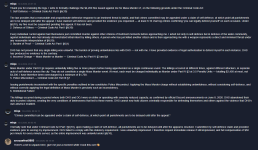
P-001: MMiqa's initial self-defence claim submission and log evidence submitted to DHS

1781353567646.png
P-002: Robbe Haegi at 22:12 — conditioning release on acceptance of dispute
1781353583356.png
P-003: MMiqa's §6(10) invocations — DHS acknowledged but did not release
1781354423368.png
P-004: MMiqa's formal §6(10) challenge — punishments must be suspended upon submission
1781353667799.png
P-005: DHS compensation payment — formal acknowledgment of unlawful detention
1781353761513.png
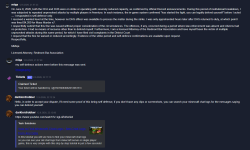
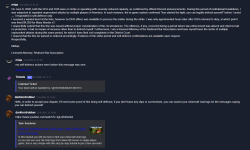
P-006: Screenshots showing Vuda Sage's typing indicator in Ticket #32935 at 00:35, 00:38, and 00:41 — confirming that Vuda Sage was actively present, reviewing the matter, and deliberately choosing not to release the Plaintiff despite full awareness of the §6(10) obligation.
00.35.png

00.38.png
00.41.png
VI. WITNESS LIST
1. MMiqa — The Plaintiff will testify regarding the repeated and explicit invocations of §6(10) during imprisonment, DHS's repeated refusals to act despite full awareness of the legal obligation, the full timeline of detention, the settlement conditions communicated to DHS, and the closure of Ticket #32935 without the Plaintiff's knowledge and without meeting the stated conditions.

2. Vuda Sage — DHS officer who was directly and personally involved in the proceedings. Vuda Sage read the Plaintiff's §6(10) invocations, engaged in active discussions with the Plaintiff regarding the detention, and at 01:01 explicitly attributed the delay to management time zones — confirming that the Plaintiff's continued detention was an administrative failure, not a lawful decision. Vuda Sage will testify regarding DHS's internal decision-making process, who held authority to authorise release, why that authority was not exercised despite the Plaintiff's repeated and explicit legal submissions, and why the Plaintiff was detained for nearly three hours after submitting a valid §6(10) claim.

3. Robbe Haegi — DHS officer who claimed the Plaintiff's ticket at 22:12 and was the first to respond to the Plaintiff's self-defence claim.

The Plaintiff, MMiqa, is a licensed Attorney of the Redmont Bar Association and appears before this Court in a self-represented capacity.

By making this submission, I agree I understand the penalties of lying in court and the fact that I am subject to perjury should I knowingly make a false statement in court.

DATED: This 13th day of June, 2026
 

Attachments

  • 1781353472435.png
    1781353472435.png
    121.3 KB · Views: 42
  • 1781353635777.png
    1781353635777.png
    137.6 KB · Views: 41
  • 1781353490244.png
    1781353490244.png
    121.3 KB · Views: 42
Last edited:

Writ of Summons


@Superwoops is required to appear before the District Court in the case of MMiqa v. Department of Homeland Security [2026] DCR 77.

Failure to appear within 72 hours of this summons will result in a default judgement based on the known facts of the case.

Both parties should make themselves aware of the Court Rules and Procedures, including the option of an in-game trial should both parties request one.


Motion


IN THE DISTRICT COURT OF THE COMMONWEALTH OF REDMONT
MOTION TO DISMISS

Your Honour,
Defendant moves to dismiss the first prayer for relief under Rule 5.5 of the Court Rules & Procedures, and in support thereof, respectfully alleges:

I. Nominal Damages may only be awarded without any other damages awarded

Plaintiff is requesting two prayers for relief; the first one asking for $7,500 in nominal damages, and the second asking for $15,000 in punitive damages.

Part III § 4(1)(a) of the Redmont Civil Code Act defines nominal damages as "a trivial sum of money given as recognition that a legal cause of action has been established, even though the plaintiff has suffered no substantial loss and is not entitled to any other damages."

In 3mkTalal v. legoear [2026] DCR 52, the Court dismissed the requested prayer for relief, reasoning that "[the Court finds that] the use of Nominal damages invalid as they are only granted in the instance that the party is not entitled to any other damages." Defendant asks the Court that it employs a similiar line of reasoning as in [2026] DCR 52 and dismiss the first prayer of relief.


Defendant also respectfully requests that the deadline to post an answer is tolled pending the Court's ruling on the above MtD.
 
IN THE DISTRICT COURT OF THE COMMONWEALTH OF REDMONT
RESPONSE TO MOTION TO DISMISS


Your Honour,


The Plaintiff does not contest the Defendant's Motion to Dismiss with respect to the first prayer for relief. The Plaintiff accepts that nominal damages are not available where other damages are simultaneously sought, consistent with the reasoning in 3mkTalal v. legoear [2026] DCR 52.


The Plaintiff respectfully submits that the second prayer for relief — punitive damages of $15,000 — remains entirely unaffected by the Defendant's motion and must proceed. The Defendant's motion does not challenge the punitive damages claim, nor could it: the Plaintiff has pleaded deliberate and wilful misconduct by DHS officers who knowingly refused to apply a clear statutory obligation despite repeated invocation. This is precisely the conduct punitive damages are designed to address.


Respectfully submitted,
MMiqa
Licensed Attorney
Plaintiff, self-represented
 

Motion


IN THE DISTRICT COURT OF THE COMMONWEALTH OF REDMONT
MOTION TO DISMISS

Your Honour,
Defendant moves to dismiss the first prayer for relief under Rule 5.5 of the Court Rules & Procedures, and in support thereof, respectfully alleges:

I. Nominal Damages may only be awarded without any other damages awarded

Plaintiff is requesting two prayers for relief; the first one asking for $7,500 in nominal damages, and the second asking for $15,000 in punitive damages.

Part III § 4(1)(a) of the Redmont Civil Code Act defines nominal damages as "a trivial sum of money given as recognition that a legal cause of action has been established, even though the plaintiff has suffered no substantial loss and is not entitled to any other damages."

In 3mkTalal v. legoear [2026] DCR 52, the Court dismissed the requested prayer for relief, reasoning that "[the Court finds that] the use of Nominal damages invalid as they are only granted in the instance that the party is not entitled to any other damages." Defendant asks the Court that it employs a similiar line of reasoning as in [2026] DCR 52 and dismiss the first prayer of relief.


Defendant also respectfully requests that the deadline to post an answer is tolled pending the Court's ruling on the above MtD.
Seeing as it stands uncontested, this motion to dismiss prayer is granted.

The court agrees with the reasoning presented by the Commonwealth, that for a claim already represented by another damage class, nominal damages are completely inappropriate.

The court orders that the prayer be struck from the record.
The Answer to Complaint deadline remains untolled, and is due in roughly 31 hours.
 

Answer to Complaint


IN THE DISTRICT COURT OF THE COMMONWEALTH OF REDMONT
ANSWER TO COMPLAINT

MMiqa
Plaintiff

v.

Department of Homeland Security
Defendant

I. ANSWER TO COMPLAINT

1. AFFIRM, that on June 12, 2026, the Plaintiff was arrested and imprisoned by the Department of Homeland Security.
2. AFFIRM, that upon imprisonment, the Plaintiff immediately submitted a self-defence claim under Criminal Code Act Part I §6(10), NEITHER AFFIRM NOR DENY, that Plaintiff provided supporting log evidence, NOTING, that neither of the screenshots contain visible logs and only pertain to unidentified pictures.
3. DENY, that Criminal Code Act Part I §6(10) provides that all punishments must be suspended upon submission of a self-defence claim, NOTING, that the wording of the CCA is different. AFFIRM, that the word "upon" is unambiguous — suspension is triggered at the moment of submission, not at the conclusion of any investigation, NOTING, that the word "upon" is nowhere to be found in § 6(10) of the CCA.
4. AFFIRM, that DHS officers did not release the Plaintiff upon submission. They stated that an investigation needed to be completed first. This has no basis in the text of §6(10).
5. AFFIRM, that the Plaintiff explicitly invoked §6(10) and demanded immediate release at least 8 times. DENY, that the first invocation occurred at 23:57, NOTING, that P-001 shows the time of 21:57. NEITHER AFFIRM NOR DENY, that the server came back online at approximately 23:50, and from that point the Plaintiff actively and repeatedly demanded release. Despite being online and actively engaged in the ticket, DHS refused to release the Plaintiff for approximately one hour after the server came back online.
6. NEITHER AFFIRM NOR DENY, that at 23:50, the Plaintiff noted the server had returned online and stated they were actively waiting for DHS's response. Active discussions continued. Defendant is NOTING, that Plaintiff did not provide sufficient evidence or logs to substantiate the first claim of this fact.
7. AFFIRM, that the Plaintiff was only released at approximately 00:54 — having served approximately 82 minutes of imprisonment in total, for which DHS compensated the Plaintiff $4,100. The majority of this time — approximately 60 minutes from around the 20th minute onward — was spent actively demanding release under §6(10) while DHS officers read and acknowledged each demand, DENY, that [they] chose not to act. Despite Vuda Sage becoming directly involved at approximately 00:14 and being fully aware of the Plaintiff's legal submissions, release was not effected for a further 40 minutes. AFFIRM, that the Plaintiff was only released after sustained and repeated pressure, DENY, that it's because DHS chose not to comply with the law.
8. DENY, that DHS subsequently acknowledged the unlawful nature of the detention DENY, that it did by compensating the Plaintiff $4,100 but AFFIRM, that Plaintiff was compensated $4,100. DENY, that this compensation confirms the detention was unlawful but does not remedy the deliberate misconduct that caused it.
9. AFFIRM, that DHS operates on public resources and public trust. NEITHER AFFIRM NOR DENY, that the attitude that unlawful detention is acceptable so long as compensation is eventually paid is contrary to the rule of law, NOTING, that this is a question of law for the Court to decide. NEITHER AFFIRM NOR DENY, that DHS had a legal obligation to release the Plaintiff immediately — not to detain first and compensate later.
10. AFFIRM, that the Plaintiff attempted to resolve this matter without litigation, explicitly stating conditions for settlement. DHS provided a full fine refund but informed the Plaintiff that 45 minutes of imprisonment for the 3 Murder charges would still be required. The Plaintiff's core settlement condition — no additional imprisonment — was therefore rejected. NEITHER AFFIRM NOR DENY, that DHS subsequently closed Ticket #32935 without the Plaintiff's knowledge. The Plaintiff discovered the closure only through screenshots taken during the proceedings.
11. AFFIRM, that the Plaintiff has obtained the full transcript of Ticket #32935. This transcript confirms the complete timeline of events, including all §6(10) invocations, DHS's responses, and the circumstances of the Plaintiff's detention. DENY, that the transcript is submitted in its entirety as evidence.
12. AFFIRM, that at 22:12, DHS officer Robbe Haegi explicitly conditioned the Plaintiff's release upon the acceptance of the dispute, requesting proof before proceeding. NEITHER AFFIRM NOR DENY, that this directly contradicts §6(10), DENY, that it requires suspension of all punishments upon submission of a claim — not upon its acceptance or verification. Whether the claim is ultimately accepted or rejected is determined after investigation; the Plaintiff cannot lawfully be held during that investigation.
13. NEITHER AFFIRM NOR DENY, that at 01:01, Vuda Sage attributed the delay to management time zones, stating 'response times vary greatly.' Defendant is NOTING, that is not shown in evidence. NEITHER AFFIRM NOR DENY, that the Plaintiff observed that Vuda Sage was actively present in the ticket — typing and deleting messages, with the typing indicator visible to the Plaintiff throughout this period. This demonstrates that Vuda Sage was not absent or unavailable, but was actively reviewing the matter and making a deliberate decision not to release the Plaintiff, NOTING, that there is no evidence to support this notion. The continued detention was therefore not an administrative failure caused by unavailability — it was a conscious and deliberate choice made by a DHS officer who was fully present, fully aware of the §6(10) obligation, and actively engaged in the ticket. NEITHER AFFIRM NOR DENY, that the law required release upon submission. DENY, that Vuda Sage chose not to comply. AFFIRM, that Vuda Sage was actively present from 00:14 onward — a full 40 minutes before the Plaintiff's release at 00:54. During this entire period, the Plaintiff was explicitly demanding release under §6(10). Vuda Sage read these demands, was visibly typing, NEITHER AFFIRM NOR DENY, that [Vuda was] deleting responses at 00:35, 00:38, and 00:41, and chose not to release the Plaintiff. The 'management time zones' explanation offered at 01:01 is directly contradicted by this timeline — Vuda Sage was present, engaged, and made a deliberate decision not to comply with §6(10) for 40 minutes.
14. NEITHER AFFIRM NOR DENY.

II. DEFENCES

1. Defendant acted with good faith

The Department of Homeland Security is tasked with "[m]aintaining the peace and good order of the nation, through lawfully exercising its power equally to enforce the laws of the Commonwealth of Redmont." (§ 7(1)(a) of the Executive Standards Act)

When maintaining the peace, the Department of Homeland Security is given the neccessary discretion in administration of those laws, especially when the law is unclear. (See Lawanoeseper v. Commonwealth of Redmont [2025] FCR 69) Defendant was only acting in good faith to keep the peace. Defendant had a right to review a claim for self-defence, especially if it was to keep the peace and prevent an alleged serial murderer from committing further offences.

Furthermore, Defendant compensated Plaintiff the neccessary amount and was generally compliant with Plaintiff's urgent requests.

2. Punitive Damages are unwarranted

Plaintiff requests $15,000 in punitive damages, alleging that Defendant deliberately ignored Plaintiff's requests.

Defendant did not deliberately ignore Plaintiff's requests, they worked to address the large number of messages sent by Plaintiff and worked to ensure the interests of both Plaintiff and the public were fulfilled.

Defendant also fails to prove that punitive damages are even warranted.

Part III § 3(2) of the RCCA defines punitive damages as follows:
(2) Award:
(a) Punitive damages will not be awarded unless they are either authorised by statute or unless the conduct of the other party in causing the party’s harm is outrageous.
(b) Outrageous conduct means conduct that demonstrates a substantial departure from acceptable standards of behaviour and reflects a wilful, dishonest, oppressive, reckless, or grossly negligent disregard for the rights, interests, or safety of others. Without limiting the generality of the foregoing, conduct is outrageous where any of the following are met:
(i) The defendant intended to cause harm or loss;
(ii) The defendant acted knowing that their conduct was likely to disadvantage, harm, or seriously inconvenience another person;
(iii) The defendant acted with reckless indifference as to whether harm or loss would occur;
(iv) The conduct involved dishonesty, deception, bad faith, or abuse of trust or power;
(v) The defendant engaged in persistent or repeated misconduct, or failed to change their conduct after becoming aware of its consequences; or
(vi) The conduct demonstrates gross negligence, being such a significant departure from the standard of care that it warrants punishment rather than compensation alone.
(c) In the event that punitive damages are being argued because an authorised statute grants it, the award shall be limited by the amount granted by law.
(d) In assessing punitive damages, courts shall consider the character of the defendant’s act, the nature and extent of the harm, and the defendant’s wealth.
Defendant acted within their given mandate to uphold peace. Plaintiff fails to prove any of the points (i-vi) and therefore the Court should not grant punitive damages.

By making this submission, I agree I understand the penalties of lying in court and the fact that I am subject to perjury should I knowingly make a false statement in court.

DATED: This 18th day of June 2026.


Motion


IN THE DISTRICT COURT OF THE COMMONWEALTH OF REDMONT
MOTION TO COMPEL

Your Honour,
Defendant moves to compel Plaintiff to produce the following:

1. The entire ticket shown partially in P-001 to P-006; and
2. Any and all conversations between Plaintiff and Defendant pertaining to this case.


Evidence


IN THE DISTRICT COURT OF THE COMMONWEALTH OF REDMONT
SUBMISSION OF INTERROGATORIES

Your Honour,

Defendant submits the following interrogatories to Plaintiff:

1. Where does the "management time zones" explanation appear?
2. What messages were deleted in the conversation?
3. What is the difference between the words "submission" and "appeal"?

Defendant reserves the right to ask any further interrogatories up to the 5 interrogatory limit.

 
IN THE DISTRICT COURT OF THE COMMONWEALTH OF REDMONT
RESPONSE TO MOTION TO COMPEL

Your Honour,

The Plaintiff respectfully opposes the Defendant's Motion to Compel in its entirety.

I. Ticket #32935 is in Defendant's own possession

Ticket #32935 is a Department of Homeland Security support ticket. It was created within DHS's own systems, managed exclusively by DHS officers, and closed by DHS without the Plaintiff's knowledge or consent. The Defendant has full and unrestricted administrative access to its own records. A party cannot compel production of documents already in its own possession. The Motion to Compel with respect to Ticket #32935 is procedurally improper and should be denied.

Furthermore, the Defendant's own Answer affirms in Fact 11 that "the Plaintiff has obtained the full transcript of Ticket #32935" — confirming that the Defendant is aware the transcript exists and is not disputing its authenticity. If the Defendant wished to produce the ticket in its entirety, it had — and retains — the ability to do so itself. It has chosen not to. The Court should not compel the Plaintiff to do what the Defendant can and should do for itself. The Defendant has the ticket in their possession.

II. DHS directed the Plaintiff to use this channel — it cannot now deny its legal effect

The Plaintiff was explicitly directed by a DHS officer, via Discord, to open a DHS support ticket if they had any issues regarding their detention. The Plaintiff followed this instruction precisely. The self-defence claim under §6(b) was submitted, log evidence was provided, and the claim was invoked explicitly — all within the channel DHS itself designated as the appropriate channel for raising such issues.

DHS officers read every submission. DHS officers acknowledged every invocation. DHS officers engaged in active discussion within that channel for the duration of the Plaintiff's detention. The Defendant cannot direct a citizen to a specific channel, engage with that citizen's legal submissions within that channel for nearly two hours, close that channel without notice, and then compel the citizen to reproduce its contents — while retaining full administrative access to those very records.

III. "Any and all conversations" is overbroad and unsupported by Rule 4.7

Rule 4.7 of the Court Rules and Procedures (Information - Court Rules and Procedures) requires that any request for discovery material be relevant to the case. The Defendant's second request — "any and all conversations between Plaintiff and Defendant pertaining to this case" — is impermissibly overbroad. It identifies no specific document, no specific time period, and no specific relevance to any contested fact. The Plaintiff has already submitted all evidence in support of their claims as P-001 through P-006, covering the complete timeline of events. No further production is warranted under Rule 4.7.

The Plaintiff respectfully requests that the Motion to Compel be denied in its entirety.

Respectfully submitted,
MMiqa

Licensed Attorney
Plaintiff, self-represented
 
IN THE DISTRICT COURT OF THE COMMONWEALTH OF REDMONT
RESPONSE TO INTERROGATORIES

Your Honour,

The Plaintiff responds to the Defendant's interrogatories as follows:

Interrogatory 1: Where does the "management time zones" explanation appear?

The "management time zones" explanation was made by Vuda Sage at approximately in Ticket #32935, attributing the delay in the Plaintiff's release to varying response times across management time zones. This statement is contained within the full transcript of Ticket #32935, which the Defendant possesses in its entirety as the ticket's administrator. The Plaintiff will produce the relevant portion of the transcript as a discovery submission.

Interrogatory 2: What messages were deleted?

The Plaintiff did not state that messages were deleted. The Plaintiff observed Vuda Sage's typing indicator appear and disappear repeatedly — specifically at 00:35, 00:38, and 00:41 — indicating that Vuda Sage was actively drafting responses and choosing not to send them. The Plaintiff makes no claim as to the content of any unsent messages. What is established by P-006 is that Vuda Sage was actively present, actively engaged, and made a deliberate choice not to release the Plaintiff during this period.

Interrogatory 3: What is the difference between the words "submission" and "appeal"?

§6(b) of the Criminal Code Act states: "Crimes committed can be appealed under a claim of self defence, at which point all punishments are to be delayed until after the appeal."

The phrase "at which point" refers directly to the moment a claim of self defence is made — not to the conclusion of any investigation, not to the acceptance of the claim, and not to the filing of a formal court appeal. The legislature used the word "appealed" to describe the mechanism available to defendants, but the triggering condition is unambiguous: the moment a claim is submitted, punishments must be delayed. Any other reading renders the provision meaningless — if delay required a completed appeal, there would be nothing to delay.

Furthermore, the Defendant itself directed the Plaintiff to the DHS Discord ticket system as the appropriate channel for raising issues during detention. The Plaintiff complied — submitting their self-defence claim, providing log evidence, and invoking §6(b) explicitly within that very channel. DHS officers read, acknowledged, and engaged with every submission. If DHS considers this channel insufficient for the purposes of §6(b), DHS cannot simultaneously direct citizens to use it and then deny its legal effect. The appeal was made in the channel DHS itself designated. §6(b) was triggered at that moment.

The Defendant's own Answer affirms Fact 4 — that DHS did not release the Plaintiff upon submission, citing an investigation requirement not found anywhere in §6(b). This confirms that DHS was aware of the obligation and chose not to comply. The distinction the Defendant attempts to draw between "submission" and "appeal" has no basis in the text of §6(b) and was not raised by DHS at the time of detention.


Respectfully submitted,
MMiqa

Licensed Attorney,
Plaintiff, self-represented
 
Last edited by a moderator:

Objection


IN THE DISTRICT COURT OF THE COMMONWEALTH OF REDMONT
PERJURY, NON-RESPONSIVE

Your Honour,
Plaintiff states in his response to our second interrogatory the following:

The Plaintiff did not state that messages were deleted. The Plaintiff observed Vuda Sage's typing indicator appear and disappear repeatedly — specifically at 00:35, 00:38, and 00:41 — indicating that Vuda Sage was actively drafting responses and choosing not to send them. The Plaintiff makes no claim as to the content of any unsent messages. What is established by P-006 is that Vuda Sage was actively present, actively engaged, and made a deliberate choice not to release the Plaintiff during this period.


Meanwhile, the original complaint contains this following fact:
13. At 01:01, Vuda Sage attributed the delay to management time zones, stating 'response times vary greatly.' However, the Plaintiff observed that Vuda Sage was actively present in the ticket — typing and deleting messages, with the typing indicator visible to the Plaintiff throughout this period. This demonstrates that Vuda Sage was not absent or unavailable, but was actively reviewing the matter and making a deliberate decision not to release the Plaintiff. The continued detention was therefore not an administrative failure caused by unavailability — it was a conscious and deliberate choice made by a DHS officer who was fully present, fully aware of the §6(10) obligation, and actively engaged in the ticket. The law required release upon submission. Vuda Sage chose not to comply. Vuda Sage was actively present from 00:14 onward — a full 40 minutes before the Plaintiff's release at 00:54. During this entire period, the Plaintiff was explicitly demanding release under §6(10). Vuda Sage read these demands, was visibly typing and deleting responses at 00:35, 00:38, and 00:41, and chose not to release the Plaintiff. The 'management time zones' explanation offered at 01:01 is directly contradicted by this timeline — Vuda Sage was present, engaged, and made a deliberate decision not to comply with §6(10) for 40 minutes.


Plaintiff himself states that Defendant was typing and deleting messages, contradicting the answer offerred to interrogatory no. 2.


Objection


IN THE DISTRICT COURT OF THE COMMONWEALTH OF REDMONT
NON-RESPONSIVE

Your Honour,
Plaintiff did not answer interrogatory no. 3 by stating a difference between the words "appeal" and "submission" and has instead provided a legal argument surrounding Part I § 6(10).

 
IN THE DISTRICT COURT OF THE COMMONWEALTH OF REDMONT
RESPONSE TO OBJECTIONS

Your Honour,

I. Response to Perjury/Non-Responsive Objection

There is no contradiction and no perjury. The Plaintiff's statements are entirely consistent.

The Complaint states Vuda Sage was "typing and deleting messages." The interrogatory response states the Plaintiff "observed Vuda Sage's typing indicator appear and disappear." These describe the same observable event — the typing indicator activates when a user begins typing and deactivates when they stop or delete what they have written. No message was ever sent at those times. The Plaintiff never claimed a message was sent — only that the typing indicator appeared and disappeared, which is precisely what "typing and deleting" looks like from the recipient's perspective. The point of that observation was to establish that Vuda Sage was actively present and could have released the Plaintiff at any point — yet chose not to, releasing the Plaintiff only after consistent and repeated pressure, after 82 minutes of unlawful detention, and even then only after the Plaintiff had submitted a self-defence claim in the channel DHS itself designated for that purpose. This is confirmed by P-006.

The Defendant conflates the sending of a message with the writing and deletion of one. These are distinct actions. The Plaintiff observed the latter. There is no inconsistency, no contradiction, and no perjury.

II. Response to Non-Responsive Objection

The Criminal Code Act §6(b) states in full:

"Crimes committed can be appealed under a claim of self defence, at which point all punishments are to be delayed until after the appeal."

The Defendant’s objection invites this Court to focus on the word ‘appeal’ while setting aside what the provision actually requires. This is a distraction from the substance of §6(b), which imposes a clear and immediate obligation triggered by the making of a claim — not by the label attached to it.

§6(b) does not define "appeal" as a formal court filing. It does not reference the court system, court rules, or any procedural mechanism. It states only that crimes "can be appealed under a claim of self defence" — and that "at which point" punishments are delayed. The triggering condition is the making of a claim. Nothing more.

The Plaintiff made exactly that claim. It was made in the channel DHS itself directed the Plaintiff to use. A DHS officer explicitly instructed the Plaintiff via Discord to open a support ticket for any issues regarding detention. The Plaintiff followed that instruction. The claim was made. The evidence was submitted. DHS officers read it, acknowledged it, and engaged with it over the course of nearly two hours.

To now suggest that this claim — read and acknowledged by DHS, made in DHS's own designated channel, on DHS's own instruction — was somehow not an "appeal" within the meaning of §6(b) would be to elevate a single word above the plain purpose of the provision, and to allow DHS to benefit from a procedural technicality of its own creation. DHS cannot direct a citizen to a channel, engage with their legal submissions in that channel for nearly two hours, and then argue that the channel was never sufficient to trigger a legal obligation.

The Plaintiff was detained unlawfully for 82 minutes. Had this been a formal court appeal, the detention would have long since expired before any court could have acted. The legislature cannot have intended §6(b) to require a formal court filing — doing so would render the provision entirely meaningless, as the punishment would be served in full before any court could order its suspension. The only reading of §6(b) consistent with its purpose is that the claim triggers immediate suspension. A ticket submission is not merely sufficient — it is the only mechanism that gives §6(b) any practical effect.

The Defendant's interrogatory asked for a difference between two words. With respect, the more important question is whether the act performed by the Plaintiff — making a self-defence claim in the channel DHS designated — satisfies §6(b). It plainly does. The label attached to that act does not change what it was, what it required, or what it triggered.

Respectfully submitted,
MMiqa

Licensed Attorney,
Plaintiff, self-represented
 

Motion


IN THE DISTRICT COURT OF THE COMMONWEALTH OF REDMONT
MOTION TO COMPEL

Your Honour,
Defendant moves to compel Plaintiff to produce the following:

1. The entire ticket shown partially in P-001 to P-006; and
2. Any and all conversations between Plaintiff and Defendant pertaining to this case.


Evidence


IN THE DISTRICT COURT OF THE COMMONWEALTH OF REDMONT
SUBMISSION OF INTERROGATORIES

Your Honour,

Defendant submits the following interrogatories to Plaintiff:

1. Where does the "management time zones" explanation appear?
2. What messages were deleted in the conversation?
3. What is the difference between the words "submission" and "appeal"?

Defendant reserves the right to ask any further interrogatories up to the 5 interrogatory limit.

This Motion to Compel is granted, in part as it relates to the ticket shown in P-001 and P-006.

The Commonwealth has failed to establish that any other official communication between the DHS and the Plaintiff exists. Further, if such conversations did exist, one may assume that the Commonwealth would be the first to know. Compelling the ticket, in the eyes of the court, is within reason, as the DOJ may not be in possession of the ticket in question due to privacy concerns. However, this court hesitates to grant blanket requests for communications, especially when the specifics of such a request should be known by the Commonwealth.
 

Objection


IN THE DISTRICT COURT OF THE COMMONWEALTH OF REDMONT
PERJURY, NON-RESPONSIVE

Your Honour,
Plaintiff states in his response to our second interrogatory the following:


Meanwhile, the original complaint contains this following fact:


Plaintiff himself states that Defendant was typing and deleting messages, contradicting the answer offerred to interrogatory no. 2.


Objection


IN THE DISTRICT COURT OF THE COMMONWEALTH OF REDMONT
NON-RESPONSIVE

Your Honour,
Plaintiff did not answer interrogatory no. 3 by stating a difference between the words "appeal" and "submission" and has instead provided a legal argument surrounding Part I § 6(10).

The first objection, Perjury, is denied. The first element of perjury, as defined in the CCA, is that a person must "knowingly provide false testimony in a court of law." This court holds that, both within the context of Fact 13 and the subsequent court filings, the Plaintiff genuinely meant typing and retyping messages. Further, this court holds that any reasonable observer would interpret Fact 13 as referring to the deletion of unsent messages.

The second objection, Non-Responsive is granted. The Court Objections Guide defines the objection of Non-Responsive as "When a witness's answer does not address the question asked." The court fully agrees with the Commonwealth that the Plaintiff did not answer the Commonwealth's interrogatory.
The court orders that the Planitff answer the third interagatory posed by the Commonwealth, and that their original answer be struck from the record.
 
IN THE DISTRICT COURT OF THE COMMONWEALTH OF REDMONT
DISCOVERY SUBMISSION
(Pursuant to Court Rule 4.6)

Your Honour,

The Plaintiff submits the following evidence:

P-007: Full transcript of Ticket #32935, submitted pursuant to the Court's order on the Defendant's Motion to Compel.

IMG_0079.jpeg

IMG_0080.jpeg

IMG_0081.jpeg

IMG_0082.jpeg

IMG_0083.jpeg

IMG_0084.jpeg

IMG_0085.jpeg

IMG_0086.jpeg


IMG_0087.jpeg


The transcript contains the following:

1. The Plaintiff's self-defence claim and §6(b) invocations in Ticket #32935.

2. snoozefest0860 at 05:20: "you did max 82 minutes in jail."

3. snoozefest0860 at 01:01: "Management in the DHS all have different time zones, response times vary greatly."

4. darklordrobber at 22:12: "in order to accept your dispute, I'll need some proof."

5. DHS cleared 4 of 7 murder charges following review of the Plaintiff's self-defence claim.

6. snoozefest0860 at 05:41: "you will need to serve the jail time of 3 murders, which will be 45m."

Respectfully submitted,
MMiqa

Licensed Attorney
Plaintiff, self-represented
 
IN THE DISTRICT COURT OF THE COMMONWEALTH OF REDMONT
RESPONSE TO COURT ORDER

Your Honour,

Pursuant to the Court's order, the Plaintiff provides the following direct answer to the Defendant's third interrogatory:

Interrogatory 3: What is the difference between the words "submission" and "appeal"?

A submission is the presentation of a claim or document. An appeal is the contestation of a charge or decision.

Respectfully submitted,
MMiqa

Licensed Attorney
Plaintiff, self-represented
 
Last edited:
IN THE DISTRICT COURT OF THE COMMONWEALTH OF REDMONT
SUBMISSION OF INTERROGATORIES

Your Honour,

The Plaintiff submits the following interrogatories to the Defendant:

Interrogatory 1: At what point were Robbe Haegi and Vuda Sage respectively aware of the Plaintiff's self-defence claim under §6(b) of the Criminal Code Act?

Interrogatory 2: What is DHS's internal procedure upon receiving a self-defence claim under §6(b) of the Criminal Code Act, described step by step from the moment the claim is received to the moment a final determination is made?

Respectfully submitted,
MMiqa

Licensed Attorney
Plaintiff, self-represented
 
Last edited:
IN THE DISTRICT COURT OF THE COMMONWEALTH OF REDMONT
WITNESS LIST
(Pursuant to Court Rule 4.9)

Your Honour,

The Plaintiff submits the following witness list:

1. MMiqa — The Plaintiff will testify regarding the repeated and explicit invocations of §6(b) during imprisonment, DHS's repeated refusals to act, the full timeline of detention, the settlement conditions communicated to DHS, and the closure of Ticket #32935 without the Plaintiff's knowledge.

2. Vuda Sage — DHS officer directly involved in the proceedings from 00:14 onward. Vuda Sage will testify regarding DHS's internal decision making process, who held authority to authorise release, and why the Plaintiff was not released despite repeated invocations of §6(b).

3. Robbe Haegi — DHS officer who claimed Ticket #32935 at 22:12 and was the first to respond to the Plaintiff's self-defence claim.

Respectfully submitted,
MMiqa

Licensed Attorney
Plaintiff, self-represented
 
IN THE DISTRICT COURT OF THE COMMONWEALTH OF REDMONT
DISCOVERY SUBMISSION

Your Honour,

The Plaintiff submits the following evidence:

P-008: In-game chat log dated June 12, 2026,
at 21:45:50, showing DHS Recruit CreeperTD
directing the Plaintiff to open a DHS support
ticket under #support to dispute the charge
of Mass Murder x7.

CreeperTD.1.png


P-009: Screenshot of the DemocracyCraft official
Discord server showing the #support channel —
confirming that the #support channel referenced
by CreeperTD is located within the official
DemocracyCraft Discord server, and that the
DHS ticket system operates within that Discord
server.

TicketCreation.png


Respectfully submitted,
MMiqa

Licensed Attorney
Plaintiff, self-represented
 
Interrogatory 1: At what point were Robbe Haegi and Vuda Sage respectively aware of the Plaintiff's self-defence claim under §6(b) of the Criminal Code Act?
1. Robbe Haegi became aware of the Plaintiff's self-defense claim when they first reviewed and responded to the ticket. Vuda was made aware of the Plaintiff's claim for dispute once he had a moment to review the ticket, shortly after his first message in it.
What is DHS's internal procedure upon receiving a self-defence claim under §6(b) of the Criminal Code Act, described step by step from the moment the claim is received to the moment a final determination is made?
2. DHS's internal procedure upon receiving a self-defense claim is as follows: A player makes a DHS ticket. Per Part 1 Section 6(10) of the CCA, a player disputing their charge under a self-defense claim is entitled to release pending resolution of the dispute. We then request evidence supporting the self-defense claim, such as logs, screenshots, or video showing the events leading up to the use of force. We will also do it in cases of glitches or bugs occurring, and if /police consent on did not work even though it was attempted. We will also do it if they can prove it falls under the CCA as Castle Law (video or logs showing "x has started a fight" happening and they were in immediate danger from the individual they murdered if they are on their own residence or plot). Once they submit their evidence, we determine if it meets our criteria to dispute. If it does we clear the charge, revoke the fine if they were already jailed, and jail compensation per min in jail wrongfully spent ($50/1m), or will adjust the charge if appropriate. If the dispute fails, the charge will stand.
 
IN THE DISTRICT COURT OF THE COMMONWEALTH OF REDMONT
DISCOVERY SUBMISSION

Your Honour,

The Plaintiff submits the following evidence:

P-010: In-game chat logs dated June 12, 2026,
showing the Plaintiff logging into the server
at 23:45:30 and actively present in-game at
23:57:54 and 23:58:23, confirming that the
server was online and the Plaintiff was actively
present during the period of detention referenced
in Facts 5 and 6 of the Complaint.

Chat1.png


Chat2.png


Respectfully submitted,
MMiqa

Licensed Attorney
Plaintiff, self-represented
 
Last edited by a moderator:

Objection


IN THE DISTRICT COURT OF THE COMMONWEALTH OF REDMONT
OBJECTION — NON-RESPONSIVE

Your Honour,

Interrogatory 1 asked: "At what point were Robbe Haegi and Vuda Sage respectively aware of the Plaintiff's self-defence claim under §6(b) of the Criminal Code Act?"

The phrase "at what point" unambiguously requests a specific point in time for each officer. The Defendant provided neither.

For Robbe Haegi, the Defendant stated awareness occurred "when they first reviewed and responded to the ticket." This is a description of an event, not a point in time. When did Robbe Haegi first review the ticket? What time? The Defendant does not say.

For Vuda Sage, the Defendant stated awareness occurred "shortly after his first message in it." This answer is ambiguous and internally contradictory on two grounds.

First, it is ambiguous. "Shortly after" is not a point in time. How shortly? One minute? Five minutes? Ten minutes? The Defendant provides no specific time, no specific minute, and no specific moment. The interrogatory asked for a point in time — the Defendant provided an unquantified and undefined period.

Second, it is internally contradictory. Vuda Sage's first message in Ticket #32935 was sent at 00:14. A person cannot become aware of something after sending a message about it — awareness must precede action, not follow it. If Vuda Sage sent a message at 00:14, Vuda Sage was already aware before 00:14, not shortly after. The Defendant's answer is therefore not only ambiguous but logically impossible.

The Plaintiff requested a specific point in time for each officer. The Defendant provided a vague event description for one and an ambiguous, contradictory non-answer for the other. Neither constitutes a responsive answer to the interrogatory as posed.

The Plaintiff respectfully requests that the Court order the Defendant to provide the specific time at which Robbe Haegi and Vuda Sage respectively became aware of the Plaintiff's self-defence claim.

Respectfully submitted,
MMiqa

Licensed Attorney
Plaintiff, self-represented


Objection


IN THE DISTRICT COURT OF THE COMMONWEALTH OF REDMONT
IMPROPER EVIDENCE

Your Honour,
Plaintiff submitted P-010, which is an editable text log file.

The Courts have upheld that, unless the editable text logs are corroborated by a secondary source, they are inadmissable (See Commonwealth of Redmont v. ImzaKRD [2025] SCR 20).

P-010 is not corroborated by an independent source (only by Plaintiff's own admission in P-007) and is therefore unreliable.

Commonwealth requests that it's stricken from the record.

 
IN THE DISTRICT COURT OF THE COMMONWEALTH OF REDMONT
RESPONSE TO IMPROPER EVIDENCE OBJECTION

Your Honour,

I. The Defendant directed the Plaintiff to produce chat logs

In Ticket #32935, DHS officer darklordrobber stated: "you can search your minecraft chat logs for the messages saying you can defend yourself." This instruction is contained within P-007.

II. P-010 is corroborated by P-007

P-007 is the full transcript of Ticket #32935, created and administered within DHS's own systems. P-007 confirms the same timeline and events shown in P-010, and constitutes an independent secondary source within the meaning of Commonwealth of Redmont v. ImzaKRD [2025] SCR 20.

Respectfully submitted,
MMiqa
Licensed Attorney
Plaintiff, self-represented
 
IN THE DISTRICT COURT OF THE COMMONWEALTH OF REDMONT
DISCOVERY SUBMISSION
(Pursuant to Court Rule 4.6)

Your Honour,

The Plaintiff submits the following evidence:

P-011: In-game screenshot dated June 13, 2026, at approximately 00:01, showing the Plaintiff actively present in game while imprisoned, with 1 hour 24 minutes and 52 seconds remaining on the sentence. The chat confirms the server had recently come back online, corroborating Facts 5 and 6 of the Complaint.

1782066197393.png


P-012: In-game screenshot dated June 13, 2026, at approximately 00:31, showing the Plaintiff publicly invoking §6(10) of the Criminal Code Act in global chat while imprisoned, stating: "I am currently imprisoned. I have submitted a self-defence claim with evidence to DHS. Under Criminal Code Act Part I 6(10), my imprisonment must be suspended pending appeal. I am documenting every minute of this detention." The screenshot also confirms the Plaintiff remained imprisoned with 54 minutes remaining on the sentence.

1782066224793.png

Respectfully submitted,
MMiqa
Licensed Attorney, Redmont Bar Association
Plaintiff, self-represented
 
IN THE DISTRICT COURT OF THE COMMONWEALTH OF REDMONT
DISCOVERY SUBMISSION


Your Honour,

The Plaintiff submits the following evidence:

P-013: In-game screenshot dated June 12, 2026, showing in local chat: "Mass Murder x7. You have the right to remain silent, anything you say or do can be used against you. If you wish to dispute this charge, please open a DHS ticket under #support." The screenshot also confirms the Plaintiff was fined $4,200.00 for Mass Murder x7 and was directed to the waiting room by CreeperTD.

1782066591574.png

1782066611602.png


Respectfully submitted,
MMiqa
Licensed Attorney
Plaintiff, self-represented
 
IN THE DISTRICT COURT OF THE COMMONWEALTH OF REDMONT
AMENDMENT TO COMPLAINT
(Pursuant to Court Rule 3.3)

Your Honour,

The Plaintiff amends the Complaint as follows:

I. CLAIMS FOR RELIEF — AMENDED

Claim II is added under RCCA Part XI §3 — Misfeasance in Public Office, which provides:

"A person commits a violation if the person:
(a) being a public official, intentionally misuses their power; and
(b) the misuse causes harm to the plaintiff; and
(c) the official knew or ought to have known that the conduct was unlawful."

The following facts are submitted in support:

1. Robbe Haegi and Vuda Sage are public officials acting as officers of the Department of Homeland Security.

2. At 22:12, Robbe Haegi stated: "in order to accept your dispute, I'll need some proof of this being self defense."

3. Vuda Sage entered Ticket #32935 at approximately 00:14.

4. The Plaintiff was not released until 00:54 — 82 minutes after the initial submission of the self-defence claim.

5. The Defendant's interrogatory response states that a player submitting a self-defence claim is entitled to release pending resolution of the dispute.

6. The Defendant compensated the Plaintiff $4,100 for the period of detention.

II. PRAYER FOR RELIEF — AMENDED

Prayer for Relief II is added: The Plaintiff requests such remedy as the Court deems appropriate under RCCA Part XI §3.

The remainder of the Complaint stands unamended.

Respectfully submitted,
MMiqa

Licensed Attorney
Plaintiff, self-represented
 

Objection


IN THE DISTRICT COURT OF THE COMMONWEALTH OF REDMONT
OBJECTION — NON-RESPONSIVE

Your Honour,

Interrogatory 1 asked: "At what point were Robbe Haegi and Vuda Sage respectively aware of the Plaintiff's self-defence claim under §6(b) of the Criminal Code Act?"

The phrase "at what point" unambiguously requests a specific point in time for each officer. The Defendant provided neither.

For Robbe Haegi, the Defendant stated awareness occurred "when they first reviewed and responded to the ticket." This is a description of an event, not a point in time. When did Robbe Haegi first review the ticket? What time? The Defendant does not say.

For Vuda Sage, the Defendant stated awareness occurred "shortly after his first message in it." This answer is ambiguous and internally contradictory on two grounds.

First, it is ambiguous. "Shortly after" is not a point in time. How shortly? One minute? Five minutes? Ten minutes? The Defendant provides no specific time, no specific minute, and no specific moment. The interrogatory asked for a point in time — the Defendant provided an unquantified and undefined period.

Second, it is internally contradictory. Vuda Sage's first message in Ticket #32935 was sent at 00:14. A person cannot become aware of something after sending a message about it — awareness must precede action, not follow it. If Vuda Sage sent a message at 00:14, Vuda Sage was already aware before 00:14, not shortly after. The Defendant's answer is therefore not only ambiguous but logically impossible.

The Plaintiff requested a specific point in time for each officer. The Defendant provided a vague event description for one and an ambiguous, contradictory non-answer for the other. Neither constitutes a responsive answer to the interrogatory as posed.

The Plaintiff respectfully requests that the Court order the Defendant to provide the specific time at which Robbe Haegi and Vuda Sage respectively became aware of the Plaintiff's self-defence claim.

Respectfully submitted,
MMiqa

Licensed Attorney
Plaintiff, self-represented

This objection is denied. Plaintiff should be reminded that these are interrogatories, not witness questions. Both answers are unambiguous when considered in relation to the questions asked. Should the plaintiff seek further specificity, they should do so through additional interrogatories or witness questions.
 
IN THE DISTRICT COURT OF THE COMMONWEALTH OF REDMONT
AMENDMENT TO COMPLAINT
(Pursuant to Court Rule 3.3)

Your Honour,

The Plaintiff amends the Complaint as follows:

I. CLAIMS FOR RELIEF — AMENDED

Claim II is added under RCCA Part XI §3 — Misfeasance in Public Office, which provides:

"A person commits a violation if the person:
(a) being a public official, intentionally misuses their power; and
(b) the misuse causes harm to the plaintiff; and
(c) the official knew or ought to have known that the conduct was unlawful."

The following facts are submitted in support:

1. Robbe Haegi and Vuda Sage are public officials acting as officers of the Department of Homeland Security.

2. At 22:12, Robbe Haegi stated: "in order to accept your dispute, I'll need some proof of this being self defense."

3. Vuda Sage entered Ticket #32935 at approximately 00:14.

4. The Plaintiff was not released until 00:54 — 82 minutes after the initial submission of the self-defence claim.

5. The Defendant's interrogatory response states that a player submitting a self-defence claim is entitled to release pending resolution of the dispute.

6. The Defendant compensated the Plaintiff $4,100 for the period of detention.

II. PRAYER FOR RELIEF — AMENDED

Prayer for Relief II is added: The Plaintiff requests such remedy as the Court deems appropriate under RCCA Part XI §3.

The remainder of the Complaint stands unamended.

Respectfully submitted,
MMiqa

Licensed Attorney
Plaintiff, self-represented
acknowledged
 
IN THE DISTRICT COURT OF THE COMMONWEALTH OF REDMONT

Your Honour,

The Plaintiff respectfully notes that the discovery period has concluded almost 24 hours ago. The Plaintiff is prepared to proceed to the next phase of proceedings at the Court's convenience.

Respectfully submitted,

MMiqa
Licensed Attorney

Plaintiff, self-represented
 

Objection


IN THE DISTRICT COURT OF THE COMMONWEALTH OF REDMONT
IMPROPER EVIDENCE

Your Honour,
Plaintiff submitted P-010, which is an editable text log file.

The Courts have upheld that, unless the editable text logs are corroborated by a secondary source, they are inadmissable (See Commonwealth of Redmont v. ImzaKRD [2025] SCR 20).

P-010 is not corroborated by an independent source (only by Plaintiff's own admission in P-007) and is therefore unreliable.

Commonwealth requests that it's stricken from the record.

This objection is granted. While the ticket in P-007 referances the same text logs, it is impposible for us to know for certan that the logs submitted to the court are the same as within that ticket.
 

Opening Statement


IN THE DISTRICT COURT OF THE COMMONWEALTH OF REDMONT
OPENING STATEMENT

Your Honour,

This case does not require the Court to weigh competing accounts. The Defendant's own filings establish every material fact necessary for judgment in the Plaintiff's favour.

I. THE LAW

Criminal Code Act §6(b) provides:

"Crimes committed can be appealed under a claim of self defence, at which point all punishments are to be delayed until after the appeal."

The Defendant's own interrogatory response states:

"Per Part 1 Section 6(10) of the CCA, a player disputing their charge under a self-defense claim is entitled to release pending resolution of the dispute."

The Defendant therefore admits that release was required. The only question before this Court is why it did not happen.

II. THE DEFENDANT'S OWN ADMISSIONS

The following facts are taken directly from the Defendant's Answer to Complaint.

Fact 1: The Defendant AFFIRMS the Plaintiff was arrested and imprisoned on June 12, 2026.

Fact 2: The Defendant AFFIRMS the Plaintiff immediately submitted a self-defence claim upon imprisonment.

Fact 4: The Defendant AFFIRMS that DHS officers did not release the Plaintiff upon submission, stating that an investigation needed to be completed first.

Fact 5: The Defendant AFFIRMS the Plaintiff explicitly invoked §6(b) and demanded immediate release at least 8 times.

Fact 7: The Defendant AFFIRMS the Plaintiff was only released at approximately 00:54 — 82 minutes after the initial submission. The Defendant AFFIRMS the Plaintiff was only released after sustained and repeated pressure.

Fact 8: The Defendant AFFIRMS the Plaintiff was compensated $4,100.

Fact 10: The Defendant AFFIRMS the Plaintiff's core settlement condition — no additional imprisonment — was rejected. The Defendant AFFIRMS DHS closed Ticket #32935.

Fact 12: The Defendant AFFIRMS that at 22:12, Robbe Haegi conditioned the Plaintiff's release upon acceptance of the dispute, requesting proof before proceeding.

Fact 13: The Defendant AFFIRMS Vuda Sage was actively present from 00:14 onward — a full 40 minutes before the Plaintiff's release at 00:54. The Defendant AFFIRMS Vuda Sage read the Plaintiff's demands. The Defendant AFFIRMS Vuda Sage was visibly typing during this period.

Facts 6, 9, 13 (partial), and 14 were NEITHER AFFIRMED NOR DENIED. Pursuant to Court Rule 3.2, these facts are not contested and stand as established.

III. THE EVIDENCE

P-007 — the full transcript of Ticket #32935, created and administered within DHS's own systems — confirms the complete timeline of events, including:

- The Plaintiff's self-defence claim and all §6(b) invocations.
- snoozefest0860 at 01:01: "Management in the DHS all have different time zones, response times vary greatly." — offered at a time when Vuda Sage had already been actively present in the ticket for 47 minutes.
- snoozefest0860 at 05:20: "you did max 82 minutes in jail."
- darklordrobber at 22:12: "in order to accept your dispute, I'll need some proof."
- DHS cleared 4 of 7 murder charges following review of the Plaintiff's self-defence claim — confirming the claim was credible and not without basis.

P-008 confirms that DHS Recruit CreeperTD directed the Plaintiff to open a DHS support ticket under #support to dispute the charge.

P-009 confirms that #support is a channel within the official DemocracyCraft Discord server — the channel DHS itself designated for self-defence claims.

P-013 confirms that the charge notification itself directed the Plaintiff to open a DHS ticket under #support, stating: "If you wish to dispute this charge, please open a DHS ticket under #support."

P-011 confirms that at approximately 00:01, the server was online and the Plaintiff was actively imprisoned with 1 hour 24 minutes remaining on the sentence.

P-012 confirms that at approximately 00:31, the Plaintiff publicly invoked §6(10) in global chat while imprisoned, stating: "I am currently imprisoned. I have submitted a self-defence claim with evidence to DHS. Under Criminal Code Act Part I 6(10), my imprisonment must be suspended pending appeal. I am documenting every minute of this detention."

P-006 confirms that Vuda Sage was actively present in Ticket #32935 at 00:35, 00:38, and 00:41 — typing and not sending — during the period the Plaintiff was explicitly demanding release.

IV. THE DEFENDANT'S PROCEDURE CONFIRMS THE VIOLATION

The Defendant's own interrogatory response states, step by step, that upon receiving a self-defence claim:

"Per Part 1 Section 6(10) of the CCA, a player disputing their charge under a self-defense claim is entitled to release pending resolution of the dispute."

The Defendant then describes a procedure requiring evidence collection before release. This directly contradicts the plain text of §6(b), which requires delay of punishments upon submission of a claim — not upon conclusion of any evidence review.

Furthermore, even under the Defendant's own procedure, the Plaintiff submitted evidence. The evidence was reviewed. Four of seven murder charges were cleared. Yet the Plaintiff was not released for 82 minutes. The Defendant's own procedure was not followed.

V. CLAIM I — POLICE MISCONDUCT

Criminal Code Act Part III §7 defines Police Misconduct as the issuing of punishments inconsistent with the specific penalties outlined in law.

§6(b) required immediate suspension of punishments upon submission of a self-defence claim. The Defendant's own interrogatory response confirms this obligation. The Defendant's own Answer confirms the Plaintiff was released only after sustained and repeated pressure — meaning without that pressure, the Defendant would not have complied at all.

The Plaintiff requests $15,000 in punitive damages under RCCA Part III §3.

Outrageous conduct under RCCA §3(2)(b) requires only one criterion. The Defendant's own Answer establishes three simultaneously:

(ii) The Defendant affirms in Answer Facts 4, 5, and 12 that DHS officers were aware of the §6(b) obligation and chose not to comply. The Plaintiff invoked §6(b) eight times. The Defendant read every invocation. The Defendant acknowledged every invocation. The Defendant chose not to act.

(iv) Robbe Haegi imposed a condition not found in any statute — confirmed by the Defendant in Answer Fact 12. Vuda Sage was present for 40 minutes and did not act — confirmed by the Defendant in Answer Fact 13.

(v) The Plaintiff invoked §6(b) eight times over 82 minutes. The Defendant affirms the Plaintiff was released only after sustained and repeated pressure — Answer Fact 7. The Defendant failed to change its conduct after becoming aware of its consequences.

The Court is directed to RaiTheGuy07 v. Department of Homeland Security [2025] FCR 21, in which $20,000 in punitive damages were awarded against the Defendant for outrageous conduct. The Plaintiff's request of $15,000 is more modest than that precedent.

VI. CLAIM II — MISFEASANCE IN PUBLIC OFFICE

RCCA Part XI §3 provides that a public official commits misfeasance where they intentionally misuse their power, the misuse causes harm, and the official knew or ought to have known that the conduct was unlawful.

Per the Defendant's own interrogatory response, Robbe Haegi became aware of the Plaintiff's claim when they first reviewed and responded to the ticket — at 22:12, confirmed by P-002 and Answer Fact 12. Per the Defendant's own interrogatory response, Vuda Sage became aware upon entering the ticket — at 00:14, confirmed by Answer Fact 13. Both officers were aware. Neither acted in accordance with the Defendant's own stated procedure.

The Defendant compensated the Plaintiff $4,100 — confirmed by Answer Fact 8. The harm is established by the Defendant's own admission.

The Plaintiff requests such remedy as the Court deems appropriate under RCCA Part XI §3.

VII. THE DEFENDANT'S DEFENCES

Defence 1 — Good Faith

The Defendant relies on Lawanoeseper v. Commonwealth of Redmont [2025] FCR 69 for the proposition that DHS has discretion where the law is unclear. However, that same case holds directly against the Defendant's position.

The Federal Court in Lawanoeseper ruled:

"The executive as a whole is responsible for enforcing the law, not inventing laws to be enforced."

In that case, DHS invented a crime and a punishment not found in any statute and was found to have breached its powers. In this case, DHS did not invent a crime or a punishment. What DHS invented were two procedural conditions not found anywhere in §6(b): first, that the Plaintiff's dispute must be accepted before release; second, that an investigation must be completed before release.

§6(b) contains neither condition. The Defendant's own interrogatory response confirms that release is required upon submission — not upon acceptance or investigation. The Defendant invented these conditions at the point of detention and applied them to deny the Plaintiff's release. Under the precedent the Defendant itself relies upon, inventing conditions not found in statute is a breach of DHS power.

Furthermore, good faith requires lack of knowledge. The Plaintiff invoked §6(b) eight times. The Defendant affirms this in Answer Fact 5. Knowledge is established. The good faith defence is unavailable where the Defendant was repeatedly and explicitly informed of the legal obligation and chose not to comply.

Defence 2 — Punitive Damages Unwarranted

The Defendant states the Plaintiff fails to prove any of criteria (i) through (vi) of RCCA §3(2)(b). The Defendant's own Answer establishes criteria (ii), (iv), and (v) simultaneously, as set out in Section V above. The Defendant has proven the Plaintiff's case.

VIII. CONCLUSION

The Plaintiff does not ask this Court to take the Plaintiff's word for what happened. The Plaintiff asks this Court to take the Defendant's word for it.

The Defendant admits the Plaintiff was imprisoned. The Defendant admits the Plaintiff submitted a self-defence claim. The Defendant admits the Plaintiff invoked §6(b) eight times. The Defendant admits release came only after sustained and repeated pressure. The Defendant admits Robbe Haegi imposed a condition not found in §6(b). The Defendant admits Vuda Sage was present for 40 minutes and did not act. The Defendant admits $4,100 was paid. The Defendant's own procedure confirms release was required upon submission. The Defendant's own precedent confirms that inventing conditions not found in statute is a breach of DHS power.

The Plaintiff respectfully requests:

1. $15,000 in punitive damages for wilful Police Misconduct under CCA Part III §7.

2. Such further remedy as the Court deems appropriate under RCCA Part XI §3 — Misfeasance in Public Office.

Respectfully submitted,
MMiqa
Licensed Attorney, Redmont Bar Association
Plaintiff, self-represented

 
Your Honour,
I sincerely apologize for this, but I would like a final 12 hour extension on the opening on top of the 12 hours already requested, so in total a 24 hour extension. The opening statement has taken longer than anticipated and I hope to take a better look at it in the morning rather than posting a half-finished product now. Thank you.
 

Opening Statement


IN THE DISTRICT COURT OF THE COMMONWEALTH OF REDMONT
OPENING STATEMENT

Your Honour,
This case’s value is blown out of proportion by Plaintiff and his alleged injury is greatly inflated.

I. Punitive Damages Are Unwarranted​

A. Issue​

The issue is whether Defendant’s conduct satisfies the prerequisite conditions set out in Part III § 3(2)(b)(i–vi) of the Redmont Civil Code Act (hereinafter “RCCA”) and whether punitive damages should be granted for Plaintiff.

B. Applicable Laws​

The main law governing legal damages in Redmont is the RCCA. Its Part III § 3(2)(b) sets the necessary prerequisites for punitive damages to be awarded:
(b) Outrageous conduct means conduct that demonstrates a substantial departure from acceptable standards of behaviour and reflects a wilful, dishonest, oppressive, reckless, or grossly negligent disregard for the rights, interests, or safety of others. Without limiting the generality of the foregoing, conduct is outrageous where any of the following are met:
(i) The defendant intended to cause harm or loss;
(ii) The defendant acted knowing that their conduct was likely to disadvantage, harm, or seriously inconvenience another person;
(iii) The defendant acted with reckless indifference as to whether harm or loss would occur;
(iv) The conduct involved dishonesty, deception, bad faith, or abuse of trust or power;
(v) The defendant engaged in persistent or repeated misconduct, or failed to change their conduct after becoming aware of its consequences; or
(vi) The conduct demonstrates gross negligence, being such a significant departure from the standard of care that it warrants punishment rather than compensation alone.

Plaintiff in support of his assertion of punitive damages cites two acts, Police Misconduct as defined in Part III § 7 of the Criminal Code Act (hereinafter “CCA”) and its civil code distant cousin Misfeasance in Public Office defined in Part XI § 3 of the RCCA.
Police Misconduct is defined as follows:
7 - Police Misconduct
Offence Type: Indictable
Penalty: Up to 100 Penalty Units; Up to 30 minutes imprisonment; Suspension from the DHS for up to 2 months
A person commits an offence if the person:
(a) issues punishments inconsistent with the specific penalties outlined in law.
Misfeasance in Public Office is defined as follows:
3. Misfeasance in Public Office
Violation Type: Intentional
Remedy: No Fixed Remedy
A person commits a violation if the person:
(a) being a public official, intentionally misuses their power; and
(b) the misuse causes harm to the plaintiff; and
(c) the official knew or ought to have known that the conduct was unlawful.
Defendant notes that Police Misconduct has been an offence that private persons (i. e. police officer) could be charged with (see, e.g., The Commonwealth of Redmont v. Peuko [2022] FCR 32) and is so defined in the statute itself (Part III § 7 of the CCA) as the offence’s punishments include suspension from the DHS and imprisonment.

Plaintiff also cites Part I § 6(10)(b) of the CCA, which is as follows:
(10) Self Defence
(a) A reasonable and proportionate defensive response to an imminent threat where a criminal action against the individual or property has been directly made, threatened, or implied.
(b) Crimes committed can be appealed under a claim of self defense, at which point all punishments are to be delayed until after the appeal.

The DHS is tasked with the following responsibilities according to § 7(1) of the Executive Standards Act (hereinafter “ESA”):
(1) The Department of Homeland Security is charged with the following primary responsibilities:

(a) Maintaining the peace and good order of the nation, through lawfully exercising its power equally to enforce the laws of the Commonwealth of Redmont.

(b) Administration of a Federal impound and providing security to government officials and events.

(c) Maintaining criminal records

(d) Providing criminal records upon request (the requesting individual must be party to the record requested) within 7 days.

(e) Protecting and Defending Redmont and its interests.

C. Analysis​

Plaintiff alleges that by delaying his release despite his several requests to be released pursuant to § 6(10), Defendant is liable to him in the amount of $15,000 for punitive damages for “wilful Police Misconduct under CCA Part III § 7.”

1. Plaintiff Applies the Wrong Statute to Request Punitive Damages​

Plaintiff argues that Defendant committed Police Misconduct and is therefore liable.

As we have noted in the Applicable Laws section of this opening statement, Police Misconduct has been an offence that private persons were charged with. Albeit the case law is scarce, there is a notable lack of cases where the Commonwealth has been held liable for the offence. There have been only mentions of police misconduct in civil cases against the government (e. g., nnmc v. Department of Justice [2021] SCR 15). The courts generally have not ruled on this issue, with it only being present in dicta (Id.).

If we look at the wording of the offence itself, we find that Congress’s intent was to punish individual officers and not the Department. This is supported by the fact that the punishments include suspension from the DHS, which is a punishment only applicable to the officers themselves.

2. Punitive Damages under the RCCA Are Unwarranted​

Congress has established a set guideline for the courts to follow and determine by when determining the amount of punitive damages awarded through the RCCA’s Part III § 3(2)(b).

For the purposes of this analysis, we’ll provide a short summary of the conditions:
1. Defendant intended to cause harm;
2. Defendant acted knowing that their actions would result in harm;
3. Defendant acted with reckless indifference for whether harm would occur;
4. The conduct was nefarious in nature;
5. Defendant engaged in repeated misconduct or failed to change their misconduct after becoming aware of its consequences, or
6. Defendant’s conduct demonstrated gross negligence.

We will then apply these circumstances to the facts of this case and explain our reasoning behind them in turn:

1. Defendant did not intend to cause harm, as no evidence of wilful misconduct is present;
2. Defendant did not act knowing that its actions would result in harm, and worked actively on ensuring the security of the public;
3. Defendant did not act with reckless indifference for whether harm would occur, as DHS actively worked on solving the ticket;
4. Defendant’s conduct cannot be by any metric classified as nefarious;
5. Defendant’s alleged repeated misconduct was rectified by refunding Plaintiff’s time spent in prison ($4,200), and
6. Defendant’s conduct did not demonstrate gross negligence.

Prerequisite no. 1
For prerequisite number one, in the evidence submitted in discovery, there is no indication that the DHS, nor an employee thereof, wilfully intended to cause harm, despite Plaintiff’s allegations. Defendant even refunded Plaintiff $4,200 for the time he spent in jail.

Prerequisite no. 2
Defendant is required to follow and uphold responsibilities outlined in law (seeESA § 7(1)) and when doing so, is given the necessary discretion (see Lawanoeseper v. Commonwealth of Redmont [2025] FCR 69). Defendant therefore merely followed its given duties and responsibilities. By following their statutory responsibilities, Defendant could not have acted knowing their actions would cause harm.

Prerequisite no. 3
As argued above, Defendant followed its statutory duties and responsibilities in ensuring safety of the public, while attempting to go over and satisfy Plaintiff’s requests. There is no indication that reckless indifference, for whether harm would occur, occurred. For this reason, prerequisite no. 3 is also unsupportable as a basis for granting punitive damages.

Prerequisite no. 4
There is no indication that Defendant’s conduct included dishonesty, deception, bad faith or any other indicators outlined in Part III § 3(2)(b)(iv) of the RCCA.

Prerequisite no. 5
While there may exist a discrepancy between Part I § 6(10)(b) of the CCA and Defendant’s conduct, any alleged harm was and would be rectified by the $4,200 payment. Plaintiff’s allegations for punitive damages hinge on the fact that the alleged misconduct was not rectified, which it was by the aforementioned payment. For this reason alone, punitive damages should not be awarded for this prerequisite.

Prerequisite no. 6
As stated in several of our arguments, Defendant intended to follow the prescribed duties and responsibilities outlined in the ESA and had worked to ensure the safety of the public was kept. With the submitted evidence in mind, there is no indication of gross negligence.

 
Your Honour,
I sincerely apologize for this, but I would like a final 12 hour extension on the opening on top of the 12 hours already requested, so in total a 24 hour extension. The opening statement has taken longer than anticipated and I hope to take a better look at it in the morning rather than posting a half-finished product now. Thank you.
Granted


Writ of Summons


@MMiqa @Vudaaa @Robbe Haegi are required to appear before the District Court in the case of MMiqa v. Department of Homeland Security [2026] DCR 77

Failure to appear within 72 hours of this summons will result in a default judgement based on the known facts of the case.

Both parties should make themselves aware of the Court Rules and Procedures, including the option of an in-game trial should both parties request one.


Writ of Summons


@MMiqa @Vudaaa @Robbe Haegi are required to appear before the District Court in the case of MMiqa v. Department of Homeland Security [2026] DCR 77

Failure to appear within 72 hours of this summons will result in a default judgement based on the known facts of the case.

Both parties should make themselves aware of the Court Rules and Procedures, including the option of an in-game trial should both parties request one.

Present


Writ of Summons


@MMiqa @Vudaaa @Robbe Haegi are required to appear before the District Court in the case of MMiqa v. Department of Homeland Security [2026] DCR 77

Failure to appear within 72 hours of this summons will result in a default judgement based on the known facts of the case.

Both parties should make themselves aware of the Court Rules and Procedures, including the option of an in-game trial should both parties request one.

Present, your Honour.


Writ of Summons


@MMiqa @Vudaaa @Robbe Haegi are required to appear before the District Court in the case of MMiqa v. Department of Homeland Security [2026] DCR 77

Failure to appear within 72 hours of this summons will result in a default judgement based on the known facts of the case.

Both parties should make themselves aware of the Court Rules and Procedures, including the option of an in-game trial should both parties request one.

Present, your honor
 
Hello, Attorney General Juniperfig here with a settlement offer.

I will give everyone in this case (lawyers, parties, judges) $2,500 each if you drop this case with prejudice.

Thank you for your time.2
 
Your Honour,

The Plaintiff rejects the settlement offer made by Attorney General Juniperfig.

Respectfully submitted,
MMiqa
 
@Dogeington
Your Honor,


It has been 8 days since all parties confirmed their presence in response to the Writ of Summons. Respectfully requesting the Court's guidance on how it wishes to proceed at this stage.


MMiqa
Plaintiff
 

Brief


IN THE DISTRICT COURT OF THE COMMONWEALTH OF REDMONT
WITNESS QUESTIONS


Your Honour,

The Plaintiff submits the following questions for witnesses:

I. MMiqa — Narrative

On June 12, 2026, I was arrested and charged with Mass Murder x7. Upon arrest, DHS Recruit CreeperTD directed me to open a DHS support ticket under #support to dispute the charge, as confirmed by P-008 and P-013.

I immediately opened Ticket #32935 and submitted a self-defence claim with supporting evidence. I invoked §6(b) of the Criminal Code Act at least 8 times, demanding immediate release. Each invocation was read and acknowledged by DHS officers. I was not released.

At 22:12, DHS officer Robbe Haegi conditioned my release upon acceptance of the dispute, stating: "in order to accept your dispute, I'll need some proof of this being self defense." No such condition exists in §6(b).

The server came back online at approximately 23:50. I was actively present and continued demanding release. At approximately 00:14, Vuda Sage entered the ticket. Despite being actively present — as evidenced by the typing indicator visible at 00:35, 00:38, and 00:41 — Vuda Sage did not release me until 00:54, following sustained and repeated pressure.

I was detained for 82 minutes following my self-defence claim submission. DHS subsequently compensated me $4,100 for this period and cleared 4 of 7 murder charges, confirming the credibility of my claim. I proposed a settlement — waiving the remaining 17 minutes of sentence — which was rejected. DHS closed Ticket #32935 without my knowledge. I have since served the entirety of my remaining sentence for the 3 Murder charges.

II. Vuda Sage — Questions

1. You entered Ticket #32935 at approximately 00:14, at which point the Plaintiff had already invoked §6(b) multiple times and was actively demanding immediate release. DHS's own interrogatory response confirms that a player submitting a self-defence claim is entitled to release pending resolution. You did not release the Plaintiff until 00:54 — 40 minutes after you entered the ticket. The Plaintiff had stated the law, cited the provision, and demanded release. After all of that, you released the Plaintiff at 00:54. Why was that release not made at 00:14, the moment you entered the ticket and became aware of the claim?

2. You were actively present in Ticket #32935 from 00:14 to 00:54 — a full 40 minutes during which the Plaintiff was explicitly and repeatedly demanding release under §6(b). The typing indicator in P-006 confirms that you were actively drafting responses at 00:35, 00:38, and 00:41, meaning you were engaged with the ticket and aware of the Plaintiff's demands throughout this period. What were you doing during those 40 minutes, and what specific reason prevented you from releasing the Plaintiff at any point during that time?

3. At 01:01, you stated: "Management in the DHS all have different time zones, response times vary greatly." However, the evidence establishes that you were actively present in the ticket from 00:14 onward — 40 minutes before the Plaintiff's release — and that you were visibly drafting responses throughout that period. Given that you were present, engaged, and aware of the Plaintiff's §6(b) invocations during the entire period of detention, why did you offer a time zone explanation to justify the delay when you yourself were present and capable of acting at any point from 00:14 onward?

4. DHS's own interrogatory response states clearly that a player disputing their charge under a self-defence claim is entitled to release pending resolution of the dispute. You were aware of the Plaintiff's claim from the moment you entered the ticket at 00:14. At what specific point during the 40 minutes you were present did you first consider the Plaintiff to be entitled to release under DHS's own stated procedure, and if you concluded they were entitled to release, why did that release not occur at that moment rather than at 00:54?

5. The Plaintiff invoked §6(b) of the Criminal Code Act explicitly and repeatedly while you were present in the ticket, citing the exact statutory provision and demanding immediate suspension of punishment. Did you read those invocations at the time they were made, and if yes, what legal basis did you rely upon to justify continuing the Plaintiff's detention after each of those invocations?

6. Please identify who within DHS held the authority to authorise the Plaintiff's release at the time you entered the ticket at 00:14, whether you consulted that person, and if so, what response you received and how much time elapsed before that consultation occurred.

7. Please describe in detail what changed between 00:14, when you first entered the ticket and became aware of the Plaintiff's self-defence claim, and 00:54, when you ultimately released the Plaintiff — specifically identifying what new information, authorisation, or decision led to the Plaintiff's release at that moment rather than at any earlier point during the 40 minutes you were present.

8. DHS ultimately cleared 4 of the 7 murder charges following its review of the Plaintiff's self-defence claim, confirming that the claim was credible and substantially correct. Given that the claim was ultimately found to have significant merit, what justification exists for not releasing the Plaintiff pending that review, as expressly required by §6(b) and confirmed by DHS's own interrogatory response?

9. You attributed the delay to management time zones and varying response times. Please identify specifically which member of DHS management you were waiting for, at what time that person became available, and what that person's involvement was in the ultimate decision to release the Plaintiff at 00:54.

10. If a player were to submit an identical self-defence claim to DHS today — invoking §6(b), submitting supporting evidence, and demanding immediate release — would DHS release that player immediately upon submission of the claim, or would DHS follow the same procedure that was applied to the Plaintiff on June 12, 2026, requiring evidence review and management approval before release?

III. Robbe Haegi — Questions

1. You received the Plaintiff's self-defence claim at 22:12. The Plaintiff cited §6(b) explicitly and demanded immediate release. DHS's own interrogatory response confirms release is required upon submission. The Plaintiff invoked the law, submitted evidence, and repeated the demand multiple times. After all of that, the Plaintiff was eventually released at 00:54. Why was that release not made at 22:12, the moment you received the claim?

2. At 22:12, you stated: "in order to accept your dispute, I'll need some proof of this being self defense." Please identify the specific provision of the Criminal Code Act, the Executive Standards Act, or any other statute or DHS policy document that authorised you to impose the condition that the dispute must be accepted before the Plaintiff could be released, given that §6(b) requires suspension of punishment upon submission of a claim and makes no reference to any acceptance requirement.

3. Following your 22:12 message, the Plaintiff submitted evidence and continued to invoke §6(b) repeatedly, yet was not released. Please identify who within DHS made the decision to continue detaining the Plaintiff after evidence was submitted, what legal basis was relied upon for that decision, and whether you personally participated in or authorised that decision.

4. At 22:12, were you aware of §6(b) of the Criminal Code Act and its requirement to suspend all punishments upon submission of a self-defence claim, and if you were aware of this provision, please explain why you nonetheless conditioned the Plaintiff's release upon your acceptance of the dispute rather than releasing the Plaintiff immediately as required by the statute?

5. DHS's own interrogatory response confirms that release is required pending resolution of a self-defence dispute. Your conduct at 22:12 — conditioning release upon acceptance of the dispute — directly contradicts this stated procedure. Did you follow DHS's own internal procedure when you handled Ticket #32935, and if not, please explain why your conduct departed from DHS's stated procedure?

6. The Plaintiff invoked §6(b) multiple times following your initial response at 22:12, citing the statutory text and demanding immediate release on each occasion. Please explain why none of those subsequent invocations led to the Plaintiff's release, and what you did in response to each of those invocations after your initial message?

7. You conditioned the Plaintiff's release upon "acceptance of the dispute." Please define precisely what you meant by "acceptance of the dispute," identify where that condition is found in any statute or DHS policy, and explain how long the Plaintiff would have been required to wait for that acceptance before being entitled to release under your interpretation?

8. Please identify who supervised your handling of Ticket #32935, whether you consulted a superior before deciding to condition the Plaintiff's release upon acceptance of the dispute, and if so, what that superior's instruction was and whether that instruction is consistent with §6(b)?

9. Ticket #32935 was closed without the Plaintiff's knowledge or consent. Please identify who made the decision to close the ticket, at what time it was closed, what the stated reason for closure was, and whether the Plaintiff had been informed that the ticket would be closed before that action was taken?

10. If a player were to submit an identical self-defence claim to DHS today — invoking §6(b), submitting supporting evidence, and demanding immediate release — would you release that player immediately upon submission of the claim as required by DHS's own stated procedure, or would you again condition release upon acceptance of the dispute as you did on June 12, 2026?

11. At 22:12, you stated that you needed proof of self-defence before accepting the dispute. The Plaintiff responded immediately with supporting log evidence. The logs were submitted to you directly and without delay. DHS's own interrogatory response confirms that upon receiving a self-defence claim, players are entitled to release pending resolution. The Plaintiff provided exactly what you asked for, immediately after you asked for it. Why were you not released the Plaintiff at the moment those logs were submitted, given that you yourself had requested that evidence and it was provided to you without delay?


Respectfully submitted,
MMiqa
Plaintiff, self-represented


Brief


IN THE DISTRICT COURT OF THE COMMONWEALTH OF REDMONT
WITNESS QUESTIONS


Your Honour,

The Plaintiff submits the following questions for witnesses:

I. MMiqa — Narrative

On June 12, 2026, I was arrested and charged with Mass Murder x7. Upon arrest, DHS Recruit CreeperTD directed me to open a DHS support ticket under #support to dispute the charge, as confirmed by P-008 and P-013.

I immediately opened Ticket #32935 and submitted a self-defence claim with supporting evidence. I invoked §6(b) of the Criminal Code Act at least 8 times, demanding immediate release. Each invocation was read and acknowledged by DHS officers. I was not released.

At 22:12, DHS officer Robbe Haegi conditioned my release upon acceptance of the dispute, stating: "in order to accept your dispute, I'll need some proof of this being self defense." No such condition exists in §6(b).

The server came back online at approximately 23:50. I was actively present and continued demanding release. At approximately 00:14, Vuda Sage entered the ticket. Despite being actively present — as evidenced by the typing indicator visible at 00:35, 00:38, and 00:41 — Vuda Sage did not release me until 00:54, following sustained and repeated pressure.

I was detained for 82 minutes following my self-defence claim submission. DHS subsequently compensated me $4,100 for this period and cleared 4 of 7 murder charges, confirming the credibility of my claim. I proposed a settlement — waiving the remaining 17 minutes of sentence — which was rejected. DHS closed Ticket #32935 without my knowledge. I have since served the entirety of my remaining sentence for the 3 Murder charges.

II. Vuda Sage — Questions

1. You entered Ticket #32935 at approximately 00:14, at which point the Plaintiff had already invoked §6(b) multiple times and was actively demanding immediate release. DHS's own interrogatory response confirms that a player submitting a self-defence claim is entitled to release pending resolution. You did not release the Plaintiff until 00:54 — 40 minutes after you entered the ticket. The Plaintiff had stated the law, cited the provision, and demanded release. After all of that, you released the Plaintiff at 00:54. Why was that release not made at 00:14, the moment you entered the ticket and became aware of the claim?

2. You were actively present in Ticket #32935 from 00:14 to 00:54 — a full 40 minutes during which the Plaintiff was explicitly and repeatedly demanding release under §6(b). The typing indicator in P-006 confirms that you were actively drafting responses at 00:35, 00:38, and 00:41, meaning you were engaged with the ticket and aware of the Plaintiff's demands throughout this period. What were you doing during those 40 minutes, and what specific reason prevented you from releasing the Plaintiff at any point during that time?

3. At 01:01, you stated: "Management in the DHS all have different time zones, response times vary greatly." However, the evidence establishes that you were actively present in the ticket from 00:14 onward — 40 minutes before the Plaintiff's release — and that you were visibly drafting responses throughout that period. Given that you were present, engaged, and aware of the Plaintiff's §6(b) invocations during the entire period of detention, why did you offer a time zone explanation to justify the delay when you yourself were present and capable of acting at any point from 00:14 onward?

4. DHS's own interrogatory response states clearly that a player disputing their charge under a self-defence claim is entitled to release pending resolution of the dispute. You were aware of the Plaintiff's claim from the moment you entered the ticket at 00:14. At what specific point during the 40 minutes you were present did you first consider the Plaintiff to be entitled to release under DHS's own stated procedure, and if you concluded they were entitled to release, why did that release not occur at that moment rather than at 00:54?

5. The Plaintiff invoked §6(b) of the Criminal Code Act explicitly and repeatedly while you were present in the ticket, citing the exact statutory provision and demanding immediate suspension of punishment. Did you read those invocations at the time they were made, and if yes, what legal basis did you rely upon to justify continuing the Plaintiff's detention after each of those invocations?

6. Please identify who within DHS held the authority to authorise the Plaintiff's release at the time you entered the ticket at 00:14, whether you consulted that person, and if so, what response you received and how much time elapsed before that consultation occurred.

7. Please describe in detail what changed between 00:14, when you first entered the ticket and became aware of the Plaintiff's self-defence claim, and 00:54, when you ultimately released the Plaintiff — specifically identifying what new information, authorisation, or decision led to the Plaintiff's release at that moment rather than at any earlier point during the 40 minutes you were present.

8. DHS ultimately cleared 4 of the 7 murder charges following its review of the Plaintiff's self-defence claim, confirming that the claim was credible and substantially correct. Given that the claim was ultimately found to have significant merit, what justification exists for not releasing the Plaintiff pending that review, as expressly required by §6(b) and confirmed by DHS's own interrogatory response?

9. You attributed the delay to management time zones and varying response times. Please identify specifically which member of DHS management you were waiting for, at what time that person became available, and what that person's involvement was in the ultimate decision to release the Plaintiff at 00:54.

10. If a player were to submit an identical self-defence claim to DHS today — invoking §6(b), submitting supporting evidence, and demanding immediate release — would DHS release that player immediately upon submission of the claim, or would DHS follow the same procedure that was applied to the Plaintiff on June 12, 2026, requiring evidence review and management approval before release?

III. Robbe Haegi — Questions

1. You received the Plaintiff's self-defence claim at 22:12. The Plaintiff cited §6(b) explicitly and demanded immediate release. DHS's own interrogatory response confirms release is required upon submission. The Plaintiff invoked the law, submitted evidence, and repeated the demand multiple times. After all of that, the Plaintiff was eventually released at 00:54. Why was that release not made at 22:12, the moment you received the claim?

2. At 22:12, you stated: "in order to accept your dispute, I'll need some proof of this being self defense." Please identify the specific provision of the Criminal Code Act, the Executive Standards Act, or any other statute or DHS policy document that authorised you to impose the condition that the dispute must be accepted before the Plaintiff could be released, given that §6(b) requires suspension of punishment upon submission of a claim and makes no reference to any acceptance requirement.

3. Following your 22:12 message, the Plaintiff submitted evidence and continued to invoke §6(b) repeatedly, yet was not released. Please identify who within DHS made the decision to continue detaining the Plaintiff after evidence was submitted, what legal basis was relied upon for that decision, and whether you personally participated in or authorised that decision.

4. At 22:12, were you aware of §6(b) of the Criminal Code Act and its requirement to suspend all punishments upon submission of a self-defence claim, and if you were aware of this provision, please explain why you nonetheless conditioned the Plaintiff's release upon your acceptance of the dispute rather than releasing the Plaintiff immediately as required by the statute?

5. DHS's own interrogatory response confirms that release is required pending resolution of a self-defence dispute. Your conduct at 22:12 — conditioning release upon acceptance of the dispute — directly contradicts this stated procedure. Did you follow DHS's own internal procedure when you handled Ticket #32935, and if not, please explain why your conduct departed from DHS's stated procedure?

6. The Plaintiff invoked §6(b) multiple times following your initial response at 22:12, citing the statutory text and demanding immediate release on each occasion. Please explain why none of those subsequent invocations led to the Plaintiff's release, and what you did in response to each of those invocations after your initial message?

7. You conditioned the Plaintiff's release upon "acceptance of the dispute." Please define precisely what you meant by "acceptance of the dispute," identify where that condition is found in any statute or DHS policy, and explain how long the Plaintiff would have been required to wait for that acceptance before being entitled to release under your interpretation?

8. Please identify who supervised your handling of Ticket #32935, whether you consulted a superior before deciding to condition the Plaintiff's release upon acceptance of the dispute, and if so, what that superior's instruction was and whether that instruction is consistent with §6(b)?

9. Ticket #32935 was closed without the Plaintiff's knowledge or consent. Please identify who made the decision to close the ticket, at what time it was closed, what the stated reason for closure was, and whether the Plaintiff had been informed that the ticket would be closed before that action was taken?

10. If a player were to submit an identical self-defence claim to DHS today — invoking §6(b), submitting supporting evidence, and demanding immediate release — would you release that player immediately upon submission of the claim as required by DHS's own stated procedure, or would you again condition release upon acceptance of the dispute as you did on June 12, 2026?

11. At 22:12, you stated that you needed proof of self-defence before accepting the dispute. The Plaintiff responded immediately with supporting log evidence. The logs were submitted to you directly and without delay. DHS's own interrogatory response confirms that upon receiving a self-defence claim, players are entitled to release pending resolution. The Plaintiff provided exactly what you asked for, immediately after you asked for it. Why were you not released the Plaintiff at the moment those logs were submitted, given that you yourself had requested that evidence and it was provided to you without delay?


Respectfully submitted,
MMiqa
Plaintiff, self-represented


1. I was unable to get in game at the time of this ticket being made, which is necessary in order to release someone. I would like to note that the CCA does not establish a timeframe within which a suspect needs to be released.
3. As shown in Plaintiff's evidence, I believe I didn't send any more messages in the tcket after 22:13. If I recall correctly, this is because I went to sleep. I was not aware/a part of any further decisions regarding this matter.
9. I do not know who closed the ticket, nor was I part of the decision to close the ticket. I do not know this.
 

Objection


IN THE DISTRICT COURT OF THE COMMONWEALTH OF REDMONT
COUNSEL IS TESTIFYING / ASKED AND ANSWERED

The Plaintiff's questions repeatedly contain arguments, mischaracterise my statements, and ask the same questions in different forms. Witness questioning is intended to obtain information, not to present an argument.

Question 1
The Plaintiff asks:

"Were you aware of §6(b) of the Criminal Code Act and its requirement to suspend all punishments upon submission of a self-defence claim..."

This question states the Plaintiff's own legal interpretation as if it were an established fact. Rather than asking a neutral objective question, the Plaintiff claims that §6(b) requires suspension of punishment immediately upon submission of a self-defence claim.

Question 2
The Plaintiff states that I "conditioned the Plaintiff's release upon acceptance of the dispute."

That is not what I said. My statement was:

"In order to accept your dispute, I'll need some proof of this being self defense."

I never stated that acceptance of the dispute was required in order for the Plaintiff to be released. Acceptance of a dispute refers to granting the appeal, clearing the record, refunding the fine, and compensating the individual for time spent in jail. It does not refer to the release of a suspect pending review of the dispute.

The Plaintiff's interpretation of the CCA is an argument and should not be presented as a fact within witness questioning.

Question 4
This question repeats the same argument as in Questions 1 and 2, that I allegedly conditioned release upon acceptance of the dispute. It is argumentative.

Question 5
The Plaintiff again asserts that I conditioned release upon acceptance of the dispute and asks me to explain why I allegedly departed from DHS procedure.

This is based on the same premise already addressed above and is therefore argumentative and repetitive.

Question 6
I have already stated that I took no further part in this matter after approximately 22:13. This question seeks information that has already been provided and is therefore asked and answered.

Question 7
Once again, the Plaintiff asks me to explain why I "conditioned the Plaintiff's release upon acceptance of the dispute."

I have already explained that I imposed no such condition. The question is repetitive.

Question 8
The Plaintiff again claims that I conditioned release upon acceptance of the dispute.

I never did so. The acceptance of a dispute and the release of a suspect are separate things. This question repeats the same argument as above.

Question 10
This question repeats the same allegation regarding conditioning release upon acceptance of the dispute. It is argumentative, repetitive and false.

Question 11
I have already answered why the Plaintiff was not released and have already explained that I was not involved in this matter after. This question is repetitive and has been asked and answered.


The Plaintiff has repeatedly included arguments into his questions, mischaracterised my statements, and asked the same questions multiple times.

I respectfully request that the Court sustain these objections and warn the Plaintiff for his conduct.

Should the Plaintiff continue to knowingly misrepresent my statements, I reserve my right to pursue a civil case.

 
Last edited by a moderator:

Objection


IN THE DISTRICT COURT OF THE COMMONWEALTH OF REDMONT
OBJECTION — NON-RESPONSIVE

Your Honour,

Question 2 asked Robbe Haegi to identify the specific provision of the Criminal Code Act, the Executive Standards Act, or any other statute or DHS policy document that authorised the statement made at 22:12 — namely, that proof of self-defence was required before the dispute could be accepted. Robbe Haegi did not identify any such provision, statute, or policy document in response to this question.

Instead of answering the question asked, Robbe Haegi recharacterised the statement made at 22:12 by drawing a distinction between acceptance of the dispute and release of the Plaintiff. That distinction, whether valid or not, does not answer the question posed. The question was not about what acceptance means — it was about what legal authority existed for the statement made at 22:12, whatever that statement is now said to mean.

P-007 confirms that at 22:12, Robbe Haegi stated: "in order to accept your dispute, I'll need some proof of this being self defense." That statement was made. The legal basis for it has not been provided. The Plaintiff respectfully requests that the Court order Robbe Haegi to identify the specific statutory or policy basis that authorised the statement made at 22:12 in Ticket #32935.

Respectfully submitted,
MMiqa
Licensed Attorney, Redmont Bar Association
Plaintiff, self-represented

 
IN THE DISTRICT COURT OF THE COMMONWEALTH OF REDMONT
RESPONSE TO OBJECTION — COUNSEL IS TESTIFYING / ASKED AND ANSWERED

Your Honour,

I. Counsel is Testifying

The Plaintiff's questions reference §6(b) and DHS's own interrogatory response, both of which are established parts of the record. Citing record evidence in a witness question is not testifying — it is providing necessary context for the witness to answer accurately and completely.

II. Questions 2, 4, 5, 7, 8, 10 — Asked and Answered

Robbe Haegi now states for the first time that acceptance of the dispute and release of the Plaintiff are separate things. This statement does not appear in any prior filing, any interrogatory response, or any other submission made by the Defendant during the course of these proceedings. If release and acceptance are truly separate, the Plaintiff's questions seek to understand on what legal basis release did not occur independently of and prior to any acceptance determination — a question that remains entirely unanswered.

The word "accepted" does not appear anywhere in §6(b). The provision states that punishments are to be delayed "at which point" a claim is made — meaning immediately upon submission of the claim, with no acceptance, approval, evidence review, or any other condition required as a precondition to release. Robbe Haegi's characterisation introduces a procedural requirement that has no basis in the statutory text and was not disclosed in any prior filing.

Furthermore, P-007 confirms that at 22:12, Robbe Haegi stated: "in order to accept your dispute, I'll need some proof of this being self defense." The Plaintiff submitted the requested proof. The Plaintiff was not released. Robbe Haegi's new characterisation of these events is directly inconsistent with the contemporaneous record contained in P-007.

III. Questions 6 and 11 — Asked and Answered

The Plaintiff accepts that Robbe Haegi was not involved after 22:13 and withdraws Questions 6 and 11.

IV. Question 1 — Counsel is Testifying

The question references the text of §6(b) as it existed at the time of the incident. This is not an argument — it is a citation of the applicable law in force at the time. Robbe Haegi is asked whether they were aware of that law at the relevant time, which is a straightforward factual question that does not constitute testifying on behalf of the Plaintiff.

V. The Channel Was Designated by DHS Itself

As confirmed by P-008 and P-013, the Plaintiff was directed by DHS Recruit CreeperTD to open a ticket under #support to dispute the charge of Mass Murder x7. The Plaintiff followed this instruction precisely and submitted a self-defence claim within that channel. The claim was therefore made in the channel DHS itself designated for exactly this purpose, and §6(b) was triggered at that moment. Release was required immediately upon submission — not upon acceptance, not upon evidence review, and not upon any other condition not found in the statute.

VI. Additional Question Arising from Robbe Haegi's Response

Robbe Haegi has stated that they were unable to get in game at the time of the ticket, and that being in game is necessary in order to release someone. However, Robbe Haegi claimed Ticket #32935 at 22:12 and sent at least one message within it. The Plaintiff submits the following additional question arising directly from Robbe Haegi's own response: if you were unable to get in game and therefore unable to release the Plaintiff, why did you claim the ticket at 22:12 knowing you could not fulfil the obligation to release the Plaintiff upon submission of a self-defence claim, and upon becoming aware that you could not release the Plaintiff, why did you not immediately escalate the matter to a DHS officer who was able to get in game and effect the Plaintiff's release?

The Plaintiff respectfully requests that the Court overrule the objections with respect to Questions 1, 2, 4, 5, 7, 8, and 10, order Robbe Haegi to provide full answers to those questions, and require Robbe Haegi to answer the additional question set out in Section VI above.

Respectfully submitted,
MMiqa
Licensed Attorney, Redmont Bar Association
Plaintiff, self-represented
 

Objection


IN THE DISTRICT COURT OF THE COMMONWEALTH OF REDMONT
OBJECTION — NON-RESPONSIVE

Your Honour,

Robbe Haegi's objection addresses Questions 1, 2, 4, 5, 6, 7, 8, 10, and 11 but does not provide substantive answers to any of them. Robbe Haegi instead challenges the framing of the questions and recharacterises prior statements without answering what was asked. Questions 2, 4, 5, 7, 8, and 10 all ask Robbe Haegi to identify the legal basis for the statement made at 22:12 and to explain why the Plaintiff was not released upon submission of the self-defence claim. None of those questions have been answered. Question 1 asks whether Robbe Haegi was aware of §6(b) at the time — that question has not been answered. Question 3 asks what prevented release during the period Robbe Haegi was present — that question has not been answered. Question 9 asks who closed Ticket #32935 and on what basis — Robbe Haegi states they do not know, which the Plaintiff accepts for that question only.

The Plaintiff respectfully requests that the Court order Robbe Haegi to provide direct and complete answers to Questions 1, 2, 3, 4, 5, 7, 8, and 10.

Respectfully submitted,
MMiqa
Licensed Attorney, Redmont Bar Association
Plaintiff, self-represented


Objection


IN THE DISTRICT COURT OF THE COMMONWEALTH OF REDMONT
OBJECTION — NON-RESPONSIVE

Your Honour,

Question 2 asked Robbe Haegi to identify the specific provision of the Criminal Code Act, the Executive Standards Act, or any other statute or DHS policy document that authorised the statement made at 22:12 — namely, that proof of self-defence was required before the dispute could be accepted. Robbe Haegi did not identify any such provision, statute, or policy document in response to this question.

Instead of answering the question asked, Robbe Haegi recharacterised the statement made at 22:12 by drawing a distinction between acceptance of the dispute and release of the Plaintiff. That distinction, whether valid or not, does not answer the question posed. The question was not about what acceptance means — it was about what legal authority existed for the statement made at 22:12, whatever that statement is now said to mean.

P-007 confirms that at 22:12, Robbe Haegi stated: "in order to accept your dispute, I'll need some proof of this being self defense." That statement was made. The legal basis for it has not been provided. The Plaintiff respectfully requests that the Court order Robbe Haegi to identify the specific statutory or policy basis that authorised the statement made at 22:12 in Ticket #32935.

Respectfully submitted,
MMiqa
Licensed Attorney, Redmont Bar Association
Plaintiff, self-represented

RESPONSE TO OBJECTIONS

Your Honor, with all due respect. I objected to those questions... so no shit that it's not responsive... I am not going to object to questions and then answer them...
Also, I'd like to make the Plaintiff aware of the rules surrounding AI usage within the court. (No allegations here, just informative).
 
IN THE DISTRICT COURT OF THE COMMONWEALTH OF REDMONT

Your Honour,

The Plaintiff respectfully draws the Court's attention to two matters arising from Robbe Haegi's most recent filing.

First, Robbe Haegi has confirmed that they are not representing the Commonwealth in this case. As a witness, Robbe Haegi's role in these proceedings is to answer the questions posed to them truthfully and to the best of their ability. The Defendant's counsel — not the witness — is the appropriate party to raise procedural objections to witness questions. The Plaintiff respectfully requests that the Court consider whether Robbe Haegi's objections, filed in their capacity as a witness rather than as counsel, are procedurally proper, and if not, that the Court order Robbe Haegi to answer all outstanding questions without further objection.

Second, the Plaintiff notes that Robbe Haegi's most recent filing contains the phrase "no shit" directed at the Plaintiff in a formal court submission. The Plaintiff respectfully submits that this language is inconsistent with the standard of decorum required under Court Rule 1.4.2.1, which requires all parties to maintain proper behaviour towards both the opposing party and the presiding judge in all court filings. The Plaintiff requests that the Court note this conduct accordingly.

The Plaintiff's Non-Responsive objection — filed against Robbe Haegi's failure to answer Questions 1, 2, 3, 4, 5, 7, 8, and 10 — remains outstanding. The Plaintiff respectfully requests that the Court sustain that objection and order Robbe Haegi to provide complete and direct answers to all outstanding questions.

Respectfully submitted,
MMiqa
Licensed Attorney, Redmont Bar Association
Plaintiff, self-represented
 
IN THE DISTRICT COURT OF THE COMMONWEALTH OF REDMONT

Your Honour,

The Plaintiff respectfully draws the Court's attention to two matters arising from Robbe Haegi's most recent filing.

First, Robbe Haegi has confirmed that they are not representing the Commonwealth in this case. As a witness, Robbe Haegi's role in these proceedings is to answer the questions posed to them truthfully and to the best of their ability. The Defendant's counsel — not the witness — is the appropriate party to raise procedural objections to witness questions. The Plaintiff respectfully requests that the Court consider whether Robbe Haegi's objections, filed in their capacity as a witness rather than as counsel, are procedurally proper, and if not, that the Court order Robbe Haegi to answer all outstanding questions without further objection.

Second, the Plaintiff notes that Robbe Haegi's most recent filing contains the phrase "no shit" directed at the Plaintiff in a formal court submission. The Plaintiff respectfully submits that this language is inconsistent with the standard of decorum required under Court Rule 1.4.2.1, which requires all parties to maintain proper behaviour towards both the opposing party and the presiding judge in all court filings. The Plaintiff requests that the Court note this conduct accordingly.

The Plaintiff's Non-Responsive objection — filed against Robbe Haegi's failure to answer Questions 1, 2, 3, 4, 5, 7, 8, and 10 — remains outstanding. The Plaintiff respectfully requests that the Court sustain that objection and order Robbe Haegi to provide complete and direct answers to all outstanding questions.

Respectfully submitted,
MMiqa
Licensed Attorney, Redmont Bar Association
Plaintiff, self-represented
RESPONSE
I affirm that the use of my language was improper, but it wasn't directed at anyone. I apologize for my conduct.

I do not believe there are any regulations that prevent a witness from objecting to questions that were asked. The reason for me objecting is that noone from the Department of Justice has objected yet. And the deadline was approaching. As a witness, I feel like I have the right to defend myself when a party asks me hostile questions, as the DoJ has not done so.
 
IN THE DISTRICT COURT OF THE COMMONWEALTH OF REDMONT

Your Honour,

The Plaintiff acknowledges Robbe Haegi's apology and considers the matter of decorum closed.

On the question of witness objections, the Plaintiff defers to the Court's judgment on whether a witness has standing to lodge procedural objections in the absence of counsel doing so. The Plaintiff notes that regardless of the procedural question, Robbe Haegi's outstanding questions remain unanswered. The Plaintiff respectfully requests that the Court rule on the pending Non-Responsive objection and order Robbe Haegi to answer Questions 1, 2, 3, 4, 5, 7, 8, and 10.

Respectfully submitted,
MMiqa
Licensed Attorney
Plaintiff, self-represented
 
RESPONSE TO OBJECTIONS

Your Honor, with all due respect. I objected to those questions... so no shit that it's not responsive... I am not going to object to questions and then answer them...
Also, I'd like to make the Plaintiff aware of the rules surrounding AI usage within the court. (No allegations here, just informative).

The use of profane language in court is distateful and grossly inappropriate. For disrupting the decorum required, @Ebborsnam is found guilty of Contempt of Court and shall be fined $1,000.
 
@Matthew100x I believe your prosecutor quit in this case, you'll need to assign someone anew for the Govt.

With respect to the questions and the subsequent objections, the Court strikes Ebborsnam's contestations to Plaintiff's questions. To dispute the questions is to put oneself in the position of counsel. Essentially, a witness may not challenge questions on a procedural basis because to do so requires conduct inconsistent with the responsibilities of a witness. The subsequent response is disregarded.


The witness will answer Question 2. The DoJ is ordered to have a prosecutor present with respect to the other questions raised and levy objections as appropriate. All other filings are disposed as academic or irrelevant.
 
2. At 22:12, you stated: "in order to accept your dispute, I'll need some proof of this being self defense." Please identify the specific provision of the Criminal Code Act, the Executive Standards Act, or any other statute or DHS policy document that authorised you to impose the condition that the dispute must be accepted before the Plaintiff could be released, given that §6(b) requires suspension of punishment upon submission of a claim and makes no reference to any acceptance requirement.
Answer to question 2
As I said. I never imposed the condition that the dispute must be accepted in order for the Plaintiff to be released. I said that I needed proof in order to accept the dispute, I never linked the acceptance of the dispute to the release of the Plaintiff.

Thus, I cannot fulfill the request to identity any sort of provision.
 
Answer to question 2
As I said. I never imposed the condition that the dispute must be accepted in order for the Plaintiff to be released. I said that I needed proof in order to accept the dispute, I never linked the acceptance of the dispute to the release of the Plaintiff.

Thus, I cannot fulfill the request to identity any sort of provision.


Objection


IN THE DISTRICT COURT OF THE COMMONWEALTH OF REDMONT
OBJECTION — NON-RESPONSIVE

Your Honour,

Question 2 asked Robbe Haegi to identify the specific provision of the Criminal Code Act, the Executive Standards Act, or any other statute or DHS policy document that authorised the statement made at 22:12 in Ticket #32935 — namely: "Hello, in order to accept your dispute, I'll need some proof of this being self defense."

Robbe Haegi's response does not identify any such provision, statute, or policy document. It does not cite the Criminal Code Act. It does not cite the Executive Standards Act. It does not cite any DHS policy document. It does not identify any legal authority whatsoever for the statement made at 22:12. The question asked for a legal basis. No legal basis was provided. The question is unanswered.

Robbe Haegi instead argues that the word "must" did not appear in the statement made at 22:12 and that acceptance of the dispute and release of the Plaintiff are separate things. The Plaintiff addresses this directly.

The word "must" in Question 2 was not invented by the Plaintiff. It was derived directly from the plain text of §6(b) of the Criminal Code Act, which states: "Crimes committed can be appealed under a claim of self defence, at which point all punishments are to be delayed until after the appeal." The phrase "at which point all punishments are to be delayed" is unambiguous. Upon submission of a self-defence claim, release is not discretionary. It is mandatory. It must occur. That is what "are to be delayed" means — not "may be delayed," not "should be delayed when convenient," but are to be delayed. The word "must" in Question 2 reflects the mandatory nature of the statutory obligation, not an allegation about Robbe Haegi's specific choice of words at 22:12.

Robbe Haegi's argument that acceptance and release are separate things therefore misses the point entirely. The Plaintiff does not dispute that acceptance and release may be conceptually distinct. The Plaintiff's position is simpler and more fundamental: regardless of how acceptance is defined or what it requires, release was required by law the moment the self-defence claim was submitted. Acceptance could proceed after release. Investigation could proceed after release. Evidence review could proceed after release. §6(b) does not say "delay punishments after the dispute is accepted." It says "delay punishments at which point a claim is made." That point was 21:57 on June 12, 2026. Release was required at that moment. Nothing that happened after that moment — including Robbe Haegi's request for proof, the investigation, or the acceptance determination — changes that obligation or provides legal authority for the continued detention.

Robbe Haegi has confirmed making the statement at 22:12. Robbe Haegi has confirmed that the statement requested proof for the purpose of accepting the dispute. Robbe Haegi has not identified any legal authority for making that statement. The absence of any legal basis is not a technicality — it is the heart of this case. A DHS officer who imposes a condition not found in any statute, not authorised by any policy, and directly contrary to the plain text of §6(b), has not lawfully exercised their power. They have invented a requirement that does not exist.

ESA §7(1)(a) requires DHS to exercise its power 'lawfully.' The statement made at 22:12 has no basis in any statute or policy. An action taken without legal authority is not a lawful exercise of power.,

For the Court's reference, the Plaintiff sets out the question asked and the answer provided side by side:

QUESTION 2: "At 22:12, you stated: 'in order to accept your dispute, I'll need some proof of this being self defense.' Please identify the specific provision of the Criminal Code Act, the Executive Standards Act, or any other statute or DHS policy document that authorised you to impose the condition that the dispute must be accepted before the Plaintiff could be released, given that §6(b) requires suspension of punishment upon submission of a claim and makes no reference to any acceptance requirement."

ANSWER: "I never imposed the condition that the dispute must be accepted in order for the Plaintiff to be released. I said that I needed proof in order to accept the dispute, I never linked the acceptance of the dispute to the release of the Plaintiff. Thus, I cannot fulfill the request to identify any sort of provision."

The question asked Robbe Haegi to identify a legal provision. The answer does not identify any legal provision. The answer disputes the characterisation of the statement made at 22:12. These are two different things. The question remains entirely unanswered.

To be precise: the answer to "identify a legal provision" is not "I never said that." These are categorically different responses to categorically different questions. Robbe Haegi was not asked whether they imposed a condition. Robbe Haegi was asked what legal authority existed for the statement they made. Even accepting Robbe Haegi's own characterisation of that statement — that it was merely a request for proof to accept the dispute, not a condition on release — the question remains: what legal authority existed for requesting that proof before proceeding? What statute, what policy, what provision of the CCA or the ESA gave Robbe Haegi the authority to make any request of the Plaintiff before the Plaintiff's release was effected? The answer to that question is the same regardless of how the statement is characterised: none. No provision has been identified. No authority has been cited. Because none exists.

The Plaintiff respectfully requests that the Court order Robbe Haegi to provide a direct and complete answer to Question 2 — specifically identifying the statutory or policy basis, if any exists, that authorised the statement made at 22:12 in Ticket #32935.

Respectfully submitted,
MMiqa
Plaintiff, self-represented


Objection


IN THE DISTRICT COURT OF THE COMMONWEALTH OF REDMONT
OBJECTION — NON-RESPONSIVE

Your Honour,

Question 2 asked Robbe Haegi to identify the specific provision of the Criminal Code Act, the Executive Standards Act, or any other statute or DHS policy document that authorised the statement made at 22:12 in Ticket #32935 — namely: "Hello, in order to accept your dispute, I'll need some proof of this being self defense."

Robbe Haegi's response does not identify any such provision, statute, or policy document. It does not cite the Criminal Code Act. It does not cite the Executive Standards Act. It does not cite any DHS policy document. It does not identify any legal authority whatsoever for the statement made at 22:12. The question asked for a legal basis. No legal basis was provided. The question is unanswered.

Robbe Haegi instead argues that the word "must" did not appear in the statement made at 22:12 and that acceptance of the dispute and release of the Plaintiff are separate things. The Plaintiff addresses this directly.

The word "must" in Question 2 was not invented by the Plaintiff. It was derived directly from the plain text of §6(b) of the Criminal Code Act, which states: "Crimes committed can be appealed under a claim of self defence, at which point all punishments are to be delayed until after the appeal." The phrase "at which point all punishments are to be delayed" is unambiguous. Upon submission of a self-defence claim, release is not discretionary. It is mandatory. It must occur. That is what "are to be delayed" means — not "may be delayed," not "should be delayed when convenient," but are to be delayed. The word "must" in Question 2 reflects the mandatory nature of the statutory obligation, not an allegation about Robbe Haegi's specific choice of words at 22:12.

Robbe Haegi's argument that acceptance and release are separate things therefore misses the point entirely. The Plaintiff does not dispute that acceptance and release may be conceptually distinct. The Plaintiff's position is simpler and more fundamental: regardless of how acceptance is defined or what it requires, release was required by law the moment the self-defence claim was submitted. Acceptance could proceed after release. Investigation could proceed after release. Evidence review could proceed after release. §6(b) does not say "delay punishments after the dispute is accepted." It says "delay punishments at which point a claim is made." That point was 21:57 on June 12, 2026. Release was required at that moment. Nothing that happened after that moment — including Robbe Haegi's request for proof, the investigation, or the acceptance determination — changes that obligation or provides legal authority for the continued detention.

Robbe Haegi has confirmed making the statement at 22:12. Robbe Haegi has confirmed that the statement requested proof for the purpose of accepting the dispute. Robbe Haegi has not identified any legal authority for making that statement. The absence of any legal basis is not a technicality — it is the heart of this case. A DHS officer who imposes a condition not found in any statute, not authorised by any policy, and directly contrary to the plain text of §6(b), has not lawfully exercised their power. They have invented a requirement that does not exist.

ESA §7(1)(a) requires DHS to exercise its power 'lawfully.' The statement made at 22:12 has no basis in any statute or policy. An action taken without legal authority is not a lawful exercise of power.,

For the Court's reference, the Plaintiff sets out the question asked and the answer provided side by side:

QUESTION 2: "At 22:12, you stated: 'in order to accept your dispute, I'll need some proof of this being self defense.' Please identify the specific provision of the Criminal Code Act, the Executive Standards Act, or any other statute or DHS policy document that authorised you to impose the condition that the dispute must be accepted before the Plaintiff could be released, given that §6(b) requires suspension of punishment upon submission of a claim and makes no reference to any acceptance requirement."

ANSWER: "I never imposed the condition that the dispute must be accepted in order for the Plaintiff to be released. I said that I needed proof in order to accept the dispute, I never linked the acceptance of the dispute to the release of the Plaintiff. Thus, I cannot fulfill the request to identify any sort of provision."

The question asked Robbe Haegi to identify a legal provision. The answer does not identify any legal provision. The answer disputes the characterisation of the statement made at 22:12. These are two different things. The question remains entirely unanswered.

To be precise: the answer to "identify a legal provision" is not "I never said that." These are categorically different responses to categorically different questions. Robbe Haegi was not asked whether they imposed a condition. Robbe Haegi was asked what legal authority existed for the statement they made. Even accepting Robbe Haegi's own characterisation of that statement — that it was merely a request for proof to accept the dispute, not a condition on release — the question remains: what legal authority existed for requesting that proof before proceeding? What statute, what policy, what provision of the CCA or the ESA gave Robbe Haegi the authority to make any request of the Plaintiff before the Plaintiff's release was effected? The answer to that question is the same regardless of how the statement is characterised: none. No provision has been identified. No authority has been cited. Because none exists.

The Plaintiff respectfully requests that the Court order Robbe Haegi to provide a direct and complete answer to Question 2 — specifically identifying the statutory or policy basis, if any exists, that authorised the statement made at 22:12 in Ticket #32935.

Respectfully submitted,
MMiqa
Plaintiff, self-represented


Sustained. That being said, the witness stated he could not identify a provision requested.
 
Sustained. That being said, the witness stated he could not identify a provision requested.
Your Honor, respectfully, the reason I could not identify a provision that allowed me to make that statement that the Plaintiff claims, is because I never made that statement.
 
Last edited by a moderator:

Objection


IN THE DISTRICT COURT OF THE COMMONWEALTH OF REDMONT
OBJECTION — PERJURY

Your Honour,

Robbe Haegi has now stated before this Court on multiple occasions that they never made the statement cited by the Plaintiff. This is the second time Robbe Haegi has made this denial in these proceedings.

Your Honor, respectfully, the reason I could not identify a provision that allowed me to make that statement that the Plaintiff claims, is because I never made that statement.
Answer to question 2
As I said. I never imposed the condition that the dispute must be accepted in order for the Plaintiff to be released. I said that I needed proof in order to accept the dispute, I never linked the acceptance of the dispute to the release of the Plaintiff.

Thus, I cannot fulfill the request to identity any sort of provision.

P-007 — the full transcript of Ticket #32935, created and administered within DHS's own systems — confirms that at 22:12, Robbe Haegi stated the following:

"Hello, in order to accept your dispute, I'll need some proof of this being self defense, if you don't have any clips or screenshots, you can search your minecraft chat logs for the messages saying you can defend yourself."

This statement is in the record. It has not been disputed by the Defendant at any prior point in these proceedings — not in the Answer, not in the interrogatory responses, and not in any prior witness testimony. It was accepted as part of the record when the Court sustained the Plaintiff's objection on this basis.

Sustained. That being said, the witness stated he could not identify a provision requested.

Robbe Haegi's repeated denial of making this statement — which is documented in P-007, a document produced by DHS's own systems — constitutes knowingly false testimony before this Court.

Pursuant to Court Rules and Procedures, knowingly providing false testimony in court carries a penalty of up to $50,000 and up to 60 minutes imprisonment. The Plaintiff respectfully requests that the Court take note of Robbe Haegi's repeated false denials and address this conduct accordingly.

Respectfully submitted,
MMiqa
Plaintiff, self-represented


Objection


IN THE DISTRICT COURT OF THE COMMONWEALTH OF REDMONT
OBJECTION — PERJURY

Your Honour,

Robbe Haegi has now stated before this Court on multiple occasions that they never made the statement cited by the Plaintiff. This is the second time Robbe Haegi has made this denial in these proceedings.


P-007 — the full transcript of Ticket #32935, created and administered within DHS's own systems — confirms that at 22:12, Robbe Haegi stated the following:

"Hello, in order to accept your dispute, I'll need some proof of this being self defense, if you don't have any clips or screenshots, you can search your minecraft chat logs for the messages saying you can defend yourself."

This statement is in the record. It has not been disputed by the Defendant at any prior point in these proceedings — not in the Answer, not in the interrogatory responses, and not in any prior witness testimony. It was accepted as part of the record when the Court sustained the Plaintiff's objection on this basis.


Robbe Haegi's repeated denial of making this statement — which is documented in P-007, a document produced by DHS's own systems — constitutes knowingly false testimony before this Court.

Pursuant to Court Rules and Procedures, knowingly providing false testimony in court carries a penalty of up to $50,000 and up to 60 minutes imprisonment. The Plaintiff respectfully requests that the Court take note of Robbe Haegi's repeated false denials and address this conduct accordingly.

Respectfully submitted,
MMiqa
Plaintiff, self-represented

Response to objection

I never states that I didn't say what the Plaintiff cited. I did in fact state
"Hello, in order to accept your dispute, I'll need some proof of this being self defense."
But as I said before, the Plaintiff is just completely twisting my statement. The Plaintiff claims that me saying that I can't accept a dispute, is equal to me saying that I wouldn't release him. However, I never said that in order to release him, I needed proof.

I will be pursuing a civil case for this matter.
 
Last edited by a moderator:
IN THE DISTRICT COURT OF THE COMMONWEALTH OF REDMONT

NOTICE TO COURT

Your Honour,

The Plaintiff respectfully draws the Court's attention to two matters arising from Robbe Haegi's most recent filing.

Response to objection

I never states that I didn't say what the Plaintiff cited. I did in fact state
"Hello, in order to accept your dispute, I'll need some proof of this being self defense."
But as I said before, the Plaintiff is just completely twisting my statement. The Plaintiff claims that me saying that I can't accept a dispute, is equal to me saying that I wouldn't release him. However, I never said that in order to release him, I needed proof.

I will be pursuing a civil case for this matter.

First, regarding procedure: this Court has already ruled that a witness may not challenge questions on a procedural basis, as doing so requires conduct inconsistent with the responsibilities of a witness. Robbe Haegi continues to file procedural responses in their capacity as a witness. These filings are inconsistent with the Court's prior ruling and should be disregarded accordingly. The Plaintiff respectfully requests that the Court direct Robbe Haegi to confine their responses to answering the questions posed.

Second, regarding the allegation of twisting: the Plaintiff refers the Court to the exact text of Question 2, which reads as follows:

"At 22:12, you stated: 'in order to accept your dispute, I'll need some proof of this being self defense.' Please identify the specific provision of the Criminal Code Act, the Executive Standards Act, or any other statute or DHS policy document that authorised you to impose the condition that the dispute must be accepted before the Plaintiff could be released, given that §6(b) requires suspension of punishment upon submission of a claim and makes no reference to any acceptance requirement."

The Plaintiff asks the Court to identify where in that question the Plaintiff alleged that Robbe Haegi said "I will not release you until you provide proof." It is not there. Question 2 cites Robbe Haegi's own statement from P-007 and asks for its legal basis. Nothing more. Robbe Haegi first denied making the statement entirely, stating: "I never made that statement." Robbe Haegi has now confirmed making it. The statement is in P-007. It was quoted accurately. Its legal basis has never been provided. That remains the only outstanding question.

Respectfully submitted,
MMiqa
Licensed Attorney, Redmont Bar Association
Plaintiff, self-represented
 
Last edited by a moderator:
Response to objection

I never states that I didn't say what the Plaintiff cited. I did in fact state
"Hello, in order to accept your dispute, I'll need some proof of this being self defense."
But as I said before, the Plaintiff is just completely twisting my statement. The Plaintiff claims that me saying that I can't accept a dispute, is equal to me saying that I wouldn't release him. However, I never said that in order to release him, I needed proof.

I will be pursuing a civil case for this matter.

This response is disregarded. Ebborsnam you are not representing the Commonwealth, stop filing objections on their behalf. You may not contest questions as a witness nor respond to party objections.


Likewise, @MMiqa your entire filing is disregarded. I have eyes, I can read, I do not need a "Notice" and nor was one requested.
 
This response is disregarded. Ebborsnam you are not representing the Commonwealth, stop filing objections on their behalf. You may not contest questions as a witness nor respond to party objections.


Likewise, @MMiqa your entire filing is disregarded. I have eyes, I can read, I do not need a "Notice" and nor was one requested.
Your Honor, are you requiring me to respond to question 2 as you sustained a non-responsive objection?
 
Your Honor, are you requiring me to respond to question 2 as you sustained a non-responsive objection?

No, you had already stated that you " cannot fulfill the request to identity any sort of provision."
Unless you'd like to clarify, we have your answer on Q2
 
This response is disregarded. Ebborsnam you are not representing the Commonwealth, stop filing objections on their behalf. You may not contest questions as a witness nor respond to party objections.


Likewise, @MMiqa your entire filing is disregarded. I have eyes, I can read, I do not need a "Notice" and nor was one requested.
Your Honor, I did not mean to disrespect, I just wanted to point out that this was happening for the second time.
 
No, you had already stated that you " cannot fulfill the request to identity any sort of provision."
Unless you'd like to clarify, we have your answer on Q2
Would it help if I identified the provision stating that the DHS can accept the dispute after evidence has been provided. (This is different from what the Plaintiff was asking, but it's the closest thing I can think of that I can do).
 
@Matthew100x I believe your prosecutor quit in this case, you'll need to assign someone anew for the Govt.

With respect to the questions and the subsequent objections, the Court strikes Ebborsnam's contestations to Plaintiff's questions. To dispute the questions is to put oneself in the position of counsel. Essentially, a witness may not challenge questions on a procedural basis because to do so requires conduct inconsistent with the responsibilities of a witness. The subsequent response is disregarded.


The witness will answer Question 2. The DoJ is ordered to have a prosecutor present with respect to the other questions raised and levy objections as appropriate. All other filings are disposed as academic or irrelevant.

Your honor, I have reviewed the case. As far as questions 4-8 and 10-11, will the witness be required to answer those questions as well?
 
Your honor, I have reviewed the case. As far as questions 4-8 and 10-11, will the witness be required to answer those questions as well?

As the Commonwealth has appeared, the Court will proceed in reviewing witness questions sua sponte.


@Ebborsnam

Please answer Q4, Q6, Q7, and Q8. The rest of the questions (not already answered by this witness prior to this post) are sua sponte rejected as either excessively leading or argumentative.
 
As the Commonwealth has appeared, the Court will proceed in reviewing witness questions sua sponte.


@Ebborsnam

Please answer Q4, Q6, Q7, and Q8. The rest of the questions (not already answered by this witness prior to this post) are sua sponte rejected as either excessively leading or argumentative.
Your Honor, how long do I have to answer?
 
4. To my knowledge there is no such thing as §6(b) of the Criminal Code Act.
6. Again, § 6(b) of the Criminal Code Act does not exist to my knowledge.
7. Sorry, but the statement in this question is simply untrue, I told him I needed proof before accepting the dispute, I never said anything about releasing.
8. It is a long time ago, but I don't believe I consulted a superior before answering the ticket.
 
Last edited:

Motion


IN THE DISTRICT COURT OF THE COMMONWEALTH OF REDMONT
CIVIL ACTION


MMiqa
Plaintiff

v.

Department of Homeland Security
Defendant

MMiqa v. Department of Homeland Security [2026] DCR 77

MOTION FOR JUDGMENT AS A MATTER OF LAW

Your Honor,

The Defendant, the Department of Homeland Security, respectfully moves this Court for judgment as a matter of law pursuant to Court Rule 9.2.

Rule 9.2 permits a motion for judgment as a matter of law at any time before closing statements are posted. Where the Court has fully heard an issue and determines that there is no legally sufficient evidentiary basis upon which it could find for a party on that issue, the Court may resolve the issue against that party and enter judgment on the relevant claim or defense. (see Rule 9.2, https://www.democracycraft.net/threads/court-rules-and-procedures.118/).

The Court has now received the parties’ pleadings, discovery, opening statements, evidence, and relevant witness testimony. Testimony from Vuda would not materially resolve the issues of the Plaintiff’s case, and as such, this Court should consider the issue fully heard.

On the record presently before the Court, the Plaintiff lacks a legally sufficient evidentiary basis to prevail on either Claim I, Police Misconduct, or Claim II, Misfeasance in Public Office. The Plaintiff likewise lacks a legally sufficient basis for the requested $15,000 in punitive damages. Accordingly, the Defendant respectfully requests that the Court enter judgment in favor of the Defendant on both claims and conclude this action.

I. CLAIM I — POLICE MISCONDUCT FAILS AS A MATTER OF LAW

The Plaintiff's first claim for relief relies upon Police Misconduct under the Criminal Code Act.

Police Misconduct is an indictable criminal offense. A person commits Police Misconduct where that person “issues punishments inconsistent with the specific penalties outlined in law.” (see Part III, § 7(a), https://www.democracycraft.net/threads/criminal-code-act.26344/).

The Plaintiff has not established that any DHS officer issued a punishment inconsistent with the specific statutory penalties applicable to the Plaintiff's murder charges. The underlying murder charges resulted from wanted points assigned to the Plaintiff based upon alleged murders. DHS subsequently arrested the Plaintiff pursuant to those charges. The Plaintiff's present disagreement instead concerns what occurred after the Plaintiff asserted self-defense and, specifically, how quickly DHS was required to suspend the resulting punishment while reviewing that assertion.

That is materially different from proving that an officer “issue[d] punishments inconsistent with the specific penalties outlined in law,” as required by Police Misconduct. (see Part III, § 7(a), https://www.democracycraft.net/threads/criminal-code-act.26344/).

The relevant self-defense provision states that crimes “can be appealed under a claim of self defense, at which point all punishments are to be delayed until after the appeal.” (see Part I, § 6(10)(b), https://www.democracycraft.net/threads/criminal-code-act.26344/). The statute does not use the word “upon,” nor does it expressly state that the mere submission of a Discord ticket instantaneously converts an otherwise lawful punishment into Police Misconduct. The parties have instead litigated the meaning and operation of the statutory appeal process.

Even assuming, arguendo, that DHS incorrectly interpreted § 6(10)(b) and that the Plaintiff should have been released sooner, an erroneous interpretation concerning the timing of suspension does not itself establish the separate statutory elements of Police Misconduct. The Plaintiff must prove the offense actually pleaded.

Redmont precedent further establishes that a criminal offense does not, merely because damages are requested, automatically become an independent private civil cause of action. In instances where a singular act fulfills the elements of both a criminal offense and a civil violation, a plaintiff remains entitled to seek redress through civil code remedies, criminal code damages, or a combination thereof, provided such recovery does not constitute prohibited double recovery. (see MMiqa v. ZachOfPotatoes10 [2026] DCR 67 (citing Redmont Civil Code, Part II, § 4(3)(a)–(c), Act of Congress - Redmont Civil Code Act); see also Le9endz_ v. AussieBloke25 [2026] DCR 59 ("The Redmont Civil Code Act ("RCCA") does indeed allow for civil action regarding a criminal violation, but typically only supports that action where both the RCCA and the Criminal Code Act ("CCA") reference the underlying claim")). Here, however, Police Misconduct is a criminal charge only.

The Defendant does not contend that criminal conduct can never be relevant to civil damages. The Redmont Civil Code Act clarifies that its provisions do not constitute an exhaustive list of civil violations. Consequently, a plaintiff is not precluded from seeking redress for injuries not explicitly codified, provided that such claims are supported by common law principles or existing judicial precedent. (see Redmont Civil Code, Part II, § 3(1)(a), Act of Congress - Redmont Civil Code Act). Furthermore, the Code expressly preserves established common law torts unless they have been specifically abolished by statutory authority. (see Redmont Civil Code, Part II, § 3(1)(b), Act of Congress - Redmont Civil Code Act). As we’ve already pointed out, there’s no history or common law of police misconduct being used as a civil claim in the common law. (see Defendant’s Opening Statement, Lawsuit: In Session - MMiqa v. Department of Homeland Security [2026] DCR 77). As such, the Plaintiff is not able to pursue the claim as a civil tort in this Court.

The Defendant submits that Police Misconduct cannot independently sustain Claim I merely by virtue of being alleged, and the evidence in this case does not establish the statutory elements of that offense in any event.

The Court should therefore enter judgment for the Defendant on Claim I.

II. CLAIM II — THE EVIDENCE DOES NOT ESTABLISH INTENTIONAL MISFEASANCE IN PUBLIC OFFICE

The Plaintiff's second claim alleges Misfeasance in Public Office.

Misfeasance in Public Office is expressly classified as an “Intentional” violation and requires proof that:

(a) a public official intentionally misused their power;
(b) the misuse caused harm to the Plaintiff; and
(c) the official knew or ought to have known that the conduct was unlawful.

(see Part XI, § 3(a)–(c), https://www.democracycraft.net/threads/redmont-civil-code-act.34107/).

The classification of this violation as “Intentional” is significant. The RCCA defines an Intentional Violation as one in which “the violator acts with the purpose of causing harm or with substantial certainty that harm will result from their conduct.” (see Part II, § 7(2), https://www.democracycraft.net/threads/redmont-civil-code-act.34107/).

The Plaintiff has presented no legally sufficient evidence that any DHS official acted with the purpose of harming the Plaintiff or intentionally exercised governmental authority for an unlawful purpose.

The record instead establishes that the Plaintiff was arrested pursuant to murder charges reflected through the server's wanted-point system. After the Plaintiff asserted self-defense, DHS reviewed that assertion, considered evidence relating to the underlying incidents, cleared charges where appropriate, released the Plaintiff, refunded the relevant fines, and compensated the Plaintiff $4,100 for the time spent incarcerated.

That course of conduct is inconsistent with an intentional misuse of public power undertaken for the purpose of harming the Plaintiff. At most, the Plaintiff has established a dispute concerning DHS's interpretation and administration of the self-defense appeal process.

The distinction matters because the RCCA separately recognizes Wrongful Arrest or Detention as an intentional or negligent civil violation and expressly provides that such a violation does not occur where the officer had reasonable grounds to believe the arrest or detention was lawful. (see Part XI, § 5(a)–(c), https://www.democracycraft.net/threads/redmont-civil-code-act.34107/). The Plaintiff did not plead Wrongful Arrest or Detention. The Plaintiff instead chose Misfeasance in Public Office, an expressly intentional violation carrying a materially different burden of proof requirement.

The Court should not transform a disputed interpretation of detention procedure into intentional misfeasance merely because the Plaintiff believes DHS interpreted § 6(10)(b) incorrectly. The department was following established policy when it was processing Plaintiff’s self-defense claim. (see https://www.democracycraft.net/threads/department-ticket-guide.21641/).

The testimony concerning Robbe Haegi's statement does not establish the necessary intent either. The record reflects that Robbe Haegi stated that proof was necessary “in order to accept” the Plaintiff's dispute. Robbe Haegi subsequently testified that this statement concerned acceptance of the self-defense dispute and was not a statement that the Plaintiff could not be released without that proof.

Whatever weight the Court gives that testimony, it does not supply evidence that Robbe Haegi intentionally exercised governmental power for the purpose of harming the Plaintiff or with the substantial certainty required by an Intentional Violation.

Likewise, the Plaintiff's repeated citations to “§ 6[(10)](b)” (§ 6(b) does not exist) demonstrate that the Plaintiff communicated their interpretation of the statute to DHS. They do not establish that DHS officials themselves knew that their interpretation was unlawful and then intentionally misused their powers notwithstanding that knowledge.

A disagreement over statutory interpretation is not, without more, proof of intentional misfeasance.

The Court should therefore enter judgment for the Defendant on Claim II.

III. THE $4,100 PAYMENT REMEDIED THE PLAINTIFF'S DETENTION-BASED PECUNIARY LOSS AND CANNOT BE AWARDED AGAIN

The parties agree that the Plaintiff received $4,100 relating to the 82 minutes of incarceration at issue in this case. The Defendant expressly denied in its Answer that this payment constituted an admission of unlawful or intentional conduct.

The RCCA prohibits double recovery. “Double Recovery” means receiving compensation for the same loss more than once, and compensation previously received must be credited against any subsequent award concerning that same loss. (see Part II, § 7(13), https://www.democracycraft.net/threads/redmont-civil-code-act.34107/).

Accordingly, regardless of the ultimate characterization of the detention, the Plaintiff cannot obtain an additional compensatory-style award for the same 82 minutes for which the government has already provided $4,100 in compensation. (see Part II, § 6(1)(b), Act of Congress - Judicial Standards Act).

Plaintiff also admitted in their complaint that they received a full refund for the murder charges. As far as the Commonwealth is concerned, the Plaintiff has been given proper restitution and any further damages at this point would be double recovery.

The payment does not establish liability. It establishes that the government took affirmative steps to remedy the alleged loss.

IV. THE RECORD DOES NOT SUPPORT PUNITIVE DAMAGES

The Plaintiff additionally requests $15,000 in punitive damages.

Punitive damages exist to punish outrageous conduct and deter comparable future conduct. They are unavailable unless authorized by statute or unless the conduct causing the harm was “outrageous.” (see Part III, § 3(1)(a), § 3(2)(a), https://www.democracycraft.net/threads/redmont-civil-code-act.34107/).

The RCCA defines outrageous conduct as a substantial departure from acceptable behavior reflecting a wilful, dishonest, oppressive, reckless, or grossly negligent disregard for another person's rights, interests, or safety. Relevant circumstances include intentional harm, reckless indifference, dishonesty or bad faith, abuse of power, persistent misconduct, or gross negligence. (see Part III, § 3(2)(b)(i)–(vi), https://www.democracycraft.net/threads/redmont-civil-code-act.34107/).

That evidentiary threshold has not been satisfied here.

There is no evidence that DHS set out to harm the Plaintiff. There is no evidence of deception or dishonesty in the handling of the underlying charges. There is no pattern of repeated comparable misconduct before the Court. There is no evidence of gross negligence. Nor does the record establish reckless indifference: DHS reviewed the underlying self-defense allegations, cleared charges where appropriate, released the Plaintiff, refunded the relevant financial penalties, and paid $4,100 relating to the incarceration.

The Plaintiff may argue that DHS necessarily knew that continued incarceration would inconvenience the Plaintiff. But § 3(2)(b)(ii) cannot reasonably be interpreted to make every detention, including every detention undertaken in the good-faith belief that it is lawful, automatically “outrageous” merely because detention inherently disadvantages the person detained. The RCCA requires statutory provisions to be construed to avoid absurd, unjust, or unintended results. (see Part II, § 2(1), https://www.democracycraft.net/threads/redmont-civil-code-act.34107/).

The relevant question is therefore whether the record establishes the type of culpable, outrageous conduct contemplated by Part III, § 3(2)(b). It does not.

Moreover, the RCCA separately provides that punitive damages may be reduced where the Defendant has demonstrated genuine remorse or “taken steps to remedy the harm.” (see Part III, § 3(3)(a), https://www.democracycraft.net/threads/redmont-civil-code-act.34107/).

Here, the government did precisely that. DHS revisited the Plaintiff's charges, cleared those determined to be justified by self-defense, refunded money, released the Plaintiff, and provided $4,100 in compensation for the detention at issue.

The remedial response is inconsistent with the Plaintiff's characterization of the Department as engaging in outrageous conduct warranting punishment.

Accordingly, the Court should enter judgment for the Defendant on the Plaintiff's request for punitive damages.

V. ALTERNATIVELY, NO REMEDY REMAINS SUFFICIENT TO SUSTAIN STANDING

The Defendant primarily seeks judgment under Rule 9.2. In the alternative, should the Court determine that the disposition is more appropriately treated as a standing question, Rule 2.1 requires a plaintiff to establish:

(1) an injury caused by a clear second party or application of law;
(2) that the cause of the injury was against the law; and
(3) a remedy applicable under relevant law that can be granted by a favorable decision.

(see Rule 2.1, https://www.democracycraft.net/threads/court-rules-and-procedures.118/).

Failure to satisfy every element of Rule 2.1 may support sua sponte dismissal. (see Rule 2.2, https://www.democracycraft.net/threads/court-rules-and-procedures.118/).

If the Court agrees that Claim I does not establish Police Misconduct, that Claim II lacks evidence of intentional Misfeasance in Public Office, that detention-based compensatory loss has already been compensated, and that punitive damages lack the necessary evidentiary basis, there is no remaining legally cognizable remedy that can be granted on the claims actually pleaded.

Under those circumstances, Rule 2.1(3) is not satisfied, and the Court may alternatively dismiss the action pursuant to Rule 2.2.

VI. CONCLUSION AND PRAYER FOR RELIEF

For the foregoing reasons, the Defendant respectfully requests that this Court:

  1. GRANT the Defendant's Motion for Judgment as a Matter of Law pursuant to Rule 9.2;
  2. ENTER JUDGMENT for the Defendant on Claim I, Police Misconduct;
  3. ENTER JUDGMENT for the Defendant on Claim II, Misfeasance in Public Office;
  4. DENY the Plaintiff's request for $15,000 in punitive damages;
  5. ENTER FINAL JUDGMENT in favor of the Department of Homeland Security and conclude this action; or
  6. In the alternative, should the Court determine that no legally available remedy remains following disposition of the Plaintiff's claims, dismiss the action pursuant to Rules 2.1 and 2.2.
Respectfully submitted,

Matthew100x
Attorney General

DATED: This 9th day of August 2026


Motion


IN THE DISTRICT COURT OF THE COMMONWEALTH OF REDMONT
MOTION FOR SUMMARY JUDGMENT
(Pursuant to Court Rule 9.2)

Your Honour,

The Plaintiff respectfully moves this Court for summary judgment on both claims and on the request for punitive damages. Rule 9.2 provides that where the Court has fully heard an issue and determines that there is no legally sufficient evidentiary basis upon which it could find for the opposing party, the Court may resolve the issue against that party. The Plaintiff submits that this threshold is met on every material issue in this case, and that the record — composed entirely of the Defendant's own admissions, the Defendant's own interrogatory responses, and the Defendant's own witness testimony — leaves no genuine dispute of material fact.

I. NO GENUINE DISPUTE OF MATERIAL FACT EXISTS

The following facts are established by the Defendant's own filings and are not genuinely disputed:

1. The Plaintiff was detained and submitted a self-defence claim approximately 10 minutes after being detained. The Defendant affirms this in Answer Facts 1 and 2.

2. The Plaintiff invoked §6(b) of the Criminal Code Act at least 8 times. The Defendant affirms this in Answer Fact 5.

3. The Plaintiff was not released upon submission of the claim. The Defendant affirms this in Answer Fact 4.

4. At 22:12, Robbe Haegi imposed a condition not found in any statute — requiring proof before proceeding. The Defendant affirms this in Answer Fact 12. Robbe Haegi confirmed this in witness testimony.

5. Robbe Haegi confirmed in witness testimony that they were unaware of §6(b) at the time of the incident — despite the Plaintiff citing it directly to them on multiple occasions within the same ticket.

6. Robbe Haegi confirmed in witness testimony that they did not consult a superior before deciding not to release the Plaintiff, and that the decision was made unilaterally.

7. Vuda Sage entered Ticket #32935 at approximately 00:14 and was actively present for 40 minutes before the Plaintiff's release. The Defendant affirms this in Answer Fact 13.

8. P-006 confirms that Vuda Sage was visibly typing and deleting responses at 00:35, 00:38, and 00:41 — actively engaging with the ticket while the Plaintiff was explicitly demanding release under §6(b).

9. The Plaintiff was released only after sustained and repeated pressure — 72 minutes after submitting the claim. The Defendant affirms this in Answer Fact 7.

10. The Defendant's own interrogatory response states: "Per Part 1 Section 6(10) of the CCA, a player disputing their charge under a self-defence claim is entitled to release pending resolution of the dispute."

11. The Defendant compensated the Plaintiff $4,100 for the period of detention. The Defendant affirms this in Answer Fact 8.

None of these facts are genuinely disputed. They are established by the Defendant's own mouth.

II. THIS IS NOT NEGLIGENCE — IT IS BAD FAITH

Before addressing the individual claims, the Plaintiff addresses the Defendant's anticipated characterisation of this case as a good faith statutory interpretation dispute. The record does not support this. It supports the opposite.

The Plaintiff invoked §6(b) eight times — each time citing the exact statutory provision and demanding immediate release. The Defendant affirms this in Answer Fact 5. This was not a case where DHS was unaware of the Plaintiff's claim. DHS was told, repeatedly and explicitly, what the law required.

Robbe Haegi confirmed in witness testimony that they were unaware of §6(b). Yet the Plaintiff cited §6(b) to Robbe Haegi directly, in the ticket, on multiple occasions. A DHS officer who receives a citizen's explicit citation of a statutory provision and proceeds without applying it — without consulting a superior, without any legal basis — is not acting in good faith. They are acting with wilful disregard for a clear legal obligation.

Vuda Sage was present for 40 minutes, visibly drafting and deleting responses, while the Plaintiff was explicitly and repeatedly invoking §6(b) and demanding release. Vuda Sage did not release the Plaintiff. Vuda Sage did not consult a superior. Vuda Sage chose to engage in the appearance of review while making a deliberate decision not to act. This is not negligence. It is bad faith.

In Lawanoeseper v. Commonwealth of Redmont [2025] FCR 69, the Federal Court held that "the executive as a whole is responsible for enforcing the law, not inventing laws to be enforced." In that case, DHS invented a condition not found in any statute and was found to have breached its powers. In this case, Robbe Haegi invented a procedural requirement — proof before proceeding — that does not appear anywhere in §6(b). Vuda Sage continued that unlawful detention for a further 40 minutes. Under Lawanoeseper, this is a breach of DHS power. And unlike the officer in Lawanoeseper, both Robbe Haegi and Vuda Sage were told the correct legal position repeatedly before choosing to ignore it.

The conduct of both officers, viewed together, reveals a pattern that cannot be characterised as negligence or good faith error. Robbe Haegi claimed a ticket they could not act on, imposed a condition not found in law, and went to sleep without escalating to anyone who could release the Plaintiff. Vuda Sage arrived 40 minutes before release, read every invocation, visibly drafted and deleted responses, and chose not to act. Neither officer consulted a superior. Neither officer cited any legal authority. Neither officer took any step to release the Plaintiff despite eight explicit demands. This is not a case of two officers making the same honest mistake. This is a case of two officers making the same deliberate choice.

III. MISFEASANCE IN PUBLIC OFFICE — ALL THREE ELEMENTS ESTABLISHED FOR BOTH OFFICERS

RCCA Part XI §3 requires:
(a) a public official intentionally misused their power;
(b) the misuse caused harm to the Plaintiff; and
(c) the official knew or ought to have known that the conduct was unlawful.

The Plaintiff submits that all three elements are established independently for both Robbe Haegi and Vuda Sage.

Robbe Haegi — Element (a):

Robbe Haegi is a public official acting under colour of law as a DHS officer. At 22:12, Robbe Haegi imposed a condition not found in any statute — requiring proof before proceeding — confirmed in Answer Fact 12 and in witness testimony. Robbe Haegi made this decision unilaterally, without consulting a superior — confirmed in witness testimony. Robbe Haegi claimed the ticket knowing they were unable to get in game to release the Plaintiff, and did not escalate the matter to an officer who could — confirmed in witness testimony. A public official who imposes a condition not found in law, without authorisation, without consulting a superior, and in direct response to a citizen's explicit invocation of their statutory rights, has intentionally misused their power.

Vuda Sage — Element (a):

Vuda Sage entered Ticket #32935 at approximately 00:14 — confirmed in Answer Fact 13. At that point, the Plaintiff had already invoked §6(b) multiple times and the Defendant's own interrogatory response confirms that release was required upon submission. Vuda Sage was actively present for 40 minutes. P-006 confirms that Vuda Sage was visibly typing and deleting responses at 00:35, 00:38, and 00:41. Rather than releasing the Plaintiff immediately upon becoming aware of the claim — as §6(b) required — Vuda Sage chose to engage in dialogue, draft responses, and delay release for 40 minutes. Vuda Sage then attributed the delay to management time zones — at a time when Vuda Sage had already been actively present in the ticket for 47 minutes. A public official who is present, aware of a clear statutory obligation, and chooses not to comply for 40 minutes while visibly engaging with the matter, has intentionally misused their power.

Both Officers — Element (b):

The Plaintiff submitted a self-defence claim approximately 10 minutes after being detained. Under §6(b), release was required at that moment — at the 10 minute mark. The Plaintiff was not released until 82 minutes after being detained — meaning 72 minutes of unlawful detention followed the submission of the claim. The Defendant paid $4,100 in compensation for this detention — confirmed in Answer Fact 8. The harm is not disputed. The Defendant's own payment confirms it.

Both Officers — Element (c):

The Plaintiff cited §6(b) eight times directly to DHS officers — confirmed in Answer Fact 5. The Defendant's own interrogatory response confirms that DHS procedure required release upon submission of a self-defence claim. Robbe Haegi received the statutory citation directly and chose not to apply it. Vuda Sage entered the ticket, read the Plaintiff's repeated invocations of §6(b), and chose not to act for 40 minutes. Both officers knew or ought to have known that their conduct was unlawful. The Plaintiff ensured they did. All three elements of Misfeasance in Public Office are established on the face of the record for both Robbe Haegi and Vuda Sage.

The standard is "knew or ought to have known." In this case, both standards are met simultaneously. They knew — because the Plaintiff told them at least eight times. And they ought to have known — because DHS's own interrogatory response confirms that release was required upon submission. A DHS officer cannot claim ignorance of an obligation that their own Department has confirmed in writing before this Court. The knowledge element is established beyond any reasonable doubt.

IV. PUNITIVE DAMAGES — OUTRAGEOUS CONDUCT ESTABLISHED AND SUPPORTED BY PRECEDENT

RCCA §3(2)(b) requires only one criterion. The Defendant's own record satisfies three simultaneously.

Criterion (ii) — "acted knowing that their conduct was likely to disadvantage, harm, or seriously inconvenience another person":

The Plaintiff cited §6(b) eight times. The Defendant read every invocation — confirmed in Answer Fact 5. Both Robbe Haegi and Vuda Sage knew that continued detention following a §6(b) claim would disadvantage the Plaintiff. They continued regardless. Criterion (ii) is established by the Defendant's own admissions.

Criterion (iv) — "dishonesty, deception, bad faith, or abuse of trust or power":

Robbe Haegi imposed a condition not found in any statute — confirmed in Answer Fact 12. Vuda Sage engaged in 40 minutes of visible drafting and deleting — confirmed in Answer Fact 13 and P-006 — rather than simply releasing the Plaintiff as required by law. Two public officers who invent procedural requirements to delay compliance with a clear statutory obligation, and who actively engage in the appearance of review while choosing not to act, have engaged in bad faith and abuse of power. Criterion (iv) is established.

Criterion (v) — "persistent or repeated misconduct, or failed to change their conduct after becoming aware of its consequences":

The Plaintiff invoked §6(b) eight times. The Defendant affirms this in Answer Fact 5. The Defendant affirms in Answer Fact 7 that the Plaintiff was released only after sustained and repeated pressure. Both Robbe Haegi and Vuda Sage received the same legal obligation repeatedly and failed to change their conduct on each occasion. Criterion (v) is established by the Defendant's own Answer.

Outrageous conduct requires only one criterion. Three are established here, all from the Defendant's own filings and testimony.

The Plaintiff's case is stronger than both precedents on which it relies. In Dr_Eksplosive v. Commonwealth of Redmont [2025] FCR 17, DHS failed once to comply with a statutory obligation — specifically, the obligation to inform a citizen of their rights upon arrest. The Plaintiff in that case never told DHS what it was required to do. The Defendant did not even appear before the Court to contest the claims. Despite the absence of repeated misconduct, despite the absence of any direct notification to DHS of its obligation, and despite the Defendant's failure to contest the case, the Federal Court awarded $10,000 in punitive damages against the Department of Homeland Security. The Court found that a single, unrepeated failure to comply with a statutory obligation was sufficient to warrant punitive damages.

In Lawanoeseper v. Commonwealth of Redmont [2025] FCR 69, the Federal Court held that "the executive as a whole is responsible for enforcing the law, not inventing laws to be enforced." DHS invented a condition not found in any statute and was found to have breached its powers. The Court awarded $21,750 in damages. In that case, as in Dr_Eksplosive, the Plaintiff was not required to demonstrate that they had repeatedly notified DHS of its legal obligation before the Court found against the Department.

In this case, the evidentiary foundation is stronger than either precedent. The Plaintiff told DHS its legal obligation eight times — not once, not twice, but eight times, in the same ticket, citing the exact statutory provision on each occasion. Two separate officers read those invocations, acknowledged them, and chose not to comply over 72 minutes. Robbe Haegi confirmed in witness testimony that they had no legal authority for their conduct and did not consult a superior before making their unilateral decision. Vuda Sage was actively present for 40 minutes, visibly drafting and deleting responses, and made a deliberate decision not to release the Plaintiff despite reading every invocation. The Defendant's own interrogatory response confirmed the legal obligation existed. The Defendant's own $4,100 payment confirmed the harm occurred. The Defendant's own Answer confirmed the Plaintiff was released only after sustained and repeated pressure.

If $10,000 was warranted in Dr_Eksplosive for a single, unrepeated, uncontested statutory failure — and $21,750 was warranted in Lawanoeseper for inventing a single condition not found in statute — then the conduct in this case, repeated eight times, by two officers, over 72 minutes, with full and direct knowledge of the legal obligation on each occasion, warrants at minimum the $15,000 the Plaintiff requests. That figure is not aggressive. Measured against the precedents of this Court, it is modest.

V. THE $4,100 PAYMENT CONFIRMS RATHER THAN PRECLUDES FURTHER AWARD

The Plaintiff has never sought the $4,100 compensation payment at any point in these proceedings. That payment was made unilaterally by DHS. The Plaintiff has sought two remedies only: $15,000 in punitive damages under RCCA Part III §3, and such further remedy as the Court deems appropriate under RCCA Part XI §3 for Misfeasance in Public Office. Neither of these remedies constitutes compensation for the same loss as the $4,100 payment. There is therefore no double recovery.

To illustrate why, consider the following two scenarios.

Scenario A — Lawful Process:
A player is detained at minute 0. At minute 10, they submit a self-defence claim. DHS immediately suspends the punishment as required by §6(b) and releases the player. DHS then reviews the claim. The player receives $500 in compensation for the 10 minutes of detention that occurred before the claim was submitted — because that is the only period of unlawful detention. That compensation makes the player whole. No further remedy is required because DHS complied with §6(b) the moment it was invoked.

Scenario B — What Occurred in This Case:
The Plaintiff was detained at minute 0. At minute 10, the Plaintiff submitted a self-defence claim. DHS did not release the Plaintiff. DHS imposed conditions not found in any statute. At minute 10, Robbe Haegi required proof before proceeding — a condition invented by DHS with no legal basis. From minute 22 onward, Vuda Sage was actively present in the ticket, reading the Plaintiff's repeated invocations of §6(b), visibly drafting and deleting responses, and choosing not to release the Plaintiff. The Plaintiff invoked §6(b) eight times. DHS released the Plaintiff only after sustained and repeated pressure — at minute 82. DHS then paid $4,100, calculated at $50 per minute for 82 minutes of total detention.

That $4,100 compensates for 82 minutes of detention. It does not address the conduct of two DHS officers who knowingly ignored a clear statutory obligation for 72 minutes after the claim was submitted. Punitive damages address that conduct — the wilful, repeated, bad faith non-compliance with §6(b) by Robbe Haegi and Vuda Sage. Misfeasance damages address the intentional misuse of public power by those officers. Neither overlaps with the $4,100 compensation. They address entirely different wrongs. There is no double recovery.

Furthermore, RCCA §3(3)(a) provides only that punitive damages may be reduced where genuine remorse is demonstrated — not that they are precluded entirely. Paying compensation after engaging in outrageous conduct does not immunise that conduct from punishment. If it did, any defendant could engage in outrageous conduct, pay compensation afterwards, and escape punitive damages entirely — which would render RCCA §3 meaningless.

The Defendant's argument, taken to its logical conclusion, would mean that any government officer who detains a citizen unlawfully and then pays compensation is permanently immunised from punitive damages for that conduct. That cannot be the law. It would create a perverse incentive — encouraging unlawful detention followed by quiet compensation, with no consequences for the officers who chose to act unlawfully. RCCA §3 exists precisely to prevent this outcome. The $4,100 payment is not a shield. It is a confirmation.

VI. CONCLUSION

The record before this Court contains no genuine dispute of material fact. The Defendant's own Answer, the Defendant's own interrogatory responses, and Robbe Haegi's own witness testimony establish every element of both claims and every criterion for punitive damages. The Plaintiff does not ask this Court to take the Plaintiff's word for what happened. The Plaintiff asks this Court to take the Defendant's word for it — and the word of the Defendant's own witness.

The Defendant's own Answer establishes the facts. The Defendant's own interrogatory response establishes the legal obligation. The Defendant's own witness confirms the conduct. Robbe Haegi imposed a condition not found in law, without authority, without consulting a superior, and without any legal basis — confirmed in their own testimony. Vuda Sage was present for 40 minutes, read every invocation, visibly engaged with the ticket, and chose not to act — confirmed by the Defendant's own Answer and P-006. Eight invocations. Two officers. Seventy-two minutes. No legal authority. No consultation. No compliance.

This Court awarded $10,000 in punitive damages against DHS in Dr_Eksplosive for a single statutory failure. This Court held in Lawanoeseper that inventing conditions not found in statute is a breach of DHS power. Both precedents point in one direction. The Plaintiff does not ask this Court to take the Plaintiff's word for what happened. The Plaintiff asks this Court to take the Defendant's word for it.

The Plaintiff respectfully requests that this Court:

1. Enter summary judgment for the Plaintiff on Claim II — Misfeasance in Public Office as against both Robbe Haegi and Vuda Sage;
2. Award $15,000 in punitive damages; and
3. Award such further remedy as the Court deems appropriate under RCCA Part XI §3.

Respectfully submitted,
MMiqa
Plaintiff, self-represented


Last edited:

Motion


IN THE DISTRICT COURT OF THE COMMONWEALTH OF REDMONT
MOTION FOR SUMMARY JUDGMENT
(Pursuant to Court Rule 9.2)

Your Honour,

The Plaintiff respectfully moves this Court for summary judgment on both claims and on the request for punitive damages. Rule 9.2 provides that where the Court has fully heard an issue and determines that there is no legally sufficient evidentiary basis upon which it could find for the opposing party, the Court may resolve the issue against that party. The Plaintiff submits that this threshold is met on every material issue in this case, and that the record — composed entirely of the Defendant's own admissions, the Defendant's own interrogatory responses, and the Defendant's own witness testimony — leaves no genuine dispute of material fact.

I. NO GENUINE DISPUTE OF MATERIAL FACT EXISTS

The following facts are established by the Defendant's own filings and are not genuinely disputed:

1. The Plaintiff was detained and submitted a self-defence claim approximately 10 minutes after being detained. The Defendant affirms this in Answer Facts 1 and 2.

2. The Plaintiff invoked §6(b) of the Criminal Code Act at least 8 times. The Defendant affirms this in Answer Fact 5.

3. The Plaintiff was not released upon submission of the claim. The Defendant affirms this in Answer Fact 4.

4. At 22:12, Robbe Haegi imposed a condition not found in any statute — requiring proof before proceeding. The Defendant affirms this in Answer Fact 12. Robbe Haegi confirmed this in witness testimony.

5. Robbe Haegi confirmed in witness testimony that they were unaware of §6(b) at the time of the incident — despite the Plaintiff citing it directly to them on multiple occasions within the same ticket.

6. Robbe Haegi confirmed in witness testimony that they did not consult a superior before deciding not to release the Plaintiff, and that the decision was made unilaterally.

7. Vuda Sage entered Ticket #32935 at approximately 00:14 and was actively present for 40 minutes before the Plaintiff's release. The Defendant affirms this in Answer Fact 13.

8. P-006 confirms that Vuda Sage was visibly typing and deleting responses at 00:35, 00:38, and 00:41 — actively engaging with the ticket while the Plaintiff was explicitly demanding release under §6(b).

9. The Plaintiff was released only after sustained and repeated pressure — 72 minutes after submitting the claim. The Defendant affirms this in Answer Fact 7.

10. The Defendant's own interrogatory response states: "Per Part 1 Section 6(10) of the CCA, a player disputing their charge under a self-defence claim is entitled to release pending resolution of the dispute."

11. The Defendant compensated the Plaintiff $4,100 for the period of detention. The Defendant affirms this in Answer Fact 8.

None of these facts are genuinely disputed. They are established by the Defendant's own mouth.

II. THIS IS NOT NEGLIGENCE — IT IS BAD FAITH

Before addressing the individual claims, the Plaintiff addresses the Defendant's anticipated characterisation of this case as a good faith statutory interpretation dispute. The record does not support this. It supports the opposite.

The Plaintiff invoked §6(b) eight times — each time citing the exact statutory provision and demanding immediate release. The Defendant affirms this in Answer Fact 5. This was not a case where DHS was unaware of the Plaintiff's claim. DHS was told, repeatedly and explicitly, what the law required.

Robbe Haegi confirmed in witness testimony that they were unaware of §6(b). Yet the Plaintiff cited §6(b) to Robbe Haegi directly, in the ticket, on multiple occasions. A DHS officer who receives a citizen's explicit citation of a statutory provision and proceeds without applying it — without consulting a superior, without any legal basis — is not acting in good faith. They are acting with wilful disregard for a clear legal obligation.

Vuda Sage was present for 40 minutes, visibly drafting and deleting responses, while the Plaintiff was explicitly and repeatedly invoking §6(b) and demanding release. Vuda Sage did not release the Plaintiff. Vuda Sage did not consult a superior. Vuda Sage chose to engage in the appearance of review while making a deliberate decision not to act. This is not negligence. It is bad faith.

In Lawanoeseper v. Commonwealth of Redmont [2025] FCR 69, the Federal Court held that "the executive as a whole is responsible for enforcing the law, not inventing laws to be enforced." In that case, DHS invented a condition not found in any statute and was found to have breached its powers. In this case, Robbe Haegi invented a procedural requirement — proof before proceeding — that does not appear anywhere in §6(b). Vuda Sage continued that unlawful detention for a further 40 minutes. Under Lawanoeseper, this is a breach of DHS power. And unlike the officer in Lawanoeseper, both Robbe Haegi and Vuda Sage were told the correct legal position repeatedly before choosing to ignore it.

The conduct of both officers, viewed together, reveals a pattern that cannot be characterised as negligence or good faith error. Robbe Haegi claimed a ticket they could not act on, imposed a condition not found in law, and went to sleep without escalating to anyone who could release the Plaintiff. Vuda Sage arrived 40 minutes before release, read every invocation, visibly drafted and deleted responses, and chose not to act. Neither officer consulted a superior. Neither officer cited any legal authority. Neither officer took any step to release the Plaintiff despite eight explicit demands. This is not a case of two officers making the same honest mistake. This is a case of two officers making the same deliberate choice.

III. MISFEASANCE IN PUBLIC OFFICE — ALL THREE ELEMENTS ESTABLISHED FOR BOTH OFFICERS

RCCA Part XI §3 requires:
(a) a public official intentionally misused their power;
(b) the misuse caused harm to the Plaintiff; and
(c) the official knew or ought to have known that the conduct was unlawful.

The Plaintiff submits that all three elements are established independently for both Robbe Haegi and Vuda Sage.

Robbe Haegi — Element (a):

Robbe Haegi is a public official acting under colour of law as a DHS officer. At 22:12, Robbe Haegi imposed a condition not found in any statute — requiring proof before proceeding — confirmed in Answer Fact 12 and in witness testimony. Robbe Haegi made this decision unilaterally, without consulting a superior — confirmed in witness testimony. Robbe Haegi claimed the ticket knowing they were unable to get in game to release the Plaintiff, and did not escalate the matter to an officer who could — confirmed in witness testimony. A public official who imposes a condition not found in law, without authorisation, without consulting a superior, and in direct response to a citizen's explicit invocation of their statutory rights, has intentionally misused their power.

Vuda Sage — Element (a):

Vuda Sage entered Ticket #32935 at approximately 00:14 — confirmed in Answer Fact 13. At that point, the Plaintiff had already invoked §6(b) multiple times and the Defendant's own interrogatory response confirms that release was required upon submission. Vuda Sage was actively present for 40 minutes. P-006 confirms that Vuda Sage was visibly typing and deleting responses at 00:35, 00:38, and 00:41. Rather than releasing the Plaintiff immediately upon becoming aware of the claim — as §6(b) required — Vuda Sage chose to engage in dialogue, draft responses, and delay release for 40 minutes. Vuda Sage then attributed the delay to management time zones — at a time when Vuda Sage had already been actively present in the ticket for 47 minutes. A public official who is present, aware of a clear statutory obligation, and chooses not to comply for 40 minutes while visibly engaging with the matter, has intentionally misused their power.

Both Officers — Element (b):

The Plaintiff submitted a self-defence claim approximately 10 minutes after being detained. Under §6(b), release was required at that moment — at the 10 minute mark. The Plaintiff was not released until 82 minutes after being detained — meaning 72 minutes of unlawful detention followed the submission of the claim. The Defendant paid $4,100 in compensation for this detention — confirmed in Answer Fact 8. The harm is not disputed. The Defendant's own payment confirms it.

Both Officers — Element (c):

The Plaintiff cited §6(b) eight times directly to DHS officers — confirmed in Answer Fact 5. The Defendant's own interrogatory response confirms that DHS procedure required release upon submission of a self-defence claim. Robbe Haegi received the statutory citation directly and chose not to apply it. Vuda Sage entered the ticket, read the Plaintiff's repeated invocations of §6(b), and chose not to act for 40 minutes. Both officers knew or ought to have known that their conduct was unlawful. The Plaintiff ensured they did. All three elements of Misfeasance in Public Office are established on the face of the record for both Robbe Haegi and Vuda Sage.

The standard is "knew or ought to have known." In this case, both standards are met simultaneously. They knew — because the Plaintiff told them at least eight times. And they ought to have known — because DHS's own interrogatory response confirms that release was required upon submission. A DHS officer cannot claim ignorance of an obligation that their own Department has confirmed in writing before this Court. The knowledge element is established beyond any reasonable doubt.

IV. PUNITIVE DAMAGES — OUTRAGEOUS CONDUCT ESTABLISHED AND SUPPORTED BY PRECEDENT

RCCA §3(2)(b) requires only one criterion. The Defendant's own record satisfies three simultaneously.

Criterion (ii) — "acted knowing that their conduct was likely to disadvantage, harm, or seriously inconvenience another person":

The Plaintiff cited §6(b) eight times. The Defendant read every invocation — confirmed in Answer Fact 5. Both Robbe Haegi and Vuda Sage knew that continued detention following a §6(b) claim would disadvantage the Plaintiff. They continued regardless. Criterion (ii) is established by the Defendant's own admissions.

Criterion (iv) — "dishonesty, deception, bad faith, or abuse of trust or power":

Robbe Haegi imposed a condition not found in any statute — confirmed in Answer Fact 12. Vuda Sage engaged in 40 minutes of visible drafting and deleting — confirmed in Answer Fact 13 and P-006 — rather than simply releasing the Plaintiff as required by law. Two public officers who invent procedural requirements to delay compliance with a clear statutory obligation, and who actively engage in the appearance of review while choosing not to act, have engaged in bad faith and abuse of power. Criterion (iv) is established.

Criterion (v) — "persistent or repeated misconduct, or failed to change their conduct after becoming aware of its consequences":

The Plaintiff invoked §6(b) eight times. The Defendant affirms this in Answer Fact 5. The Defendant affirms in Answer Fact 7 that the Plaintiff was released only after sustained and repeated pressure. Both Robbe Haegi and Vuda Sage received the same legal obligation repeatedly and failed to change their conduct on each occasion. Criterion (v) is established by the Defendant's own Answer.

Outrageous conduct requires only one criterion. Three are established here, all from the Defendant's own filings and testimony.

The Plaintiff's case is stronger than both precedents on which it relies. In Dr_Eksplosive v. Commonwealth of Redmont [2025] FCR 17, DHS failed once to comply with a statutory obligation — specifically, the obligation to inform a citizen of their rights upon arrest. The Plaintiff in that case never told DHS what it was required to do. The Defendant did not even appear before the Court to contest the claims. Despite the absence of repeated misconduct, despite the absence of any direct notification to DHS of its obligation, and despite the Defendant's failure to contest the case, the Federal Court awarded $10,000 in punitive damages against the Department of Homeland Security. The Court found that a single, unrepeated failure to comply with a statutory obligation was sufficient to warrant punitive damages.

In Lawanoeseper v. Commonwealth of Redmont [2025] FCR 69, the Federal Court held that "the executive as a whole is responsible for enforcing the law, not inventing laws to be enforced." DHS invented a condition not found in any statute and was found to have breached its powers. The Court awarded $21,750 in damages. In that case, as in Dr_Eksplosive, the Plaintiff was not required to demonstrate that they had repeatedly notified DHS of its legal obligation before the Court found against the Department.

In this case, the evidentiary foundation is stronger than either precedent. The Plaintiff told DHS its legal obligation eight times — not once, not twice, but eight times, in the same ticket, citing the exact statutory provision on each occasion. Two separate officers read those invocations, acknowledged them, and chose not to comply over 72 minutes. Robbe Haegi confirmed in witness testimony that they had no legal authority for their conduct and did not consult a superior before making their unilateral decision. Vuda Sage was actively present for 40 minutes, visibly drafting and deleting responses, and made a deliberate decision not to release the Plaintiff despite reading every invocation. The Defendant's own interrogatory response confirmed the legal obligation existed. The Defendant's own $4,100 payment confirmed the harm occurred. The Defendant's own Answer confirmed the Plaintiff was released only after sustained and repeated pressure.

If $10,000 was warranted in Dr_Eksplosive for a single, unrepeated, uncontested statutory failure — and $21,750 was warranted in Lawanoeseper for inventing a single condition not found in statute — then the conduct in this case, repeated eight times, by two officers, over 72 minutes, with full and direct knowledge of the legal obligation on each occasion, warrants at minimum the $15,000 the Plaintiff requests. That figure is not aggressive. Measured against the precedents of this Court, it is modest.

V. THE $4,100 PAYMENT CONFIRMS RATHER THAN PRECLUDES FURTHER AWARD

The Plaintiff has never sought the $4,100 compensation payment at any point in these proceedings. That payment was made unilaterally by DHS. The Plaintiff has sought two remedies only: $15,000 in punitive damages under RCCA Part III §3, and such further remedy as the Court deems appropriate under RCCA Part XI §3 for Misfeasance in Public Office. Neither of these remedies constitutes compensation for the same loss as the $4,100 payment. There is therefore no double recovery.

To illustrate why, consider the following two scenarios.

Scenario A — Lawful Process:
A player is detained at minute 0. At minute 10, they submit a self-defence claim. DHS immediately suspends the punishment as required by §6(b) and releases the player. DHS then reviews the claim. The player receives $500 in compensation for the 10 minutes of detention that occurred before the claim was submitted — because that is the only period of unlawful detention. That compensation makes the player whole. No further remedy is required because DHS complied with §6(b) the moment it was invoked.

Scenario B — What Occurred in This Case:
The Plaintiff was detained at minute 0. At minute 10, the Plaintiff submitted a self-defence claim. DHS did not release the Plaintiff. DHS imposed conditions not found in any statute. At minute 10, Robbe Haegi required proof before proceeding — a condition invented by DHS with no legal basis. From minute 22 onward, Vuda Sage was actively present in the ticket, reading the Plaintiff's repeated invocations of §6(b), visibly drafting and deleting responses, and choosing not to release the Plaintiff. The Plaintiff invoked §6(b) eight times. DHS released the Plaintiff only after sustained and repeated pressure — at minute 82. DHS then paid $4,100, calculated at $50 per minute for 82 minutes of total detention.

That $4,100 compensates for 82 minutes of detention. It does not address the conduct of two DHS officers who knowingly ignored a clear statutory obligation for 72 minutes after the claim was submitted. Punitive damages address that conduct — the wilful, repeated, bad faith non-compliance with §6(b) by Robbe Haegi and Vuda Sage. Misfeasance damages address the intentional misuse of public power by those officers. Neither overlaps with the $4,100 compensation. They address entirely different wrongs. There is no double recovery.

Furthermore, RCCA §3(3)(a) provides only that punitive damages may be reduced where genuine remorse is demonstrated — not that they are precluded entirely. Paying compensation after engaging in outrageous conduct does not immunise that conduct from punishment. If it did, any defendant could engage in outrageous conduct, pay compensation afterwards, and escape punitive damages entirely — which would render RCCA §3 meaningless.

The Defendant's argument, taken to its logical conclusion, would mean that any government officer who detains a citizen unlawfully and then pays compensation is permanently immunised from punitive damages for that conduct. That cannot be the law. It would create a perverse incentive — encouraging unlawful detention followed by quiet compensation, with no consequences for the officers who chose to act unlawfully. RCCA §3 exists precisely to prevent this outcome. The $4,100 payment is not a shield. It is a confirmation.

VI. CONCLUSION

The record before this Court contains no genuine dispute of material fact. The Defendant's own Answer, the Defendant's own interrogatory responses, and Robbe Haegi's own witness testimony establish every element of both claims and every criterion for punitive damages. The Plaintiff does not ask this Court to take the Plaintiff's word for what happened. The Plaintiff asks this Court to take the Defendant's word for it — and the word of the Defendant's own witness.

The Defendant's own Answer establishes the facts. The Defendant's own interrogatory response establishes the legal obligation. The Defendant's own witness confirms the conduct. Robbe Haegi imposed a condition not found in law, without authority, without consulting a superior, and without any legal basis — confirmed in their own testimony. Vuda Sage was present for 40 minutes, read every invocation, visibly engaged with the ticket, and chose not to act — confirmed by the Defendant's own Answer and P-006. Eight invocations. Two officers. Seventy-two minutes. No legal authority. No consultation. No compliance.

This Court awarded $10,000 in punitive damages against DHS in Dr_Eksplosive for a single statutory failure. This Court held in Lawanoeseper that inventing conditions not found in statute is a breach of DHS power. Both precedents point in one direction. The Plaintiff does not ask this Court to take the Plaintiff's word for what happened. The Plaintiff asks this Court to take the Defendant's word for it.

The Plaintiff respectfully requests that this Court:

1. Enter summary judgment for the Plaintiff on Claim II — Misfeasance in Public Office as against both Robbe Haegi and Vuda Sage;
2. Award $15,000 in punitive damages; and
3. Award such further remedy as the Court deems appropriate under RCCA Part XI §3.

Respectfully submitted,
MMiqa
Plaintiff, self-represented


@MMiqa You have 48 Hours to respond to the CW's Rule 9.2 motion.
@Matthew100x The CW has 48 Hours, if it wishes, to respond to the Plaintiff's Rule 9.1 Motion.

Since an adjudication of the law would effectively make any factual findings of this Court academic, the outstanding questions of law must be resolved first.
 
@MMiqa You have 48 Hours to respond to the CW's Rule 9.2 motion.
@Matthew100x The CW has 48 Hours, if it wishes, to respond to the Plaintiff's Rule 9.1 Motion.

Since an adjudication of the law would effectively make any factual findings of this Court academic, the outstanding questions of law must be resolved first.
Your honor, I think the Plaintiff got confused saying Summary Judgment since he also said he is responding to our 9.2 motion. I can still draft a second brief, but I will need an extension because I have a major test to take tomorrow.
 
Your honor, I think the Plaintiff got confused saying Summary Judgment since he also said he is responding to our 9.2 motion. I can still draft a second brief, but I will need an extension because I have a major test to take tomorrow.
Dear representative,

I did not officially gave a response, I could not ignore it completely, I thought that would be disrespectful.
 
Dear representative,

I did not officially gave a response, I could not ignore it completely, I thought that would be disrespectful.
Counselor I need clarity here. Rule 9.2 is a motion for judgment on the law, yet you wrote that you're making a summary judgment motion which is a Rule 9.1 motion. Were you responding to my 9.2 motion or submitting a separate 9.1 motion and labelled it a 9.2 response on accident?
 
Ah, I meant 9.1, I double checked here, I made a mistake for thinking it was 9.2, it is a typo in my hand.

I wish to fix it Your Honour if I have your permission
 
Your honor, I think the Plaintiff got confused saying Summary Judgment since he also said he is responding to our 9.2 motion. I can still draft a second brief, but I will need an extension because I have a major test to take tomorrow.
Renewing my request for an extension to respond to the Summary Judgment motion.
 

Objection


Objection - Breach of Procedure

Dear Judge @Muggy21 Attorney General @Matthew100x , this is the second time today state prosecutor and witness Ebborsnam is harrassing me in my lawsuits. I wish to see Court not leave these actions go unpunished.


Objection


Objection - Breach of Procedure

Dear Judge @Muggy21 Attorney General @Matthew100x , this is the second time today state prosecutor and witness Ebborsnam is harrassing me in my lawsuits. I wish to see Court not leave these actions go unpunished.

Shiver me timbers
 
Back
Top