

- Joined
- Nov 28, 2022
- Messages
- 64
- Thread Author
- #1
Username: Brzzzes
I am representing myself
What Case are you Appealing?: [2026] DCR 27
Link to the Original Case: Lawsuit: Pending - Fletchingrs v. UrbanDesign [2026] DCR 27
Basis for Appeal: 1. Reversible Error: Failure to Prove "Specific Intent" (Mens Rea)
Under the Criminal Code Act (CCA), Perjury requires that the defendant knowingly provide false testimony. The Appellant maintains that the statements made were not "knowing falsehoods" but were "procedural nomenclature errors." As a Barrister specialized in Corporate and Administration, the Appellant utilized terminology consistent with administrative oversight (where a party's demand to end a case is a de facto dismissal) rather than the strict docket labeling of the District Court. A mistake of professional labeling is not a crime of moral turpitude.
2. Violation of Judicial Precedent (Bardiya_King Standard)
In Commonwealth v. Bardiya_King [2023] SCR 23, the Supreme Court established that mislabeled or sloppily titled motions should be addressed by striking the motion or warning counsel. The District Court’s decision to bypass these procedural remedies in favor of a summary criminal conviction and a conduct strike is a departure from established precedent and constitutes an abuse of discretion.
3. Disproportionate Sentencing
A fine of $45,000 and 130 minutes of imprisonment for a first-time procedural misunderstanding is grossly disproportionate. Such a sentence effectively dismantles the Appellant's legal practice (Utterly Amazing Group LLC) before a higher court can review the merits of the underlying confusion.
Supporting Evidence: Exhibit A: The Defendant's "Dismissal" Arguments
Reference: District Court Record, Post #9 and #10.
Description: In these posts, the Defendant argued that they had already refunded the money and that the case should be struck or stopped.
Purpose: To prove the Appellant did not "invent" a motion from thin air, but was responding to the substance of the Defendant’s arguments for the case to end.
Exhibit B: Professional Certification of Appellant
Reference: Appellant's Profile.
Description: Confirmation that the Appellant is a Barrister specialized in Corporate and Administration.
Purpose: To demonstrate that the Appellant's "Discovery Notice" (Post #12) and use of "Motion to Dismiss" terminology were based on Corporate Administrative training, proving a lack of criminal intent to deceive a Civil District Court.
Exhibit C: Timing of the Response to Order to Show Cause
Reference: Post #28 (Judge's Order) and Post #29 (Appellant's Response).
Description: The Appellant responded within eight (8) minutes.
Purpose: To show "Good Faith." A person intending to commit perjury would likely avoid immediate interaction with the Court. The rapid response indicates a lack of a "guilty mind."
I am representing myself
What Case are you Appealing?: [2026] DCR 27
Link to the Original Case: Lawsuit: Pending - Fletchingrs v. UrbanDesign [2026] DCR 27
Basis for Appeal: 1. Reversible Error: Failure to Prove "Specific Intent" (Mens Rea)
Under the Criminal Code Act (CCA), Perjury requires that the defendant knowingly provide false testimony. The Appellant maintains that the statements made were not "knowing falsehoods" but were "procedural nomenclature errors." As a Barrister specialized in Corporate and Administration, the Appellant utilized terminology consistent with administrative oversight (where a party's demand to end a case is a de facto dismissal) rather than the strict docket labeling of the District Court. A mistake of professional labeling is not a crime of moral turpitude.
2. Violation of Judicial Precedent (Bardiya_King Standard)
In Commonwealth v. Bardiya_King [2023] SCR 23, the Supreme Court established that mislabeled or sloppily titled motions should be addressed by striking the motion or warning counsel. The District Court’s decision to bypass these procedural remedies in favor of a summary criminal conviction and a conduct strike is a departure from established precedent and constitutes an abuse of discretion.
3. Disproportionate Sentencing
A fine of $45,000 and 130 minutes of imprisonment for a first-time procedural misunderstanding is grossly disproportionate. Such a sentence effectively dismantles the Appellant's legal practice (Utterly Amazing Group LLC) before a higher court can review the merits of the underlying confusion.
Supporting Evidence: Exhibit A: The Defendant's "Dismissal" Arguments
Reference: District Court Record, Post #9 and #10.
Description: In these posts, the Defendant argued that they had already refunded the money and that the case should be struck or stopped.
Purpose: To prove the Appellant did not "invent" a motion from thin air, but was responding to the substance of the Defendant’s arguments for the case to end.
Exhibit B: Professional Certification of Appellant
Reference: Appellant's Profile.
Description: Confirmation that the Appellant is a Barrister specialized in Corporate and Administration.
Purpose: To demonstrate that the Appellant's "Discovery Notice" (Post #12) and use of "Motion to Dismiss" terminology were based on Corporate Administrative training, proving a lack of criminal intent to deceive a Civil District Court.
Exhibit C: Timing of the Response to Order to Show Cause
Reference: Post #28 (Judge's Order) and Post #29 (Appellant's Response).
Description: The Appellant responded within eight (8) minutes.
Purpose: To show "Good Faith." A person intending to commit perjury would likely avoid immediate interaction with the Court. The rapid response indicates a lack of a "guilty mind."
Attachments
-
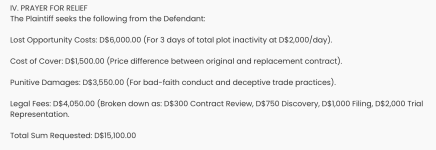 Prayers For Relief.png109.1 KB · Views: 95
 -
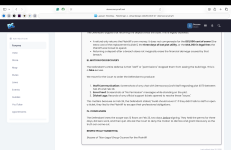 First Request of Evidence of Staff Logs.png508.9 KB · Views: 88
 -
 Clarification Post.png557.8 KB · Views: 88
 -
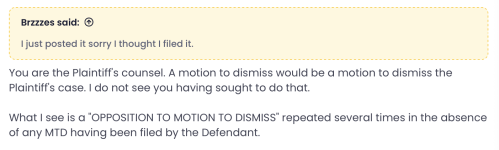 Post #20.png83.1 KB · Views: 99
 -
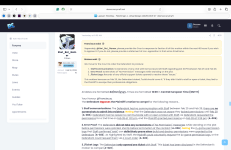 Post 25 1.png773.1 KB · Views: 104
 -
 Post 25 2.png743.1 KB · Views: 99
 -
 Post 25 3.png749.9 KB · Views: 83
 -
 Post 25 4.png658.1 KB · Views: 86
Last edited: